
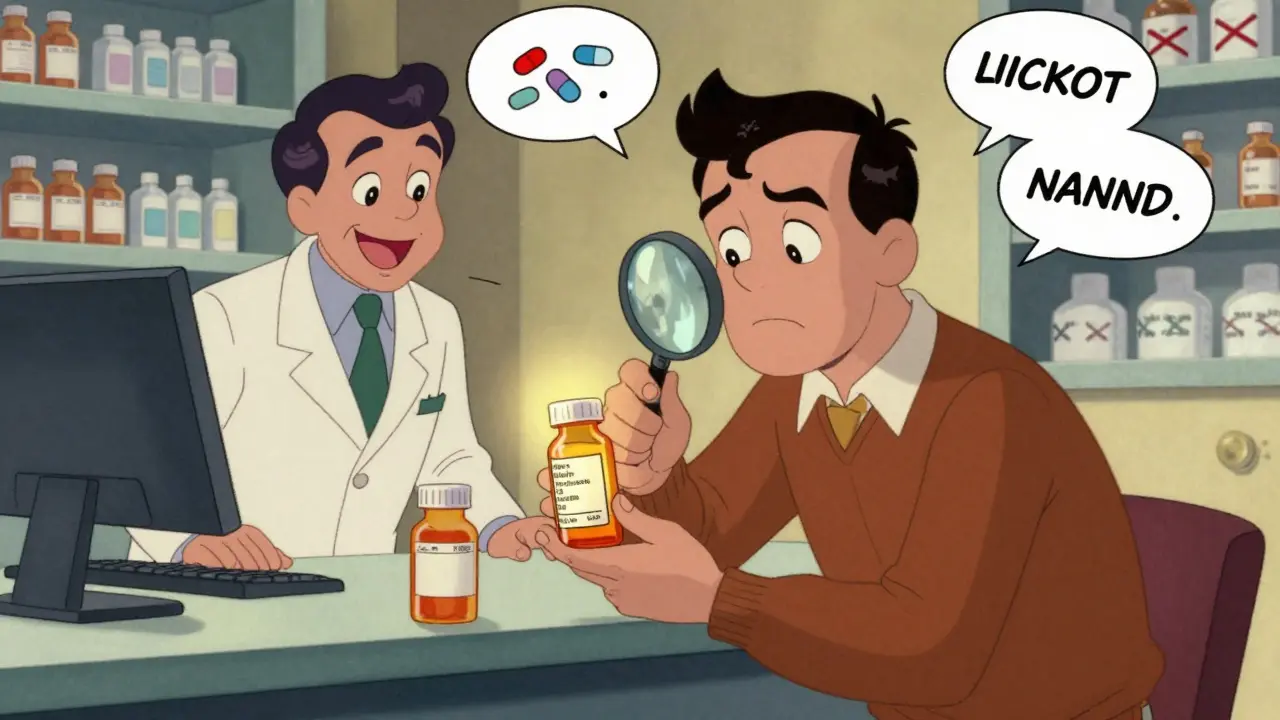
Getting a prescription filled should be simple - but mistakes happen. A wrong pill, a misprinted name, or an incorrect dose can lead to serious harm. The good news? You hold the final line of defense. Before you walk out of the pharmacy, take 30 seconds to confirm your name and medication on the prescription label. It’s not just a suggestion - it’s a proven safety step that can stop errors before they hurt you.
Why Checking Your Prescription Label Matters
Every year, over 1.5 million people in the U.S. experience preventable medication errors. About one in four of those errors comes from a mismatch on the prescription label. That could mean you get someone else’s medicine, the wrong dose, or a drug your doctor never prescribed. These aren’t rare glitches. They happen in busy pharmacies, during staff shifts, or when labels get mixed up in the system. The FDA, CDC, and Joint Commission all agree: patient verification is the last safety net. A 2020 study in the Journal of the American Pharmacists Association found that when patients check their labels, the chance of taking the wrong medication drops by 67%. That’s not luck - it’s action. You’re not being overly cautious. You’re doing your job as a patient.What to Look for on the Label
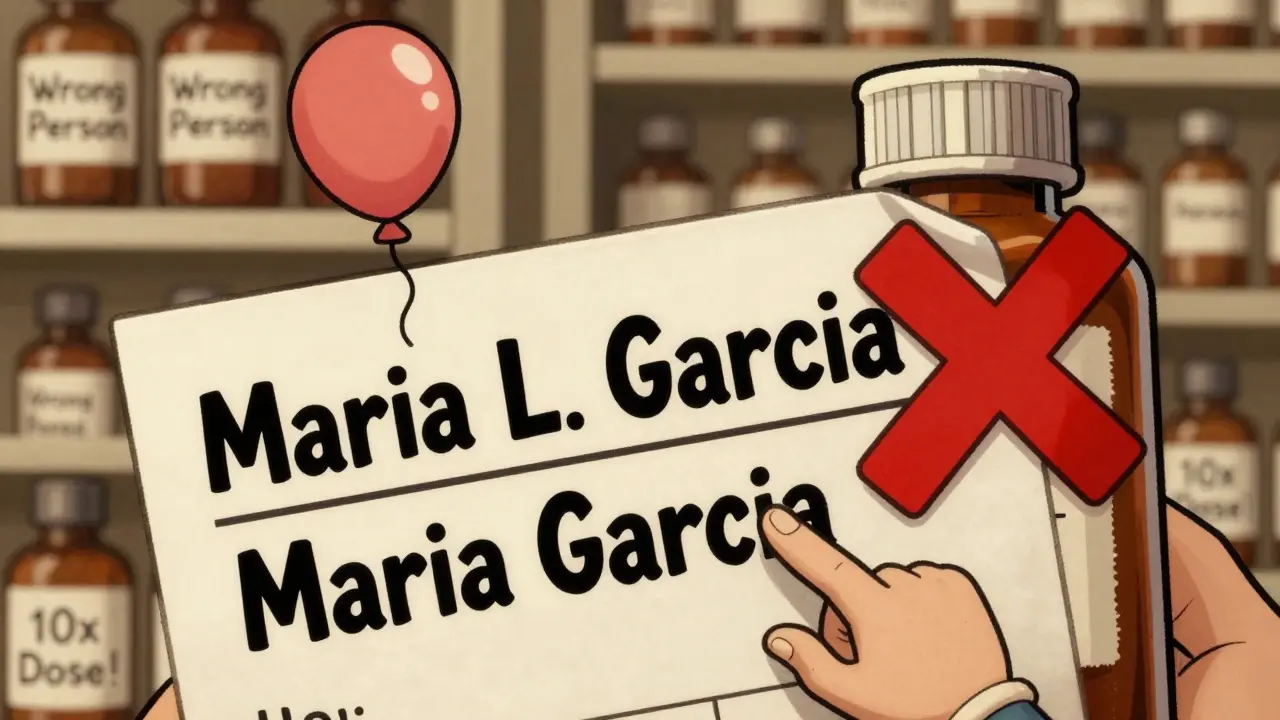
Your prescription label isn’t just a sticker. It’s a legal document with specific information required by federal law. Here’s what must be there - and what you need to check:- Your full legal name - First, middle, and last. No nicknames. If your name is Maria L. Garcia and the label says “Maria Garcia,” that’s not enough. Ask for a correction.
- Medication name - Both the brand name (like Lipitor) and the generic name (like atorvastatin) should appear. If your doctor said “atorvastatin” but the label says “Lipitor,” that’s okay - as long as you know they’re the same drug. If it says something completely different, like “metformin” instead of “lisinopril,” stop.
- Strength - This is where mistakes are most dangerous. A label saying “50 mg” instead of “5 mg” is a 10x overdose. Always compare it to what your doctor told you. If you’re unsure, ask the pharmacist to read it aloud.
- Directions - “Take one tablet by mouth twice daily” should match what your doctor said. If it says “take at bedtime” but your doctor said “take with breakfast,” speak up.
- Pharmacy name and phone number - This seems obvious, but if the label says “Rite Aid” and you picked it up at CVS, something’s wrong.
Don’t skip the expiration date or refill info either. An expired pill won’t work. And if the label says “no refills” but your doctor said you could get three, that’s another red flag.
How to Check Your Label - Step by Step
You don’t need special training. Just follow these six steps every time you pick up a new prescription:- Hold the bottle at eye level - Good lighting matters. Stand near a window or turn on a bright light. Poor lighting hides small print.
- Find your name - Look for your full legal name. If it’s missing, misspelled, or looks like someone else’s, don’t take it.
- Match the medication - Compare the name on the label to the one your doctor gave you. If you’re unsure, ask: “Is this the same as the one Dr. Lee prescribed for my blood pressure?”
- Check the strength - Look for numbers like “5 mg,” “10 mg,” or “250 mg.” If it’s different from what you expected, double-check with the pharmacist. Don’t assume it’s a typo.
- Read the directions - Does it say “take with food”? “Avoid alcohol”? “Take once daily”? If it doesn’t match what your doctor told you, ask why.
- Verify the pharmacy - Is the name and phone number correct? If you’re picking up from a different pharmacy than usual, make sure the label matches the one you requested.
This takes less than a minute. But skipping it? That’s a gamble with your health.
Common Problems and How to Fix Them
Even with careful checking, things go wrong. Here’s what patients run into - and how to handle it:- Small print - Many labels use tiny fonts. If you can’t read it, ask for a large-print copy. Most pharmacies now offer this for free. CVS and Walgreens have magnifiers at their prescription counters - use them.
- Similar-sounding names - “Hydroxyzine” and “Hydrochlorothiazide” look alike. “Lanoxin” and “Lanoxin-P” are different drugs. If a name sounds confusing, ask the pharmacist to spell it out.
- Wrong patient - This happens more than you think. A 2023 survey found that 15% of label errors involved the wrong person’s name. If your name is on a bottle for a different medication, it might be your roommate’s - or someone else’s. Never assume.
- Abbreviations - “BID” means twice daily. “QHS” means at bedtime. If you don’t understand an abbreviation, ask for plain language. Pharmacists are required to explain it.
If you see a problem, don’t leave. Say: “I think there’s an error here.” The pharmacist will double-check your file. Most errors are caught before the pill leaves the counter.
What to Do If You Spot an Error
If your label is wrong, here’s what to do:- Don’t take the medication.
- Ask to speak with the pharmacist - not just the technician.
- Have your doctor’s name and prescription number ready.
- Ask: “Can you verify this with my doctor’s original order?”
- If they refuse to fix it, call your doctor’s office directly.
- Report the error to the pharmacy’s customer service. Write it down - name, date, what happened. You have the right to a safe prescription.
One Reddit user shared how catching a 10mg instead of 5mg dose on a blood thinner saved her mother’s life. Another user almost took her roommate’s blood pressure pill because the name matched - but the pill looked different. She noticed because she checked.
Technology Can Help - But Not Replace
Apps like Medisafe and GoodRx can scan your label and remind you when to take your pills. Some even compare the label to your doctor’s order. That’s helpful - but not foolproof. Most people over 65 - who take the most prescriptions - don’t use these apps regularly. And apps can’t catch a misprinted name if the photo is blurry or the barcode is damaged. Manual verification is still the most reliable method. The FDA is pushing for new label standards by 2025, with bigger fonts and clearer layouts. But until then, you’re the best tool you’ve got.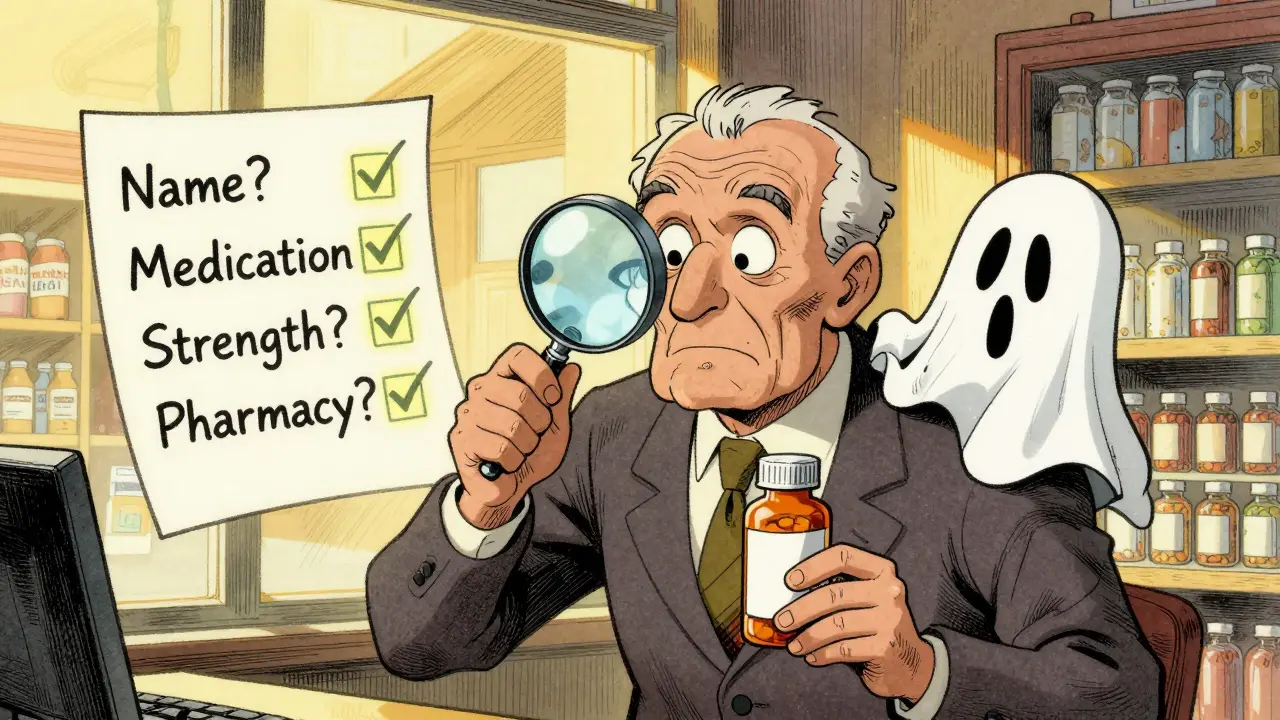
Who Should Be Extra Careful
Some people are at higher risk:- People taking five or more medications - 22% of Medicare patients fall into this group. More pills = more chances for mix-ups.
- Older adults - 37% of seniors say they struggle to read small print. Use a magnifier or ask for large print.
- People with low health literacy - 36 million adults in the U.S. have trouble understanding medical terms. Don’t pretend you know - ask.
- Those on high-risk drugs - Blood thinners, diabetes meds, opioids, and seizure drugs require extra care. Always double-check these.
If you’re in any of these groups, make checking your label a habit. Keep a small notebook with your meds, doses, and why you take them. Bring it to the pharmacy.
Final Reminder: You’re Not Being Difficult
Some people feel awkward asking questions at the pharmacy. They think, “Maybe I’m wrong.” Or “The pharmacist knows better.” But here’s the truth: pharmacists expect you to check. In fact, the American Medical Association now tells doctors to require patients to verify their labels. A 2021 AMA study showed a 40% drop in errors when patients were trained to check. You’re not causing trouble. You’re preventing harm.What if my name is spelled wrong on the prescription label?
Never take the medication. Even a missing middle initial or a misspelled last name can mean you got someone else’s prescription. Ask the pharmacist to call your doctor’s office to confirm the correct name. Most pharmacies will re-label the bottle at no cost.
Can I trust the generic version of my medication?
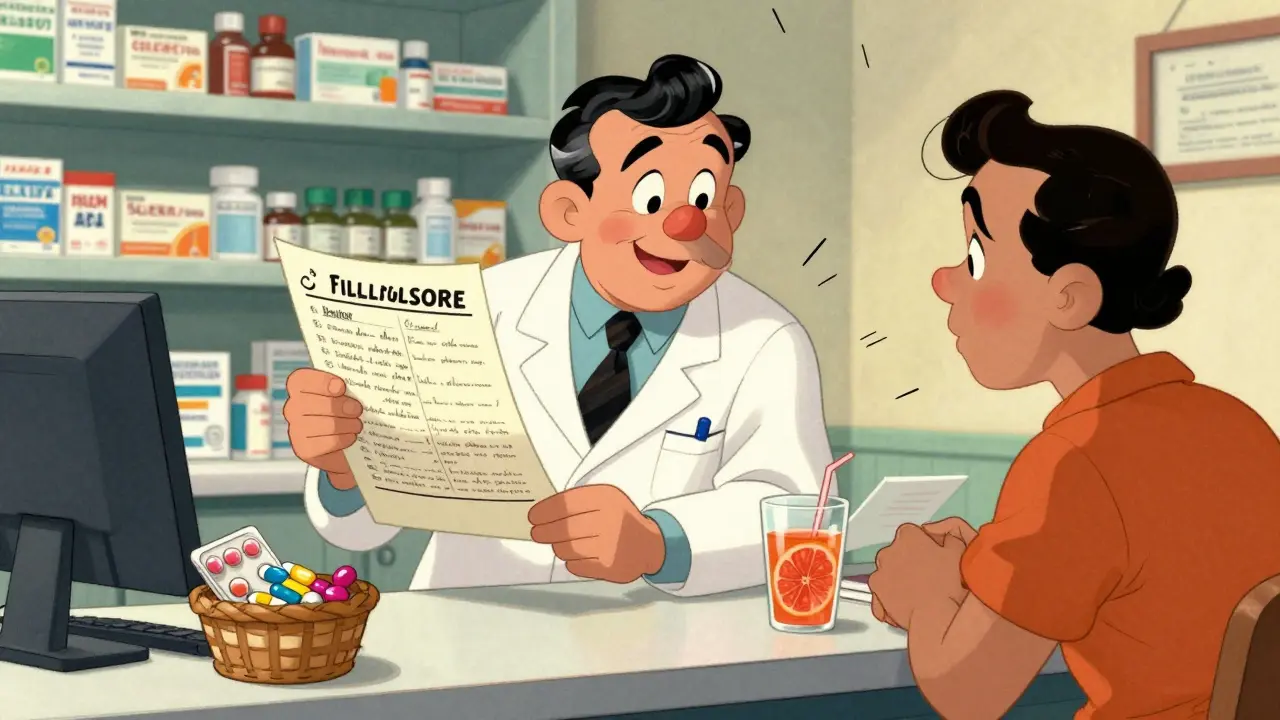
Yes - generic drugs are required by the FDA to be identical in strength, safety, and effectiveness to brand-name versions. But the label must still show both names. If the generic name doesn’t match what your doctor prescribed, ask why. Sometimes, a pharmacy switches brands without telling you. That’s fine - as long as the active ingredient is correct.
What should I do if I can’t read the label?
Ask for a large-print copy - most pharmacies offer this for free. You can also use your phone’s magnifier feature: open the camera, zoom in, and hold it over the label. If you’re still unsure, call the pharmacy’s helpline or ask the pharmacist to read it to you aloud.
Why does the label have a National Drug Code (NDC) number?
The NDC is a unique 10- or 11-digit number that identifies the exact drug, manufacturer, and package size. It helps pharmacies and regulators track medications. You don’t need to remember it, but if you’re ever in a medical emergency, having this number helps first responders know exactly what you took.
Is it okay to take a prescription if the expiration date has passed?
No. Expired medication can lose strength or break down into harmful substances. Even if it looks fine, don’t take it. Return it to the pharmacy for safe disposal. Many pharmacies have take-back bins for expired or unused drugs.
Lisa Rodriguez
I used to skip checking my labels until my mom almost got the wrong blood pressure med. Her name was on someone else's bottle and the pill looked totally different. I didn't catch it till I was at home. Now I check every single time. Seriously, it takes 30 seconds but could save your life.
Pharmacists aren't mad when you ask questions. They're relieved. I've seen them cheer when someone catches a mistake before walking out.
Chris & Kara Cutler
THIS. 🙌 I check every time. Even if I've taken the same pill for 5 years. You never know when the pharmacy messes up. 💊🔥
Donna Macaranas
I appreciate how this post breaks it down without being alarmist. I'm 71 and struggle with small print, so I keep a magnifying glass by my medicine cabinet. The pharmacy even gave me a free large-print label last month. Just asking makes a difference.
Aditya Gupta
in india we dont always have good labels but i still check the pill color and shape. if it looks off i call the doc. better safe than sorry. also pharmacy staff are usually super helpful if you just ask nicely
Jamie Allan Brown
There’s something profoundly human about this. We’re told to trust experts, but medicine is a system built by fallible people. The label isn’t just ink on plastic-it’s your voice saying, 'I am here, I matter, and I won’t let this slip through.' I’ve watched my father take his pills without question for decades. He never checked. He died from a drug interaction that could’ve been caught with a glance. Don’t be like my father. Look. Speak. Live.
Nicki Aries
I can't believe how many people just grab their meds and walk out. I work in healthcare, and I've seen the mistakes. One time, a woman took her neighbor's insulin because the names were similar. She ended up in the ER. Please. Check. The. Label. It's not just 'being careful'-it's your legal right. And if they give you attitude? Ask for the manager. You're not being difficult-you're being responsible.
Ed Di Cristofaro
People are so lazy these days. You think the pharmacist is your personal nurse? Nah. They're swamped. You want to live? Read the damn label. I had a cousin die because he didn't check. His name was on a bottle of warfarin he wasn't even prescribed. He took it because 'it looked right.' Idiot. Don't be an idiot.
Bryan Coleman
I always check the NDC number on my phone using the FDA database. If it doesn't match the drug name, I know something's off. Also, if the pill looks different than last time, I call the pharmacy. I once got a generic that was a different color-turned out they switched manufacturers. No problem, but I wouldn't have known if I hadn't looked.
Naresh L
It's fascinating how a small act of verification-something so mundane, almost robotic-becomes an act of existential resistance. In a world that treats us as data points, checking your label is you saying: 'I am not a barcode. I am not a mistake waiting to happen. I am here, and I will not be erased by a misprint.' We are taught to defer to authority, but medicine is not theology. It is a practice. And like any practice, it requires vigilance. You are not interrupting. You are completing.
franklin hillary
I'm a pharmacist's kid. Grew up behind the counter. Saw every kind of error-wrong names, wrong doses, wrong bottles. The ones who survive? The ones who ask. The ones who say, 'Wait, that doesn't look right.' Don't be shy. Don't be polite. Be loud. Be clear. Be the person who stops the mistake. I've seen lives saved because someone didn't just take the bottle. They looked at it. And then they spoke.
And if you're helping an elderly parent? Do it for them. Don't assume they see it. Don't assume they know. You're not being overprotective-you're being the bridge between their safety and a system that forgets them.