
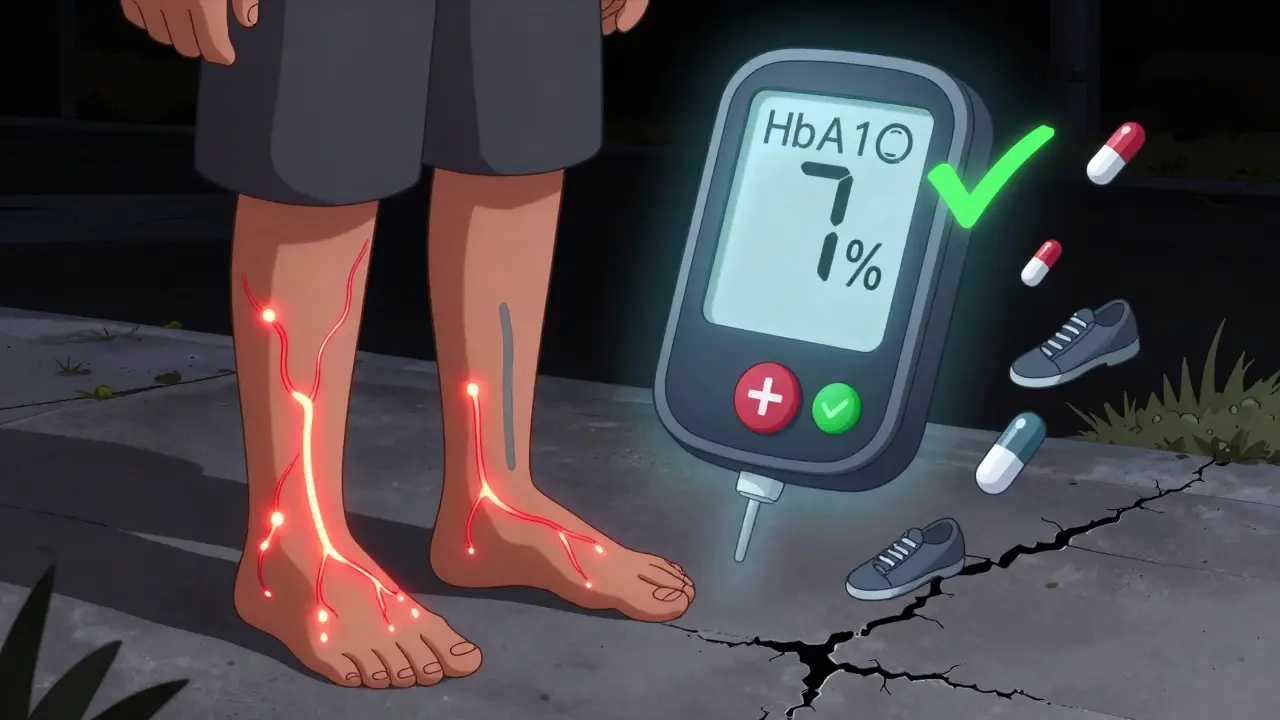
When your feet start tingling, burning, or going numb for no clear reason, and you have diabetes, it’s not just bad luck-it’s diabetic neuropathy. This isn’t a minor side effect. It’s nerve damage caused by years of high blood sugar, and it affects up to 7 out of 10 people with diabetes. For nearly one in four, it turns into chronic pain that makes walking, sleeping, or even wearing socks unbearable. The good news? You can stop it from getting worse. You can reduce the pain. And in some cases, you can even bring back feeling you thought was gone for good.
Why High Blood Sugar Kills Nerves
It sounds simple: too much sugar in your blood. But what happens inside your body is more complex. Over time, high glucose levels damage the tiny blood vessels that feed your nerves, especially in your feet and hands. Without enough oxygen and nutrients, those nerves start to misfire. They send pain signals when there’s no injury. Or they go silent, leaving you unable to feel a blister, a cut, or a hot stove.
This isn’t just about discomfort. It’s about danger. People with numb feet can develop ulcers without knowing it. Those ulcers can turn into infections. And infections in the foot are the leading cause of amputations in people with diabetes. That’s why managing your blood sugar isn’t optional-it’s the first and most powerful tool you have.
The Diabetes Control and Complications Trial showed that keeping your HbA1c below 7% cuts your risk of nerve damage by 60%. That’s not a suggestion. It’s your foundation. Every pill, every meal, every walk you take should be aimed at hitting that target.
First-Line Medications That Actually Work
If pain is already here, you need more than just better blood sugar. You need targeted pain relief. And not all painkillers are created equal.
The only two medications specifically approved by the FDA for diabetic nerve pain are duloxetine (Cymbalta) and pregabalin (Lyrica). Both work differently but have similar results: about 30-40% of people get at least half their pain gone. Duloxetine, an SNRI, helps your brain better manage pain signals. Pregabalin calms overactive nerves. Both can cause dizziness, drowsiness, or weight gain. But for many, the trade-off is worth it.
Many doctors still start with amitriptyline, an old-school tricyclic antidepressant. It’s cheaper, and studies show it works even better than duloxetine-up to 58% of users get significant relief. But it can make you groggy, dry your mouth, and raise your heart rate. That’s why it’s not always the best pick for older adults or people with heart issues.
Don’t use ibuprofen or naproxen for this pain. They won’t help the nerve damage, and they can hurt your kidneys-something you’re already at higher risk for with diabetes. Stick to drugs that target nerves, not inflammation.
Topical Treatments: Less Side Effects, Same Relief
If pills make you feel worse than the pain, try something that stays local. The capsaicin 8% patch (Qutenza) is a game-changer. It’s applied by a doctor, and it works by depleting the nerve’s pain chemical. After one treatment, many people feel 30% less pain for up to 3 months. No drowsiness. No weight gain. Just localized relief.
There’s also the lidocaine 5% patch. You can buy it over the counter. It numbs the skin where you stick it-perfect if your pain is focused on one spot, like the ball of your foot. It doesn’t fix the nerve damage, but it gives you hours of relief without affecting your whole body.
These aren’t magic. But they’re safer, especially if you’re on other meds for high blood pressure, cholesterol, or kidney disease. Many patients in Melbourne tell me they switch to topicals after getting sick from oral meds. And they’re right to.
Non-Drug Options That Change Lives
Medications help, but they don’t cure. Real change comes from what you do every day.
Exercise isn’t just for your heart. Walking 30 minutes a day, swimming, or cycling improves blood flow to your nerves. A 2021 study found that people who walked daily had less nerve damage progression than those who didn’t-even if their HbA1c didn’t change much. Movement helps your nerves heal.
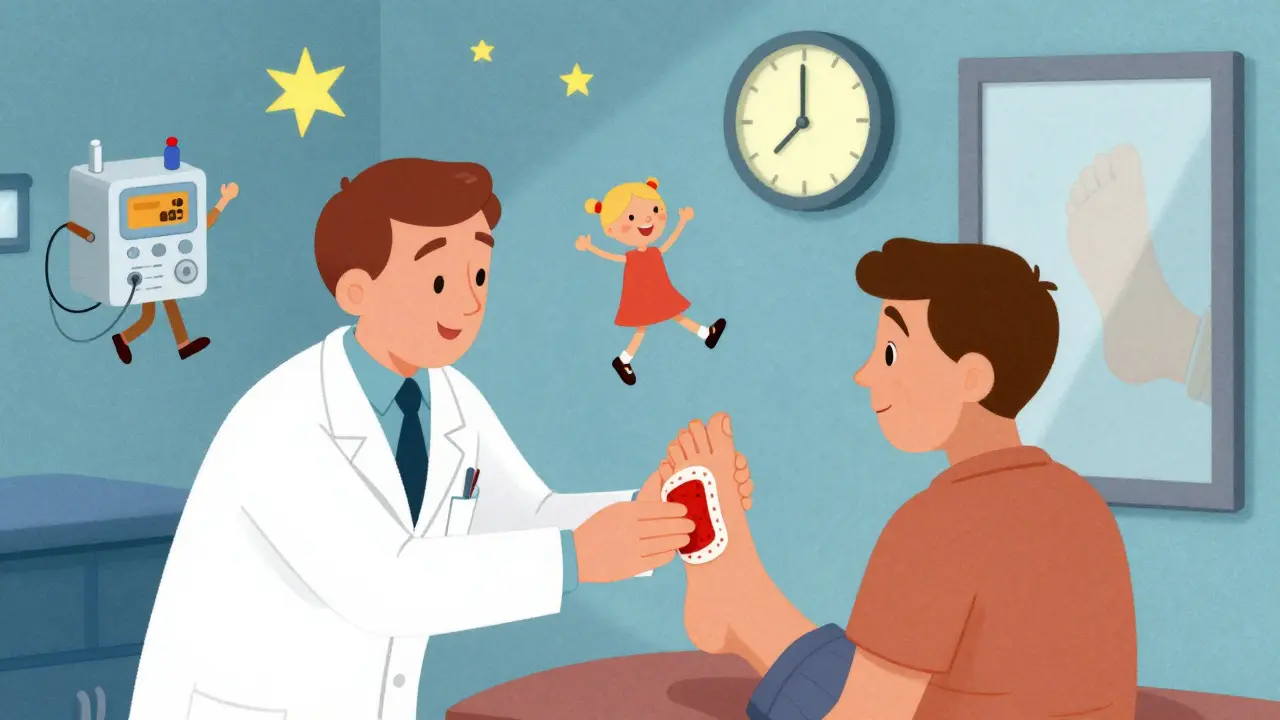
Foot care is non-negotiable. Check your feet every day. Use a mirror if you can’t see the bottom. Wash them in lukewarm water. Dry them completely. Never go barefoot. Wear socks made for diabetics-no seams, no tight bands. Get regular foot exams from your podiatrist. One small cut you miss can become a hospital stay.
TENS units (transcutaneous electrical nerve stimulation) are small, battery-powered devices you can wear at home. They send gentle pulses through your skin to block pain signals. In one trial, 83% of users reported better pain scores after 6 weeks. They’re cheap, safe, and you can use them while watching TV.
And don’t ignore stress. Chronic pain raises cortisol, which raises blood sugar. Meditation, deep breathing, or even just 10 minutes of quiet every morning can help your whole system reset.
When Medications Fail: The Next Step
One in two people with diabetic nerve pain still hurt badly after trying first-line drugs. That doesn’t mean you’re out of options.
Nerve blocks involve injecting numbing medicine near damaged nerves. They give quick relief-sometimes for weeks. Great for flare-ups, but not a long-term fix.
Peripheral nerve stimulation (PNS) is a small device implanted under your skin near the affected nerve. It sends mild electrical pulses to disrupt pain signals. Studies show it works for 60-70% of people who’ve tried everything else. It’s a day procedure. You’re back home in hours. And unlike opioids, it doesn’t dull your mind.
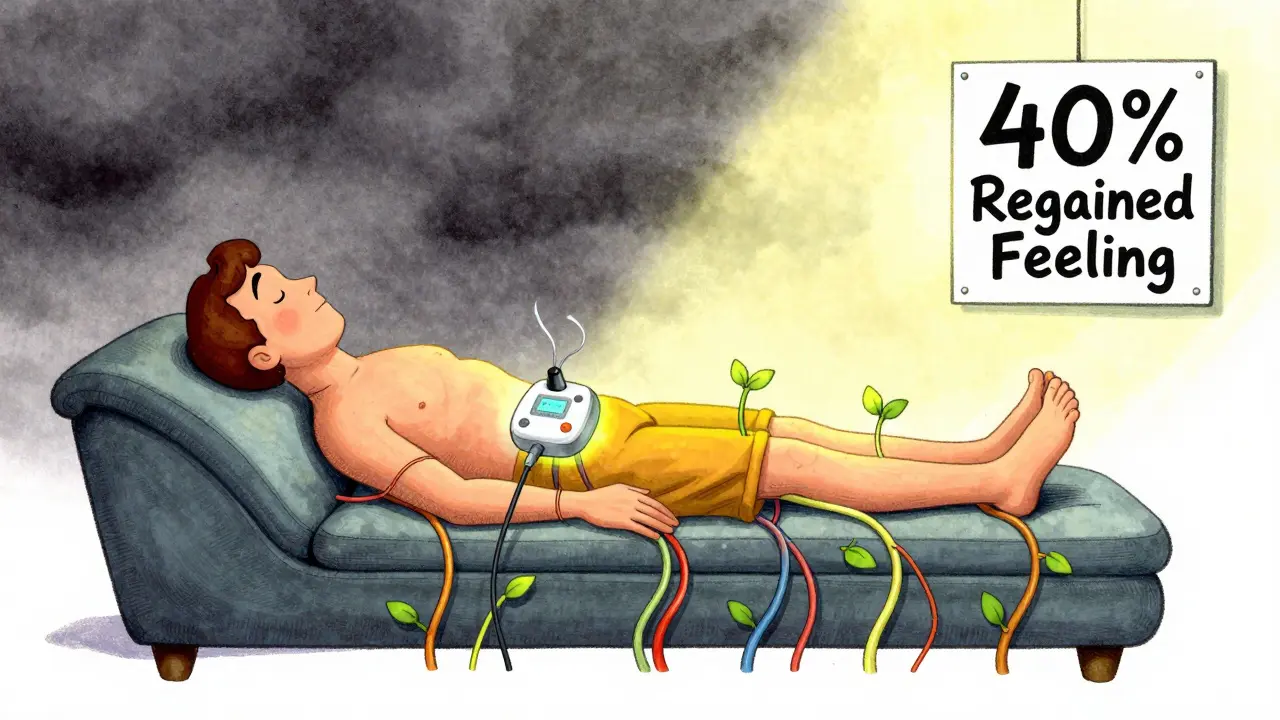
Then there’s spinal cord stimulation. This one surprises even doctors. It’s not just about pain relief. In some patients, it brings back sensation. People who couldn’t feel their toes for years suddenly start feeling the texture of grass or the pressure of a shoe. One study found that 40% of long-term numb patients regained partial feeling after 6 months of stimulation. It’s not FDA-approved for this yet, but it’s being used successfully in clinics in Australia and the U.S.
These aren’t for everyone. But if you’ve been told, “This is just part of aging,” you deserve to know they exist.
What Doesn’t Work (and What’s Coming)
Tramadol and tapentadol are powerful, but they’re opioids. They work, yes. But they carry addiction risk. The CDC says 8-12% of long-term users develop dependence. And they don’t stop the nerve damage-just mask the pain. Use them only if nothing else works, and only under strict supervision.
And don’t waste time on supplements like alpha-lipoic acid or vitamin B12 unless you have a confirmed deficiency. Studies show mixed results. They’re not a substitute for proven treatments.
But the future is bright. Researchers are testing drugs that target specific pain channels in nerves-Nav 1.7 blockers, NGF antibodies, and new calcium channel inhibitors. Some are already in Phase 3 trials. The goal isn’t just to numb the pain. It’s to repair the nerves. One day, we may reverse damage instead of just managing symptoms.
Your Action Plan
You don’t need to do everything at once. Start here:
- Check your HbA1c. If it’s above 7%, work with your doctor to get it down. This is your #1 priority.
- Inspect your feet daily. Look for cuts, redness, swelling. Use a mirror. Take a photo if you need to track changes.
- Try a TENS unit. They’re under $100. Use it for 20 minutes a day. Many feel better in 2 weeks.
- Ask your doctor about duloxetine or pregabalin. Don’t wait until pain is unbearable. Start early.
- Move for 30 minutes daily. Walk, swim, bike-anything that gets your blood flowing.
- See a podiatrist every 6 months. Even if your feet feel fine.
Neuropathy doesn’t have to be your life sentence. With the right mix of control, care, and treatment, you can live with less pain-and more freedom.
Can diabetic neuropathy be reversed?
In mild cases, yes-especially if caught early. Studies show that with sustained blood sugar control (HbA1c below 7%), symptoms like numbness and tingling can improve or even disappear within 6-12 months. But once nerves are severely damaged or dead, they can’t regenerate fully. That’s why early action is critical. The more damage already done, the less likely full recovery is. But even in advanced cases, pain can be reduced and further damage prevented.
Why does diabetic neuropathy hurt more at night?
At night, your body is still, and distractions fade. That makes pain signals more noticeable. Also, your blood sugar may rise slightly during sleep due to hormonal changes, especially if you’ve eaten late or skipped dinner. Cooler nighttime temperatures can also make nerve damage feel sharper. Many people find that keeping their feet warm with socks, avoiding alcohol before bed, and maintaining stable glucose levels helps reduce nighttime pain.
Is walking safe if my feet are numb?
Yes-walking is one of the best things you can do. But you need to protect your feet. Wear supportive, cushioned shoes with no seams. Check your feet before and after walking for blisters or cuts. Use a mirror or ask someone to check the soles if you can’t see them. Walking improves circulation, which helps nerves heal. Just don’t walk barefoot, and avoid rough surfaces like gravel or hot pavement.
What’s the best diet for diabetic neuropathy?
Focus on low-glycemic, anti-inflammatory foods: leafy greens, berries, legumes, fatty fish like salmon, nuts, and whole grains. Avoid sugary drinks, white bread, processed snacks, and fried foods. Omega-3s from fish and flaxseed reduce nerve inflammation. Magnesium-rich foods like spinach and almonds may help with nerve signaling. A Mediterranean-style diet has been shown in studies to slow neuropathy progression better than standard low-fat diets.
Can I use alcohol with diabetic neuropathy?
No. Alcohol is toxic to nerves. Even moderate drinking can make neuropathy worse. It interferes with blood sugar control, reduces vitamin B1 levels (critical for nerve health), and increases pain sensitivity. If you have diabetic neuropathy, avoiding alcohol entirely is one of the simplest and most effective steps you can take.
How long does it take for nerve pain to improve after better blood sugar control?
Some people notice less tingling or burning within weeks. But real improvement usually takes 3-6 months of consistent blood sugar control. Full reversal, if possible, can take up to a year. Patience matters. Nerves heal slowly. But if you keep your HbA1c below 7%, your body has the best chance to repair itself. Don’t give up before you’ve given it time.


Sally Lloyd
They say blood sugar control prevents nerve damage… but what if your doctor’s been lying about your HbA1c targets? I got my numbers ‘under control’ for two years-7.1, 6.9, 6.8-and my feet got worse. Then I found out my lab was using outdated calibration. My real HbA1c was 9.3. Who’s really monitoring this? I’m not paranoid. I’m just awake.
And why are we not talking about the pharmaceutical industry funding every ‘study’ on duloxetine? Lyrica’s patent expires next year. Coincidence? I think not.
Emma Deasy
Oh. My. GOSH. This post is nothing short of a MASTERCLASS in diabetic neuropathy management. I am absolutely floored by the depth of evidence presented here-from the DCCT trial data to the groundbreaking potential of spinal cord stimulation to restore sensation! I mean, really-how is this not being taught in med schools nationwide?!
And the fact that we’re still allowing ibuprofen to be prescribed for neuropathic pain? Unacceptable. Catastrophic. A national disgrace. I’ve printed this out and sent it to my senator. Someone needs to make this mandatory reading for every endocrinologist in America.
tamilan Nadar
In India we use turmeric paste on feet and walk barefoot on grass at dawn. Works better than pills. Also no side effects. Doctors here say same thing-control sugar, move daily, check feet. Simple. No need for expensive patches or implants. We survived without Lyrica for centuries.
Adam M
TENS units? Cute. If you’re still in pain after HbA1c >7%, you’re not trying hard enough.
Rosemary Chude-Sokei
I appreciate the thoroughness of this breakdown, particularly the emphasis on non-pharmacological interventions. As someone who manages both diabetes and chronic pain, I’ve found that consistency-not novelty-is what truly shifts outcomes.
That said, I’m cautious about promoting spinal cord stimulation as a near-cure. While the anecdotal data is compelling, we must acknowledge the lack of long-term, large-scale RCTs. I’d love to see a follow-up piece on accessibility and insurance coverage-because knowledge without equity is just information, not empowerment.
Noluthando Devour Mamabolo
OMG this is 🔥🔥🔥 I’ve been on pregabalin for 18 months and the 8% capsaicin patch literally saved my life 🙌 I was on opioids before this-now I’m hiking again! Also, TENS unit on my calves every morning = game changer. PS: NO ALCOHOL. NOT EVEN ONE DRINK. 😤
Leah Dobbin
How quaint. A post that treats diabetic neuropathy as if it’s merely a biomedical problem to be solved with pharmaceuticals and TENS units.
Have you considered that the real issue is systemic neglect? The fact that 70% of diabetics develop neuropathy speaks to a public health failure-poor nutrition access, food deserts, wage slavery, and the commodification of healthcare. You’re telling me to walk 30 minutes a day? How lovely, when you live in a food desert with no sidewalks and work two jobs.
This isn’t about compliance. It’s about justice.
Ali Hughey
EVERYTHING they’re telling you is a lie. 🤫
Did you know the FDA approved Lyrica because of a ghost-written study funded by Pfizer? And those ‘nerve regeneration’ claims from spinal stimulation? That’s from a trial in Australia funded by a company that owns the implant patent.
Meanwhile, the real cure-low-carb ketogenic diets-has been suppressed for decades. I’ve reversed my neuropathy in 9 months. No meds. No patches. Just butter, eggs, and bacon. Your doctor won’t tell you this because they’re paid to push pills. I’m not paranoid. I’ve read the studies.
And yes-I still feel the grass. 🌿
Alex MC
Just wanted to say thank you for this. I’ve had diabetic neuropathy for 12 years. I tried everything-pills, creams, acupuncture, even hypnosis.
What finally helped? Walking 20 minutes after dinner, checking my feet with a mirror every night, and a $60 TENS unit from Amazon. I don’t use meds anymore. My HbA1c is 6.2. It took time. It took patience.
You’re not broken. You’re just learning how to listen to your body. Keep going. You’ve got this.
And yes-no alcohol. Not even a sip. 💪
rakesh sabharwal
The entire premise is flawed. You can’t ‘repair’ nerves with electricity or patches. Nerve regeneration requires stem cell therapy-which is banned in the US for ‘ethical reasons.’ Meanwhile, India and China are doing human trials. This post reads like a Big Pharma brochure. Wake up. The science is decades ahead of what you’re being told.
Aaron Leib
Love this. Especially the foot care checklist. I’m a nurse and I see so many patients who don’t know how to check their feet. One guy didn’t realize he had a blister for three weeks. He lost his toe.
Just a gentle reminder: if you’re on metformin, you might be low on B12. Get it checked. And if you’re thinking about supplements-yes, B12 helps if you’re deficient. But it won’t fix what sugar destroyed.
Small steps. Daily. That’s the magic.
Dylan Patrick
THIS. This right here. I was told neuropathy was ‘just part of aging.’ I cried for three days.
Then I tried the TENS unit. First day? Felt my toes for the first time in 5 years. I screamed. My dog ran out of the room.
Now I walk barefoot on the grass every morning. I don’t care if I look weird. I feel the earth. I feel alive.
You’re not alone. And it’s not too late. 💙
Sally Lloyd
Interesting. So you’re saying TENS units work? That’s funny-I tried one. Lasted 2 days. Then my foot went numb again. And guess what? My doctor’s office just got a new contract with a TENS manufacturer. They’re pushing them hard now. Coincidence? I don’t think so.
Meanwhile, the real solution-nervous system detox through intermittent fasting-is being buried under $200 devices. You think they want you to heal? Or just keep buying?