
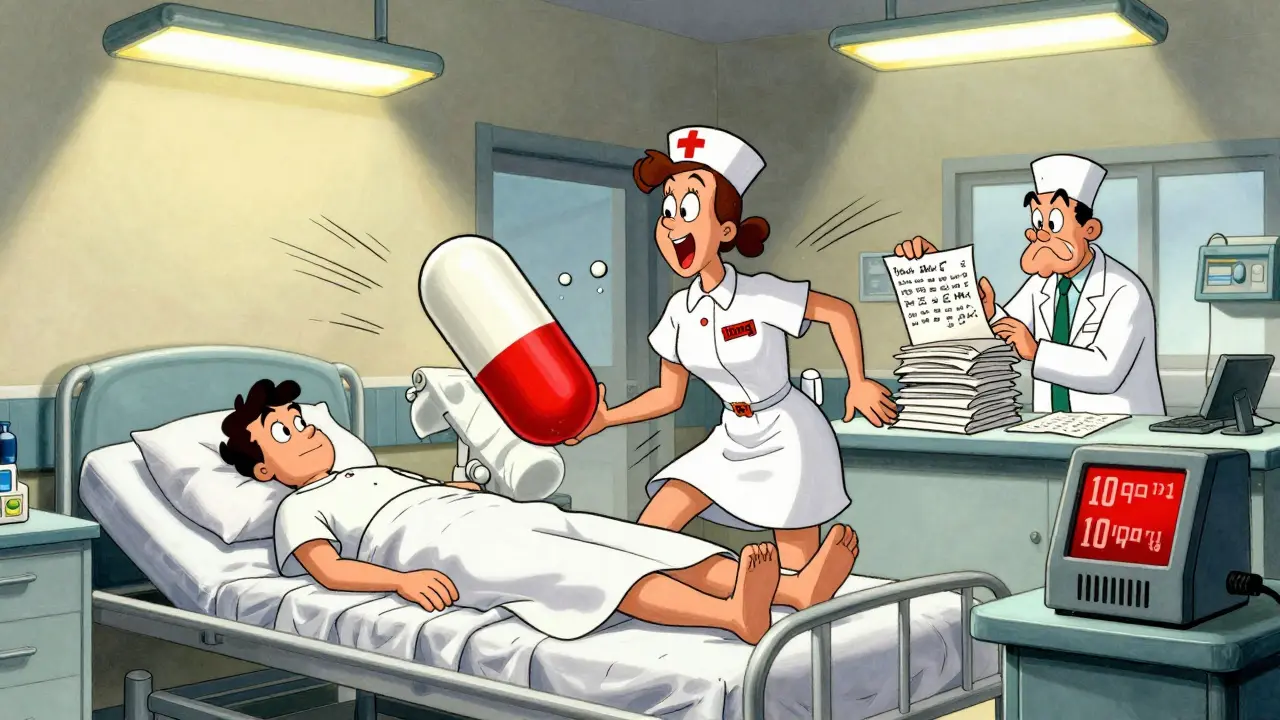
Every year, millions of people in the U.S. get the wrong medicine, wrong dose, or wrong instructions - not because they asked for it, but because a system failed. These aren’t rare accidents. They’re routine breakdowns, and they happen in two very different places: hospitals and retail pharmacies. The numbers tell a surprising story. In hospitals, errors are frequent - about 1 in 5 doses has some kind of mistake. In retail pharmacies, it’s far less common - roughly 1.5% of prescriptions are dispensed incorrectly. But here’s the twist: the pharmacy error might be more dangerous. Why? Because no one checks it again after it leaves the counter.
How Often Do Errors Happen?
Hospitals are noisy, crowded, and overloaded. Nurses juggle ten patients at once. Doctors write prescriptions on the fly. Pharmacists rush to fill orders between code blues and shift changes. It’s no surprise that a 2006 study in JAMA Internal Medicine found that nearly 20% of all medication doses given in hospitals contained an error. That’s not a typo. One in five. Most of these happen during administration - when a nurse gives the pill, shot, or IV to the patient. Timing is off. The wrong drug gets handed out. The dose is doubled. All because the system moved too fast.
Now look at your local pharmacy. You walk in, hand over a prescription, wait ten minutes, and walk out with your meds. It seems simple. But behind that counter, pharmacists are filling 250 prescriptions a day. Multiply that by thousands of pharmacies, and you get 3 billion prescriptions a year. A 2003 national study found that about 51.5 million of those were dispensed incorrectly. That’s roughly 1.5% error rate - or between 1.4% and 1.8%. Sounds low? It is - compared to hospitals. But that still means 45 million mistakes every year. And here’s the kicker: in a hospital, someone else might catch the mistake before it hurts you. In a pharmacy? You’re the last line of defense.
What Kind of Mistakes Happen?
In hospitals, errors are messy. They come from all directions:
- Wrong drug - penicillin instead of amoxicillin
- Wrong dose - 10 mg instead of 1 mg
- Wrong timing - given 4 hours early
- Wrong route - IV instead of oral
These mistakes often happen because of poor communication. A doctor writes a scribble. A pharmacist misreads it. A nurse assumes the label is right. The system has layers, but they’re thin.
In retail pharmacies, mistakes are simpler - but just as deadly:
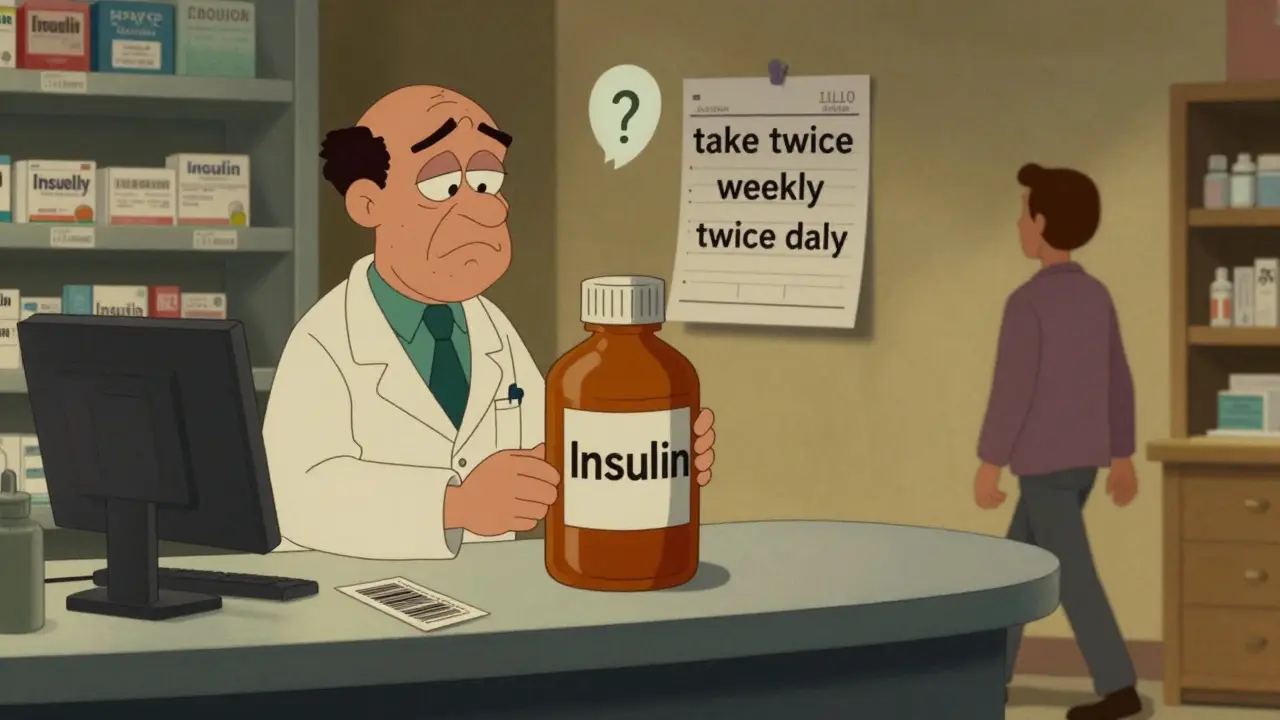
- Wrong medication - you get insulin instead of metformin
- Wrong dose - 1 tablet twice a day instead of twice a week
- Wrong directions - “take with food” becomes “take on empty stomach”
The most common error? Transcription mistakes. That’s when a pharmacist types the wrong instructions into the system. A 2023 AHRQ case report showed a patient given estradiol - a hormone - twice daily instead of twice weekly. She ended up with severe side effects. No one caught it. Not the pharmacist. Not the doctor. Just her.
Why Does It Matter?
It matters because hospitals have checks. Retail pharmacies don’t.
In a hospital, the medication goes through multiple hands before it reaches you. Pharmacist checks it. Nurse checks it. Sometimes, a second nurse checks it again. Barcodes scan the drug. The system flags mismatches. If a mistake slips through, the patient is monitored. Vital signs are watched. Labs are drawn. If something’s wrong, they act fast.
In a pharmacy? The pharmacist fills the bottle. You pay. You leave. That’s it. No one else looks at it. No scans. No second review. If the label says “take 2 pills daily” and it should be “1 pill weekly,” you’ll take two pills every day - for weeks - until you feel sick. Or worse.
That’s why the NIH found that while only 1 in 10,000 community pharmacy prescriptions has a dispensing error, about 3 out of every 10,000 caused hospitalization. One error. One patient. One life changed. And most of those errors were caught only after harm was done.
What Causes These Errors?
In hospitals, it’s pressure. Staff shortages. Too many patients. Too many drugs. Too many systems that don’t talk to each other. A doctor prescribes in one program. The pharmacy uses another. The nurse charts in a third. Information leaks. Mistakes grow.
In pharmacies, it’s fatigue. Repetition. Distractions. A pharmacist is answering the phone, helping a customer with a cold medicine, and scanning a new prescription - all at once. Cognitive overload. A 2023 AHRQ report found that 80% of pharmacy errors come from human thinking mistakes - not laziness, not carelessness, but the brain getting tired from doing the same task hundreds of times a day.
Technology doesn’t always help. Automated pill dispensers look smart, but they can misread labels. Barcode scanners fail. Software glitches. And when systems fail, there’s no backup. No safety net.
Who’s Reporting These Errors?
Hospitals report. Constantly. Every error, near miss, or slip is logged. Some large hospitals log 100 errors a month. Why? Because they’re required to. Because they’re trying to fix it. Because mistakes cost lives - and money. The extra cost of treating drug-related injuries in hospitals alone is over $3.5 billion a year.
Community pharmacies? Not so much. Until recently, reporting was voluntary. Many didn’t report at all. The FDA gets over 100,000 error reports a year - but experts say that’s less than 10% of what actually happens. California now requires pharmacies to report errors to the state board. Other states are following. But it’s patchy. And without reporting, you can’t fix what you don’t see.
What’s Being Done to Fix It?
Hospitals are ahead. Barcode systems cut errors by up to 86%. Electronic prescriptions reduce handwriting mistakes. AI tools flag dangerous drug combinations. Mayo Clinic cut hospital errors by 52% in 2021 by linking their electronic health records directly to pharmacy systems.
Pharmacies are catching up. CVS Health rolled out AI-powered verification in 2022. Their internal audit showed a 37% drop in dispensing errors. UCSF’s pilot program in 2023 used AI to catch transcription mistakes before they were printed - reducing them by 63%. These aren’t science fiction. They’re real. And they’re working.
But tech alone won’t fix it. Culture matters. In hospitals, staff are trained to speak up. If you see something wrong, you say it. No blame. No shame. That’s not the norm in pharmacies. Many pharmacists fear punishment. They don’t report near misses because they think they’ll get in trouble. That’s dangerous. The Journal of Patient Safety says we need a culture where reporting errors is as normal as washing your hands.
What Can You Do?
You’re not powerless. Here’s how to protect yourself:
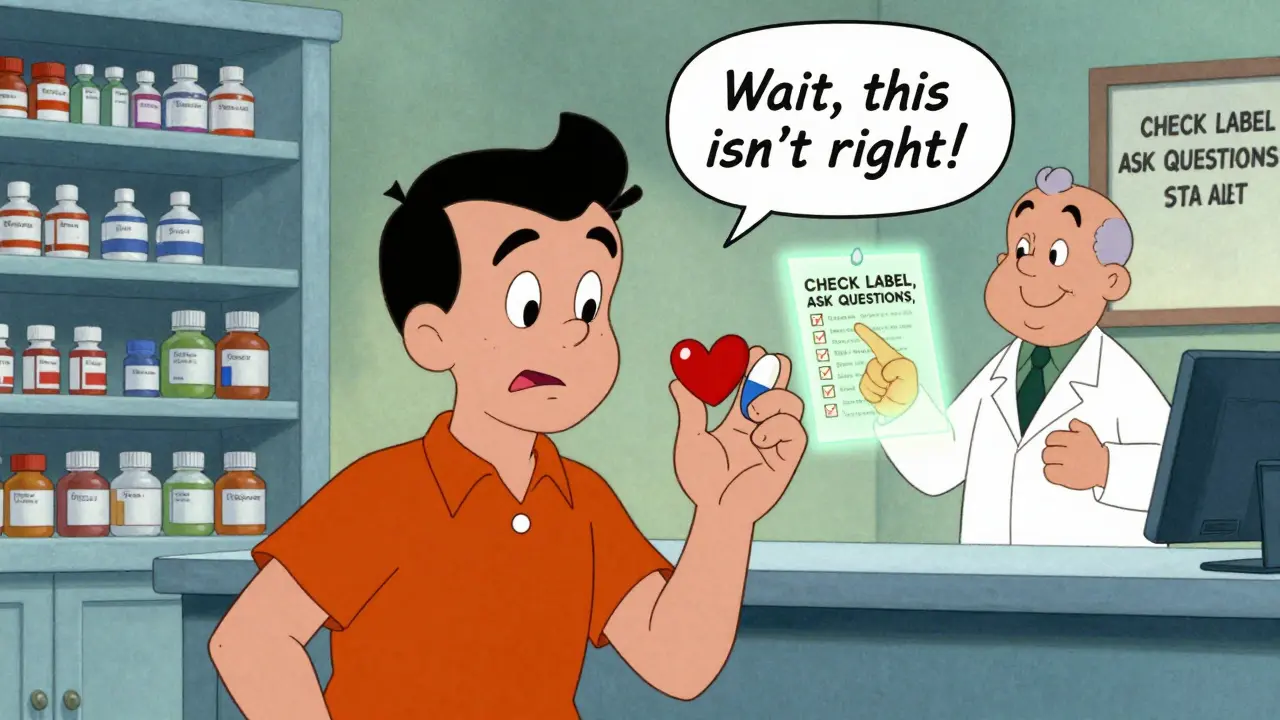
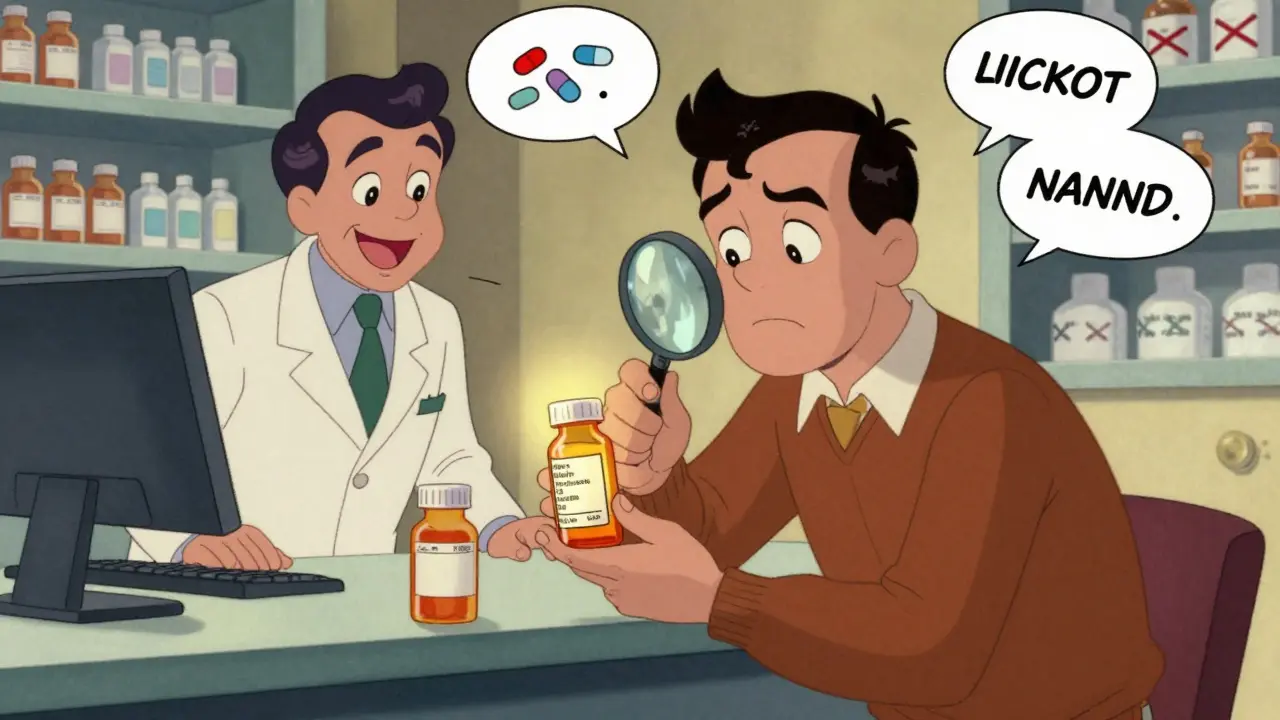
- Check the label - Does it match what your doctor told you? If the dose or instructions seem off, ask.
- Ask questions - “Why am I taking this?” “How often?” “What happens if I miss a dose?”
- Compare pills - Does the shape, color, and size match your last refill? If not, ask.
- Use one pharmacy - It helps pharmacists spot drug interactions.
- Keep a list - Write down every medication you take. Bring it to every appointment.
Don’t assume the system got it right. Assume it might have made a mistake. Then check.
The Bottom Line
Hospitals have more errors. But they have more safety nets. Retail pharmacies have fewer errors. But when one happens, it often slips through unnoticed. The real danger isn’t the number of mistakes - it’s the lack of a second pair of eyes. You’re the last line of defense. And you’re the only one who can catch it.
The system is broken - but it’s fixable. Better tech. Better reporting. Better culture. And you - asking questions, checking labels, speaking up - can help make it better.


RacRac Rachel
This is so important. 🙌 I always check my prescriptions now - even if it’s the same med I’ve had before. Last month, my pharmacy gave me a different pill shape. I asked, and they admitted it was a mix-up. Thank you for reminding us we’re not powerless.
Chris Beckman
people just dont care anymore. i got my meds wrong twice and didnt even notice till i started feeling weird. why do we let this happen? its not that hard to double check
Levi Viloria
I’ve worked in both settings. Hospitals are chaotic, yes - but at least there’s a team. In pharmacies, you’re alone with a screen and 200 scripts. The pressure is insane. No one talks about how tired pharmacists are. We need more staff, not more blame.
marjorie arsenault
If you’re on meds, keep a little card in your wallet. Write the name, dose, and why you take it. I gave mine to my sister last year - she caught a mistake before I even left the pharmacy. Small habit. Big safety net.
Jane Ryan Ryder
So let me get this straight - we’re supposed to be our own pharmacists now? Because the system failed? Cool. I’ll just add 'human error detector' to my resume. Next up: fixing the power grid between coffee breaks.
Renee Jackson
I appreciate the data, but let’s not forget the human cost. I lost a cousin to a pharmacy error. The label said 'take weekly.' It was dispensed as 'take daily.' No one questioned it. No one checked. She was 62. This isn’t theoretical. It’s personal. And it’s preventable.
Shivam Pawa
From India, we have similar issues. But here, the pharmacy staff often don’t have access to EHRs. They rely on handwritten scripts. One typo, one misread, and you’re on a dangerous path. Tech helps - but only if it’s accessible. Equity matters too.
Callum Duffy
The systemic failure here is not merely technical - it is cultural. We have normalized the delegation of responsibility to the patient without providing adequate support structures. A truly patient-centered system would embed verification at every stage - not as an afterthought, but as a foundational principle.
Sharon Lammas
It’s strange how we trust machines more than people. We scan barcodes, use AI, automate everything - yet the final safety net is a tired person who just finished their 12th script of the hour. Maybe the real fix isn’t more tech. Maybe it’s more humanity.
Deborah Dennis
I’m not surprised. People are lazy. Why should the pharmacist double-check when YOU can just look at the bottle? If you don’t know what your meds are, you shouldn’t be taking them. It’s not rocket science. Stop expecting everyone else to babysit your health.