
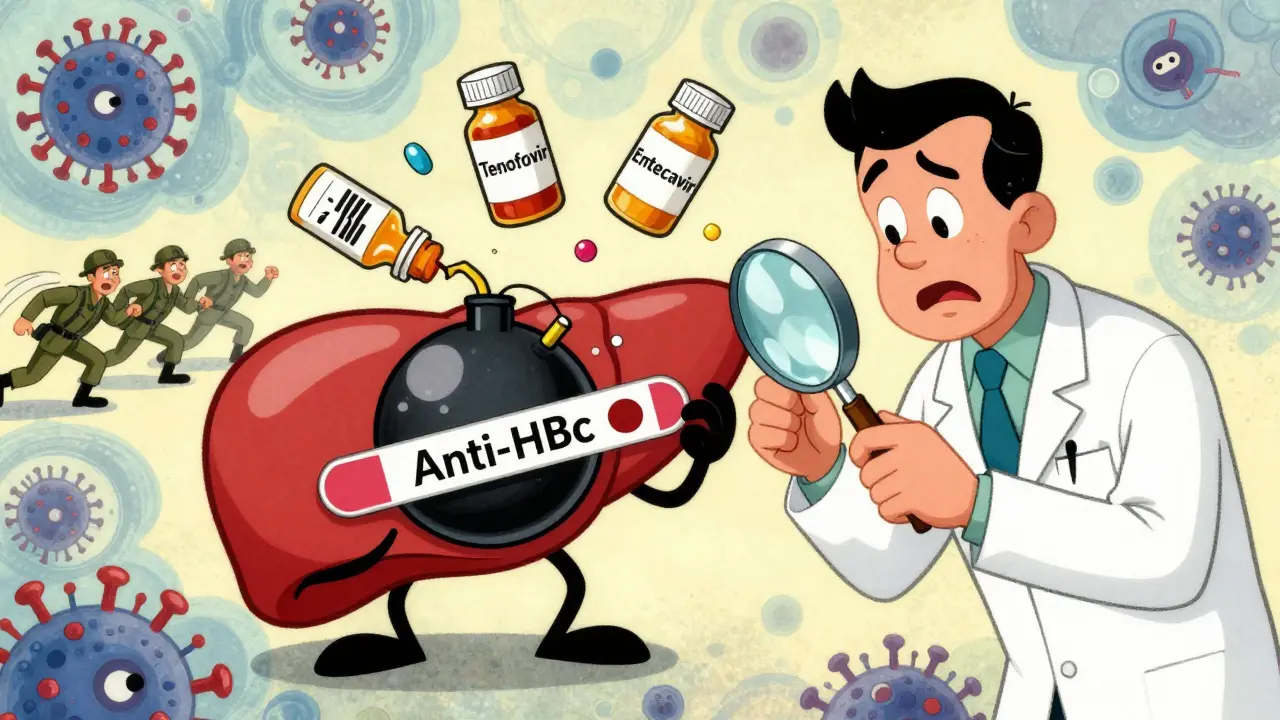
When someone starts treatment for cancer, rheumatoid arthritis, or another condition that requires powerful drugs to suppress the immune system, they might not think about their liver. But if they’ve ever had hepatitis B - even decades ago - their body could be sitting on a time bomb. This is called HBV reactivation, and it’s one of the most preventable, yet deadly, complications in modern medicine.
What Exactly Is HBV Reactivation?
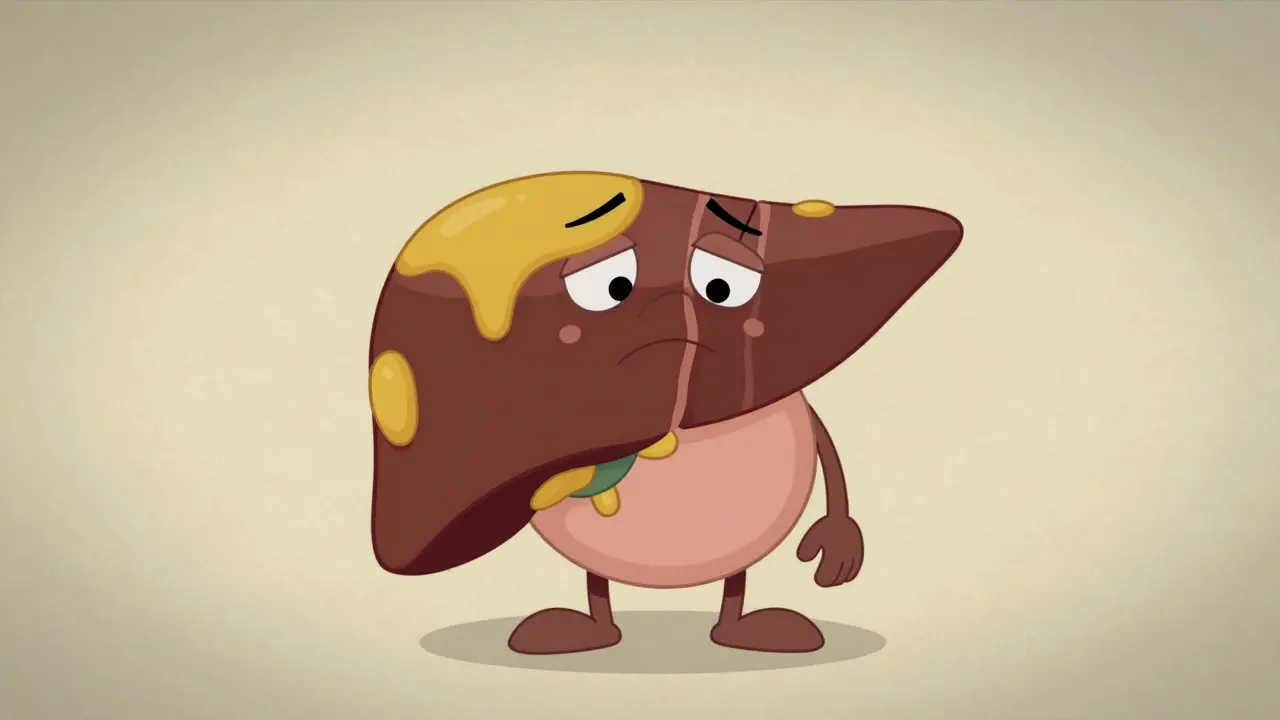
Hepatitis B virus (HBV) doesn’t always disappear after infection. In about 5-10% of adults, the virus goes quiet, hiding in liver cells. These people test negative for HBsAg (the main marker of active infection) but still carry anti-HBc antibodies - a sign they were once infected. This is called "resolved" or "occult" HBV. For most, it’s harmless. But when immunosuppressive drugs come in, the immune system’s grip on the virus loosens. The virus wakes up, starts copying itself, and attacks the liver. This isn’t a new infection. It’s the same old virus, coming back with a vengeance. Without warning, ALT and AST liver enzymes spike. Jaundice appears. Some patients develop acute liver failure. In severe cases, death follows within weeks. Studies show that when reactivation happens without prevention, fatality rates range from 5% to 10%. The scary part? Most of these deaths are avoidable.Which Treatments Trigger HBV Reactivation?
Not all drugs carry the same risk. The danger depends on how deeply the treatment shuts down the immune system - especially the T-cells that keep HBV in check.- High-risk (38-81% reactivation): Drugs that wipe out B-cells, like rituximab and ofatumumab, are the biggest offenders. Patients with lymphoma on these drugs face reactivation rates as high as 73%. Stem cell transplants - both autologous and allogeneic - also rank at the top. One study found 81% of allogeneic transplant recipients had reactivation within two years.
- Intermediate-risk (1-10%): Conventional chemotherapy (like CHOP or anthracycline regimens) carries a 20-50% risk in people who are HBsAg-positive. TNF-alpha inhibitors (used for rheumatoid arthritis and Crohn’s) and drugs like ibrutinib also fall here. Radiation therapy, especially for liver cancer, has a 14% reactivation rate in people with past HBV.
- Low-risk (<1%): Most non-cytotoxic targeted therapies, like hormone blockers or some monoclonal antibodies not aimed at B-cells, pose minimal risk. But even these aren’t risk-free if the patient is HBsAg-positive.
Checkpoint inhibitors - newer cancer drugs like pembrolizumab and nivolumab - have added a twist. Even if HBV DNA was undetectable before treatment, 21% of HBsAg-positive patients had reactivation. That’s higher than many experts expected. And here’s the catch: the liver inflammation from these drugs can look just like HBV reactivation. Mistaking one for the other can delay treatment and cost lives.
Who’s at Risk? The Serology Matters
Testing isn’t just about checking for current infection. You need to know the full story.- HBsAg-positive: These patients have active or chronic HBV. Their reactivation risk is high - often 20% to over 80%, depending on the drug. They need antiviral prophylaxis before starting any immunosuppressive therapy.
- HBsAg-negative, anti-HBc-positive: This group has cleared the virus but still carries it silently. Their risk is lower, but still real. For high-risk therapies like rituximab or stem cell transplant, reactivation rates can hit 18%. These patients also need prophylaxis.
- Anti-HBc-negative: If someone has never been exposed to HBV, their risk is near zero. No screening or prophylaxis needed.
Many clinicians still miss the second group. They assume "no HBsAg = no risk." That’s a fatal mistake. In fact, half of all fatal reactivation cases happen in people who tested HBsAg-negative.
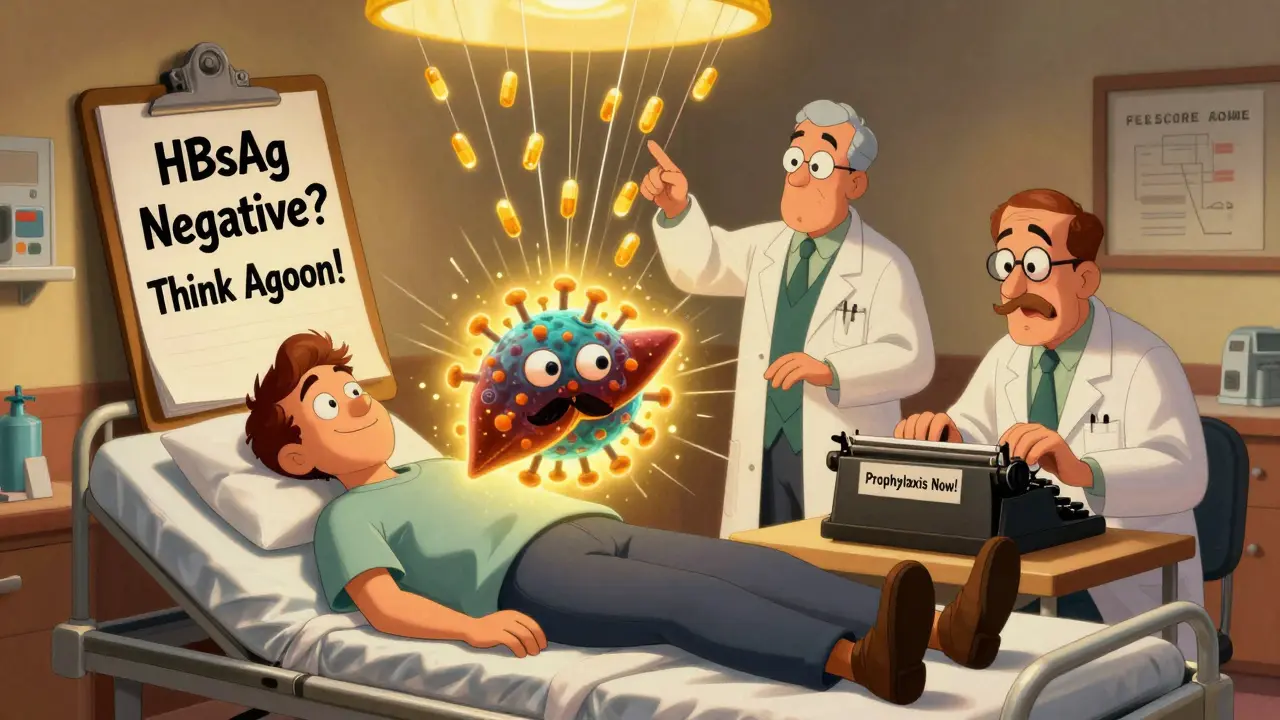
How to Prevent It: Prophylaxis Works
The good news? Antiviral drugs stop reactivation almost entirely.- Tenofovir and entecavir are the two go-to drugs. They’re potent, safe, and rarely cause resistance.
- Start them at least one week before immunosuppressive therapy begins - sometimes two weeks if possible.
- Continue them for 6 to 12 months after therapy ends. New data from the New England Journal of Medicine (2022) shows six months is enough for most cases. But for high-risk patients - especially those on rituximab or transplants - 12 months is still recommended.
One landmark study followed 1,245 HBsAg-positive patients. Those who got entecavir had a 3.2% reactivation rate. Those who didn’t? 48.7%. That’s a 93% reduction. Another study found that universal screening and prophylaxis cut fatal reactivation cases by 90% in a single hospital system.
It’s not just about giving a pill. It’s about timing, duration, and monitoring. Liver enzymes should be checked monthly during and after therapy. HBV DNA levels should be tested if ALT rises. Stopping antivirals too early is one of the most common mistakes.
Why Aren’t More People Being Screened?
The guidelines are clear. The American Association for the Study of Liver Diseases (AASLD), the European Association for the Study of the Liver (EASL), and the Infectious Diseases Society of America (IDSA) all say: screen everyone before immunosuppression. Yet, a 2020 survey found only 58% of community oncologists follow these guidelines. In academic centers? 89%. Why the gap?- Missed screening: Patients are seen by oncologists, rheumatologists, or surgeons - not hepatologists. No one orders the test.
- Assumptions: "They’re young and healthy. They wouldn’t have HBV." But HBV is often silent for decades.
- Logistics: Waiting for lab results delays treatment. Some fear holding up chemotherapy.
- Cost concerns: A few argue screening is unnecessary in low-prevalence areas. But even in places where HBV affects less than 0.1% of the population, the cost of one missed reactivation - hospitalization, transplant, death - far outweighs the cost of a blood test.
One hospital solved this by building automatic alerts into their electronic health record. If a patient was scheduled for rituximab or chemotherapy, the system flagged them for HBV testing. Within five years, reactivation rates dropped from 12.3% to 1.7%.
What’s Changing Now?
The field is evolving fast.- New drugs: Checkpoint inhibitors are now included in guidelines. Their risk profile is different, and prophylaxis is mandatory for HBsAg-positive patients.
- Shorter prophylaxis: The 12-month rule is being reconsidered. For most patients, 6 months after therapy ends is enough - unless they’re on B-cell depleting drugs.
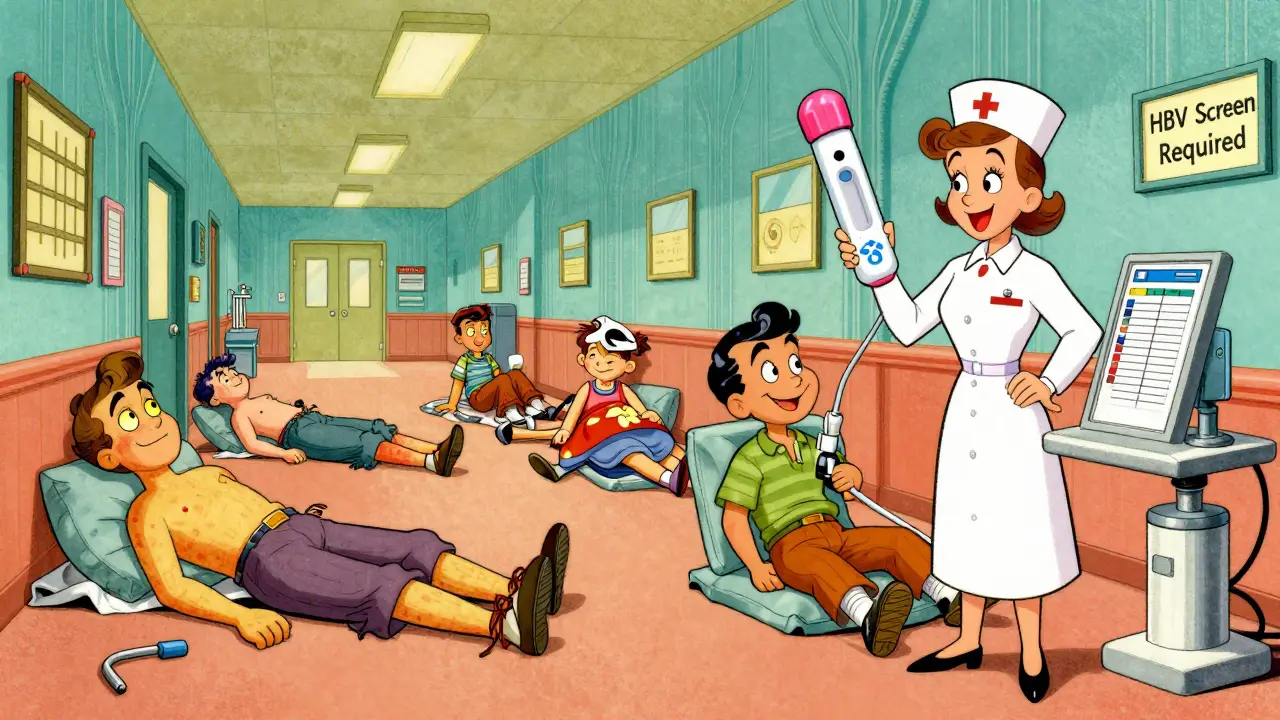
- Faster testing: The OraQuick HBV rapid test, expected to be approved in late 2023, could bring screening to clinics, ERs, and even outpatient infusion centers. No lab needed. Results in 20 minutes.
- Integration: Companies like Tempus Labs are now adding HBV status to genomic cancer reports. If a patient’s tumor is being profiled, their HBV status is checked automatically.
These changes aren’t just about technology. They’re about making prevention routine - not optional.
The Bottom Line
HBV reactivation isn’t a rare curiosity. It’s a predictable, preventable disaster. Every year, hundreds of people die from it - not because the science is unclear, but because the system fails. If you’re prescribing or receiving chemotherapy, biologics, or stem cell transplants:- Ask: "Has my patient been screened for hepatitis B?"
- Don’t assume negative HBsAg means no risk.
- Start antivirals early - don’t wait.
- Don’t stop them too soon.
The tools are here. The evidence is overwhelming. The cost? A simple blood test and a month of pills. The alternative? A liver that fails. A life lost. There’s no excuse for inaction anymore.

Robert Bliss
This blew my mind. I had no idea HBV could just wake up like this. 😱 My uncle had liver issues after chemo and they never connected it to his old hepatitis. If this saves even one life, it's huge.
Peter Kovac
The clinical data presented is statistically significant but lacks granular stratification by viral load, HBV genotype, and duration of immunosuppression. Without these variables, risk stratification remains imprecise. The 5-10% mortality figure is misleading without context on baseline liver function and age-adjusted comorbidities.
APRIL HARRINGTON
OMG I just read this and I’m crying 😭 My cousin died from liver failure after her RA treatment and no one ever told her about HBV 😭 I’m sharing this everywhere
Leon Hallal
This is why I stopped taking all meds after my last hospital stay. Doctors don't even test for this. They just throw drugs at you and hope for the best. I'm not dying because someone forgot to check a blood panel from 20 years ago.
Judith Manzano
This is such an important topic. I work in oncology nursing and we’ve had patients where this slipped through the cracks. The good news is that screening is simple - just an anti-HBc test. If you’ve ever had hepatitis B, even decades ago, get tested before starting immunosuppressants. It’s one of those rare wins in medicine - cheap, easy, life-saving.
rafeq khlo
Western medicine continues to ignore fundamental virological principles in favor of profit-driven protocols. In India we screen everyone for HBV before any immunosuppressive therapy. Here it's an afterthought. The system is broken. No one cares until someone dies.
Morgan Dodgen
Let’s be real - this is all part of the Big Pharma playbook. They don’t want you to know about prophylaxis because antivirals are expensive. The real risk? They’re hiding the fact that HBV reactivation is 100% preventable with generic tenofovir. But why sell a $10,000 biologic when you can give a $3 pill? The truth is buried under layers of JAMA papers and insurance red tape.
Philip Mattawashish
You think this is bad? Wait until you find out that 87% of people with occult HBV are asymptomatic for decades - and then get crushed by a drug they were told was 'safe.' This isn't medicine. It's negligence wrapped in a white coat. People die because they trusted the system. And now they're dead.
Tom Sanders
I just got diagnosed with RA and I’m on methotrexate. Did anyone else get tested for this? I’m gonna ask my doc tomorrow. If this is real, I’m not risking my liver for a pill that makes my hands stop shaking.
Jazminn Jones
While the clinical implications are undoubtedly significant, the absence of a formal risk stratification algorithm based on quantitative HBV DNA thresholds, HBsAg seroconversion kinetics, and duration of immunosuppressive exposure renders this article insufficient for evidence-based clinical decision-making. A systematic review with meta-analysis is required before institutional guidelines can be revised.