
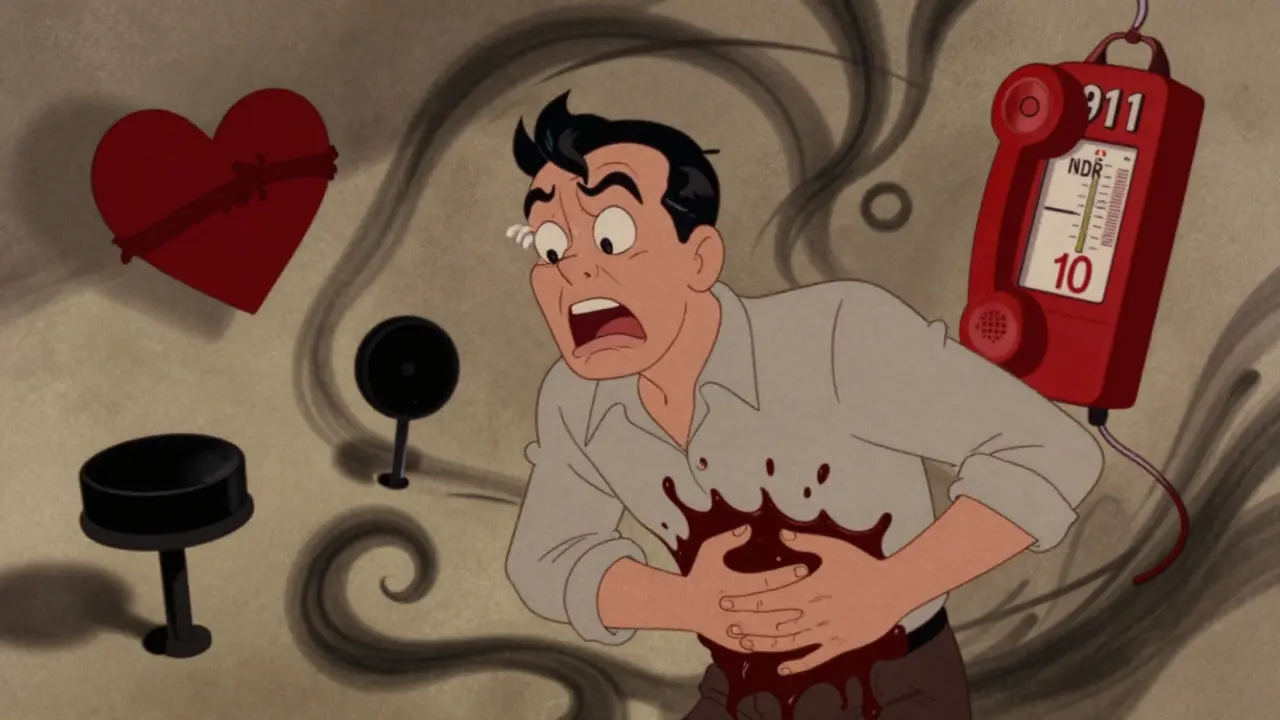
When you take a blood thinner, you’re trading one risk for another. These drugs prevent deadly clots that can cause strokes or heart attacks, but if you take too much-or if your body reacts unexpectedly-you can start bleeding internally without warning. And unlike a broken bone or a bad cut, internal bleeding doesn’t always show up right away. By the time you feel dizzy or notice dark stools, it might already be life-threatening. If you suspect a blood thinner overdose, time is the most critical factor. Every minute counts.
What Blood Thinners Do-and What Happens When You Overdose
Blood thinners like warfarin (Coumadin), apixaban (Eliquis), dabigatran (Pradaxa), and rivaroxaban (Xarelto) don’t actually make your blood thinner. They interfere with your body’s ability to form clots. Warfarin works by blocking vitamin K, which your liver needs to make clotting proteins. DOACs (direct oral anticoagulants) target specific clotting factors directly. All of them are effective, but they leave little room for error.An overdose doesn’t mean you took five pills at once. Sometimes it’s just one extra pill over days, or a missed INR test that lets levels creep too high. For warfarin users, an INR above 3.0 is considered elevated; above 3.5 if you have a mechanical heart valve. But when INR hits 8 or 10, your body can’t stop bleeding at all-even from tiny vessels inside your body.
Internal bleeding can happen anywhere: in your brain, gut, kidneys, or muscles. It doesn’t always bleed out. That’s why it’s so dangerous. You might feel fine one day and collapse the next.
Warning Signs You Can’t Ignore
You don’t need to wait for a major accident to realize something’s wrong. These symptoms aren’t normal-even if they seem mild:- Black, tarry, or bloody stools (looks like tar or has bright red streaks)
- Pink, red, or dark brown urine
- Vomiting blood or material that looks like coffee grounds
- Spitting or coughing up blood
- Unusual bruising, especially large bruises with no injury
- Petechiae-tiny red or purple spots under the skin that don’t fade when pressed
- Prolonged nosebleeds (more than 10 minutes with pressure)
- Heavy menstrual bleeding (soaking through a pad or tampon every hour)
- Severe headaches, dizziness, confusion, or weakness
- Unexplained pain or swelling in joints, abdomen, or back
Many people dismiss these signs. One Reddit user, u/WarfarinWarrior, thought his dark stools were from eating beets. By the time he got to the ER, his hemoglobin had dropped to 6.2 g/dL (normal is 12-16). He needed a blood transfusion. That’s not rare. A 2022 survey by the National Blood Clot Alliance found 28% of emergency visits for warfarin overdose happened because patients waited more than 12 hours to act.
What to Do Right Now-Step by Step
If you or someone you know is showing signs of internal bleeding and takes blood thinners, don’t wait. Don’t call your doctor tomorrow. Don’t check online. Act now.- Call 911 or your local emergency number immediately. Tell them: “I’m on a blood thinner and I think I’m bleeding internally.” Mention the drug name if you know it-warfarin, Eliquis, Xarelto, etc.
- Do NOT take another dose. Even if you think you missed one, don’t double up. Overdose means too much already in your system.
- Write down the details. When was the last dose? How much? Did you take anything else-vitamins, herbal supplements, ibuprofen? This helps doctors decide treatment.
- Lie down and stay still. If you’re bleeding externally (nose, cut, gum), apply firm pressure for at least 10 minutes. Don’t check every 30 seconds. Keep pressure on. Elevate the area above heart level if possible.
- Avoid NSAIDs. No aspirin. No ibuprofen. No naproxen. These make bleeding worse. Even acetaminophen (Tylenol) should be used cautiously-ask medical staff.
Don’t try to “wait it out.” Internal bleeding doesn’t heal itself. It keeps spreading. A small bleed in your brain can become fatal in hours. A slow leak in your gut can drop your blood pressure until your organs shut down.
How Hospitals Treat It
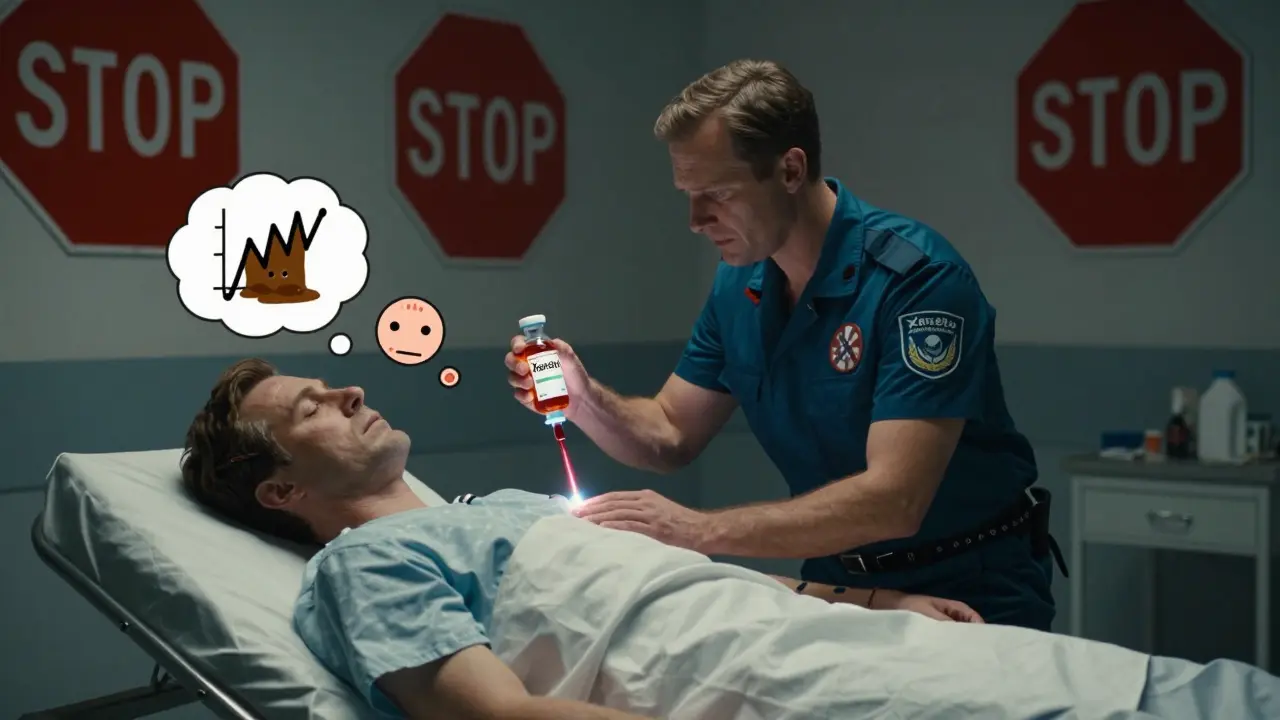
Emergency teams don’t guess. They act fast with science-backed protocols.If it’s warfarin and you’re not actively bleeding but your INR is high (say, 6-10), they’ll give you oral vitamin K. It takes hours to work, but it’s safe and effective. If INR is over 10, or if you’re bleeding, they’ll use 4-factor Prothrombin Complex Concentrate (PCC)-a concentrated mix of clotting factors that can reverse warfarin’s effect in minutes. They’ll also give IV vitamin K (10 mg) to prevent rebound bleeding later.
For DOACs like Eliquis or Xarelto, reversal agents exist: andexanet alfa for factor Xa inhibitors, and idarucizumab for dabigatran. These are expensive-up to $10,000 per dose-but they work fast. In a 2023 study, patients given andexanet alfa had clotting restored within 20 minutes. That’s life-saving.
Activated charcoal can help if the overdose happened within the last hour and you’re alert. But after that? Useless. Your body already absorbed the drug.
Why Some People Delay-And Why That’s Deadly
The biggest killer in these cases isn’t the drug. It’s denial.People think: “It’s just a nosebleed.” “I’ve had dark stools before.” “I’m not that sick.” But blood thinners don’t care how you feel. They work on chemistry, not perception.
A CDC report from 2023 found anticoagulant errors are the second most common serious medication mistake in adults over 65. Why? Because many patients don’t know their INR levels. They don’t track symptoms. They don’t realize that a single extra pill, or a missed blood test, can push them into danger.
And then there’s the cost factor. Some avoid tests because they’re expensive. Others skip doses because they’re scared of bleeding. Both choices are worse than the risk.
How to Prevent This From Happening
Prevention beats emergency every time.- Know your INR target. Most people aim for 2.0-3.0. If you have a mechanical valve, it’s 2.5-3.5. Ask your doctor to write it down.
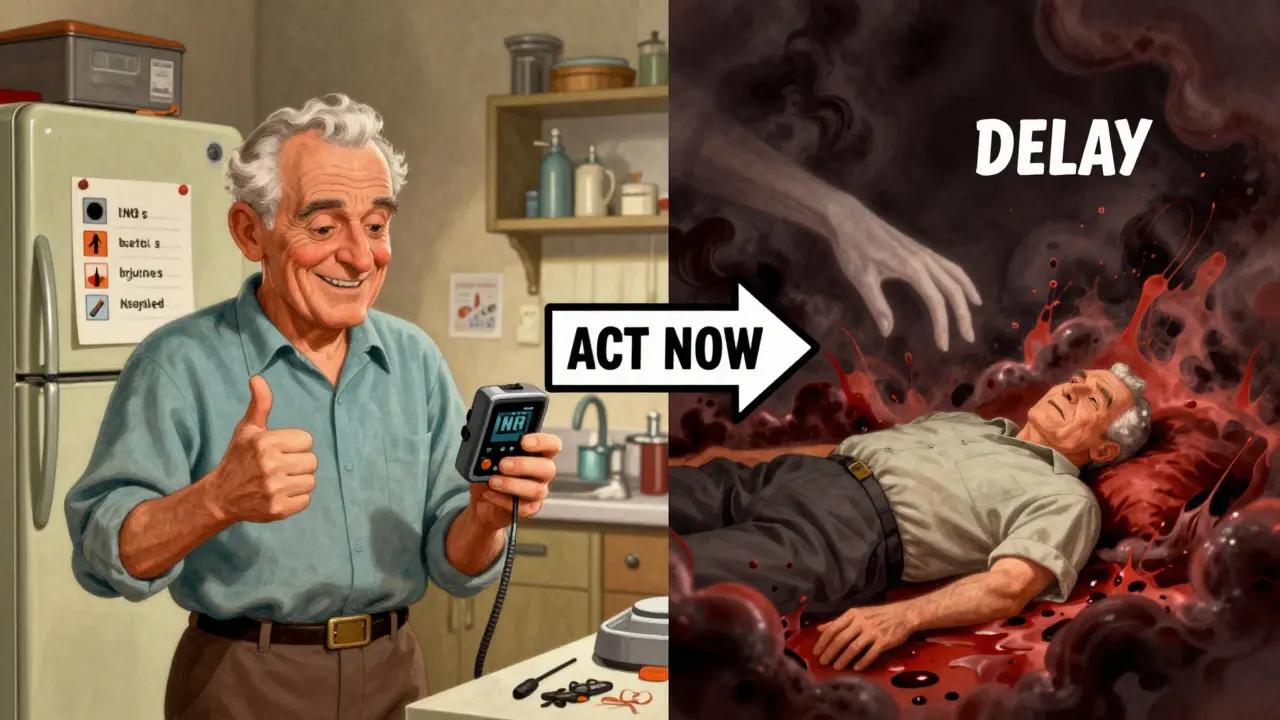
- Test regularly. Weekly at first. Then monthly if stable. If you’re on warfarin, use a home INR monitor. These cost $200-$300 and cut major bleeding events by 34%.
- Keep a bleeding checklist. Tape it to your fridge. List: black stools, red urine, unexplained bruising, prolonged bleeding. If one happens, call 911.
- Review all meds with your pharmacist. Antibiotics, supplements, even St. John’s Wort can throw off warfarin. Don’t assume your doctor knows everything you take.
- Wear a medical ID. A bracelet or necklace that says “ON BLOOD THINNER” can save your life if you’re found unconscious.
- Limit alcohol. It increases bleeding risk and interferes with liver metabolism of warfarin.
What’s Changing in Treatment
Good news: the future is getting safer.In 2023, the FDA approved the start of Phase III trials for ciraparantag, a universal reversal agent that could work on all anticoagulants-warfarin, DOACs, even heparin. If it works, it could cut reversal time from hours to minutes.
Meanwhile, hospitals are adopting better protocols. The HAS-BLED score (Hypertension, Abnormal kidneys/liver, Stroke, Bleeding history, Labile INR, Elderly, Drugs/alcohol) is now standard before prescribing. It helps doctors weigh risks before they even start the drug.
But none of this matters if you don’t act fast when something’s wrong.
What should I do if I think I took too much of my blood thinner?
Call 911 immediately. Do not wait for symptoms to get worse. Note the name of the drug, how much you took, and when you took it. Do not take another dose. Lie down and avoid any NSAIDs like ibuprofen or aspirin. Emergency responders will assess your INR or specific drug levels and begin reversal treatment right away.
Can I reverse a blood thinner overdose at home?
No. There is no safe, reliable way to reverse a blood thinner overdose at home. Vitamin K for warfarin requires medical supervision because too much can cause clotting risks later. Reversal agents like PCC or andexanet alfa are only available in hospitals. Delaying treatment increases the risk of death. If you suspect overdose, get to an ER or call emergency services immediately.
How long does it take for a blood thinner overdose to cause bleeding?
It varies. For warfarin, INR levels can keep rising for up to 9 days after an overdose because the drug stays in your system so long. Symptoms may not appear for hours or even days. DOACs like Eliquis or Xarelto work faster, so bleeding can occur within hours of an overdose. Never assume you’re safe just because you feel fine.
Are there natural alternatives to blood thinners?
No. There are no safe, proven natural alternatives to prescription blood thinners for preventing strokes or clots in high-risk patients. Supplements like garlic, ginger, or fish oil can thin your blood slightly-but not enough to replace medication, and they can dangerously interact with your drug. Never stop your prescribed anticoagulant without talking to your doctor.
Can I still take pain relievers if I’m on blood thinners?
Only acetaminophen (Tylenol) is generally safe for occasional use. Avoid NSAIDs like ibuprofen, naproxen, or aspirin-they increase bleeding risk. Always check with your pharmacist or doctor before taking any new medication, even over-the-counter ones. During an overdose, NSAIDs are strictly forbidden.

Stephanie Paluch
Wow. Just... wow. 🥹 I didn't realize how sneaky this stuff is. I thought dark stools were just from eating spinach. I'm gonna print this out and tape it to my fridge. My dad's on warfarin and I had no idea. Thank you. 🙏
tynece roberts
so like... i took an extra pill once bc i thought i missed it and i was fine?? like i felt totally normal. like why are we all so scared?? its not like we're taking cyanide lmao. also why do they make it sound like its a death sentence??
Hugh Breen
THIS. IS. CRUCIAL. 🚨 I work in ER and I've seen too many patients come in too late. One guy thought his bruise was "just a bump." It was a retroperitoneal hemorrhage. He almost died. Please. If you're on these meds, treat every symptom like it's your last day on earth. Don't wait. Don't Google. Call 911. Period. 🙏
Byron Boror
Why are we letting Big Pharma scare people into thinking they need constant monitoring? In my day, people just took their pills and lived. Now we're all paranoid robots checking INR levels like it's a video game. This article reads like a fear campaign. Maybe the real problem is overmedicating?
Lorna Brown
It's fascinating how biology doesn't care about our perception of risk. The body operates on chemistry, not intuition. We're conditioned to trust how we feel - but when your liver is quietly failing to produce clotting factors, "feeling fine" is the most dangerous illusion of all. We need more public education on this.
Rex Regum
Oh here we go. Another fear-mongering post from the medical-industrial complex. Vitamin K? PCC? Andexanet? Sounds like a $10,000 fix for a problem they created. Why not just stop prescribing these drugs to everyone and get people to eat real food? Maybe if we stopped treating aging like a disease, we wouldn't need chemical bandaids.
Kelsey Vonk
I read this and just sat there for a minute. I have a friend who’s on Xarelto after her stroke. I never thought about how invisible the danger is. It’s not dramatic. It doesn’t scream. It just... leaks. I’m going to send this to her. Quietly. With love. 🌿
Emma Nicolls
my grandma took warfarin for 12 years and never had a problem. she used to say "if you dont feel it you aint got it" but now i think she was just lucky. i think we need to talk more about luck in medicine. like, some people just dont bleed out even when they mess up. is that luck? genetics? i dont know. but i think we shouldnt scare everyone the same way
Jimmy V
Let me cut through the noise: If you're on a blood thinner and you see one sign on that list - ACT. No excuses. No "I'll call tomorrow." That's not anxiety - that's survival. And yes, home INR monitors are worth every penny. I saved my brother's life with one. He's alive today because he didn't wait. Period.
Richard Harris
interesting that the article mentions the has-bled score... i never knew that was a thing. i wonder if its used enough in primary care? my gp just says "take it daily" and moves on. maybe we need a checklist for doctors too? just a thought.
Kandace Bennett
OMG I'm so glad I read this. 😍 I just started on Eliquis last month and I was like, "eh, it's fine." Now I'm printing the warning signs and laminating them. Also, I'm getting a medical ID bracelet today. 💅✨ You're all so lucky to have this info - I'm gonna share this with my book club. They're gonna lose it.
Tim Schulz
Wow. A 2023 study says reversal works in 20 minutes? 🤡 And yet we still have people dying because they "didn't feel sick." The real tragedy? It's not the drug. It's the delusion that modern medicine is somehow "safe" if you just follow the rules. Spoiler: It's not. It's a high-stakes gamble with your organs. Enjoy your life insurance policy.
douglas martinez
Thank you for this comprehensive and clinically accurate overview. The emphasis on immediate action is not only appropriate - it is essential. The integration of evidence-based reversal agents, coupled with clear patient education, represents a paradigm shift in anticoagulation safety. I recommend this be distributed to all primary care clinics and pharmacy networks.
mir yasir
One must question the underlying epistemological framework of this article. It presumes a binary dichotomy between "safe" and "dangerous" behavior, when in fact anticoagulant therapy exists within a probabilistic continuum governed by pharmacokinetic variance, genetic polymorphisms, and environmental confounders. The call to "call 911 at the first sign" is not merely reactionary - it is epistemologically unsound, reducing complex biochemistry to a Pavlovian trigger. One must ask: Are we cultivating medical literacy - or fostering conditioned panic?
Shruti Chaturvedi
so i have been on warfarin for 8 years and i use my home monitor every thursday. i never had a problem. but i know people who dont test and they are scared all the time. i think the real issue is not the drug. its the fear. we need to teach people how to live with it. not just run to the hospital every time they see a bruise. calm down. check your inr. breathe.