
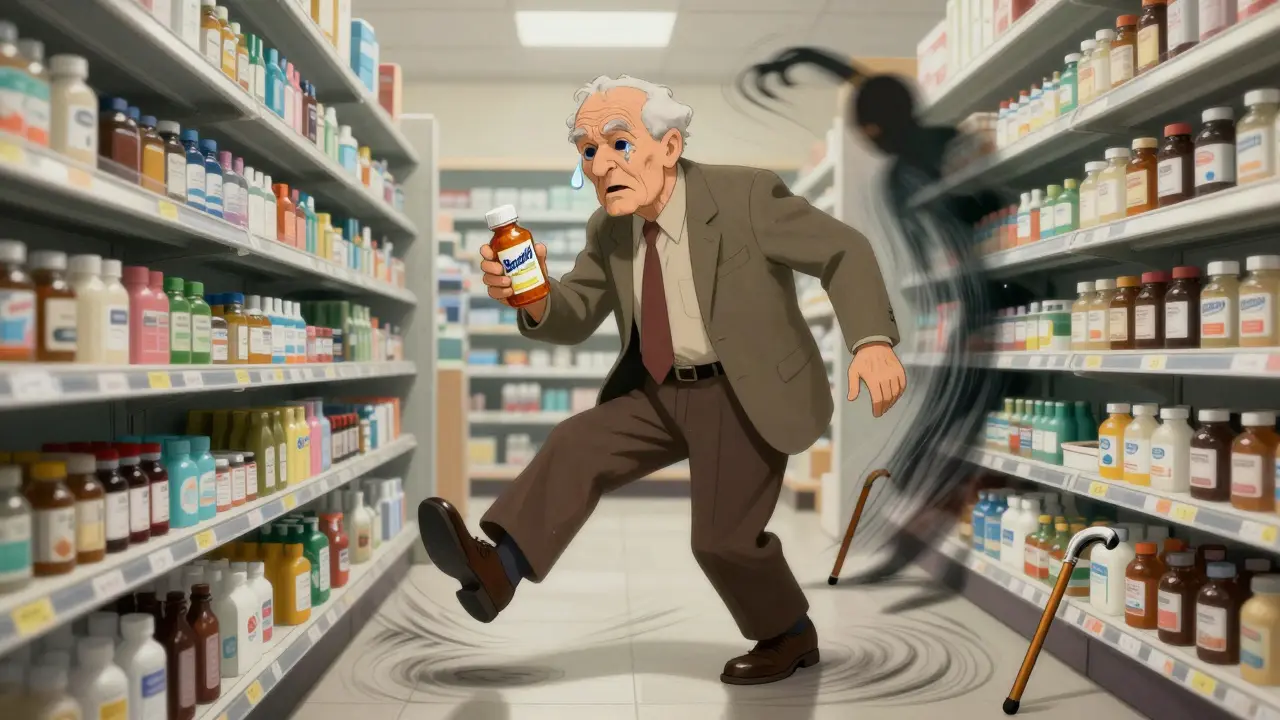
Every year, millions of people reach for antihistamines and decongestants to chase away sneezes, runny noses, and stuffy sinuses. These medications are everywhere - on pharmacy shelves, in convenience stores, even in vending machines. But just because they’re sold without a prescription doesn’t mean they’re harmless. In fact, many people don’t realize how dangerous these common allergy drugs can be, especially when used without understanding their real risks.
What Antihistamines Do - And How They Can Hurt You
Antihistamines work by blocking histamine, the chemical your body releases during an allergic reaction. That stops sneezing, itching, and watery eyes. But not all antihistamines are the same. First-generation ones like diphenhydramine (Benadryl) and doxylamine (Unisom SleepTabs) cross the blood-brain barrier easily. That’s why they make you sleepy - about 60% of users report drowsiness. But that’s just the start.
These older antihistamines also cause dry mouth (40%), blurry vision (15%), constipation (20%), and dizziness (35%). For older adults, the risks get worse. AARP found that adults over 65 who take diphenhydramine have a 300% higher risk of falling. Why? Because these drugs interfere with balance, memory, and bladder control. They can also make confusion and anxiety worse in people with dementia or Parkinson’s.
Even worse, some people don’t realize these drugs can make sinus infections worse. Dr. Craig H. Zalvan explains that antihistamines thicken mucus. That might sound helpful, but thick mucus can’t drain properly. In about 25% of cases, this leads to bacterial buildup and actual sinus infections. And if you have glaucoma, especially angle-closure glaucoma, antihistamines can trigger sudden spikes in eye pressure - a medical emergency.
Second-generation antihistamines like loratadine (Claritin) and cetirizine (Zyrtec) are much safer for daily use. They cause drowsiness in only 10-15% of users. But even these aren’t risk-free. Cetirizine can still cause drowsiness in sensitive people. And long-term use of any antihistamine can lead to withdrawal itching - a nasty, itchy rash that shows up when you stop taking the drug suddenly.
Decongestants: Quick Relief, Long-Term Danger
Decongestants like pseudoephedrine (Sudafed) and phenylephrine shrink swollen blood vessels in your nose. That gives you instant relief - but it does more than that. These drugs tighten blood vessels everywhere, including in your heart and brain.
That’s why they raise blood pressure. On average, pseudoephedrine increases systolic pressure by 1-3 mmHg. Sounds small? For someone with high blood pressure - which affects 116 million American adults - that’s enough to trigger chest pain, stroke, or heart attack. Mayo Clinic reports that decongestants can spike blood pressure by 5-10 mmHg in vulnerable people. And if you’re on antidepressants like SSRIs or MAOIs, the combination can cause a hypertensive crisis - a life-threatening surge in blood pressure.
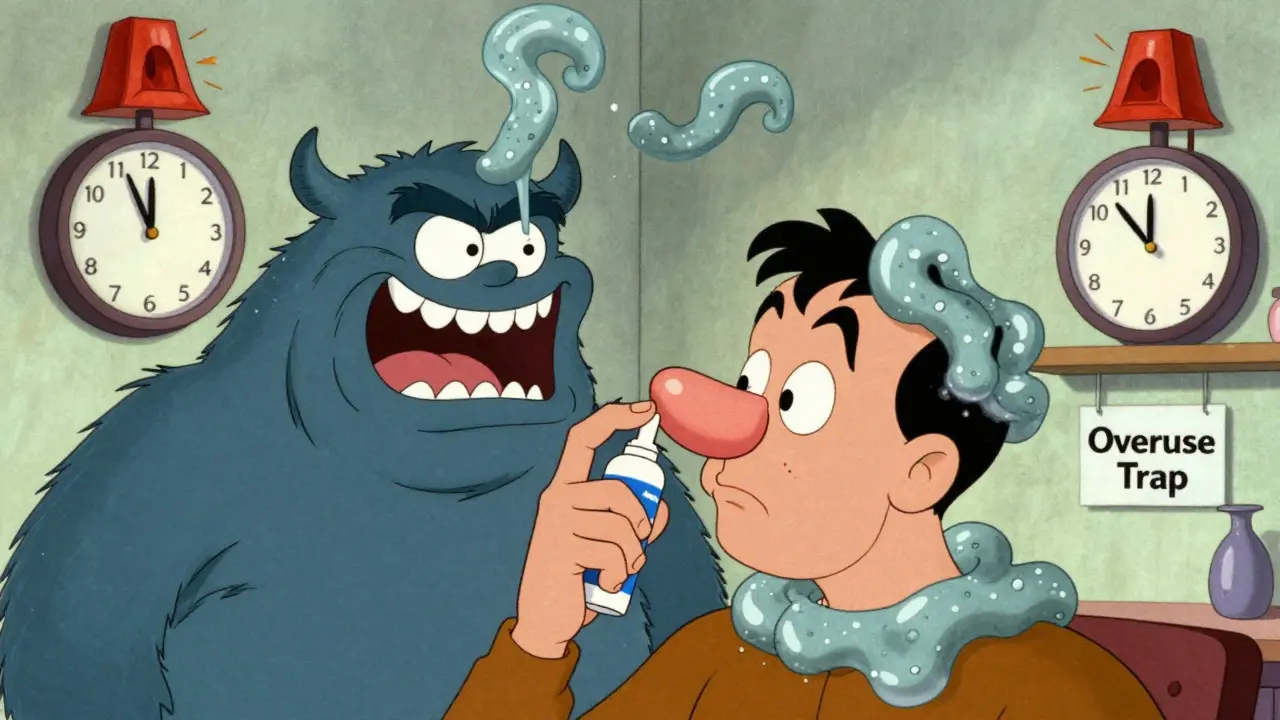
Nasal sprays like oxymetazoline (Afrin) seem safer because they’re local. But they’re not. Use them longer than 3 days, and you risk rhinitis medicamentosa - rebound congestion. Your nose gets worse than before. Studies show a 50% chance of this happening after just one week of overuse. And because they’re sold as nasal sprays, people think they’re harmless. They’re not.
Even rarer, but just as scary, are side effects like hallucinations (0.05% of users) and anaphylaxis (0.01% of cases). These are rare - but they happen. And when they do, they hit fast.
Combination Products: The Hidden Overdose Trap
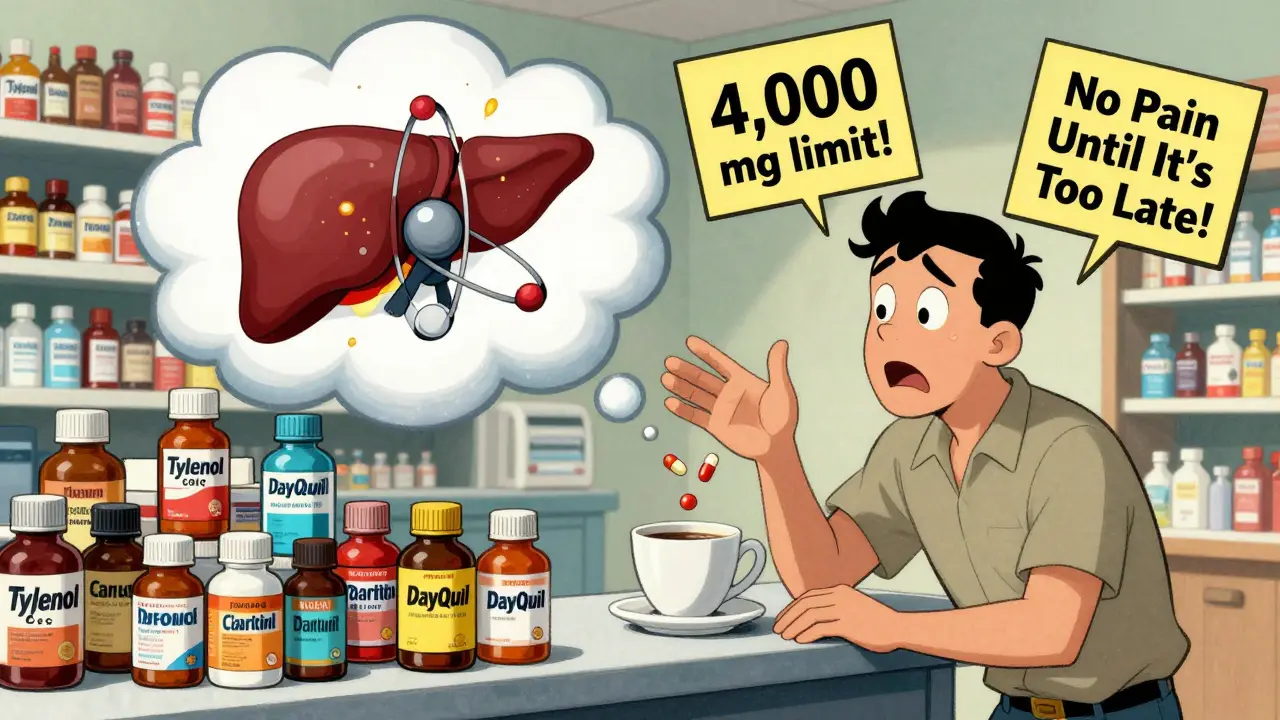
Most cold-and-allergy combos - like Tylenol Cold, DayQuil, or Claritin-D - mix antihistamines, decongestants, and painkillers. That’s the problem. People take one for a headache, another for congestion, and a third for sleep. Before they know it, they’re hitting the daily limit of acetaminophen - 4,000 mg - and risking liver failure.
The FDA says more than 68% of OTC cold medications contain acetaminophen. And 1 in 4 people don’t realize they’re taking it. Liver damage from acetaminophen overdose is silent until it’s too late. No pain. No warning. Just rising liver enzymes, then coma, then transplant - or death.
And then there’s the caffeine factor. Energy drinks, coffee, or even chocolate with decongestants? That’s a recipe for racing heart, panic attacks, and high blood pressure spikes. Rutgers University’s Poison Control Center saw a 25% jump in calls last year from young adults mixing Sudafed with energy drinks.
Who Should Never Take These Medications
Some people shouldn’t touch these drugs at all - unless a doctor says so.
- People with high blood pressure: Decongestants can turn mild hypertension into a crisis.
- Men with enlarged prostates: Antihistamines can cause urinary retention - you simply can’t pee.
- People with glaucoma: Antihistamines can trigger acute angle-closure glaucoma - a blinding emergency.
- People with heart disease or thyroid problems: Decongestants can trigger arrhythmias or thyroid storm.
- Pregnant women: Decongestants are discouraged in the first trimester. Antihistamines should be limited to second-generation options like loratadine.
- Children under 2: The FDA warns that OTC cough and cold meds can cause seizures, rapid heart rate, and death in infants.
- People on MAOIs: Combining these with decongestants can cause fatal high blood pressure.
The NHS, Mayo Clinic, and American Geriatrics Society all agree: if you have any of these conditions, don’t guess. Talk to your doctor or pharmacist.
When to Stop and See a Doctor
These medications are meant for short-term relief - not long-term management. If your symptoms last more than 10-14 days, it’s not just allergies. It could be a sinus infection, nasal polyps, or even a non-allergic condition like vasomotor rhinitis.
And if you’re using nasal sprays daily? That’s a red flag. You’re not curing anything - you’re trapping yourself in a cycle of congestion and rebound.
Pharmacists are your best ally. The American Pharmacists Association says 78% of OTC medication problems could be avoided with a simple consultation. Don’t wait until you’re in the ER. Ask your pharmacist: “Is this safe for me, given my health conditions?”
What Works Better - And Safer
There are alternatives with fewer risks.
Intranasal corticosteroids - like Flonase or Nasacort - are the gold standard for chronic congestion. They reduce inflammation without raising blood pressure or causing drowsiness. Studies in the Mayo Clinic Proceedings show they’re as effective as decongestants - without the heart risks.
Saline nasal rinses (neti pots or sprays) flush out allergens and mucus. No side effects. No dependency. Just clean airways.
Allergy immunotherapy - shots or tablets - changes your body’s response to allergens over time. It’s not quick, but it’s the only treatment that reduces your need for meds long-term.
And if you’re just dealing with a cold? Give it time. Symptoms usually clear up in 7-10 days. Pushing through with OTC meds won’t speed it up - it just adds risk.
Final Warning
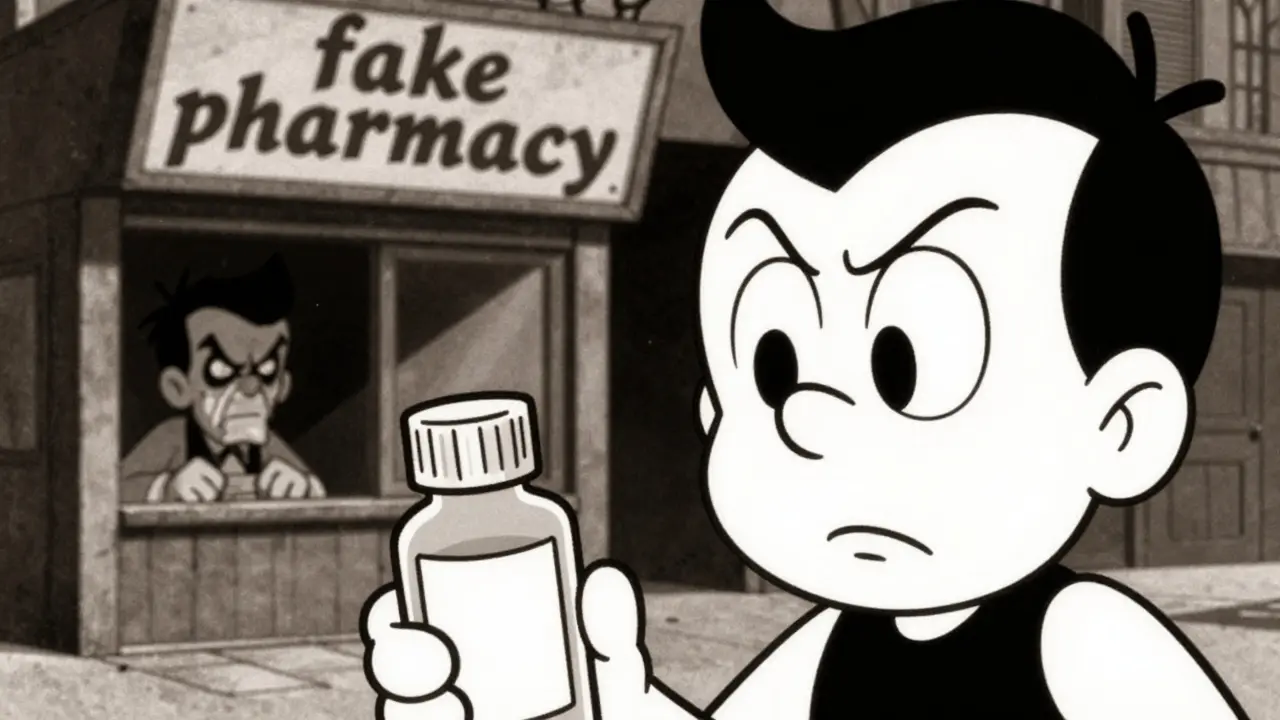
OTC doesn’t mean safe. It means easy to buy. And that’s the trap.
Dr. Lewis Nelson says it best: “Over-the-counter medicines have the same potential for dangerous side effects, drug interactions, and overdose as prescription drugs.”
So next time you grab that bottle of Benadryl or Sudafed, ask yourself: Do I really need this? What’s my health history? Am I taking anything else? And what happens if I use this for more than a few days?
There’s no shame in asking a pharmacist. No shame in seeing a doctor. And no excuse for ignoring the risks just because the label says “non-prescription.”
Zacharia Reda
I swear, my grandma took Benadryl like candy. One time she passed out in the grocery store because she took it with her blood pressure med. No one told her it was a bad idea. OTC doesn't mean 'harmless' - it means 'you're on your own.'
Matt Alexander
Saline rinses changed my life. No more drowsiness, no more rebound congestion. Just clean sinuses. I use it every night before bed. Cheap, safe, and actually works. Why do people keep reaching for chemicals when water does the job?
Jeff Card
I used to be the guy who kept a bottle of Sudafed in my desk drawer. Then I had a panic attack after mixing it with coffee. Turns out my anxiety was being fueled by decongestants. I switched to Flonase and now I feel like I can breathe again - mentally and physically. Don't ignore how these drugs mess with your head.
Gretchen Rivas
My pharmacist saved me. I was taking three different cold meds every night. Turns out I was hitting 5000mg of acetaminophen daily. Liver damage doesn't hurt until it's too late. She gave me a chart. Now I check every label. Small habit. Big difference.
Mike Dubes
i had no idea cetirizine could cause withdrawal itching 😭 i stopped it cold turkey after 6 months and my skin felt like it was on fire for two weeks. my derm said it's real. never thought otc meds could do that. now i taper off slow. thanks for the heads up.
Milad Jawabra
I’ve been using nasal sprays for 8 years. Rebound congestion? Oh yeah. I’m stuck. I tried to quit. Felt like I was suffocating. Now I’m doing saline rinses and seeing an ENT. It’s not fun. But it’s better than being a slave to Afrin. Don’t let this happen to you.
John Smith
They sell this shit like candy. Next thing you know, your kid’s on DayQuil because they sneezed. I saw a 14-year-old buy Sudafed with his allowance. This system is broken. We need to treat OTC meds like real drugs - because they are. Someone’s gotta stop this.
Stephen Vassilev
This is all part of the pharmaceutical-industrial complex. They make drugs that create dependency, then sell you the 'solution' to the problem they created. Rebound congestion? Withdrawal itching? These aren't accidents - they're business models. The FDA is complicit. Wake up. They're not your friends.
Helen Brown
I think they put something in the water. Why else would everyone be so sick? I read that 90% of allergies are caused by chemicals in our homes. The meds are just covering it up. You think your nose is the problem? It's the air. It's the paint. It's the plastic. It's everything.
John Cyrus
If you're using antihistamines daily you're an idiot. You're not treating allergies you're masking them. Real solution? Get tested. Remove the allergens. Stop being lazy. Your body isn't broken - you're just too lazy to clean your house. Clean your sheets. Get rid of the cat. Stop taking pills and start taking responsibility.