
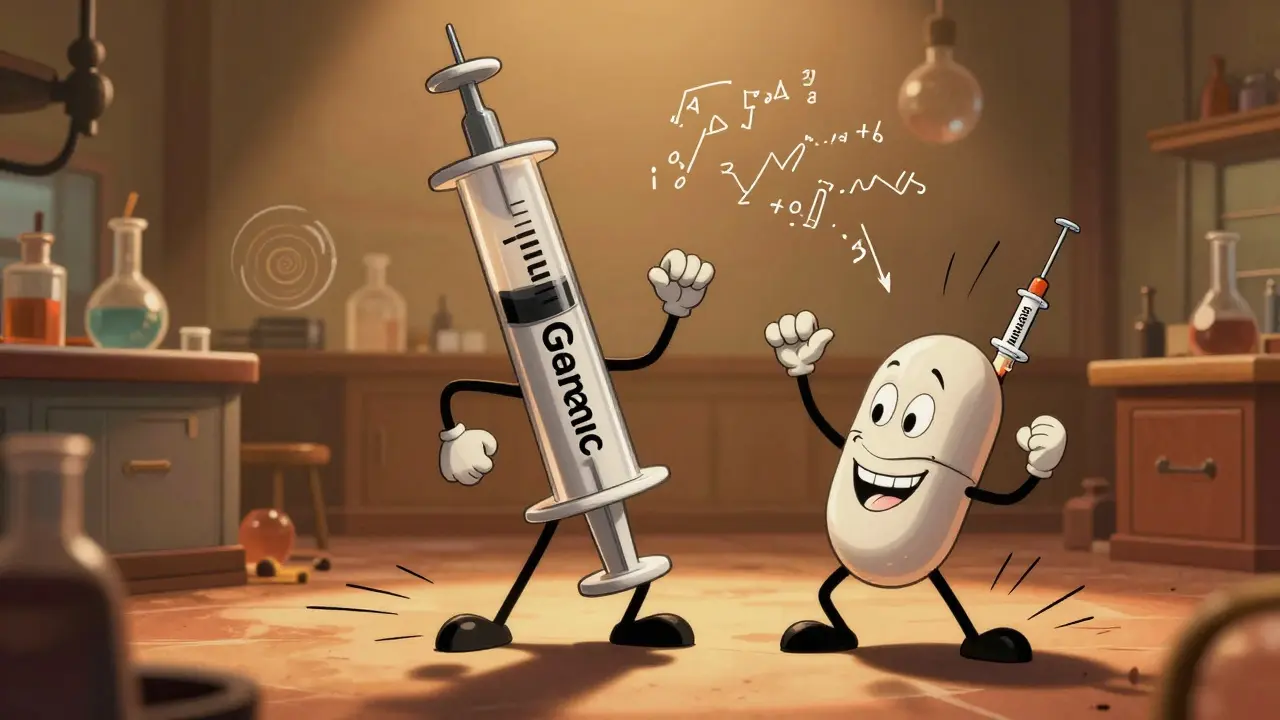
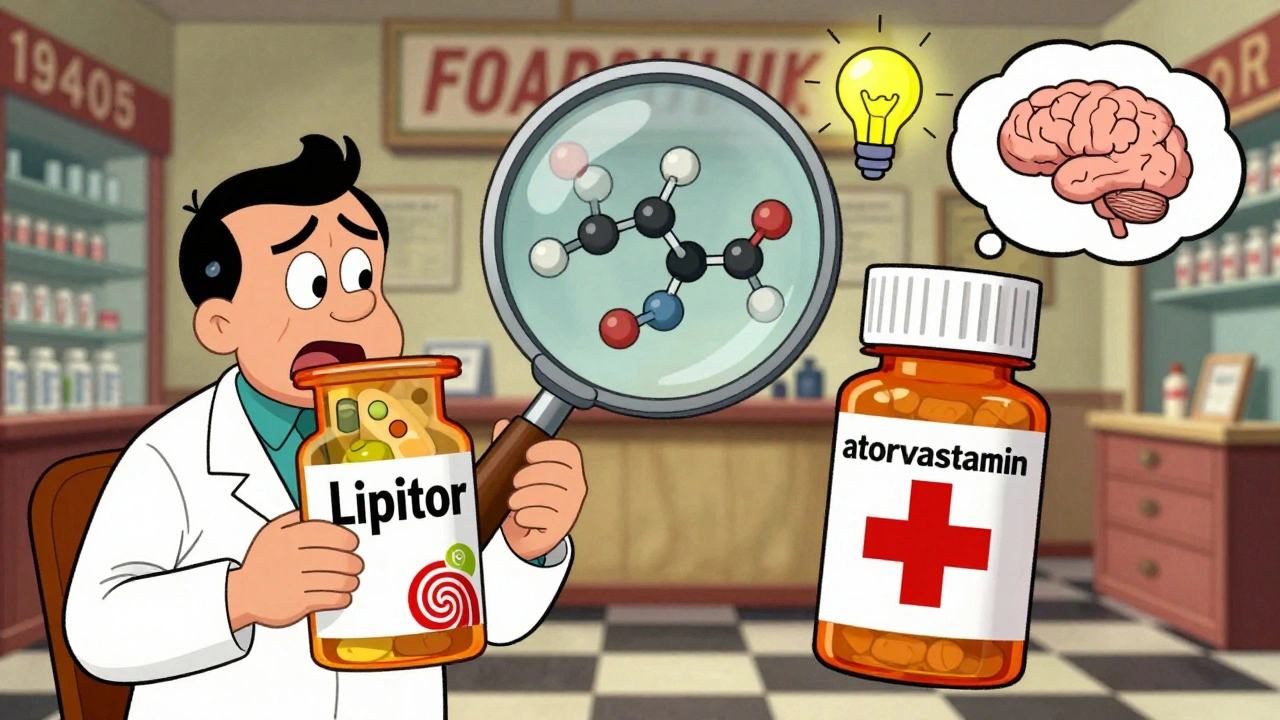
When you need a cheaper version of a brand-name pill, you probably reach for a generic. It’s the same active ingredient, same effect, same price cut-often 80% off. But what if your medicine isn’t a pill? What if it’s an injection for rheumatoid arthritis, cancer, or diabetes? That’s where biosimilars come in. They’re the biologic version of generics. And yes, they’re just as reliable.
Why Biosimilars Aren’t Just ‘Generic Biologics’
You can’t make an exact copy of a biologic drug the way you can with a pill. Small molecule drugs, like aspirin or metformin, have a simple chemical structure. A lab can recreate them perfectly. Biologics? They’re made from living cells-yeast, bacteria, or animal cells. Think of them like a complex recipe brewed in a living system. Tiny changes in temperature, pH, or cell line can shift the final product. So even the original brand isn’t identical from batch to batch. That’s why the FDA doesn’t call them generics. They call them highly similar. A biosimilar must match the reference biologic in structure, function, and clinical effect. No meaningful differences in safety or effectiveness. The approval process isn’t just a quick test-it’s a full scientific deep dive. Manufacturers must prove similarity through dozens of lab tests, animal studies, and human trials. The FDA calls it the “totality of the evidence.”Interchangeable Biosimilars: The Real Generic Equivalents
Not all biosimilars are created equal. There’s a special subset called interchangeable biosimilars. These are the ones that can be swapped at the pharmacy like a generic pill-no doctor’s note needed. To earn that title, a biosimilar must prove it can be switched back and forth with the original biologic without increasing risk or reducing effectiveness. That’s a higher bar than regular biosimilars. As of late 2023, only a handful of biosimilars have been approved as interchangeable. The first for Humira (adalimumab), Amjevita, hit the market in November 2023. That’s a big deal. Humira was the top-selling drug in the U.S. for years, with annual sales over $20 billion. Now, patients might get the same drug for half the price-automatically.Cost Savings: Not as Big as Generics, But Still Meaningful
Generic small-molecule drugs typically cut costs by 80-85%. Biosimilars? They’re more like 10-50% cheaper. Why the smaller discount? Because making biologics is expensive. The facilities, the sterile environments, the quality controls-it all adds up. Plus, manufacturers of the original biologics often fight hard to protect their market share with legal tactics and rebates. But here’s the real win: it’s not just about the price tag. It’s about access. Before biosimilars, many patients couldn’t afford biologics at all. A single infusion of a cancer biologic could cost $1,200. With a biosimilar, that drops to $450. One patient on a cancer forum said switching saved her $750 per treatment. That’s not a minor savings-it’s life-changing.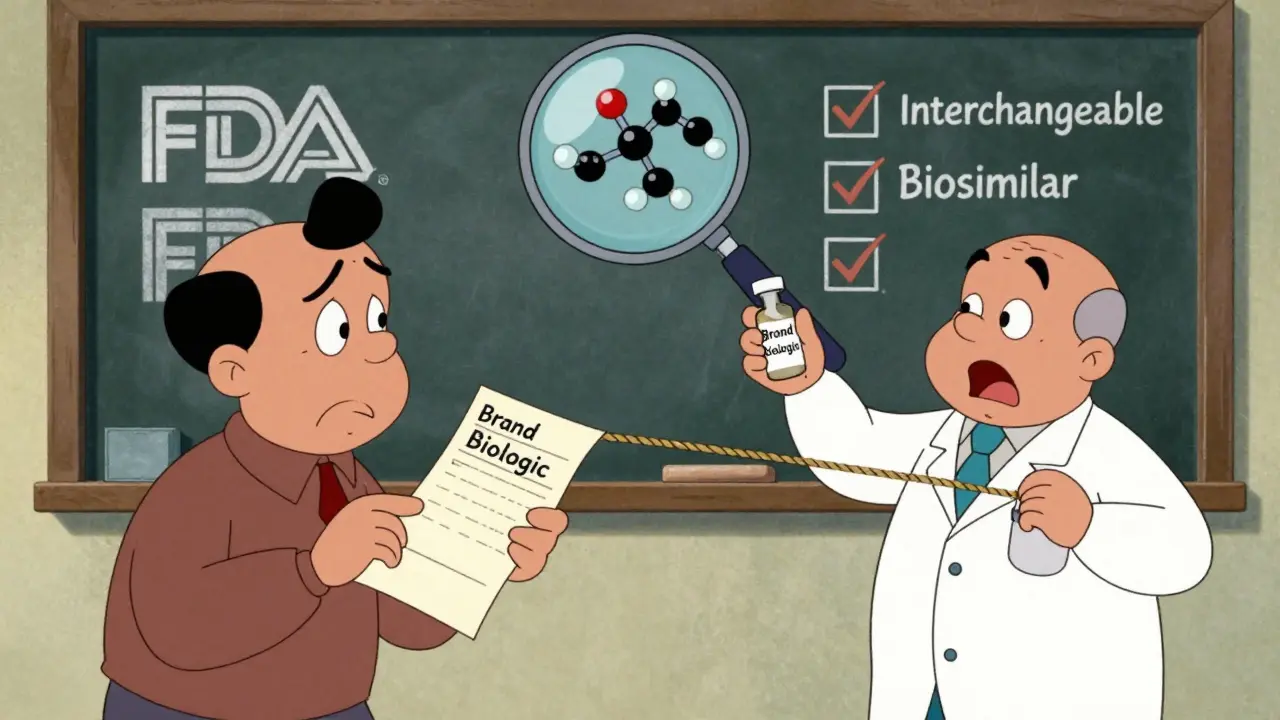
Why Aren’t More People Using Them?
Despite 76 biosimilars approved by the FDA, they still make up less than 20% of the biologic market. Why? Three big reasons:- Doctors are cautious. Many haven’t been trained on biosimilars. A 2022 study found it takes 6-8 hours of continuing education for rheumatologists to feel confident prescribing them.
- Patient fear is real. If you’ve been on a biologic for years, switching feels risky-even if the science says it’s safe. One Reddit user reported new injection reactions after switching between three different versions of the same drug. No proof it was the biosimilar’s fault, but the fear stuck.
- Insurance tricks. Some plans force patients to switch to biosimilars just to save money. A 2022 Arthritis Foundation survey found 37% of patients had their treatment disrupted by forced switches. Only 12% actually felt worse-but the disruption alone caused stress, missed doses, and anxiety.
What’s Changing Now?
The tide is turning. The FDA has made it easier to get biosimilars approved. In May 2023, they released new guidance to simplify labeling and clarify interchangeability rules. They’re also pushing for 15-20 new biosimilars each year by 2025. Major players like Amgen, Sandoz, and Pfizer are investing heavily. Amgen alone has 12 approved biosimilars. And with over $115 billion in biologic sales set to lose patent protection by 2028, the market is about to explode. Hospitals are leading the charge. Eighty-seven percent now have formal biosimilar adoption programs. Medicare Part D plans are starting to put biosimilars on preferred tiers, meaning lower copays for patients. In 2023, 62% of Medicare plans covered biosimilars at the same cost as the original biologic.
What You Need to Know If You’re Taking a Biologic
If you’re on a biologic-whether for psoriasis, Crohn’s, rheumatoid arthritis, or cancer-here’s what to ask:- Is there a biosimilar available for my drug? Check the FDA’s biosimilar database.
- Is it interchangeable? That means your pharmacist can switch it without calling your doctor.
- Will my insurance cover it? Ask if they have a preferred biosimilar tier.
- Can I choose to stay on the brand? Yes. You have the right to refuse a switch.
- What happens if I switch? Most patients see no change in symptoms. Some report fewer side effects because the biosimilar is more consistent than the brand’s later batches.
The Bottom Line
Biosimilars aren’t perfect. They’re not as cheap as generics. Not all are interchangeable. And not all doctors are comfortable prescribing them. But they’re real. They’re safe. And they’re working. The science is clear: biosimilars deliver the same results as the original biologics. The FDA doesn’t approve them unless they do. And the numbers back it up-over 344 million extra days of patient therapy have been made possible because of biosimilars. If you’ve been told you can’t afford your biologic, ask about biosimilars. You might be surprised at how close you are to a more affordable option.Are biosimilars the same as generics?
No. Generics are exact chemical copies of small-molecule drugs, approved through a simpler process. Biosimilars are highly similar to complex biologic drugs made from living cells, but not identical. They require much more testing to prove they work the same way in the body.
Can pharmacists substitute biosimilars without my doctor’s permission?
Only if the biosimilar is labeled as “interchangeable” and your state allows pharmacy substitution. As of 2023, 32 states-including California, New York, and Texas-have laws permitting this. In other states, your doctor must approve the switch.
Are biosimilars safe?
Yes. The FDA requires biosimilars to prove they have no clinically meaningful differences in safety, purity, or effectiveness compared to the original biologic. Over 76 have been approved, and real-world data from hospitals and patient reports show they perform just as well.
Why are biosimilars more expensive than generics?
Biologics are made in living systems, which is far more complex and costly than synthesizing chemicals in a lab. Manufacturing, testing, and quality control for biosimilars require advanced facilities and years of research-so savings are smaller, typically 10-50% versus 80-85% for generics.
Can I switch back to the brand if I don’t feel well on a biosimilar?
Absolutely. You have the right to ask your doctor to switch you back. Many patients do-especially if they were forced to switch by their insurance. If you notice new side effects or worsening symptoms, talk to your provider. There’s no rule saying you must stay on a biosimilar.
How do I know if my drug has a biosimilar?
Visit the FDA’s Biosimilar Product Information page. It lists all approved biosimilars and their reference products. You can search by brand name or active ingredient. Your pharmacist or doctor can also help you check.
Do biosimilars have different side effects?
The FDA requires biosimilars to show no increase in side effects compared to the original. In practice, most patients report the same side effects-sometimes fewer. Rare cases of new reactions have been reported, but these are often linked to switching between multiple products, not the biosimilar itself.
Will my insurance force me to switch to a biosimilar?
Some plans do, especially if the biosimilar is cheaper. But you can appeal. If you’ve been stable on the brand for years, your doctor can write a letter saying switching could harm your health. Many insurers will honor that.

dean du plessis
Biosimilars are a quiet revolution and most people don't even notice it happening. I've seen friends on Humira switch and not even realize it until they got the bill. No side effects, no drama. Just cheaper medicine. That's what healthcare should look like.
Jane Lucas
i just switched to a biosimilar last month and my co pay dropped from $350 to $45. no more crying in the pharmacy. also no weird side effects. honestly? it felt like nothing changed. weird.
Liz MENDOZA
This is such an important topic. So many people are scared to switch because they don't understand the science - not because it's unsafe. I work in patient advocacy and I've seen firsthand how a simple conversation with a pharmacist can ease fears. You don't need to be a scientist to know that if the FDA says it's equivalent, it is. And if it saves someone from choosing between rent and treatment? That’s not just smart policy - it’s human.
Gerald Tardif
Let me tell you something - the real win here isn’t the price tag. It’s the dignity. People with autoimmune diseases don’t want to be treated like cost centers. They want to live. And biosimilars? They give that back. I’ve watched patients cry when they realize they can finally afford to keep their treatment. No hype. No marketing. Just science doing its job. That’s beautiful.
Babe Addict
yo but like… biosimilars are just pharma’s way of rebranding old drugs while keeping the monopoly alive. they spend billions lobbying to delay generics, then slap ‘biosimilar’ on the same vial and call it innovation. the FDA’s ‘totality of evidence’? more like ‘totality of legal loopholes.’ and don’t get me started on interchangeability - it’s a corporate shell game. real talk: if it was truly identical, why’s the approval process 10x harder than for a pill? 🤔
Olivia Goolsby
Wait - so you’re telling me that after spending 20 years studying biologics, the FDA now says a drug made from yeast in a lab in India is ‘highly similar’ to one made in a sterile Swiss facility? And you believe that? Who’s really behind this? Big Pharma? The WHO? The Illuminati? Look - biologics are alive, man. They’re not pills. You can’t replicate a living system like a 3D printer. And now they’re letting pharmacists swap them without a doctor’s approval? That’s not science - that’s negligence wrapped in a PowerPoint. My cousin had a reaction after switching - they said it was ‘psychosomatic.’ That’s the same thing they said about Gulf War Syndrome. History repeats. And we’re all just pawns.
Will Neitzer
While the narrative around biosimilars often focuses on cost, it is imperative to recognize the rigorous regulatory framework that underpins their approval. The FDA’s requirement for analytical, nonclinical, and clinical data to demonstrate no clinically meaningful differences is not merely procedural - it is scientifically exhaustive. Moreover, the emergence of interchangeable biosimilars represents a paradigm shift in therapeutic accessibility, particularly for chronic conditions where long-term adherence is critical. The fact that over 344 million additional patient-days of therapy have been enabled underscores not only efficacy but also societal impact. This is not a compromise - it is a triumph of translational medicine.
Monika Naumann
In India, we have been producing high-quality biologics for decades - yet Western nations still treat us as inferior manufacturers. Biosimilars? They are not a gift from the West. They are proof that developing nations can master the most complex pharmaceutical science. The FDA’s approval is not charity - it is recognition. And yet, Western patients still hesitate. Shame. We do not fear science. We build it. The world should stop doubting and start trusting.
Kishor Raibole
Let us contemplate, for a moment, the metaphysical implications of biosimilarity. If a biologic is a living molecule, born of yeast and human ingenuity, can it ever be truly ‘similar’? Or are we, in our arrogance, attempting to quantify the unquantifiable - the soul of a protein? The FDA may label it ‘no clinically meaningful difference,’ but what of the subtle, unseen harmonics of cellular expression? The patient who feels different after the switch - is that not data too? Science reduces, but life resists. Perhaps the real question is not whether biosimilars work - but whether we, as a society, are ready to accept that healing is not always reducible to statistics.
Miriam Piro
Okay but… did you know that the original biologics are often made in the same factories as the biosimilars? Like… literally the same vials, just relabeled? I read a whistleblower report from 2021 - they were switching batches between brand and biosimilar on the same line. And the FDA knew. They just don’t say it. That’s why the side effects are ‘rare’ - because they’re the same drug! The whole ‘highly similar’ thing is a PR stunt. And now they want to let pharmacists switch you without telling you? That’s not healthcare - that’s corporate espionage with a stethoscope. 😡
Kylie Robson
From a pharmacokinetic standpoint, the analytical comparability package for biosimilars requires at least 10-15 orthogonal methods - including LC-MS, CE-SDS, HILIC, and SPR binding assays - to demonstrate structural and functional equivalence. The clinical trials are typically non-inferiority designs with power calculations based on the reference product’s known variability. The fact that interchangeability requires additional switching studies in healthy volunteers is often misunderstood as a barrier - it’s actually the gold standard for demonstrating therapeutic equivalence. If you’re not familiar with the ICH Q5E guideline, you’re not qualified to opine on this.
Satyakki Bhattacharjee
People worry too much. Life is simple. If the medicine works, take it. If it’s cheaper, good. If it saves your life, better. Why do we need so many words? The body doesn’t read FDA reports. It just knows if the pain goes away. Simple.
Will Neitzer
It’s worth noting that the patient-reported outcomes in the post are consistent with real-world evidence from the CDC’s biosimilar surveillance program. The perception of increased side effects after switching often correlates with heightened awareness - not physiological change. This phenomenon, known as nocebo effect, is well-documented in immunotherapy and pain management. When patients are told a ‘new’ drug might cause issues, they are statistically more likely to report them - even when the molecule is identical. Education, not restriction, is the key to adoption.