

Every time you pick up a prescription, you’re handed a small piece of paper with a lot of words on it. It might look like a jumble of codes, abbreviations, and medical terms. But every part of that label is there for a reason - to keep you safe and help you take your medicine correctly. Most people glance at it, toss it in a bag, and forget about it. But if you don’t understand what’s written there, you’re risking mistakes that could hurt you. Medication errors send over 7,000 people to their deaths each year in the U.S. The good news? You don’t need a medical degree to read your label. You just need to know what each part means.
Your Name - The First Line of Defense
Your name is printed right at the top of the label. It’s not just for show. This is the most important safety check. Pharmacists are trained to verify your name before handing over any medication. Why? Because mixing up patients is one of the most common causes of dangerous errors. A 2006 report from the Institute of Medicine found that about 1.5 million medication errors happen every year in the U.S. - and many of them involve the wrong person getting the wrong drug. If your name isn’t on the label, don’t take it. Even if it looks right, ask the pharmacist to double-check. It’s your right, and it’s your safety.
Medication Name - Brand vs. Generic
You’ll see two names here: the brand name (like Abstral) and the generic name (fentanyl). The brand name is what the drug company calls it. The generic name is the actual chemical that works in your body. They’re the same medicine. Many people think brand-name drugs are stronger or better. They’re not. Generic drugs are required by law to work exactly the same way. Knowing the generic name helps you avoid getting the same drug twice under different names. For example, if your doctor prescribes hydrochlorothiazide and your insurance switches you to a cheaper version, you’ll still get the same active ingredient. Always check both names. If you’re on multiple prescriptions, writing down the generic names helps you spot duplicates.
Dosage Strength - How Much Is in Each Pill or Drop?
This tells you how much of the active drug is in each unit. It might say “10 mg” or “500 mcg.” That’s critical. Taking two 10 mg pills when you were supposed to take one 20 mg pill is the same thing - but if you don’t know the strength, you might think you’re taking the right amount. A 2022 survey by the National Community Pharmacists Association found that 43% of parents misread liquid medication doses because labels used “tsp” instead of spelling out “teaspoon.” Always look for the number and the unit. If it says “100 micrograms,” don’t assume it’s 100 milligrams. One is 1,000 times smaller. Confusing them can be deadly. Keep a small note in your wallet with the strengths of your main meds - especially if you take insulin, blood thinners, or seizure medications.
Directions - When, How Often, and How to Take It
This is where most people get confused. “Take one tablet by mouth every 4 to 6 hours as needed for pain.” Sounds simple. But what does “as needed” mean? How many times a day is too many? What if you forget a dose? The label might say “take with food” or “take on an empty stomach.” That matters. Some drugs can upset your stomach if taken alone. Others won’t absorb properly if you eat right after. If the instructions say “take at bedtime,” don’t take it at noon. The timing affects how well it works. The FDA recommends asking five key questions about your prescription. One of them is: “How and when do I take it?” If the label isn’t clear, call your pharmacy. Don’t guess. A 2021 study in JAMA Internal Medicine found that patients who used the “teach-back” method - where they repeat instructions back to the pharmacist - were 28% more likely to take their meds correctly.
Expiration Date - When It Stops Working
That date on the label isn’t a suggestion. It’s the last day the manufacturer guarantees the drug is fully potent and safe. Most prescriptions expire 12 to 18 months after they’re filled. After that, the medicine can break down. Some become less effective. Others can turn toxic. The FDA says you shouldn’t use expired antibiotics - they might not kill the infection, and that can lead to worse illness. Don’t keep old meds in your bathroom cabinet. Heat and moisture ruin them faster. If you’re not sure whether a pill is still good, take it back to the pharmacy. They’ll dispose of it safely. Never take medicine past its expiration date - even if it looks fine.
Prescription Number - The Pharmacist’s Tracking Code
This is a unique number assigned to your prescription. It’s not your insurance ID or your social security number. It’s just for the pharmacy to track your order. You’ll need this number if you call in a refill or have a question about your order. If you get a new bottle and the Rx number is different from the last one, that’s normal - each fill gets a new number. But if the number doesn’t match the one you were given before, or if the bottle looks wrong, ask. This number helps the pharmacy catch mix-ups. The Cleveland Clinic says the Rx number must match across all containers for the same prescription. If you’re picking up multiple meds, make sure each bottle has the correct number for that specific drug.
Pharmacy and Prescriber Info - Who to Call
Look for the pharmacy’s name, address, and phone number. This is your lifeline. If you have questions about side effects, interactions, or how to take the drug, call them. Pharmacists are trained to answer these questions. You don’t need to wait for your doctor. Also check the prescriber’s name - the doctor or nurse practitioner who ordered the drug. If you’re unsure why you’re taking it, call the pharmacy and ask them to confirm the reason with your doctor. A 2022 study from the Institute for Safe Medication Practices showed that when the reason for the medication (like “for high blood pressure”) is printed on the label, wrong-drug errors drop by 55%. That’s huge. Not every pharmacy does this yet - but you can ask for it.
Visual Description - What the Pill Looks Like
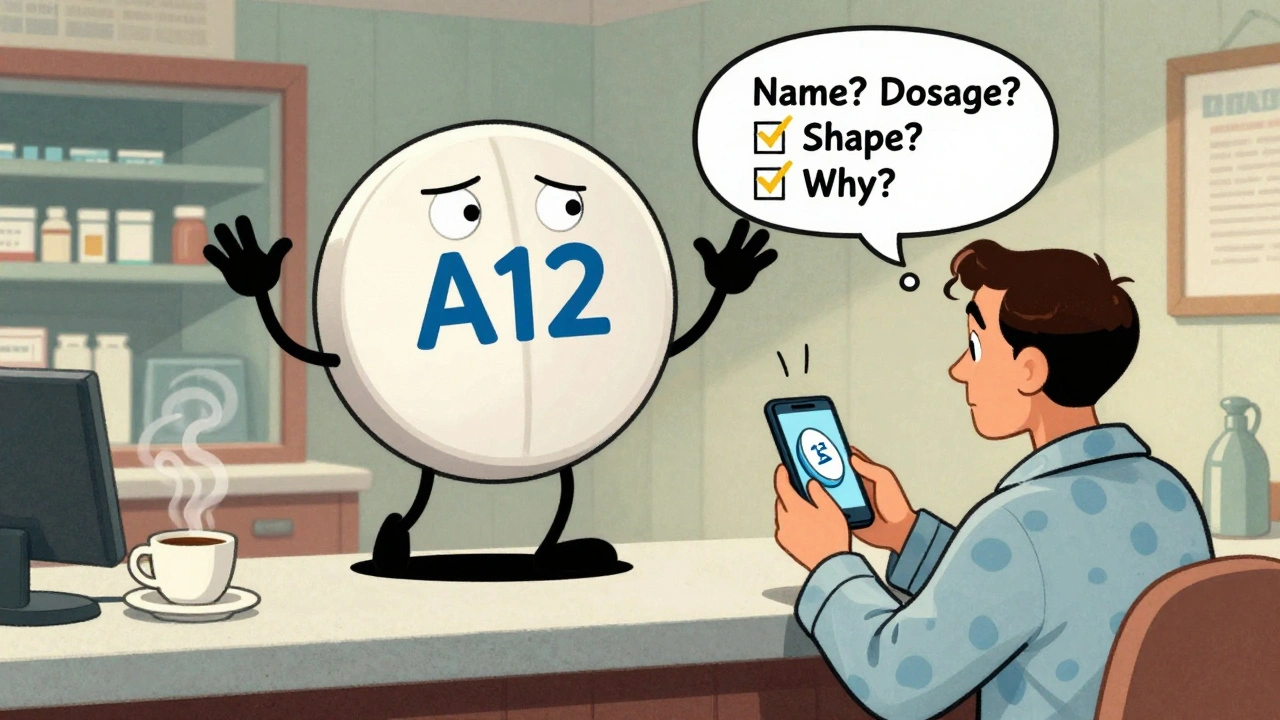
This part tells you the color, shape, and imprint on the pill. For example: “white, round, film-coated tablet with ‘A12’ imprinted.” This helps you spot if you got the wrong drug. If you usually take a blue oval pill and you’re handed a white round one, that’s a red flag. Even if the label says it’s the same medicine, check the visual. Pills from different manufacturers can look different. But if the shape or color doesn’t match what you’re used to, ask. A 2023 Cleveland Clinic study found that patients who checked the pill’s appearance were 40% less likely to take the wrong medication. Keep a photo of your pills on your phone - just in case.
National Drug Code (NDC) - The Drug’s Unique ID
This is a 10- or 11-digit number that identifies the exact drug, manufacturer, and package size. You won’t need it unless you’re dealing with insurance claims or pharmacy systems. But it’s there for tracking. If there’s a recall, the FDA uses the NDC to find every bottle of the affected drug. If you’re ever asked for your drug’s NDC, you can find it on the label. It’s usually printed near the bottom. Don’t confuse it with your insurance ID. It’s not for you to use - it’s for the system to make sure you get the right version of the drug.
Storage Instructions - Where to Keep It
Some meds need to stay cool. Others need to stay dry. The label might say “store at room temperature” or “refrigerate.” If it says “20°-25°C (68°-77°F),” that means your medicine should be kept in a cabinet, not the bathroom or the car. Heat, humidity, and sunlight can destroy pills and liquids. Insulin, for example, goes bad if left out too long. If you’re traveling, ask your pharmacist for tips on keeping meds safe. Some come with cool packs. Others need to be carried in a small insulated bag. Never leave medicine in a hot car - even for a few minutes.
Warnings - What You Must Know
This section might say things like “Do not take if you have liver disease,” “May cause drowsiness,” or “Avoid alcohol.” These aren’t suggestions. They’re warnings. Some drugs can cause serious harm if taken with other medicines or if you have certain health conditions. The FDA requires these warnings for drugs with known risks. For example, blood thinners like warfarin can cause dangerous bleeding if you take certain painkillers. If you see a warning you don’t understand, call your pharmacist. Don’t ignore it. A 2023 FDA report showed that 78% of patients who didn’t know why they were taking a drug also didn’t understand the warnings. That’s a dangerous mix.
What’s Missing? The Indication (Why You’re Taking It)
Here’s the big one: most labels still don’t say why you’re taking the drug. Is it for high blood pressure? Depression? Infection? That’s the most important piece of information - and it’s often left off. But that’s changing. The U.S. Pharmacopeia (USP) says by 2025, every prescription label should include the reason for use. Why? Because patients who know why they’re taking a drug are far less likely to make mistakes. A patient on Reddit shared that since her pharmacy started including indications, she hasn’t had a single case of someone taking insulin for high blood pressure - a common error before. If your label doesn’t say why you’re taking the medicine, ask for it. You have the right to know.
How to Use This Info Every Time
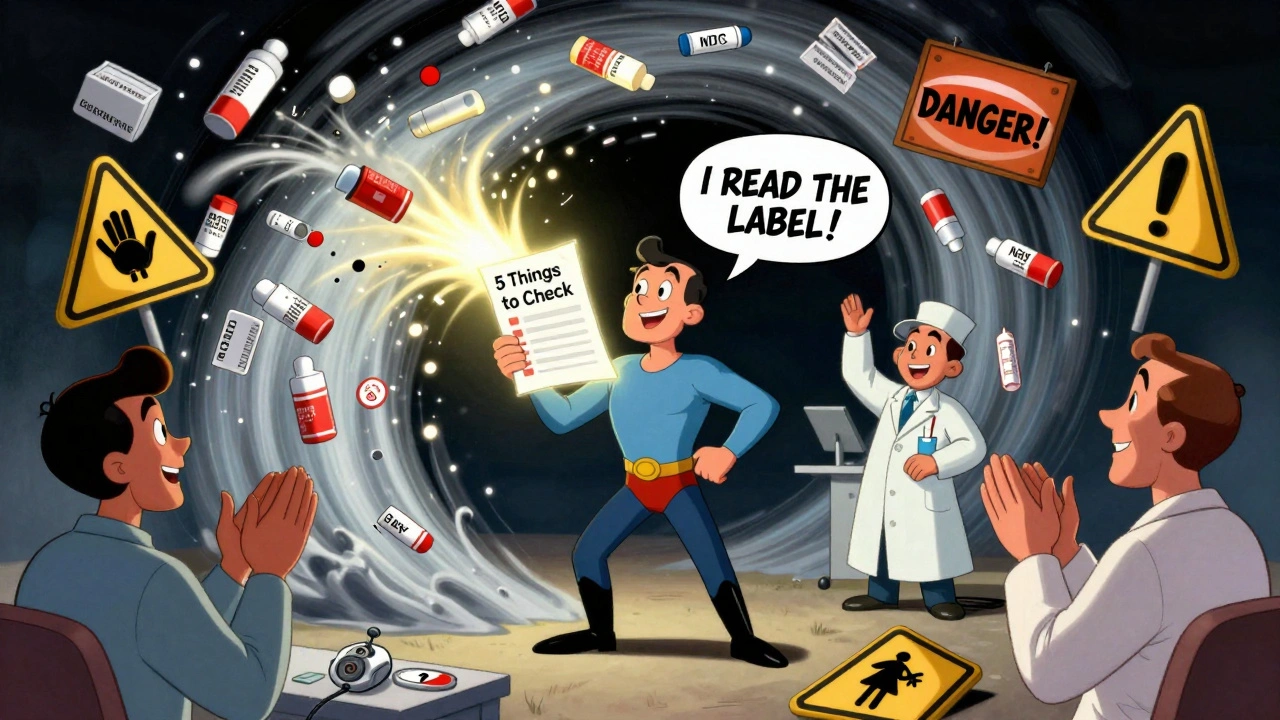
Here’s a simple habit: every time you get a new prescription, check these five things:
- Your name - Is it spelled right?
- Medication name - Brand and generic - do they match what your doctor said?
- Dosage - How much per pill or drop?
- Instructions - When and how to take it?
- Expiration date - Is it still good?
Then, ask yourself: “Why am I taking this?” If you can’t answer that, call the pharmacy. Keep a small notebook or phone note with your meds, their doses, and why you take them. It saves time, stress, and maybe your life.
What to Do If Something Doesn’t Look Right
If the pill looks different, the instructions seem off, or your name isn’t on the label - don’t take it. Call the pharmacy immediately. Most errors happen because people assume it’s fine. It’s not. Pharmacists are there to catch mistakes. They’ve seen it all. They won’t think you’re being paranoid. They’ll thank you. The Institute for Safe Medication Practices says that when patients speak up, errors are caught 92% of the time before they cause harm. Your voice matters.
Final Thought: You’re the Last Line of Defense
No pharmacist, doctor, or system is perfect. But you can be. You’re the one who takes the pill. You’re the one who sees the label. You’re the one who knows if something feels wrong. Learning what each part of your prescription label means isn’t just helpful - it’s essential. It’s not about being a medical expert. It’s about being your own advocate. The system is designed to help you. But you have to read it.
What if my prescription label doesn’t say why I’m taking the medicine?
Call your pharmacy and ask them to confirm the reason with your doctor. Many pharmacies now include the indication on labels, but not all do yet. You have the right to know why you’re taking a medication. If your label doesn’t say it, write it down yourself and keep it with your meds. Knowing the purpose reduces the chance of taking the wrong drug by more than half, according to the Institute for Safe Medication Practices.
Can I still take medicine after the expiration date?
The FDA advises against it. While some pills may still be safe after expiration, they can lose potency. For critical medications like insulin, heart drugs, or antibiotics, this can be dangerous. Expired antibiotics might not kill the infection, leading to worse illness. If you’re unsure, return the medicine to the pharmacy for safe disposal. Never keep expired meds in your medicine cabinet.
Why do some pills look different even if they’re the same drug?
Different manufacturers make generic drugs, and they can use different colors, shapes, or imprints. That’s normal. But if the pill looks completely different from what you’re used to - like a red oval instead of a white round one - check with your pharmacist. Always compare the generic name and dosage. If those match, it’s likely the same medicine. But if you’re unsure, ask. Never assume.
What should I do if I miss a dose?
Check the label first. Some meds say to take it as soon as you remember. Others say to skip it and wait until the next dose. Never double up unless the label says it’s safe. For example, if you miss a blood pressure pill, taking two later can cause your blood pressure to drop too low. If the label doesn’t say, call your pharmacist. They can give you the safest advice based on the specific drug.
Are pharmacy labels the same in every state?
No. While federal rules set minimum standards, states can add their own requirements. Some states now require the indication on the label. Others mandate larger font sizes or pictograms for older adults. This variation can confuse people who get prescriptions from multiple states. The Institute of Medicine recommends a national standard to prevent errors. Until then, always check your label carefully - no matter where you get it.
John Filby
I used to ignore my labels until my grandma nearly took double her blood pressure med because she didn't know what '10 mg' meant. Now I read every line. Seriously, it's the only thing standing between you and a hospital trip.
Elizabeth Crutchfield
i always forget to check the expiration date til i find a 3 year old bottle in my bag. yikes.
Heidi Thomas
If you can't read your own label you shouldn't be allowed to take pills. This isn't hard. Stop being lazy.
val kendra
I started taking photos of my pills after I almost took my neighbor's thyroid med by accident. Same color, different name. Now I keep a little album on my phone with the name, dose, and why I'm taking it. Saved me twice already.
Isabelle Bujold
I live in Canada and our labels are way more detailed than what I've seen in the US. We have the indication printed right under the name, the reason for the med, and even a QR code that links to the drug info sheet. I wish more pharmacies here would adopt that. It's not just about safety-it's about dignity. People deserve to know why they're taking something. I've seen older folks cry because they finally understood what their doctor meant. It's not just information, it's peace of mind.
Joe Lam
Honestly, if you need a 2000-word guide to read a pill bottle, maybe you shouldn't be managing your own meds. This isn't rocket science. It's basic literacy.
Chase Brittingham
My pharmacist actually asked me last week if I wanted the indication printed on my label. I said yes. She did it. Best decision I've made all year. I didn't even know I was taking it for anxiety until she wrote it down. Now I don't feel so weird taking a 'mood' pill.
Bill Wolfe
I'm sorry, but this post is basically a public service announcement disguised as Reddit content. Who even wrote this? A pharmacist? A corporate wellness bot? The fact that we need this level of hand-holding says more about our healthcare system than it does about patients. Also, the FDA doesn't say expired meds are dangerous-they say they might be less effective. Big difference. Stop fearmongering.
michael booth
It is imperative that all patients be afforded the opportunity to fully comprehend the nature and purpose of their prescribed pharmaceuticals. The inclusion of therapeutic indications on prescription labels represents a significant advancement in patient safety and autonomy.
Alex Piddington
I printed this out and taped it to my medicine cabinet. My mom doesn't read well, but she can point to the checklist. She's 74 and takes 7 meds. This saved her from a bad interaction last month.
Dematteo Lasonya
I used to think the Rx number was just a barcode. Turns out it's how the pharmacy tracks which bottle you got. I once got a different pill because the tech mixed up two Rx numbers. Never ignore that number again.
Rudy Van den Boogaert
I check the pill shape every time. Last year I got a generic that looked totally different and I almost didn't take it. Called the pharmacy-they said it was the same but I still took a pic and sent it. They thanked me. Turns out the old version had a coating that made it shiny. New one was matte. Same drug. Good thing I asked.
Shofner Lehto
I work at a pharmacy. People come in with expired insulin, crushed pills in their pockets, and no idea what they're taking. We're not here to judge. We're here to help. If you're unsure, just ask. We've seen it all. We won't think you're dumb. We'll think you're smart for asking.
Ben Choy
I got my first label with the indication printed on it last month. It said 'for anxiety.' I didn't even know that's what it was for. I thought it was for sleep. I cried. Not because I was sad-because I finally understood. That little line changed everything.
Emmanuel Peter
This post is the reason people think they're doctors. You don't need to know the NDC code. You don't need to memorize the storage temp. Just take what you're given and trust your doctor. If you're this paranoid, maybe you shouldn't be on meds at all.
Scott van Haastrecht
I'm not saying this isn't useful, but why is this even a thing? Why are we letting Big Pharma and the FDA design labels like they're writing a user manual for a toaster? Someone's gotta be accountable here. The system is broken. And now we're just teaching people to read the labels instead of fixing the damn thing.
Libby Rees
I always keep a small notebook with my meds, doses, and reasons. I write it down every time I get a new prescription. It helps me remember. And if I ever get confused, I show the notebook to the pharmacist. They always say thank you.