

Insulin Side Effect Calculator
Personalized Risk Assessment
Your Results
Hypoglycemia Risk Assessment
Your risk level:
Weight Gain Prediction
Estimated weight gain in first year:
Personalized Recommendations
When you start insulin therapy, it’s not just about lowering blood sugar. For many people with type 1 or advanced type 2 diabetes, insulin is life-saving. But it comes with two big, real-world problems: hypoglycemia and weight gain. These aren’t rare side effects-they’re common, predictable, and often under-discussed. If you’re on insulin, or thinking about starting it, you need to know what to expect and how to handle it.
What Hypoglycemia Really Feels Like
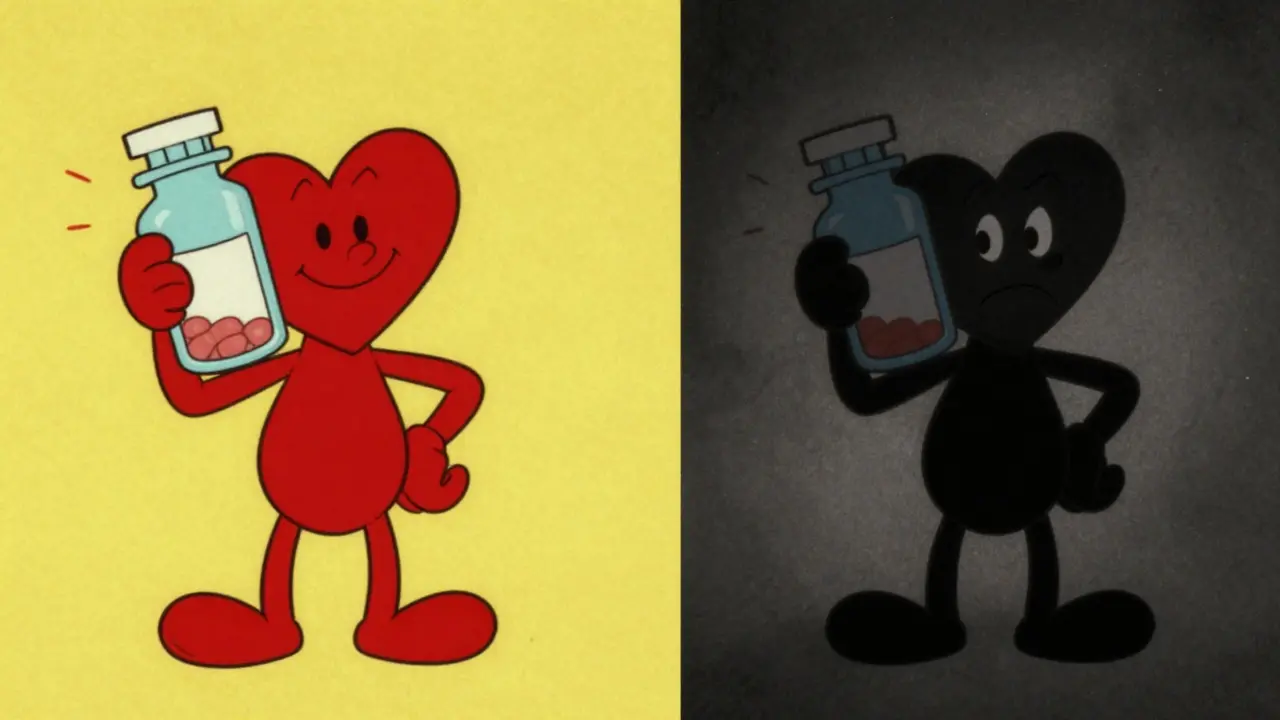
Hypoglycemia means your blood sugar drops below 70 mg/dL. That’s not just a number on a meter-it’s a physical crisis. You might feel shaky, sweaty, your heart races, or your vision blurs. Some people get dizzy, confused, or start speaking incoherently. In severe cases, you can pass out. And yes, it can be deadly if no one’s around to help. The risk isn’t theoretical. In the landmark DCCT study, people with type 1 diabetes on tight insulin control had three times more severe low blood sugar episodes than those on standard therapy. About 6% of them had at least one life-threatening episode each year. That’s one in every 17 people. And for people with type 2 diabetes on insulin, the numbers are similar. What makes it worse is hypoglycemia unawareness. After 15-20 years of diabetes, about one in four people lose the warning signs. They don’t feel shaky or sweaty anymore. Their body stops reacting. So they wake up in the middle of the night with a headache-or worse, they collapse without warning. That’s why continuous glucose monitors (CGMs) are so important now. They beep before you feel anything.Why Insulin Makes You Gain Weight
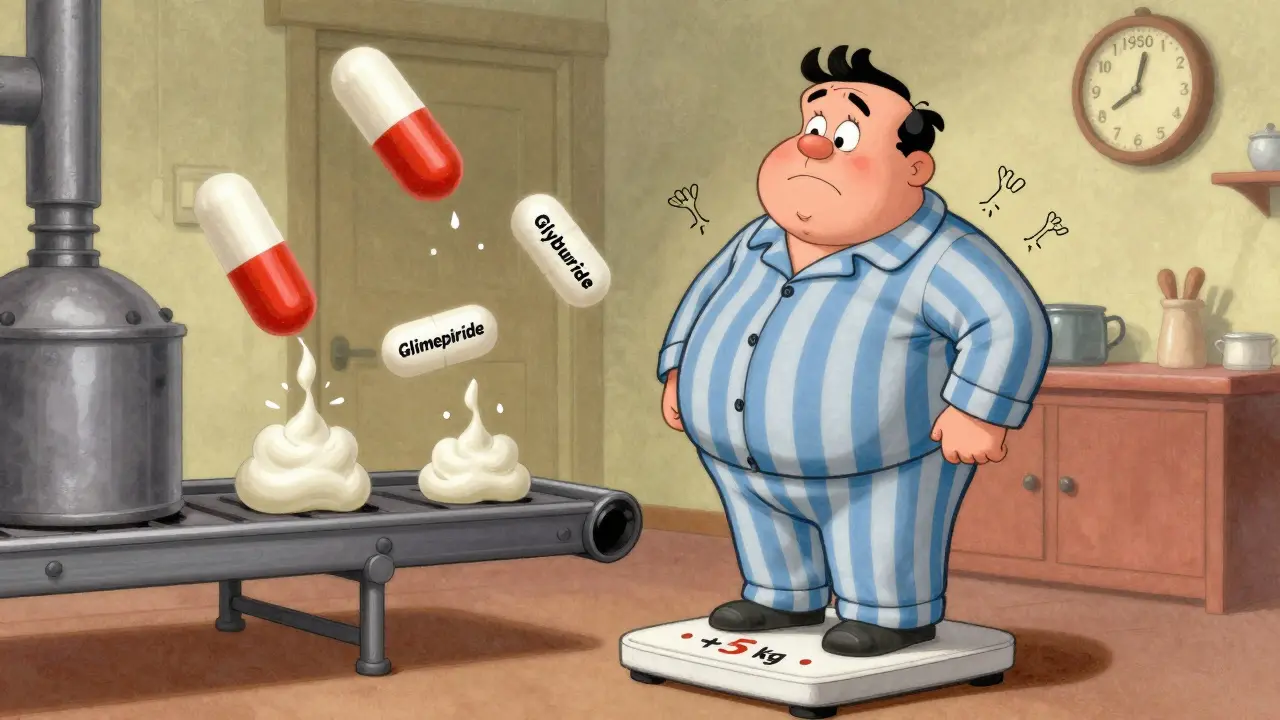
Insulin isn’t just a glucose-lowering drug. It’s a storage hormone. It tells your body to hold onto fat, not burn it. Before insulin therapy, many people with uncontrolled diabetes were losing weight-not because they were healthy, but because their bodies were throwing glucose out in urine. That’s glycosuria. When you start insulin, that stops. Your cells finally get the glucose they need. And your body starts storing it-as fat. Studies show most people gain 4-6 kilograms (9-13 pounds) in the first year on insulin. Some gain more. It’s not just about eating too much-it’s biology. Insulin increases appetite, especially for carbs. It also makes fat cells more efficient at grabbing and holding onto energy. And if you’re afraid of lows, you might snack more to prevent them. That’s a vicious cycle. A 2023 American Association of Clinical Endocrinologists report found that people who got early diet counseling gained only 2.8 kg on average in the first year. Those who didn’t? 6.2 kg. That’s a 55% difference. It’s not that insulin causes weight gain-it’s that we often don’t adjust our eating habits when we start it.Why These Side Effects Are the Biggest Barrier to Good Control
Doctors want your A1c under 7%. But if every time you try to get there, you almost pass out or gain 10 pounds, you’ll stop trying. That’s not laziness-it’s survival. A 2022 study showed that 15-20% of insulin users intentionally take less insulin than prescribed to avoid lows or weight gain. That’s dangerous. High blood sugar doesn’t just cause long-term damage-it makes you feel awful now: tired, thirsty, foggy-headed, prone to infections. Hypoglycemia isn’t just a medical issue. It’s a psychological one. People report anxiety about driving, working, or even sleeping. They avoid social events because they don’t want to explain why they’re eating candy in public. Some people say they’d rather live with high blood sugar than risk another low. That’s the real cost of insulin therapy.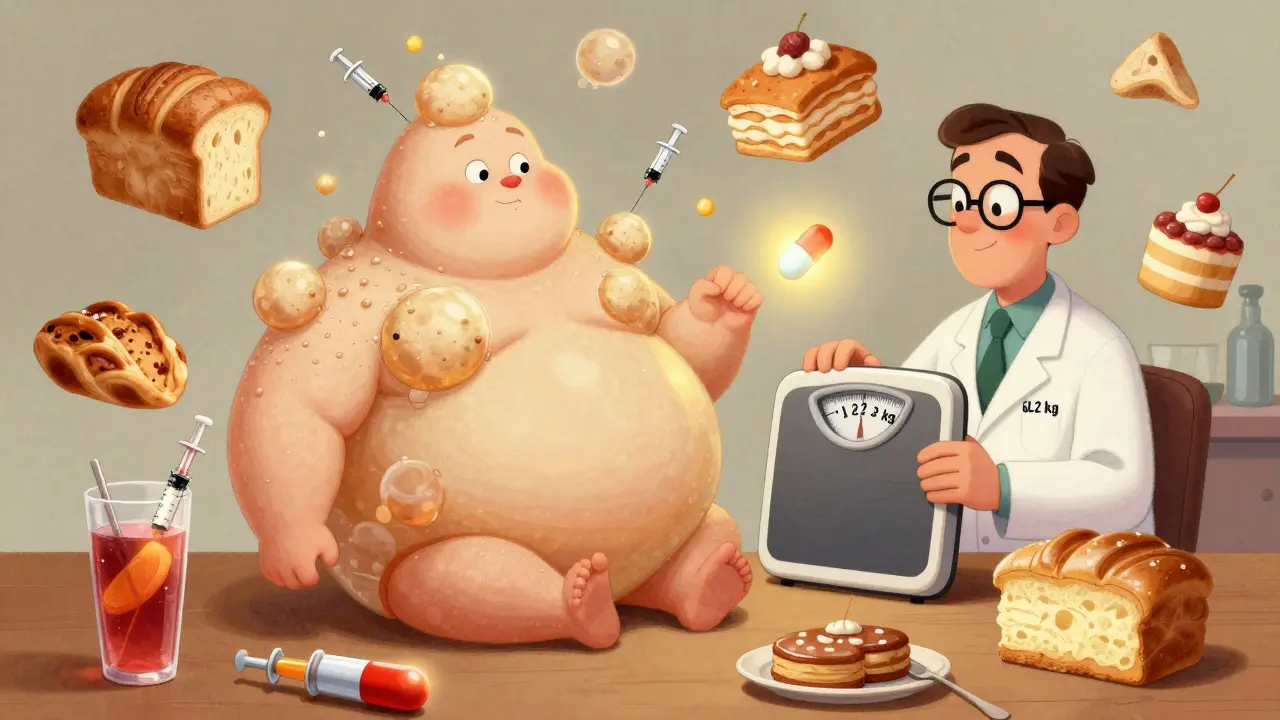
How to Prevent Hypoglycemia
You can’t eliminate the risk-but you can cut it in half.- Use a CGM. It’s not luxury-it’s essential. Real-time alerts for falling glucose give you time to act. Studies show CGMs reduce severe hypoglycemia by 40-50%.
- Know your lows. Write down what your symptoms are. Is it sweating? Nausea? Irritability? Track them. If you stop feeling them, tell your doctor. You might need a less aggressive target.
- Carry fast-acting sugar. Glucose tablets, juice, or candy. Not chocolate-fat slows absorption. Keep it in your bag, your car, your desk drawer.
- Teach someone how to give glucagon. Glucagon is the emergency shot that reverses severe lows. If you’re alone and pass out, it could save your life. Make sure your partner, coworker, or neighbor knows where it is and how to use it.
- Adjust your insulin based on activity. Exercise lowers blood sugar. If you’re going for a run, you might need to eat 15 grams of carbs beforehand or reduce your pre-meal insulin by 20-30%.
How to Manage Weight Gain
Weight gain isn’t inevitable. It’s manageable.- Work with a dietitian. Not a generic ‘eat less’ plan. A diabetes-specific plan that matches your insulin timing with your meals. Carbohydrate counting and insulin-to-carb ratios are critical.
- Don’t overcorrect lows. If your blood sugar is 60, you need 15 grams of glucose-not a whole bag of candy. Wait 15 minutes. Check again. Only eat more if it’s still low.
- Choose protein and fiber. These keep you full longer and cause smaller blood sugar swings. Swap white bread for whole grain. Swap soda for sparkling water with lemon.
- Move daily. You don’t need to run a marathon. Walking 30 minutes a day improves insulin sensitivity. That means you need less insulin. Less insulin = less fat storage.
- Ask about GLP-1 agonists. Medications like semaglutide (Ozempic, Wegovy) or liraglutide (Victoza) are now commonly added to insulin regimens. They help you lose weight, reduce appetite, and lower blood sugar. In trials, people lost 5-10 kg over 6 months while on insulin plus a GLP-1 drug.
New Tools Are Changing the Game
Insulin isn’t what it was 20 years ago. Long-acting analogues like insulin degludec (Tresiba) and insulin glargine (Lantus, Toujeo) are designed to be flatter and more predictable. They reduce nighttime lows by 20-40% compared to older NPH insulin. And then there’s the artificial pancreas. Closed-loop systems-like the Omnipod 5 or Tandem t:slim X2 with Control-IQ-check your glucose every 5 minutes and adjust insulin automatically. In a major 2020 trial, users spent 72% less time in hypoglycemia compared to traditional pump therapy. These aren’t sci-fi. They’re FDA-approved, insurance-covered for many, and available now. If you’re still using syringes or manual pumps and struggling with lows or weight gain, it’s worth asking your endocrinologist if you’re a candidate.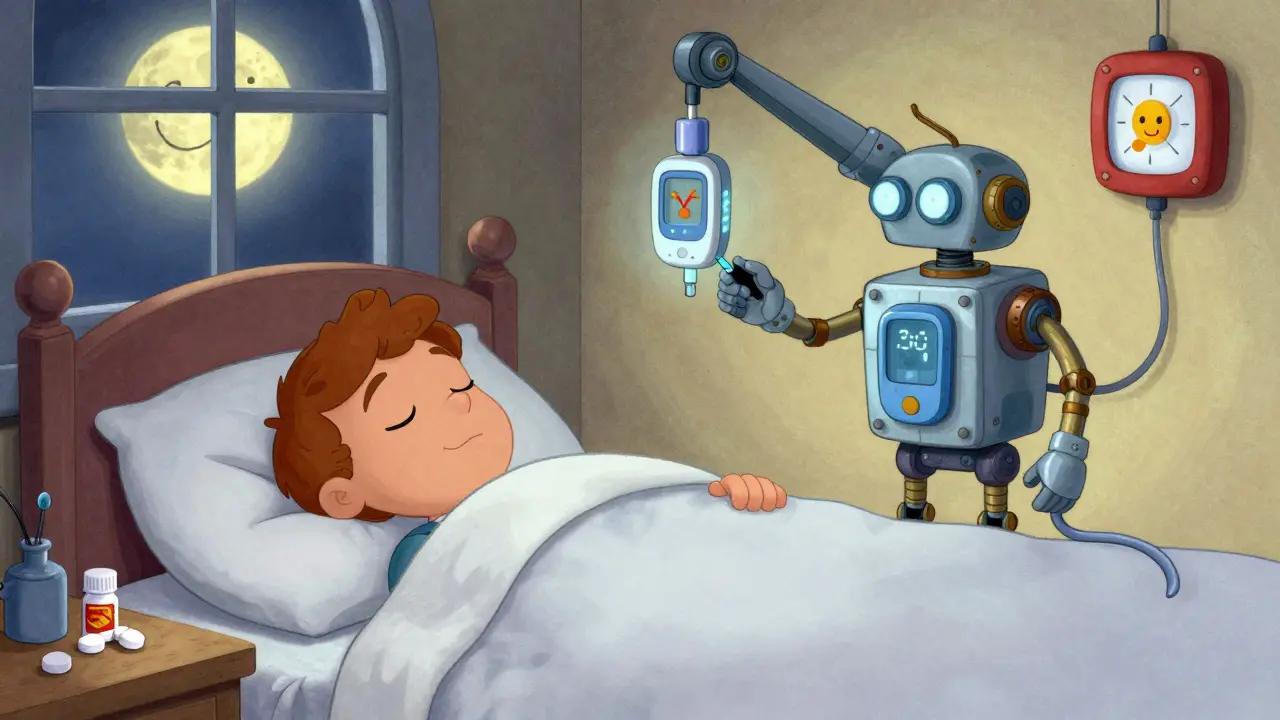
What Your Doctor Should Be Asking You
Too often, the conversation ends at: “Your A1c is 8.5. We need to start insulin.” But good care doesn’t stop there. Your doctor should be asking:- “Have you ever passed out or needed help because of low blood sugar?”
- “Are you afraid to take your insulin because of weight gain?”
- “Do you check your blood sugar before driving or exercising?”
- “Would you be open to trying a CGM or a GLP-1 medication?”
It’s Not All or Nothing
You don’t have to choose between perfect blood sugar and your health. You don’t have to be perfect. You just have to be informed. A1c of 7.5% with no lows and stable weight is better than 6.8% with three hospital visits a year and 15 extra pounds. The goal isn’t to eliminate insulin side effects-it’s to manage them so they don’t control your life. You can have good control without being terrified of your next meal. You can take insulin without gaining weight. It’s not magic. It’s strategy.Start with one change: get a CGM. Or talk to your doctor about GLP-1 drugs. Or carry glucose tablets. One step. That’s all you need to begin.
Can insulin cause seizures?
Yes, severe hypoglycemia from insulin can lead to seizures. When blood sugar drops too low, the brain doesn’t get enough fuel to function properly. This can trigger uncontrolled muscle movements, loss of consciousness, and seizures. If someone has a seizure due to low blood sugar, they need immediate medical help. A glucagon injection or emergency IV glucose is required. Never wait to see if it passes-call 999 or your local emergency number.
Why do I feel hungrier since starting insulin?
Insulin increases appetite because it helps your body store energy. Before insulin, your body was losing glucose through urine, so you were burning calories inefficiently. Once insulin starts working, your cells get the fuel they need, and your brain gets signals that you’re not getting enough energy-so you feel hungrier. This is normal. The key is managing hunger with protein, fiber, and balanced meals instead of sugary snacks.
Is weight gain from insulin permanent?
Not necessarily. Many people gain weight in the first 3-6 months as their body adjusts. But after that, weight gain often slows or stops. With proper diet, regular activity, and possibly adding a GLP-1 medication, you can lose the extra weight. It’s not a life sentence-it’s a temporary side effect that can be reversed with the right plan.
Can I stop insulin if I gain too much weight?
Never stop insulin without medical supervision. Stopping insulin can lead to diabetic ketoacidosis (DKA), a life-threatening condition. If weight gain is a concern, talk to your doctor about adjusting your dose, adding a weight-friendly medication like semaglutide, or working with a dietitian. There are safer ways to manage weight than stopping insulin.
Do all insulin users get hypoglycemia?
Not everyone, but most do at some point. People on multiple daily injections or insulin pumps are at higher risk. Those with long-standing diabetes or kidney problems are also more vulnerable. But with modern tools like CGMs, better insulin types, and education, many people experience very few lows. It’s not unavoidable-it’s manageable with the right approach.
Next Steps: What to Do Today
If you’re on insulin and worried about lows or weight gain:- Check your blood sugar before bed and after meals for a week. Look for patterns.
- Write down every low you’ve had in the last 3 months. What happened before it? What did you do?
- Ask your doctor for a referral to a certified diabetes care and education specialist.
- Research if your insurance covers a CGM or GLP-1 medication.
- Keep glucose tablets in your wallet. Just in case.

Alex Curran
Insulin weight gain isn't magic it's biology and most docs don't explain that part
They just say 'eat less' like it's that simple
I gained 12 lbs in 3 months and no one told me insulin turns your body into a fat storage unit
Then I found out about GLP-1s and my life changed
Don't suffer in silence ask for semaglutide
Connie Zehner
OMG YES I HAD A SEIZURE FROM A LOW AND NO ONE TOLD ME THIS COULD HAPPEN 😭
My endo just said 'be careful' and that was it
I now keep glucagon in my purse and my kids know how to use it
Why is this not taught in every diabetes 101 class??
Vicki Belcher
You're not alone 💪
Started insulin last year, gained 8 lbs, terrified of lows
Got a CGM and now I sleep through the night
One step at a time, you got this 🌟
Alana Koerts
This post is full of lazy solutions
CGMs are expensive and insurance denies them
GLP-1s are for rich people
Most of us just live with the lows and the weight
Stop pretending it's all about 'strategy' when the system is broken
Lynsey Tyson
I used to feel so guilty about gaining weight on insulin
Like I was failing at being a 'good diabetic'
Then I realized it's not my fault
Insulin is a storage hormone
It's not about willpower
It's science
And I'm still here
Still managing
Still alive
That's the win
benchidelle rivera
It's not just about the numbers. It's about dignity.
People don't talk about how hypoglycemia makes you feel like a burden.
You cancel plans because you're afraid you'll pass out in public.
You carry glucose tablets like a secret weapon.
You feel ashamed when you eat candy in front of coworkers.
You stop driving because you're scared you'll crash.
This isn't just a medical issue - it's a loss of autonomy.
And no, telling someone to 'just check their levels more' doesn't fix the trauma.
Real care means addressing the fear, not just the glucose.
It means listening when someone says 'I'd rather be high than low.'
It means prescribing dignity as much as insulin.
And if your doctor doesn't get that, find one who does.
Because surviving diabetes shouldn't mean sacrificing your peace.
You deserve to live without fear - not just without high A1c.
Kelly Mulder
As a certified diabetes educator with 17 years in clinical practice, I must emphasize that the notion that weight gain is 'inevitable' is a dangerous myth perpetuated by patient advocacy groups with insufficient scientific grounding.
Insulin's adipogenic effect is dose-dependent and modifiable through precise carbohydrate-to-insulin ratios, circadian insulin kinetics, and energy expenditure optimization.
Furthermore, the 2023 AACE report referenced lacks longitudinal controls and fails to account for baseline BMI variability.
It is not the hormone itself that causes weight gain - it is the absence of metabolic re-education.
One must understand that insulin is not a 'calorie magnet' - it is a signaling molecule that restores homeostasis.
When patients are provided with structured nutrition therapy grounded in evidence-based glycemic targets - not anecdotal 'swap white bread for whole grain' platitudes - weight stabilization occurs in 89% of cases within 12 months.
Therefore, the real failure lies not in insulin therapy, but in the deprofessionalization of diabetes care.
It is time to return to clinical rigor - not convenience.
And yes, CGMs are valuable - but they are not a substitute for expert-guided behavioral modification.
Any clinician who prescribes a CGM without concurrent dietitian referral is practicing malpractice by omission.
Stop romanticizing technology. Start demanding accountability.
And for God's sake, stop calling this 'strategy.' It's physiology.
Emily P
Does anyone know if the weight gain slows down after the first year? I’m 8 months in and still gaining slowly… wondering if it’s just my body adjusting or if I need to do something different.
anthony funes gomez
Insulin is not the enemy
It is the bridge between death and life
But the system has turned it into a curse
Because we treat biology like a math problem
When it is a human experience
Every gram of glucose stored is a whisper of survival
Every low is a scream into silence
We measure A1c but we don't measure fear
We count carbs but we don't count grief
Maybe the real side effect isn't weight or hypoglycemia
Maybe it's the quiet erosion of trust
Trust in your body
Trust in your care
Trust that you won't be abandoned when you need help most
So yes
Get the CGM
Ask for the GLP-1
Carry the glucagon
But also
Ask yourself
Who taught you to be afraid of your own survival?