
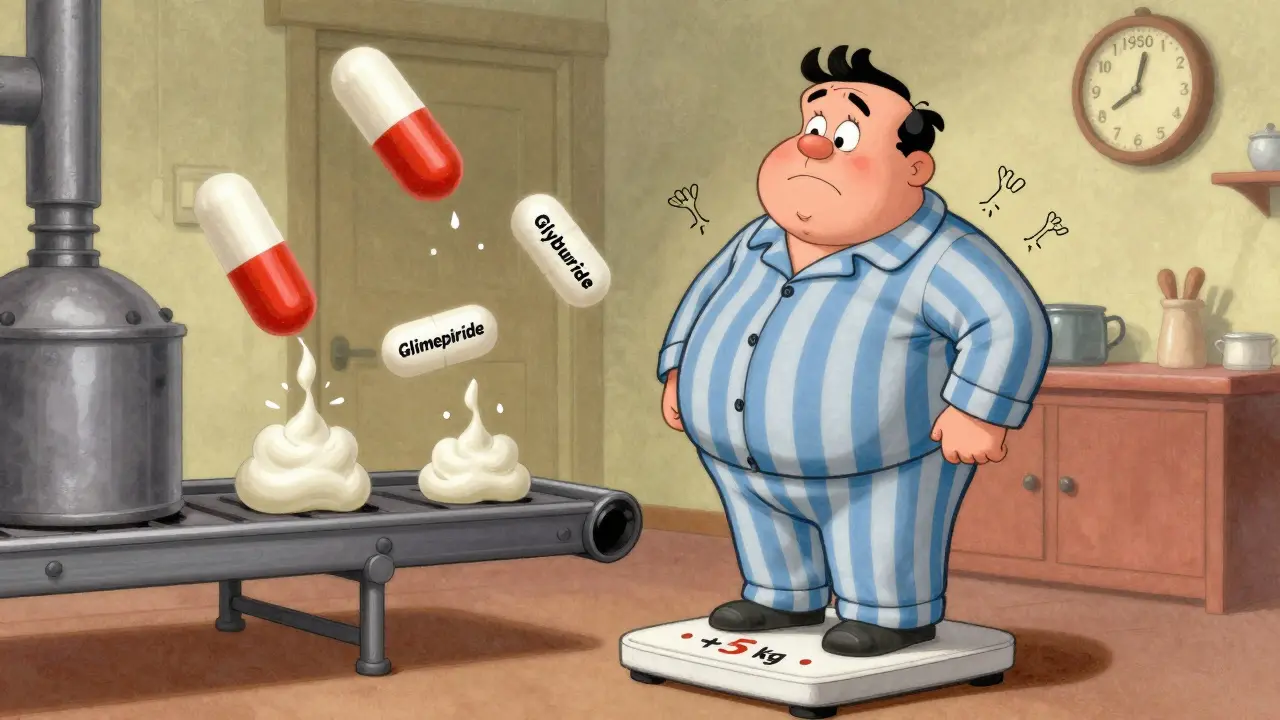
Sulfonylurea Weight Gain Calculator
Estimate how much weight you might gain on different sulfonylurea medications. Based on clinical studies, this tool shows average weight changes for each medication class.
When you're managing type 2 diabetes, getting your blood sugar under control is the top priority. But what happens when the drug that helps you do that also makes you gain weight? For millions of people on sulfonylureas, this isn't a hypothetical question-it's a daily reality. These older diabetes pills, like glipizide, glyburide, and glimepiride, have been around since the 1950s. They work by telling your pancreas to pump out more insulin. That lowers blood sugar. But it also tells your fat cells to store more fat. And that’s where the problem starts.
Why Sulfonylureas Make You Gain Weight
It’s not just about eating more. Sulfonylureas directly affect how your body handles fat. When these drugs bind to receptors on fat cells, they trigger a chain reaction: calcium floods inside, and your body starts making more fat instead of burning it. This isn’t a side effect you can out-exercise. Even if you eat the same amount and move just as much, your body shifts into storage mode.
Studies show most people gain between 2 and 5 kilograms (4-11 pounds) in the first year. Some gain more. A 2016 study of 51 patients found that 25.5% gained noticeable weight-enough to affect insulin sensitivity and make diabetes harder to manage. The worst offenders? Glimepiride and glyburide. In that same study, 62.7% of weight gain cases happened in people taking glimepiride. Meanwhile, gliclazide? Almost no weight gain. In fact, one 1988 study found people on gliclazide actually lost weight over three years.
Not All Sulfonylureas Are the Same
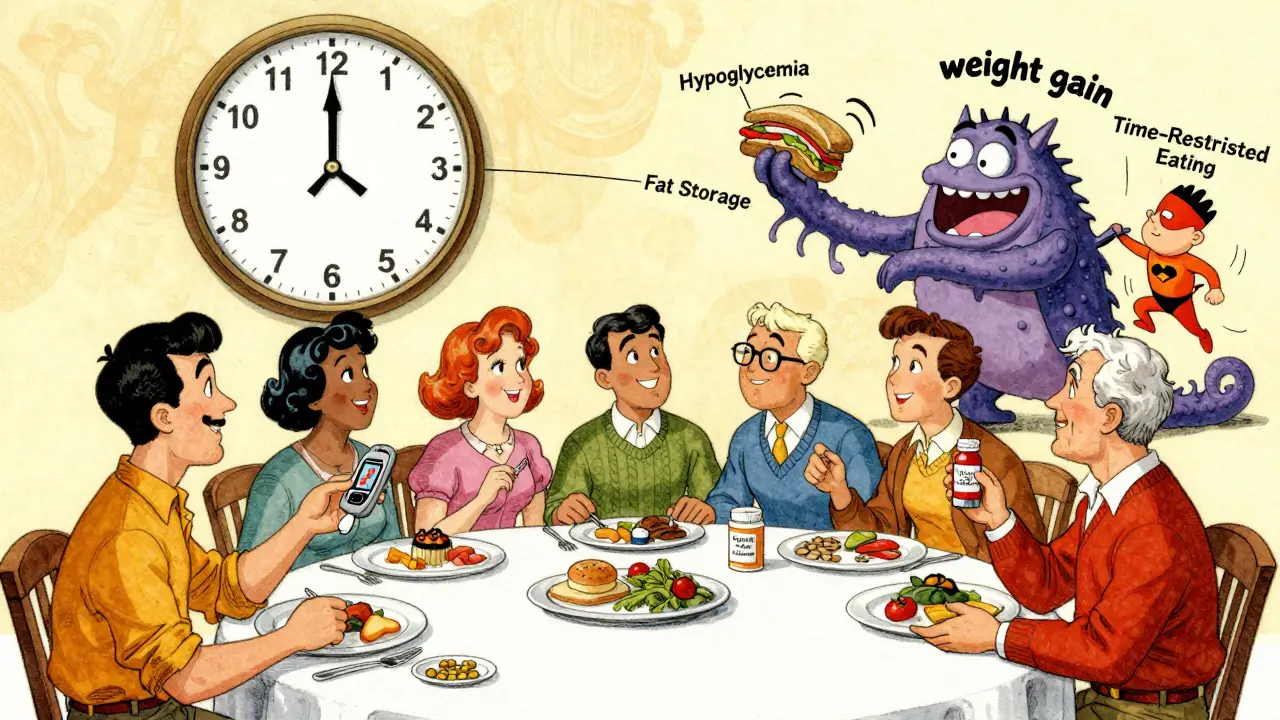
It’s easy to think of sulfonylureas as one group. They’re not. There’s a big difference between the drugs in this class. Glimepiride and glyburide are strong, long-acting, and more likely to cause weight gain. They also carry a higher risk of low blood sugar, which can lead to eating more to counter it-adding to the problem.
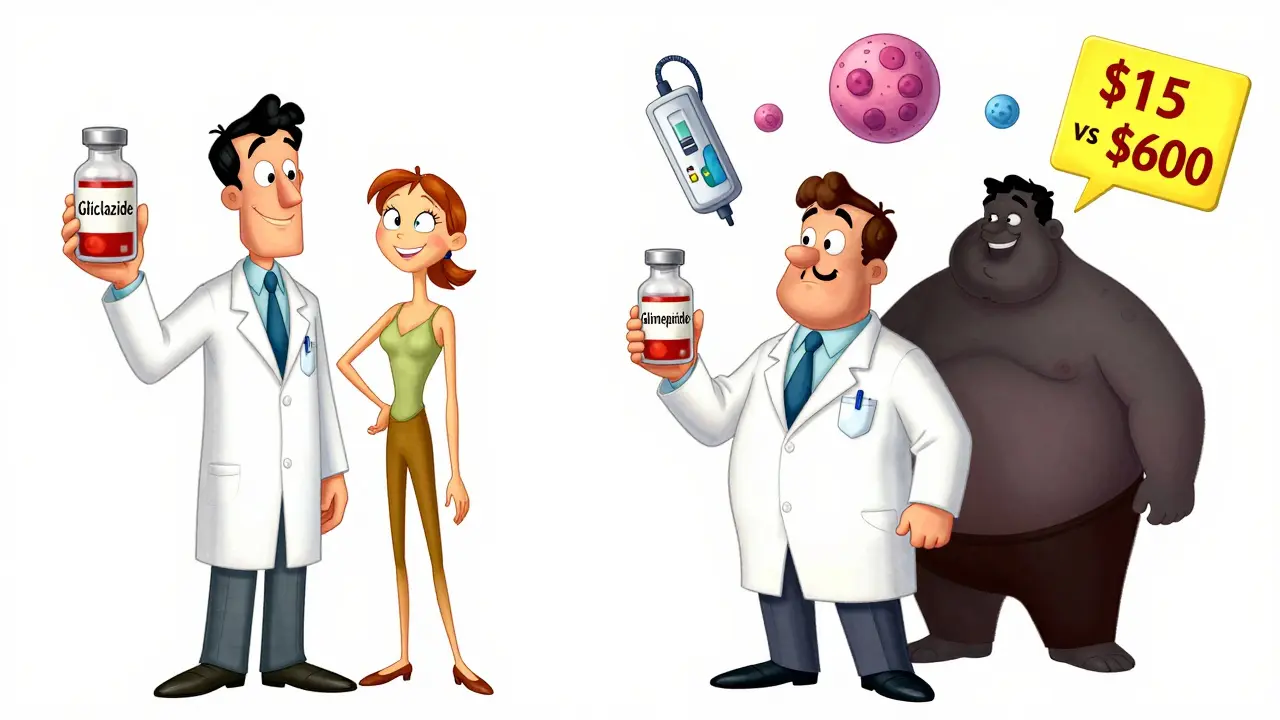
Gliclazide, on the other hand, behaves differently. It doesn’t bind as tightly to fat cell receptors. It’s less likely to cause hypoglycemia. And it doesn’t trigger the same fat-storage signal. That’s why experts now recommend starting with gliclazide if you need a sulfonylurea. It’s not a miracle drug, but it’s the least bad option in this category.
How They Compare to Other Diabetes Drugs
Let’s put this in perspective. If you take metformin, you might lose 2-3 kg. If you take a GLP-1 agonist like semaglutide, you could lose 5-7 kg. SGLT2 inhibitors like empagliflozin? Same thing-weight loss. But sulfonylureas? They make you gain.
This matters because weight gain isn’t just about appearance. Extra fat, especially around your belly, makes your body more resistant to insulin. That means you need more medication over time. It raises your blood pressure. It increases your risk of heart disease. A 2015 meta-analysis found sulfonylureas were linked to a 16-55% higher risk of heart problems, partly because of the weight gain and fluid retention they cause.
Here’s a quick comparison:
| Medication Class | Average Weight Change (First Year) | Common Examples |
|---|---|---|
| Sulfonylureas | +2 to +5 kg | Glimepiride, glyburide, glipizide |
| Gliclazide (specific sulfonylurea) | +0 to -1 kg | Gliclazide |
| Metformin | -2 to -3 kg | Metformin |
| GLP-1 Agonists | -3 to -7 kg | semaglutide, liraglutide |
| SGLT2 Inhibitors | -3 to -6 kg | empagliflozin, canagliflozin |
| Thiazolidinediones | +1.5 to +4 kg | pioglitazone |
The gap is clear. Sulfonylureas are the only class that consistently adds weight. And in a disease where extra weight makes everything worse, that’s a major downside.
Real People, Real Weight Gain
Online forums tell a story that clinical trials often miss. On the American Diabetes Association’s community site, 68% of 1,243 users said weight gain was a "significant problem." Reddit’s r/diabetes had similar results: 72% of comments about sulfonylureas mentioned weight gain as the reason they quit the drug.
One user wrote: "After 9 months on glipizide, I gained 12 pounds. Diet and exercise didn’t change. Switched to metformin-and lost it all back in 6 months." Another said: "At $8 a month for glyburide, I accept the 5-pound gain. I can’t afford the newer stuff."
These aren’t outliers. They’re reflections of real trade-offs. People are choosing between affordability and body weight. And for many, especially those without insurance or on fixed incomes, the cost wins.
What Can You Do About It?
If you’re on a sulfonylurea and gaining weight, you’re not stuck. There are options.
- Switch to gliclazide. If you’re on glimepiride or glyburide, ask your doctor about switching. It’s just as effective at lowering blood sugar but doesn’t pack on the pounds.
- Add metformin. Studies show combining sulfonylureas with metformin cuts weight gain by nearly half. Metformin doesn’t just help with blood sugar-it helps with weight too.
- Move more. The VA Diabetes Trial found that 150 minutes of walking or light exercise per week, plus cutting 500 calories a day, reduced weight gain from sulfonylureas by 63%. You don’t need to run a marathon. Just move consistently.
- Try time-restricted eating. A 2024 study showed that eating only within an 8-hour window (like 10 a.m. to 6 p.m.) cut sulfonylurea-related weight gain by 78%. It’s not a diet-it’s a timing shift.
And if weight keeps climbing? Don’t wait. If you gain more than 3% of your body weight in six months, talk to your doctor. That’s the threshold the European Association for the Study of Diabetes recommends for reevaluating your treatment.
The Bigger Picture: Cost vs. Consequences
Sulfonylureas still make up 18% of the global oral diabetes market. Why? Price. Glimepiride costs $15 a month. Semaglutide? Over $600. For many, the choice isn’t about what’s best-it’s about what’s possible.
But here’s the catch: the long-term cost of weight gain is higher than the drug itself. More weight means more complications-high blood pressure, heart disease, kidney strain. These cost more than pills. A 2022 cost analysis found that even though GLP-1 drugs are expensive upfront, they pay for themselves after five years by preventing hospitalizations and surgeries.
That’s why experts now say sulfonylureas should be reserved for people with low cardiovascular risk and limited income. Not because they’re dangerous-but because better options exist, and weight gain makes diabetes harder to control over time.
What’s Next?
Newer versions are coming. A 2023 launch combined glyburide with extended-release metformin. In trials, it cut weight gain by 1.8 kg compared to glyburide alone. And research into time-restricted eating is growing fast. These aren’t magic fixes, but they’re steps in the right direction.
Some experts worry that abandoning sulfonylureas entirely would leave millions behind. Eighty-five percent of low-income patients globally still rely on them. The goal isn’t to erase them-it’s to use them smarter. Choose gliclazide over glimepiride. Combine them with metformin. Add movement. Monitor weight. And don’t be afraid to switch if the scale keeps climbing.
Diabetes isn’t just about numbers on a glucose meter. It’s about your whole body. And if your treatment is making you gain weight, it’s time to ask: Is this really the best path forward?





Anil bhardwaj
man i been on glyburide for 3 years and yeah i put on like 15 lbs no joke. didnt even change my eating habits. just felt like my body was holding onto everything. dont even get me started on the midnight cravings from low blood sugar. its a trap.
Southern Indiana Paleontology Institute
gliclazide? lol. you think they give that to people on medicaid? nah bro. glimepiride is $5 a month. semaglutide is a luxury item for rich folks with private insurance. we dont get to choose what's 'best' we choose what dont make us homeless.
Vanessa Drummond
so youre telling me the drug that saves my life is making me sicker? classic. i lost my job because my knees gave out from the weight. now i cant even walk to the pharmacy to get my meds. thanks, pharma.
Joanna Reyes
the data here is really compelling but i think we're missing the emotional toll. weight gain from sulfonylureas isnt just physical-it erodes self-worth. people stop checking their glucose because they feel ashamed. they avoid family gatherings. they stop exercising because they feel like they’re already failing. the clinical studies don’t capture that silence. the real cost is in the isolation, the quiet shame, the daily battle with a mirror that no one talks about.
Nerina Devi
in india, gliclazide is the go-to sulfonylurea. cheap, effective, and barely any weight gain. its not even a debate here. we dont have the luxury of choosing semaglutide but we do have access to gliclazide. doctors here know this. why dont they teach it in the u.s.?
kirti juneja
my aunt switched from glipizide to gliclazide and lost 11 lbs in 4 months. no diet. no gym. just a different pill. she cried when she saw the scale. said she felt like herself again for the first time in 5 years. why is this not shouted from the rooftops?
Nick Hamby
there’s a deeper philosophical question here: when medicine prioritizes affordability over physiological harmony, are we healing-or merely managing decline? the body is not a machine to be patched with the cheapest part. it is a system that responds to imbalance with systemic failure. weight gain isn’t a side effect-it’s a signal. and we are ignoring the signal because the cost of listening is too high. perhaps the real tragedy isn’t the drug-it’s our refusal to redesign a system that forces people to choose between dignity and survival.
Dinesh Dawn
i read somewhere that time-restricted eating cuts weight gain by 78%? i tried it. ate only between 11am and 7pm. lost 8 lbs in 2 months. no magic. just timing. maybe we need to stop thinking of diabetes as just a pill problem.
lela izzani
as a nurse who works in endocrinology, i see this every day. patients on glimepiride come in with rising A1c and rising waistlines. we try to switch them, but insurance denies gliclazide because it's "not first-line." meanwhile, the cost of their next heart attack? $120,000. we're paying twice. it's broken.
Haley Gumm
you're all missing the point. the real issue isn't the drug-it's that people think they have agency in this system. they don't. doctors are pressured to prescribe cheap meds. insurers won't cover better options. patients are told to "just eat less" while being handed a pill that makes them store fat. this isn't medical care. it's structural neglect dressed up as a prescription.