
Tyramine Food Checker
Enter any food to check its tyramine content and safety while taking MAOIs
Notes: Contains < 6 mg tyramine per serving. Safe when consumed in moderation.
Notes: Contains more than 6 mg tyramine per serving. Risk of hypertensive crisis. Avoid completely.
When you're taking an MAOI for depression, what you eat isn't just about nutrition-it can be a matter of safety. Monoamine Oxidase Inhibitors (MAOIs) like phenelzine, tranylcypromine, and isocarboxazid are powerful antidepressants, especially for people who haven't responded to other treatments. But they come with a hidden risk: tyramine, a naturally occurring compound in certain foods. When MAOIs block the enzyme that breaks down tyramine, that compound builds up in your body and can cause a sudden, dangerous spike in blood pressure. This isn't a minor side effect. It's a medical emergency that can lead to stroke, heart attack, or even death.
Why Tyramine Is Dangerous with MAOIs
Your body normally uses an enzyme called monoamine oxidase-A (MAO-A) to break down tyramine after you eat it. This keeps blood pressure stable. But MAOIs shut down this enzyme-permanently, in most cases. Without it, tyramine slips into your bloodstream unchecked. Once there, it forces nerve endings to dump stored norepinephrine, a powerful stimulant. That surge triggers your fight-or-flight response: your heart races, your blood vessels tighten, and your blood pressure skyrockets.
Just 10 to 25 milligrams of tyramine-less than what's in a single slice of aged cheese-can cause a spike of 30 mmHg or more in systolic pressure. In severe cases, readings hit 180/120 mmHg or higher. That’s not just high blood pressure. That’s a hypertensive crisis. Symptoms include pounding headache, chest pain, blurred vision, nausea, and a rapid, irregular heartbeat. If you feel any of these after eating, seek emergency help immediately.
Foods That Can Trigger a Crisis
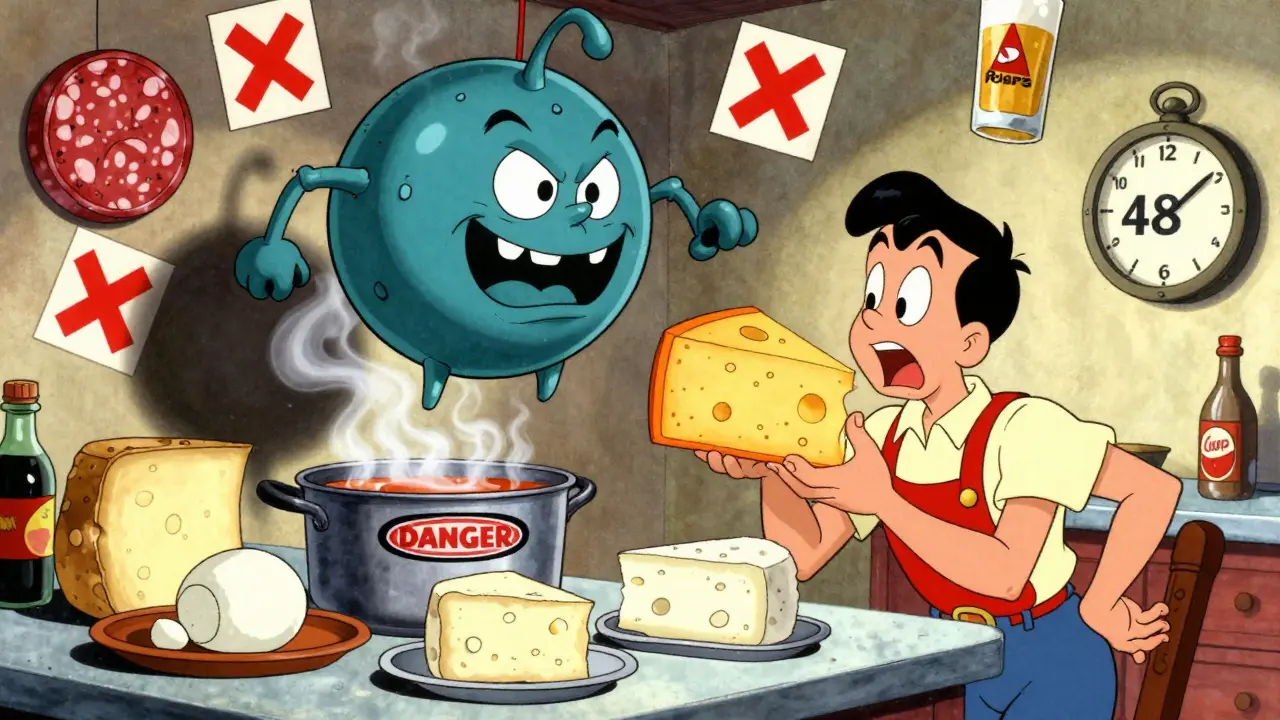
Tyramine doesn’t show up in fresh foods. It builds up during aging, fermentation, or spoilage. That’s why the risk isn’t about the food itself, but how it’s processed. Here’s what to avoid:
- Aged cheeses: Cheddar, Swiss, blue cheese, parmesan, and gouda can contain 50 to 400 mg of tyramine per 100 grams. One slice of aged cheddar has about 30 mg. Fresh cheeses like mozzarella, cottage cheese, and cream cheese are safe.
- Dried, cured, or fermented meats: Salami, pepperoni, summer sausage, and pickled herring contain 50-100 mg per 100 grams. Even a small portion can be risky.
- Fermented soy products: Traditional soy sauce, miso paste, and tempeh are high in tyramine. Commercial soy sauce has less-around 30 mg per 100 ml-but still enough to be dangerous. Avoid all fermented versions.
- Overripe fruits: Bananas, avocados, and figs are fine when ripe. But if they’re brown, mushy, or left out too long, tyramine levels jump. One overripe avocado can contain up to 10 mg.
- Tap beer and draft beer: These contain 10-30 mg of tyramine per 100 ml due to natural fermentation. Bottled or canned beer is usually safer, but check labels. Wine (especially Chianti) is okay in moderation-about 10-20 mg per 100 ml.
- Yeast extracts and concentrated broths: Marmite, Vegemite, and homemade meat stocks simmered for hours can contain high levels. Stick to fresh, low-sodium broth.
Modern food processing has helped. Many packaged foods now have lower tyramine levels than they did 20 years ago. But don’t assume safety. Always check for signs of aging: mold on cheese, strong smells in meats, or dark spots on fruit. When in doubt, skip it.
Not All MAOIs Are the Same
Not every MAOI requires the same strict diet. The risk depends on the type of drug you’re taking.
Traditional MAOIs like phenelzine and tranylcypromine are irreversible and non-selective. They block MAO-A everywhere-in your gut, liver, and brain. That means you need to follow strict dietary rules.
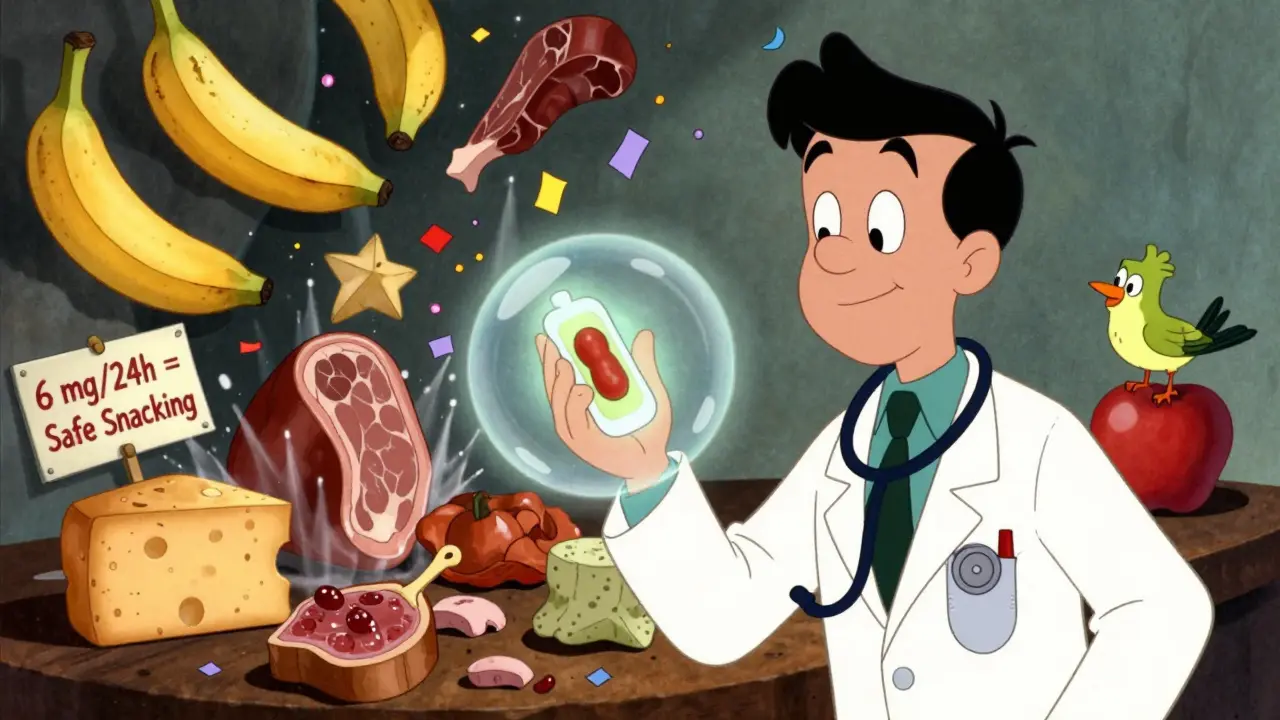
But newer options change the game. The transdermal selegiline patch (Emsam), for example, delivers the drug through your skin. At the lowest dose (6 mg/24 hours), it doesn’t significantly inhibit gut MAO-A, so dietary restrictions are minimal. You can eat most foods without worry. At higher doses (9 mg and 12 mg), restrictions return.
There’s also moclobemide, a reversible MAOI. It lets your body break down tyramine again if levels rise, so the risk is much lower. It’s not available everywhere, but where it is, it’s often preferred for its safety profile.
Bottom line: Your doctor should tell you exactly what restrictions apply to your specific medication. Don’t assume all MAOIs are the same.
What About Other Medications?
MAOIs don’t just clash with food-they clash with other drugs. Over-the-counter cold medicines with pseudoephedrine or phenylephrine can trigger the same dangerous blood pressure spike. Even some herbal supplements like St. John’s wort or L-tryptophan are risky.
The biggest danger comes from combining MAOIs with SSRIs or SNRIs. If you switch from an SSRI like sertraline or fluoxetine to an MAOI, you must wait at least 14 days. The reverse is also true: if you stop an MAOI, wait 14 days before starting an SSRI. This isn’t a suggestion-it’s a rule. There are documented cases of fatal serotonin syndrome when this washout period was ignored.
Always tell every doctor, dentist, or pharmacist you see that you’re on an MAOI. Even a simple antibiotic or painkiller could interact. Carry an MAOI alert card in your wallet. It’s a small step that could save your life.
How to Stay Safe Every Day
Managing your diet on an MAOI isn’t about deprivation-it’s about awareness. Here’s how to make it work:
- Buy fresh, not aged: Choose fresh cheese, freshly cooked meats, and unspoiled produce. If it’s been sitting for days, skip it.
- Read labels: Look for “fermented,” “aged,” or “cured.” Avoid anything with yeast extract or hydrolyzed protein.
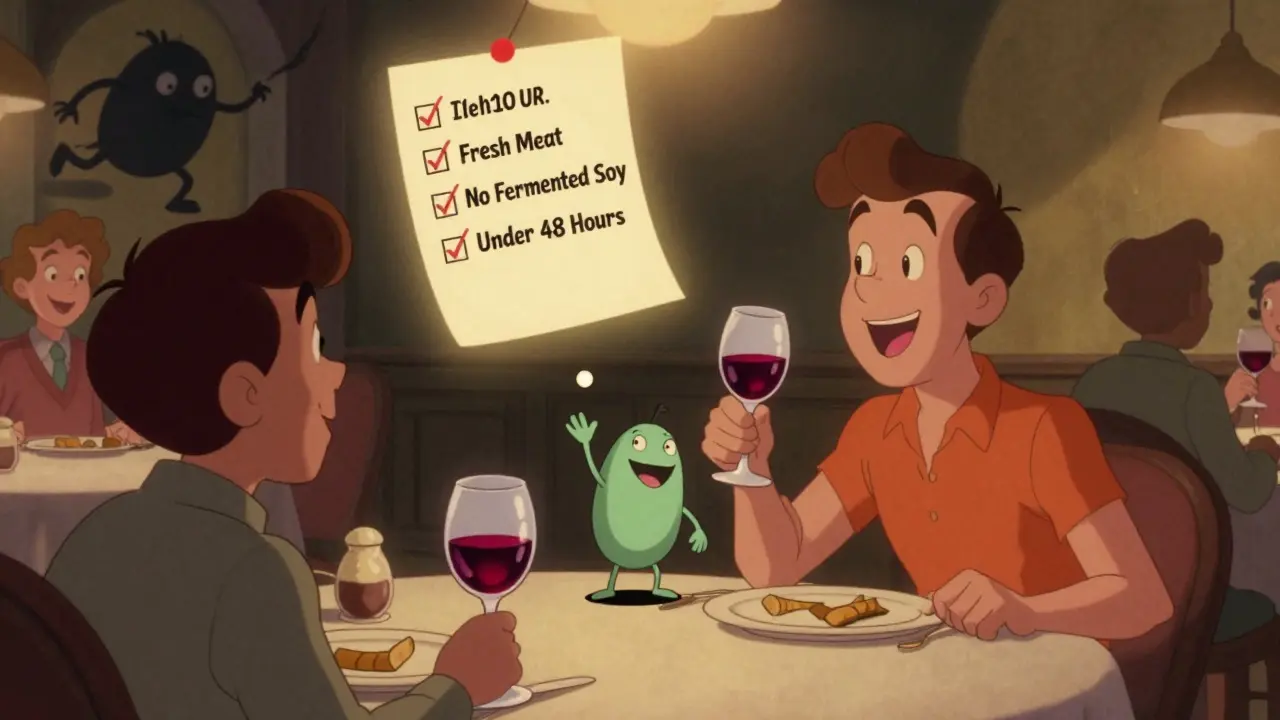
- Don’t eat leftovers past their prime: Food that’s been refrigerated for more than 48 hours can develop tyramine. Eat meals soon after cooking.
- Use a food list: Ask your pharmacist for a printed guide with tyramine thresholds. Some hospitals, like the University of Iowa, provide detailed charts with exact amounts per serving.
- Plan ahead: When dining out, ask how food is prepared. Avoid anything that’s been aged, fermented, or stored for long periods.
Many people on MAOIs live full, normal lives. They travel, eat at restaurants, and enjoy meals with family. The key is knowing what’s safe and what’s not-and being consistent.
What Happens After You Stop?
Even after you stop taking an MAOI, the risk doesn’t disappear right away. The enzyme it blocked takes 2 to 4 weeks to regenerate. That means you still need to avoid high-tyramine foods for at least two weeks after your last dose. Some doctors recommend waiting the full 4 weeks, especially if you were on a high-dose irreversible MAOI.
Don’t rush to restart another antidepressant. The 14-day washout period is non-negotiable. If you start an SSRI too soon, you risk serotonin syndrome-a condition that can cause fever, seizures, muscle rigidity, and death.
MAOIs Are Still Worth It
Because of the risks, MAOIs are prescribed less often than SSRIs. They make up only about 2% of antidepressant prescriptions in the U.S. But for people with treatment-resistant depression, atypical depression, or depression with anxiety and fatigue, they can be life-changing.
With better understanding, safer formulations like Emsam, and clear dietary guidelines, the risk of a tyramine reaction is now under 0.5% per year in properly managed cases. That’s lower than the risk of a car accident on your daily commute.
The goal isn’t to scare you off MAOIs. It’s to make sure you use them safely. If your depression hasn’t responded to other treatments, talk to your doctor about whether an MAOI could help. Just make sure you’re ready to follow the rules-and know exactly what’s on your plate.
Can I drink alcohol while taking MAOIs?
Moderate amounts of wine or distilled spirits like vodka or whiskey are generally safe. Avoid tap beer and draft beer-they contain tyramine. Red wine, especially Chianti, has about 10-20 mg per 100 ml, which is usually okay in small amounts. But don’t binge. Alcohol can worsen dizziness or lower blood pressure, which may interact unpredictably with MAOIs.
Is soy sauce always dangerous?
Traditional fermented soy sauce can have up to 500 mg of tyramine per 100 ml-extremely dangerous. But most commercial brands now use controlled fermentation and contain only about 30 mg per 100 ml. One tablespoon (15 ml) has roughly 4.5 mg, which is below the 6 mg danger threshold. Still, avoid large amounts and never use old or homemade versions.
Are there any safe cheeses?
Yes. Fresh cheeses like mozzarella, ricotta, cottage cheese, cream cheese, and processed cheese slices (like American or cheddar singles) contain less than 10 mg of tyramine per 100 grams. These are safe. Avoid anything labeled as aged, sharp, blue, or aged for more than 60 days.
What if I accidentally eat a high-tyramine food?
If you eat something risky, monitor yourself closely for 4 to 6 hours. Watch for headache, chest tightness, rapid heartbeat, or blurred vision. If any of these occur, call emergency services immediately. Don’t wait. If you feel fine after 6 hours, you’re likely okay. But avoid repeating the mistake.
Can I take supplements while on MAOIs?
Avoid all supplements containing L-tryptophan, 5-HTP, or St. John’s wort. These can trigger serotonin syndrome. Even vitamin B6 in high doses can interfere. Always check with your doctor before taking any supplement, including herbal teas or protein powders.

Darren Gormley
Bro I ate a whole wheel of blue cheese last week and still got up to go to work 😎😂 MAOIs are just fear porn anyway. My cousin did it for 3 years and never had a problem. Probably just wanna sell you more meds.
Sheila Garfield
I’ve been on selegiline patch for 2 years and honestly? I eat aged cheddar, soy sauce, and leftover chili like it’s nothing. My doctor said the low dose is fine. Just don’t go crazy with the fermented stuff. 🤷♀️
Shawn Peck
You people are panicking over cheese? 😭 This is why America’s healthcare is broken. One slice of cheddar and you’re gonna die? My grandpa took phenelzine in the 70s and ate salami every day. He lived to 92. Stop scaring folks.
Jason Xin
I work in psych pharmacy. The real danger isn’t the cheese-it’s the people who think they can wing it. I’ve seen three hypertensive crises in the last year. All from ‘I read it online so it’s fine.’
Don’t be the guy who turns a 10-minute ER visit into a funeral.
Diana Dougan
So... I ate a banana that was kinda brown and now I'm scared to blink. Is my brain gonna explode? 🤯 Also why does everyone say 'tap beer' like it's a cult? I just want a pint and a nap.
Holly Robin
THEY’RE HIDING THE TRUTH. 🚨 Big Pharma doesn’t want you to know that tyramine is a mind control agent planted by the WHO to reduce population growth. That’s why they ban aged cheese but let you eat ‘safe’ soy sauce. The FDA approved it. Don’t believe the lies. 🌍💊
Shubham Dixit
In India, we’ve been eating fermented soy and aged paneer for centuries. My grandmother took MAOIs in the 80s and never had a problem. You Westerners overthink everything. It’s not about fear-it’s about tradition. Your body knows what to do. Why do you trust a pill more than your ancestors?
KATHRYN JOHNSON
This post is medically accurate. Do not ignore dietary restrictions. This is not a suggestion. This is a life-or-death protocol. If you are unsure, consult your prescriber. Do not rely on Reddit.
Blair Kelly
I took phenelzine for 18 months. I ate everything. I drank tap beer. I ate leftover lasagna from Tuesday. I lived. I thrived. I got my life back. And now you’re telling me I was lucky? No. I was right. You’re the one who’s scared. Not me.
Rohit Kumar
The body is not a machine to be controlled by labels. Tyramine is not evil. It is nature’s way of preserving food. MAOIs are a blunt instrument. The real issue is not the cheese-it is our fear of natural processes. We have forgotten how to live with uncertainty. We demand perfect safety, and in doing so, we lose the courage to be alive.
Lily Steele
Just got my Emsam patch and honestly? I’m eating all the cheese now. My doc said low dose = no restrictions. So I’m having a grilled cheese sandwich with a glass of wine. I’m not risking my life-I’m reclaiming it. You got this.