
Serotonin Syndrome Risk Calculator
Based on recent evidence, the risk of serotonin syndrome when taking linezolid with antidepressants is much lower than previously believed. This calculator estimates your individual risk based on key clinical factors.
Remember: For most patients, the benefit of treating serious infections with linezolid outweighs the risk. Always consult your healthcare provider for personalized medical advice.
Your Risk Assessment
When you’re prescribed linezolid for a stubborn infection like MRSA or VRE, your main concern is getting better. But if you’re also taking an antidepressant - say, sertraline, fluoxetine, or venlafaxine - you might have heard a warning: linezolid could trigger serotonin syndrome. It sounds scary. And for years, doctors were told to avoid combining them at all costs. But here’s the twist: recent data suggests the risk is far lower than we thought.
What Is Linezolid, Really?
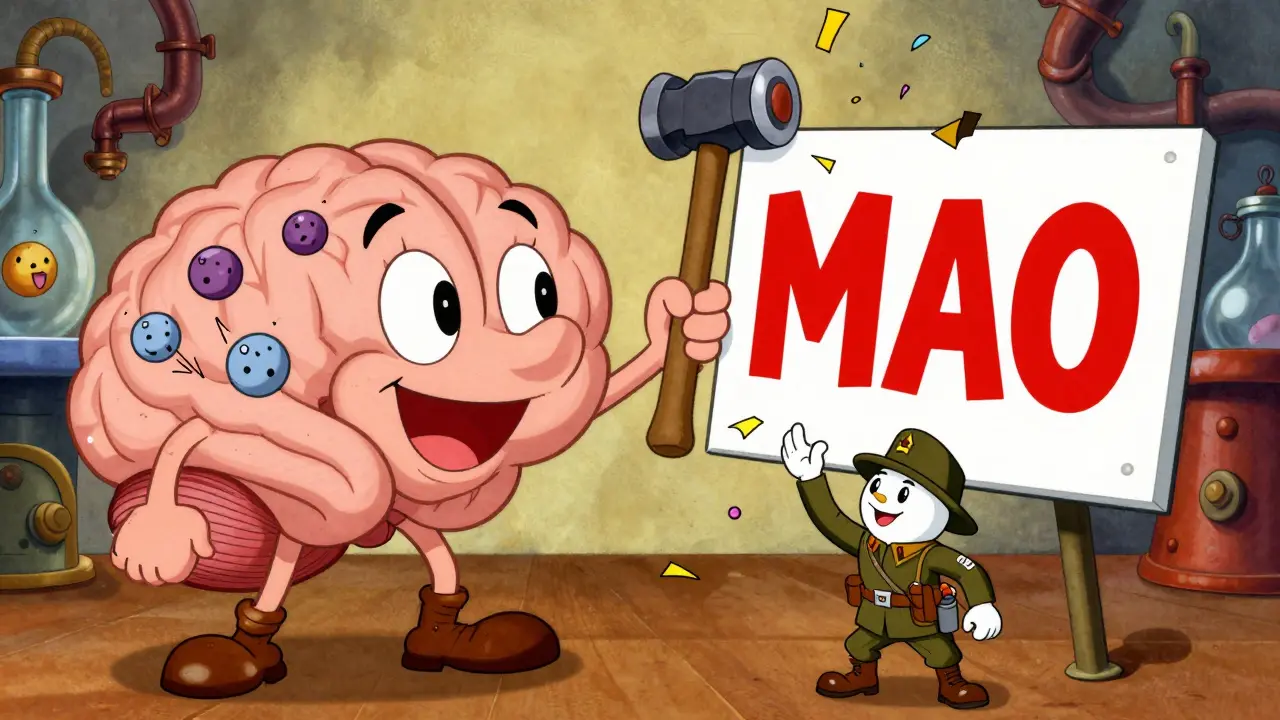
Linezolid, sold under the brand name Zyvox, is an antibiotic used for serious infections that don’t respond to other drugs. It’s especially useful against resistant bacteria like MRSA (methicillin-resistant Staphylococcus aureus) and VRE (vancomycin-resistant Enterococcus). It was first approved by the FDA in 2000, but its history is unusual. Originally, scientists were testing it as an antidepressant. They noticed it affected brain chemicals - specifically, it blocked monoamine oxidase (MAO), the enzyme that breaks down serotonin, norepinephrine, and dopamine. That’s why it was initially designed to treat depression. But then they discovered it killed bacteria too. So they repurposed it.
Unlike most antibiotics that attack cell walls or DNA, linezolid works by jamming the bacterial ribosome. It stops bacteria from making proteins, which kills them. That’s why it’s still a go-to for tough infections. But that same MAO-blocking effect? That’s where the trouble starts - at least, that’s what we used to think.
What Is Serotonin Syndrome?
Serotonin syndrome isn’t just a side effect - it’s a medical emergency. It happens when too much serotonin builds up in your nervous system. Think of serotonin as a chemical messenger. It helps regulate mood, sleep, and digestion. But when levels spike, your body goes into overdrive.
The classic signs show up in three areas:
- Cognitive: Agitation, confusion, restlessness, hallucinations
- Autonomic: Sweating, rapid heartbeat, high blood pressure, fever (sometimes over 104°F)
- Neuromuscular: Shivering, muscle rigidity, tremors, overactive reflexes, even seizures
Severe cases can lead to rhabdomyolysis (muscle breakdown), kidney failure, or death. Symptoms usually appear within 24 to 72 hours after starting or increasing a drug that affects serotonin. The faster they come on, the more serious it tends to be.
Why Did We Think Linezolid Was Dangerous with Antidepressants?
The FDA issued a warning in 2011 after reviewing case reports. There were stories - real ones - of people developing serotonin syndrome after taking linezolid along with SSRIs or SNRIs. One 70-year-old woman got pneumonia, started linezolid, and within two days had a fever, shaking, and confusion. She didn’t even take another antidepressant. That case alone made headlines.
Doctors panicked. Pharmacies started flagging the combo. Guidelines told prescribers to avoid it. The logic was simple: linezolid blocks MAO-A. Antidepressants like fluoxetine boost serotonin. Put them together, and serotonin floods the brain. Boom - serotonin syndrome.
But here’s the problem: those were case reports. They don’t prove cause and effect. They just show what happened in a few people. What we needed was real-world data from thousands of patients.
The New Evidence: Risk Is Much Lower Than We Thought
In 2023, a major study in JAMA Network Open looked at 1,134 patients prescribed oral linezolid. Of those, 215 (19%) were already taking antidepressants. The researchers didn’t just assume risk - they tracked outcomes.
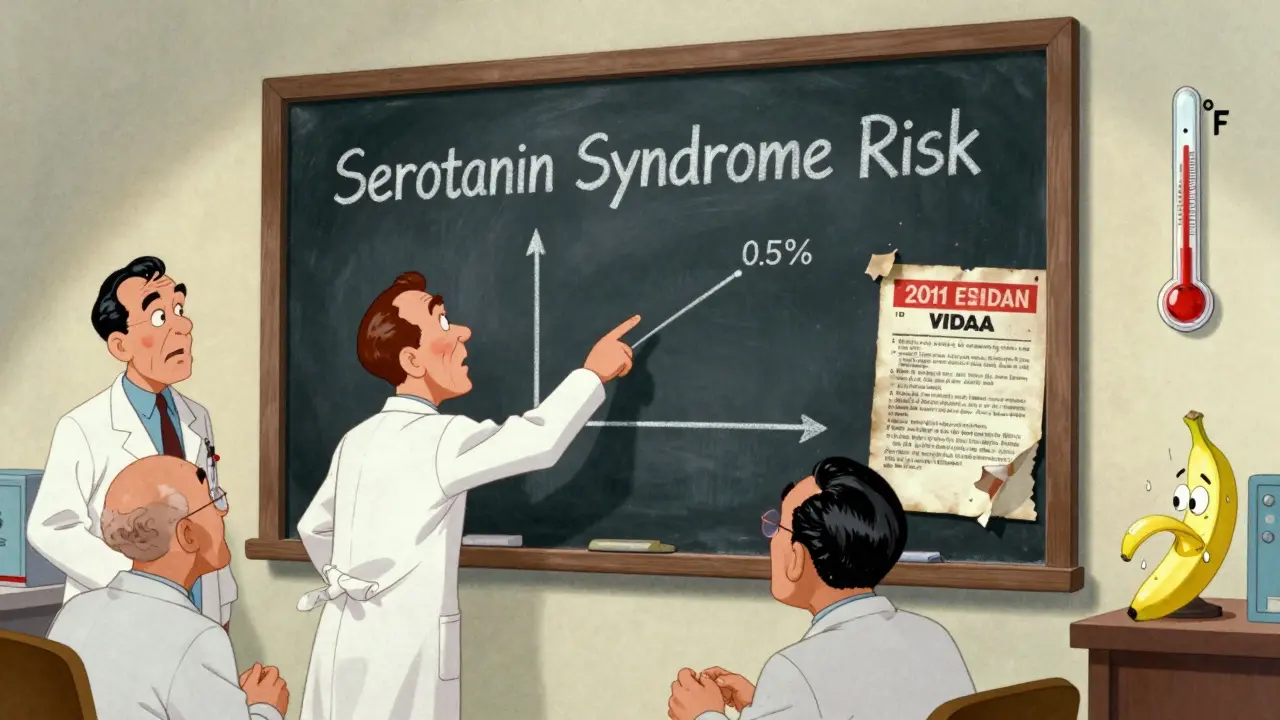
Result? Only fewer than six patients developed serotonin syndrome. That’s less than 0.5%. And here’s the shocker: patients taking antidepressants had fewer cases than those who weren’t. The adjusted risk difference was -1.2%. In plain terms: taking an antidepressant didn’t raise the risk. It might have even lowered it.
A follow-up study in 2024, with over 3,800 patients, found the same thing. The odds ratio was 0.87 - meaning linezolid plus antidepressants was actually associated with a slightly lower chance of serotonin syndrome than linezolid alone. That’s not a typo. The data says the opposite of what we were taught.
Why? Because linezolid’s MAO inhibition is weak. It’s about 50 to 100 times less potent than older MAO inhibitors like phenelzine. Your body still breaks down most of the serotonin. Plus, linezolid is usually given for only 10 to 14 days. That’s not long enough for serotonin to build up dangerously in most people.
So Why Does the FDA Still Warn About It?
Because they haven’t updated their label since 2011. The warning is still there: avoid linezolid with SSRIs, SNRIs, MAO inhibitors, even dextromethorphan or St. John’s wort. But the science has moved on. The FDA hasn’t.
Meanwhile, clinical practice hasn’t caught up either. A 2022 survey of 247 prescribers found that 68% still avoid the combo, even though the evidence doesn’t support it. Why? Fear. One bad case report can haunt guidelines for years.
What About Other Drugs and Foods?
Linezolid can also interact with other serotonin-boosting drugs:
- Opioids: Meperidine (Demerol), fentanyl
- Migraine meds: Sumatriptan
- Anti-nausea drugs: Ondansetron
- Herbal supplements: St. John’s wort, ginseng
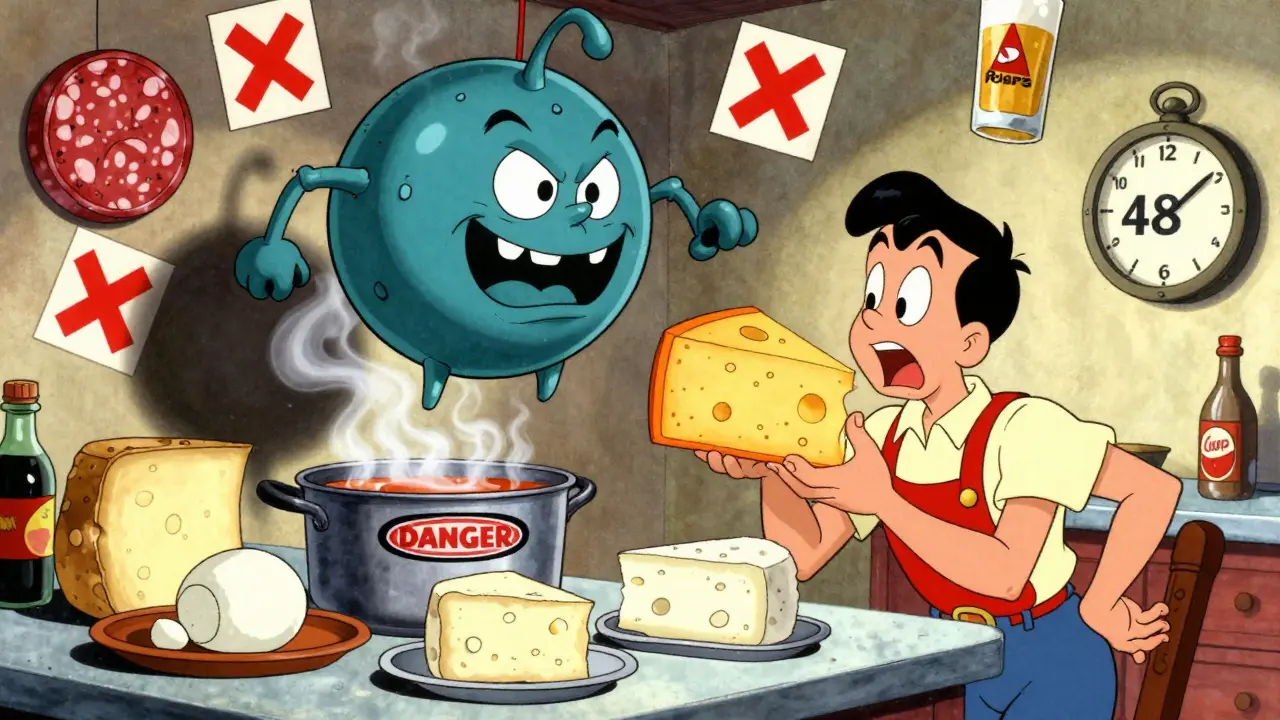
And yes, it can interact with tyramine-rich foods - aged cheeses, cured meats, draft beer. But again, the risk is low. Unlike classic MAOIs, linezolid doesn’t cause dangerous blood pressure spikes in most people. Still, if you’re on high-dose linezolid (600 mg twice daily) or have kidney problems, it’s worth being cautious.
When Should You Be Concerned?
Not every combo is equal. Risk increases if:
- You’re taking two or more serotonergic drugs (e.g., fluoxetine + venlafaxine + linezolid)
- You’re on high-dose linezolid (600 mg twice daily instead of 600 mg once daily)
- You’re over 65 - older adults process drugs slower
- You have kidney disease - linezolid clearance drops by 50% in severe renal failure
- You’ve had serotonin syndrome before
If you’re on an antidepressant and need linezolid for a life-threatening infection, the benefits almost always outweigh the risk. But you need to be monitored.
What Should You Do?
Here’s what works in real life:
- Don’t stop your antidepressant. Stopping suddenly can cause withdrawal or relapse. That’s riskier than serotonin syndrome.
- Tell your doctor. Make sure they know everything you’re taking - including supplements and OTC meds.
- Watch for symptoms. If you feel agitated, sweaty, shaky, or have a fever within 2-3 days of starting linezolid, call your doctor immediately.
- Don’t panic if you’re already on both. The odds are still less than 1 in 200 that anything bad will happen.
- Ask about alternatives. If you have a mild infection, maybe another antibiotic is safer. But for MRSA or VRE? Linezolid might be your only option.
What If Serotonin Syndrome Happens?
If it does, treatment is straightforward:
- Stop linezolid and any other serotonergic drug immediately
- Give benzodiazepines (like lorazepam) to calm agitation and muscle spasms
- Use cyproheptadine - an antihistamine that blocks serotonin receptors - at 4-32 mg per day
- Cool the body if fever is high
- Give IV fluids to support blood pressure
Most people recover fully within 24 hours. Severe cases take longer, especially if the drug has a long half-life (like fluoxetine, which sticks around for weeks). But death is rare - and almost always linked to delayed recognition.
The Bottom Line
Linezolid and antidepressants? The fear was real. The danger? Not so much. The latest science says the risk of serotonin syndrome is extremely low - less than 0.5%. For most people, it’s safer to keep taking your antidepressant and use linezolid if you need it. The FDA’s warning hasn’t changed, but medicine has. You don’t need to avoid this combo unless you’re on multiple serotonergic drugs, have kidney failure, or are over 70 with other risk factors.
When in doubt, talk to your pharmacist. They’re trained to spot these interactions. And if you’re prescribed linezolid, don’t assume the worst. Ask: "Is this really dangerous, or is this just an old warning?" The answer might surprise you.

Mayank Dobhal
This is wild. I’ve been on sertraline for 5 years and got linezolid last year for a stubborn sinus infection. No issues. Zero. They’re still scaring people with 2011 guidelines like it’s gospel.
Ashley Hutchins
I dont get why doctors still scare people like this its not 2005 anymore i took both at the same time and my doc just told me to watch for sweating and if i felt weird to call back. no big deal.
Savannah Edwards
I work in a psych clinic and we’ve had patients on SSRIs go on linezolid for MRSA more times than I can count. Every single time, we monitor them closely for 72 hours-vitals, mental status, hydration-and not one case of serotonin syndrome. The data is clear. The fear is outdated. It’s like telling people not to drive because someone once got in a crash. We’ve got better tools now. We’ve got evidence. Why are we still clinging to cautionary tales from 13 years ago? The FDA’s label hasn’t changed because bureaucracy moves slower than a snail on sedatives. Meanwhile, real doctors are quietly doing the right thing: trusting science over paperwork. And patients? They’re the ones paying the price with unnecessary delays, anxiety, and sometimes, worse infections because we were too scared to use the best tool we had.
AMIT JINDAL
Lmao so u mean to tell me that like... the whole medical industry got it wrong for over a decade? 😳 I mean I get it, MAOIs are scary but linezolid? It’s like a weak version of them. And 14 days max? Come on. My aunt was on it for 10 days with venlafaxine and she was fine. She even made banana bread. 🍌🍞 Seriously though, this is why I hate how medicine works. One case report = global panic. Real data = ignored. We need to stop treating guidelines like holy texts and start treating them like draft emails. #ScienceOverFear
Lakisha Sarbah
I’m a nurse and I’ve seen this play out. A patient came in with a diabetic foot infection, needed linezolid, was on fluoxetine. We checked everything, talked to pharmacy, monitored closely. No issues. She walked out 10 days later with healed tissue and her mood intact. The real danger isn’t the combo-it’s the fear. That’s what makes people stop meds, delay care, or refuse life-saving treatment. We need to stop weaponizing uncertainty.
Paula Sa
It’s fascinating how medicine evolves. We build these warnings based on fear, then slowly, quietly, reality catches up. I think we need to stop treating drug interactions like black-and-white rules and start seeing them as gradients. Risk isn’t binary. It’s layered-dose, duration, comorbidities, individual metabolism. The fact that people on antidepressants had *fewer* cases in the study? That’s not noise. That’s a clue. Maybe serotonin levels aren’t the whole story. Maybe there’s something about baseline neurochemistry that’s protective. Or maybe it’s just that people on antidepressants are more likely to be monitored, noticed, and cared for. Either way, the data says: don’t panic. Just pay attention.
Gouris Patnaik
In India we never had this issue. People take antibiotics and antidepressants together all the time. No hospital here avoids linezolid because of some FDA warning from 2011. Why are Americans so scared of everything? Even a simple infection becomes a crisis. This is why your healthcare system is broken. You over-medicate, over-warn, over-fear. Real medicine is simple: observe, adapt, act. Not hide behind outdated labels.
Ariel Edmisten
Just tell your doc you're on an SSRI. They'll know what to do. No need to stress. You're fine.