When to See a Doctor for Back Pain
Back pain is one of the most common reasons people visit a doctor, but when to see a doctor for back pain, the point at which ordinary discomfort becomes a medical emergency isn’t always clear. Most back pain comes from strained muscles or poor posture and goes away on its own in a few days. But if it’s tied to something deeper—like a pinched nerve, infection, or spinal issue—it won’t fix itself. Waiting too long can turn a manageable problem into a life-altering one.
There are clear red flag symptoms, warning signs that signal serious underlying conditions that demand immediate attention. If your back pain comes with numbness or tingling in your legs, feet, or groin, it could mean a nerve is being compressed. Weakness in your legs, trouble standing, or foot drop (where your foot slaps the ground when you walk) are also urgent signals. Loss of bladder or bowel control is a medical emergency—this could be cauda equina syndrome, a rare but dangerous condition that needs surgery within hours. Even if the pain feels mild, these symptoms mean you need to see a doctor today, not tomorrow.
Another key moment to act is when back pain doesn’t improve after chronic back pain, pain lasting more than six weeks despite rest and home care sets in. If you’ve tried over-the-counter pain relievers, ice, heat, and gentle movement—and it’s still there—you’re not just being picky. You might be dealing with a herniated disc, spinal stenosis, or even a fracture, especially if you’re over 50 or have osteoporosis. Pain that wakes you up at night, gets worse when you rest, or comes with unexplained weight loss or fever could point to infection or cancer. These aren’t guesses—they’re clinical indicators doctors use to rule out serious causes.
And don’t ignore pain that spreads. If your back pain shoots down one leg, especially past the knee, it’s likely sciatica. That’s often from a disc pressing on a nerve, and while it can improve with physical therapy, it sometimes needs imaging or injections. If you’ve had recent trauma—a fall, car accident, or heavy lift—and now you can’t move without screaming, get checked. Fractures don’t always show up on regular X-rays right away, and delaying care can lead to permanent damage.
People often think back pain is just part of aging or being active. But the body doesn’t lie. If your pain is changing, getting worse, or showing up with other symptoms, it’s not normal. You don’t need to suffer through it hoping it’ll vanish. The posts below break down exactly what doctors look for, what tests actually matter, how to tell if it’s muscle strain or something more, and what treatments work—without the fluff. You’ll find real advice on spotting danger signs, understanding imaging results, and knowing when to push back if a doctor dismisses your pain. This isn’t about fear—it’s about knowing when to act before it’s too late.
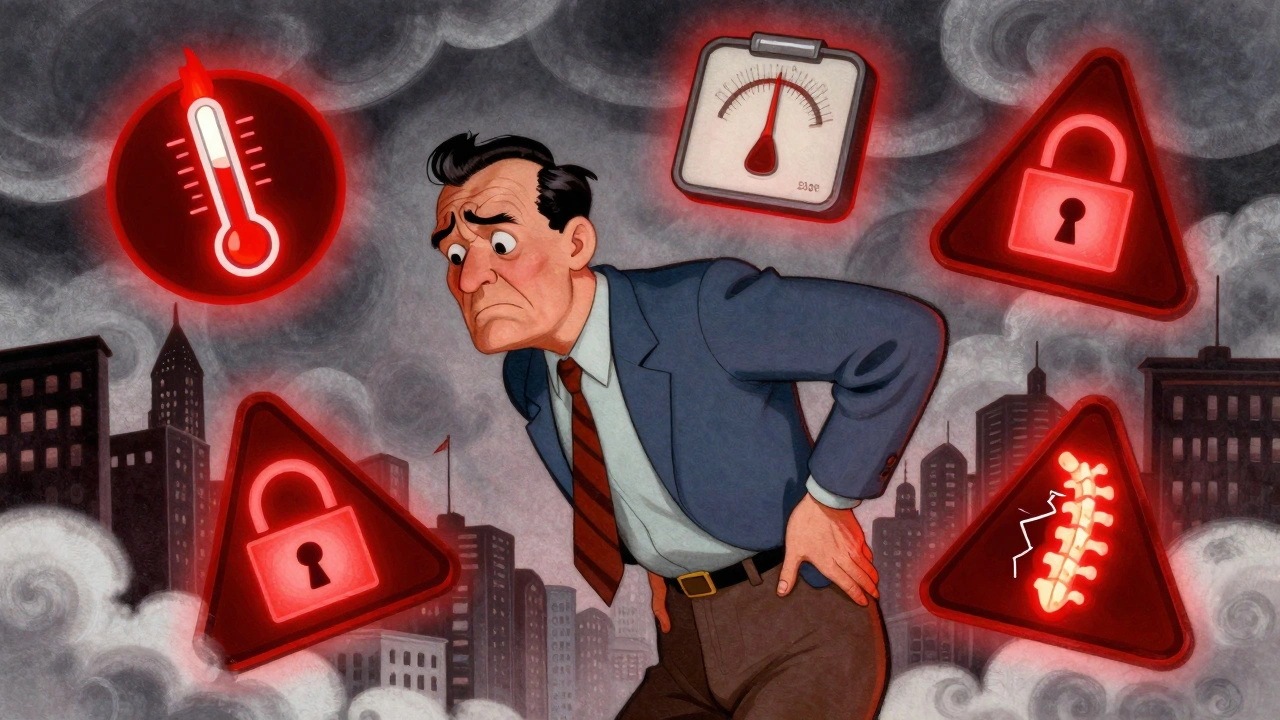
Back Pain Red Flags: When Imaging and Referral Are Needed
Learn the key back pain red flags that signal serious conditions like infection, cancer, or nerve damage. Find out when imaging and urgent referral are necessary-and when they're not.
Popular posts