Prevent GI Bleeding: Key Medications, Risks, and Real Steps to Stay Safe
When you take medications for pain, arthritis, or heart conditions, you might not realize one hidden danger: gastrointestinal bleeding, a serious and sometimes life-threatening loss of blood from the digestive tract. Also known as GI bleeding, it doesn’t always come with warning signs—until it’s too late. Many people think stomach pain or heartburn is just a side effect, but it could be the first clue that your lining is wearing down.
Some of the most common drugs you take daily can quietly damage your stomach and intestines. NSAIDs, like ibuprofen and naproxen, used for headaches or joint pain are a top cause. Even low-dose aspirin, often taken for heart health, increases risk. Then there’s anticoagulants, blood thinners like warfarin or apixaban—they stop clots but also make bleeding harder to stop. And if you’re on both? Your risk doubles. The good news? You don’t have to accept this as normal. Proton pump inhibitors, medications like omeprazole that reduce stomach acid are often prescribed to protect high-risk patients. But knowing when they’re needed—and when they’re not—is just as important.
It’s not just about popping pills. Age, alcohol use, H. pylori infection, and existing ulcers all stack the deck. People over 65, especially those on multiple medications, are most at risk. But younger adults aren’t safe either—especially if they take NSAIDs regularly for back pain or sports injuries. You don’t need to stop your meds. You need to understand them. That’s why the posts below cover real cases: how a simple painkiller led to internal bleeding, why some generic drugs carry hidden risks, what your prescription label might be hiding, and how comorbidities like kidney disease or heart failure change the game. You’ll find out what doctors don’t always tell you about drug interactions, how to spot early signs of trouble, and what steps actually work to protect your gut. This isn’t theory. It’s what people are living with—and how to stop it before it starts.
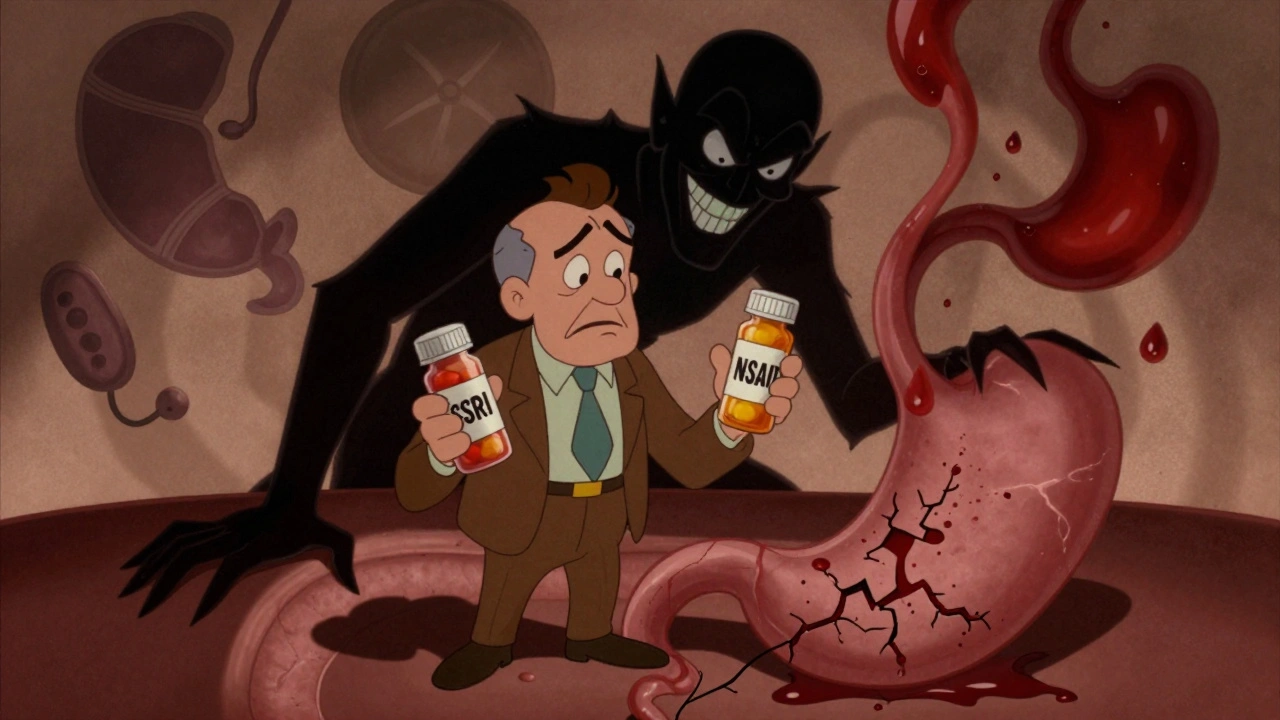
SSRIs with NSAIDs: How This Common Drug Combo Raises GI Bleeding Risk and How to Prevent It
Combining SSRIs and NSAIDs can raise your risk of serious stomach bleeding by 75%. Learn why this happens, who’s most at risk, and how to prevent it with safer pain relief and protective meds.
Popular posts