
SSRI and NSAID Bleeding Risk Calculator
Risk Assessment Tool
Your Personal Risk Assessment
Recommendations
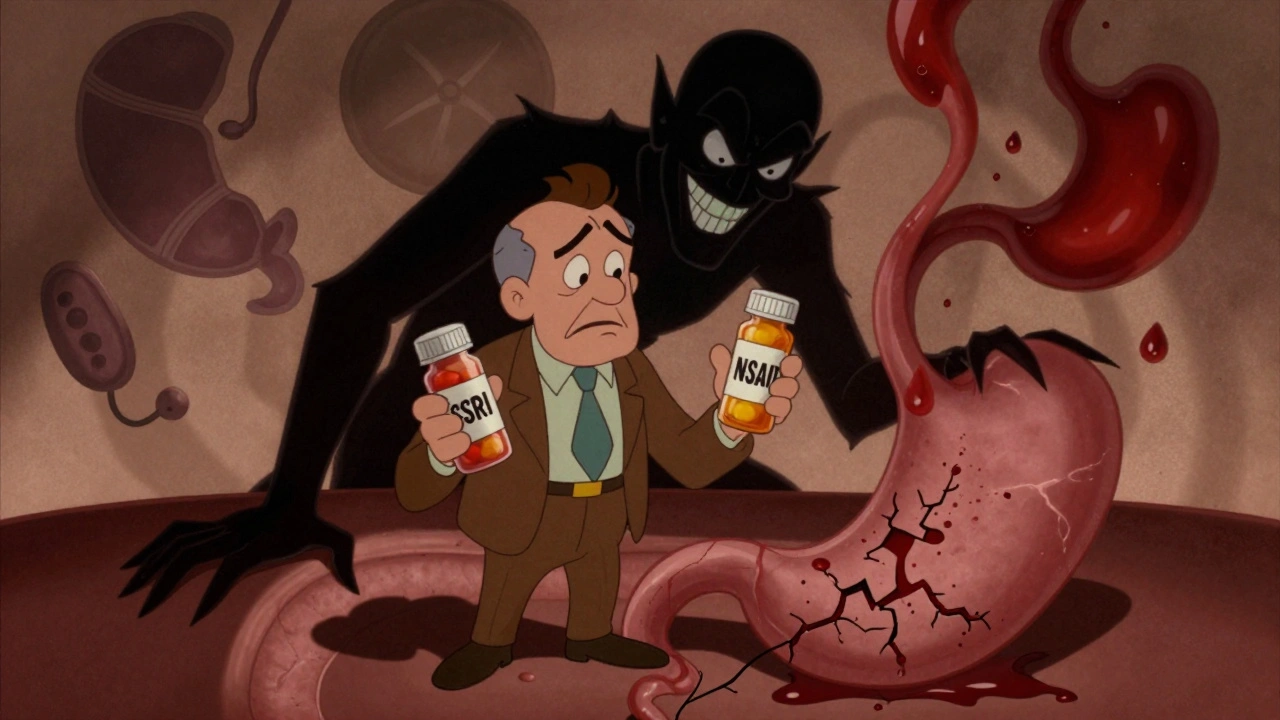
When you’re taking an SSRI for depression or anxiety and also need pain relief for arthritis or a bad back, it’s easy to assume that combining SSRIs and NSAIDs is harmless. After all, both are common, over-the-counter, or routinely prescribed. But here’s the truth: mixing these two can seriously increase your risk of life-threatening stomach bleeding - and most people have no idea.
Why This Combination Is Dangerously Common
About 1 in 8 U.S. adults takes an SSRI like sertraline, fluoxetine, or escitalopram. Nearly 1 in 6 regularly uses an NSAID like ibuprofen, naproxen, or celecoxib. That means millions of people are taking both. And while neither drug alone is a major bleeding risk on its own, together they create a perfect storm. SSRIs reduce serotonin in the brain to improve mood, but serotonin also helps platelets clump together to stop bleeding. When SSRIs block serotonin reuptake in platelets, they weaken the body’s first line of defense against bleeding. NSAIDs, meanwhile, attack the stomach lining directly. They block prostaglandins - natural compounds that protect the stomach and help it repair itself. So you’ve got one drug making it harder for blood to clot, and another eating away at the lining that keeps your stomach from bleeding. The result? A 75% higher risk of upper GI bleeding compared to taking NSAIDs alone.The Numbers Don’t Lie
A 2022 analysis of over 1.2 million patients found that the combination of SSRIs and NSAIDs led to a consistent 1.75 times higher risk of GI bleeding. That’s not a small bump - it’s a major jump. To put it in perspective:- NSAIDs alone: 2-4 times higher bleeding risk than no NSAID use
- SSRIs alone: 1.5-2 times higher risk
- SSRIs + NSAIDs: 1.75 times higher than NSAIDs alone - meaning the risk isn’t just added, it’s multiplied
Not All SSRIs or NSAIDs Are Equal
Some drugs in these classes are riskier than others. Among SSRIs, paroxetine and fluoxetine have stronger effects on platelet serotonin, so they carry a higher bleeding risk than sertraline or citalopram. It’s not a guarantee, but if you’re already on an SSRI and need pain relief, switching to a lower-risk SSRI might help. For NSAIDs, the type matters a lot:- Celecoxib (a COX-2 inhibitor): Lowest GI bleeding risk among NSAIDs
- Ibuprofen: Moderate risk - better than naproxen or diclofenac
- Naproxen and diclofenac: Highest GI bleeding risk
Who’s Most at Risk?
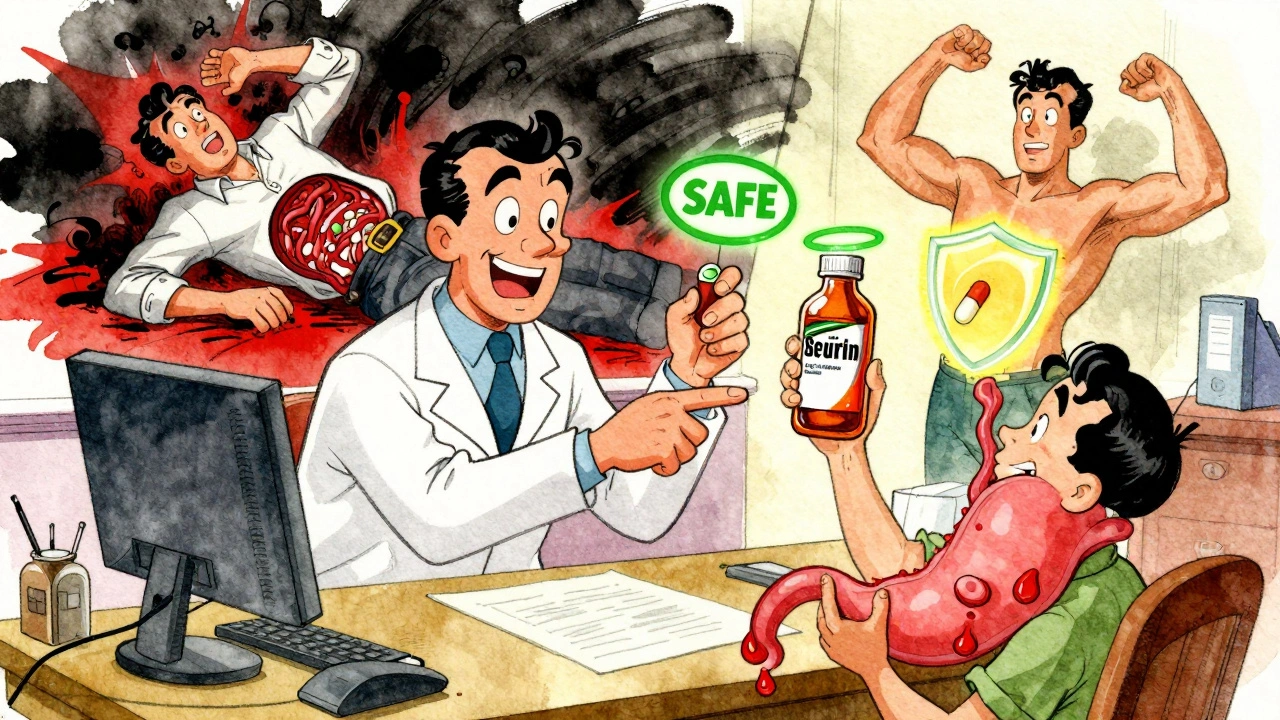
This isn’t a risk that affects everyone equally. Certain people are in the danger zone:- Age 65 or older
- History of ulcers or GI bleeding
- Taking blood thinners like warfarin, apixaban, or aspirin
- High-dose NSAIDs (more than 1,200 mg ibuprofen per day)
- On SSRIs for more than 90 days
- Has kidney disease or liver problems
What Doctors Should Do - And Often Don’t
Despite clear evidence, many clinicians still miss this interaction. A 2021 study found that 28% of primary care patients on SSRIs were also getting NSAIDs - and nearly all of them had no warning. Patient forums are full of stories like this one: “I was on sertraline and ibuprofen for six months before I ended up in the ER with internal bleeding. My doctor never mentioned this could happen.” The American Gastroenterological Association (AGA) has clear guidelines: every patient taking both SSRIs and NSAIDs should also take a proton pump inhibitor (PPI) like omeprazole or esomeprazole. PPIs reduce stomach acid, allowing the lining to heal and lowering bleeding risk by about 70%. That’s not a small benefit - it’s life-saving. But here’s the problem: many doctors don’t prescribe PPIs unless the patient already has an ulcer. That’s like only giving seatbelts after you’ve been in a crash. Prevention isn’t optional here. If you’re on both drugs, you need a PPI - no exceptions.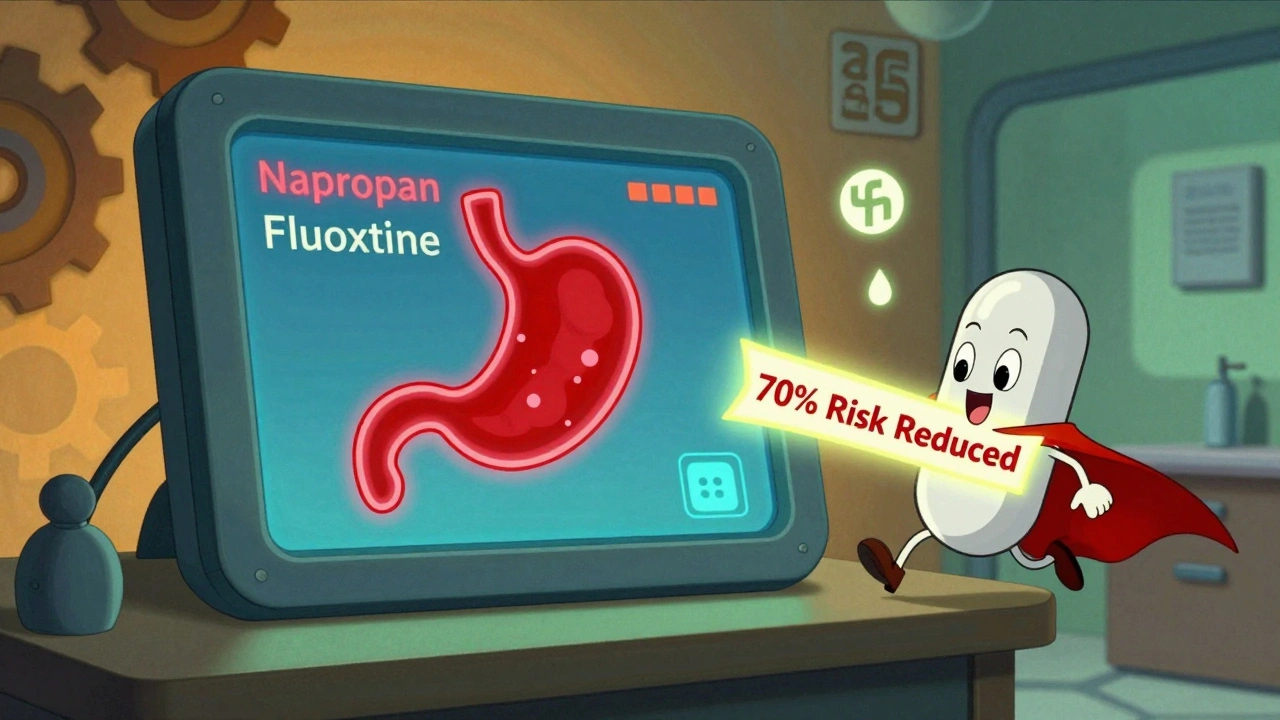
What You Can Do Right Now
You don’t have to wait for your doctor to bring it up. Here’s what to do:- Check your meds. Look at your pill bottles or pharmacy app. Are you taking an SSRI and an NSAID? If yes, don’t panic - but don’t ignore it either.
- Ask about alternatives. Can your pain be managed with acetaminophen? It’s just as effective for many types of pain and carries zero bleeding risk with SSRIs.
- Ask about PPIs. If you must stay on both drugs, ask your doctor to prescribe a daily PPI. Omeprazole 20 mg once a day is usually enough.
- Know the warning signs. Black, tarry stools; vomiting blood or material that looks like coffee grounds; sudden dizziness or weakness; unexplained abdominal pain - these aren’t normal. Call your doctor or go to the ER.
- Don’t self-medicate. If you’re on an SSRI, don’t start taking ibuprofen or naproxen without checking with your provider first.
What’s Changing in 2025
The tide is turning. In 2019, the FDA required all SSRI labels to include warnings about NSAID bleeding risks. In 2023, major EHR systems like Epic rolled out a new GI-BLEED risk calculator that scores your personal risk based on age, drug types, genetics, and medical history. It’s now embedded in electronic prescriptions - so if your doctor tries to prescribe naproxen with fluoxetine, the system flags it. New antidepressants are also emerging. Vortioxetine, for example, showed 40% less bleeding risk than traditional SSRIs in a 2022 trial. And research is underway on drugs that treat depression without affecting platelets at all. Meanwhile, prescriptions for NSAIDs among SSRI users have dropped 12% since 2018 - and acetaminophen use has risen 18%. That’s not coincidence. It’s awareness.The Bottom Line
This isn’t a rare side effect. It’s a predictable, preventable, and tragically common danger. Millions of people are taking SSRIs and NSAIDs together without knowing the stakes. The good news? You don’t have to be one of them. You don’t need to stop your antidepressant. You don’t need to suffer through pain. You just need to ask the right questions. Switch to acetaminophen. Add a PPI. Avoid naproxen. Talk to your doctor. These steps aren’t optional - they’re essential. The science is clear. The tools are available. The risk is real. But so is the solution.Can I take ibuprofen with sertraline?
You can, but it’s not safe without precautions. Combining ibuprofen with sertraline increases your risk of stomach bleeding by about 75% compared to taking ibuprofen alone. If you must take both, your doctor should prescribe a proton pump inhibitor (PPI) like omeprazole to protect your stomach. Better yet, switch to acetaminophen (Tylenol), which has no bleeding risk with SSRIs.
Which SSRI has the lowest bleeding risk?
Sertraline and citalopram have weaker effects on platelet serotonin compared to fluoxetine or paroxetine, making them slightly lower risk. But no SSRI is completely free of this risk. The key isn’t just choosing the “safest” SSRI - it’s avoiding NSAIDs whenever possible and using a PPI if you must take both.
Is celecoxib safer than ibuprofen with SSRIs?
Yes. Celecoxib is a COX-2 inhibitor and has significantly lower GI bleeding risk than non-selective NSAIDs like ibuprofen, naproxen, or diclofenac. Studies show its bleeding risk is close to placebo levels when used alone. Still, combining celecoxib with an SSRI still raises risk - so a PPI is still recommended, and acetaminophen remains the safest option.
How do I know if I’m having a GI bleed?
Signs include black, sticky, tar-like stools; vomiting blood or material that looks like coffee grounds; sudden dizziness, fainting, or weakness; rapid heartbeat; or unexplained abdominal pain. These aren’t normal side effects - they’re medical emergencies. If you’re on SSRIs and NSAIDs and experience any of these, go to the ER immediately.
Can I stop NSAIDs and still manage my pain?
Absolutely. For most types of pain - headaches, muscle aches, arthritis - acetaminophen (Tylenol) works just as well without the bleeding risk. Physical therapy, heat/cold therapy, or topical pain relievers like diclofenac gel (which doesn’t enter your bloodstream much) are also good alternatives. Talk to your doctor about a pain management plan that doesn’t rely on oral NSAIDs.
Should I take a PPI if I’m on an SSRI and NSAID?
Yes, if you’re taking both. The American Gastroenterological Association recommends a daily PPI for anyone on this combination. Studies show PPIs reduce bleeding risk by about 70%. Even if you feel fine, the damage can build silently. A PPI like omeprazole 20 mg daily is inexpensive, widely available, and can prevent a life-threatening bleed.
Is this risk only for older adults?
No. While people over 65 are at highest risk, younger adults with a history of ulcers, kidney disease, or who take aspirin or blood thinners are also vulnerable. Bleeding doesn’t care how old you are - it cares about what drugs you’re taking and whether you’re protected. If you’re on SSRIs and NSAIDs, you’re at increased risk regardless of age.

Vincent Soldja
SSRIs and NSAIDs together increase bleeding risk. That's it. No need to overcomplicate.
Makenzie Keely
Let me just say-this is one of the most critical, life-saving pieces of medical advice I’ve read all year! 🙌 If you’re on an SSRI and popping ibuprofen like candy, please, please, PLEASE talk to your doctor about acetaminophen and a PPI. It’s not just ‘a risk’-it’s a silent, ticking time bomb in your gut. And yes, celecoxib is better than naproxen, but still not risk-free. Acetaminophen is your new best friend. Your stomach will thank you.
Francine Phillips
Been on sertraline for years. Took naproxen for back pain. Never thought twice. Now I’m scared to even take Tylenol.
Katherine Gianelli
Hey, I get it-you’re in pain, you’re tired, you just want to feel normal again. But please, don’t suffer in silence or self-medicate. Your mental health matters, and your physical health matters too. Talk to your doctor. Ask about topical creams. Try physical therapy. Use heat packs. There are so many gentle, safe ways to manage pain without putting your life at risk. You’re not weak for needing help-you’re smart for looking for safer options. 💪❤️
Joykrishna Banerjee
Typical American medical fearmongering. In India, we’ve been combining SSRIs with NSAIDs for decades without ‘bleeding crises.’ This is just Big Pharma pushing PPIs to sell more drugs. Your ‘75% increased risk’ is statistically manipulated. Who funded this study? Who profits from your anxiety? 🤔
Myson Jones
Thank you for sharing this. I’ve seen too many patients walk in with black stools and no idea why. It’s heartbreaking. The fact that doctors still don’t routinely screen for this interaction is a systemic failure. I’m glad the EHR systems are finally flagging it. Prevention should be the standard, not the exception.
parth pandya
sertraline + ibuprofen = bad. ppi is good. acetaminophen is better. i read this and i was like ohhhhh so that’s why my uncle had a bleed. thanks for the info. i’ll tell my mom.
James Kerr
Just took my first omeprazole today after reading this. Feels good to be proactive. No more ibuprofen for me. Tylenol FTW 😎
shalini vaishnav
This is Western medical nonsense. In India, we treat pain with natural remedies and strong willpower. You don’t need PPIs. You need discipline. Your weak stomach is a result of your soft lifestyle. Stop blaming drugs and start building resilience.
vinoth kumar
Great post! I’m a pharmacist in Delhi and I’ve seen this exact combo cause issues. Many patients think ‘if it’s sold over the counter, it’s safe.’ I always ask about antidepressants before dispensing NSAIDs. Awareness is growing, but slowly. Keep spreading the word!
bobby chandra
Let’s be real-this isn’t just about bleeding. It’s about how broken our healthcare system is. We’re told to pop pills like candy, but no one tells us the hidden costs. SSRIs aren’t ‘just for mood.’ NSAIDs aren’t ‘just for pain.’ And yet, we treat them like candy. This is a wake-up call. Time to stop being passive patients and start demanding smarter care.
Archie singh
Of course the FDA added a warning. Because they’re terrified of lawsuits. Meanwhile, real medicine-like exercise, fasting, and cold showers-would fix both depression and arthritis. But you can’t patent a lifestyle. So they sell you more pills. Wake up.
Gene Linetsky
They don’t want you to know this-but NSAIDs and SSRIs were *designed* to cause GI issues so you’d need more drugs. PPIs? They’re the next step in the cycle. The real solution? Stop taking all of it. Go primal. Eat real food. Sleep in the dark. Your gut will heal. The system doesn’t want you healthy-they want you dependent.
Ignacio Pacheco
So… if I take celecoxib + sertraline + omeprazole… am I just paying for three drugs to do what one drug (acetaminophen) could do for free? Why does medicine always feel like a Russian nesting doll of prescriptions?