
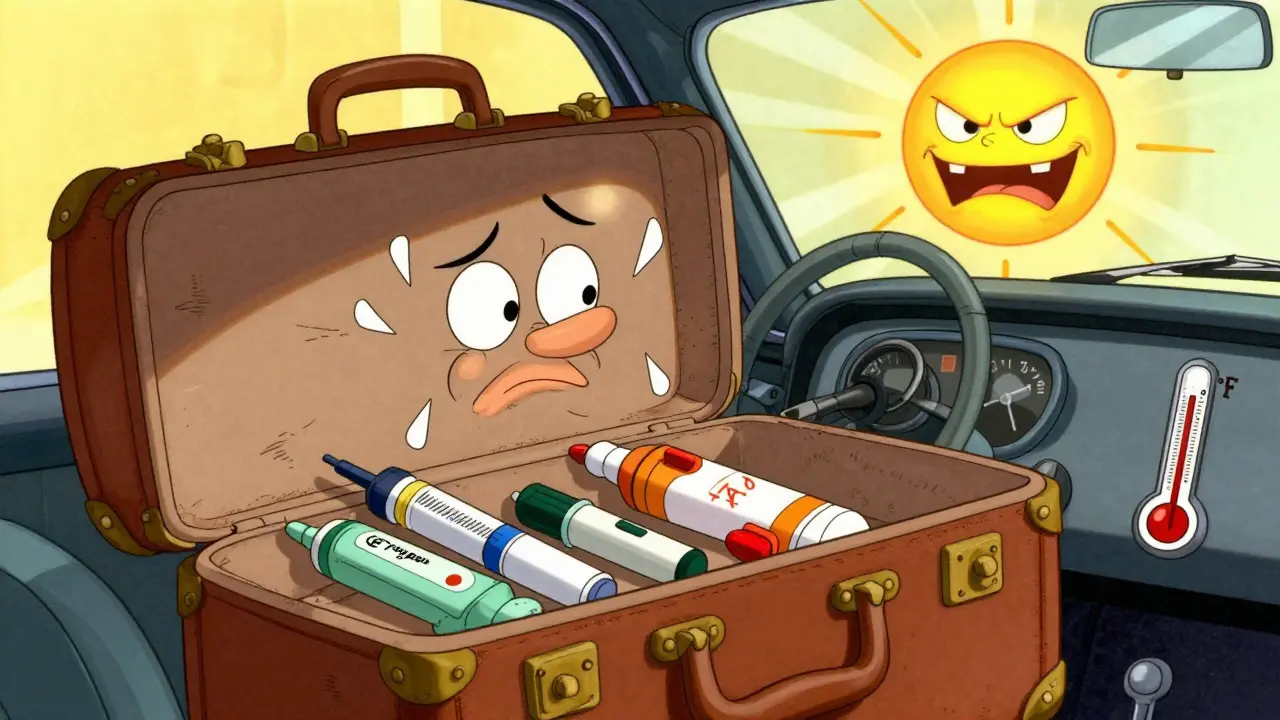
When you're traveling in a hot climate, your medications aren't just sitting in your bag-they're sitting in a potential chemical time bomb. A car seat in the sun can hit 140°F in under 30 minutes. That’s hotter than an oven on bake. And if your insulin, EpiPen, birth control, or asthma inhaler is sitting there? It’s not just losing strength-it could be turning into something useless, or worse, unsafe.
Why Heat Destroys Medications
Not all pills are created equal. While a basic ibuprofen tablet might survive a day in your backpack, many critical drugs break down fast when they get too warm. The ideal storage range for most medications is between 68°F and 77°F (20°C to 25°C). That’s not your hotel room in Bangkok at 85°F. That’s not your glove compartment in Dubai. That’s not the trunk of a rental car parked under a palm tree. According to research from Baystate Health and the American Pharmacists Association, temperatures above 86°F (30°C) start causing chemical changes in sensitive drugs. Insulin, for example, can lose up to 30% of its potency after just 24 hours at 104°F. EpiPens-the devices that save lives during anaphylaxis-can fail completely if exposed to heat for too long. Hormonal birth control pills, certain antibiotics, and even some seizure medications are vulnerable too. The FDA’s 2022 Drug Stability Guidelines say that if a medication is exposed to temperatures more than 15°F above its recommended range for over 24 hours, you should talk to your pharmacist before using it. That’s not a suggestion. That’s a safety rule.What Medications Are Most at Risk?
Here’s what you absolutely cannot risk leaving in the sun:- Insulin: Loses effectiveness fast. Used insulin pens can degrade in under 2 hours at 95°F.
- EpiPens: Epinephrine breaks down in heat. A failed EpiPen during an allergic reaction is life-threatening.
- Hormonal contraceptives: Birth control pills, patches, and rings can become unreliable if stored above 86°F.
- Asthma inhalers: Albuterol and other bronchodilators can clog or lose pressure in high heat.
- Thyroid meds and anti-seizure drugs: Even small drops in potency can trigger serious health setbacks.
What Not to Do
The worst places to store meds on a hot trip? Everywhere you’d naturally think to put them.- Car glove compartment: Hits 140°F+ in minutes. A 2021 study by A4PC.org confirmed this is the #1 cause of medication failure on road trips.
- Car trunk: Even worse. No airflow, full sun exposure, and metal absorbs heat like a frying pan.
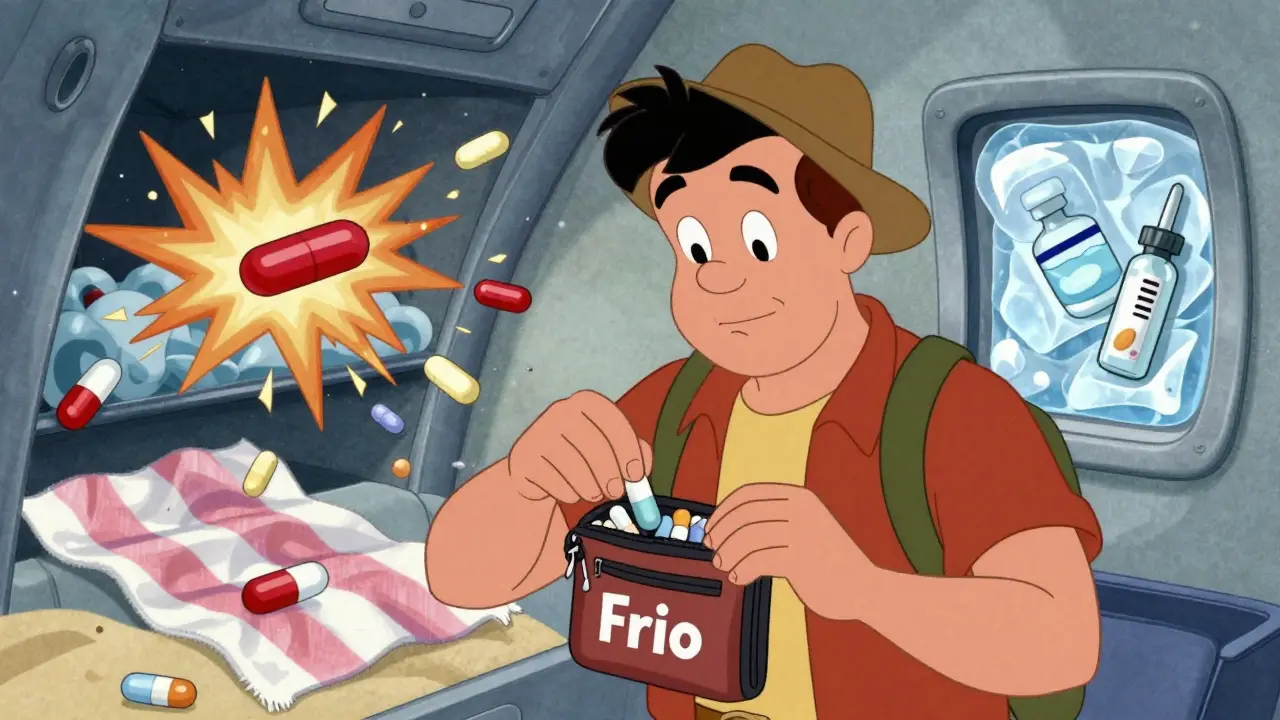
- Backpack left on a beach towel: Sand reflects heat. A 2023 Reddit thread from a nurse shared how a patient’s birth control failed after being left on a beach for two days-resulting in pregnancy.
- Checked luggage on a plane: Cargo holds can drop below freezing or spike above 120°F. Neither is safe for insulin or other refrigerated meds.
How to Pack Medications Right
You don’t need fancy gear. But you do need a system. Here’s how to do it right:- Use an insulated cooler bag. Look for one designed for medications-not a regular lunch cooler. The Frio Insulated Wallet ($24.99) uses water-activated crystals to keep meds under 77°F for up to 48 hours in 100°F heat. It’s lightweight, fits in a purse, and has been tested by travelers in Arizona, Thailand, and the Caribbean.
- For refrigerated meds (like insulin), use a pharmaceutical-grade cooler like the MyMediCarrier ($89.95). It holds 36°F-46°F for 72 hours with ice bricks. Independent tests in the Journal of Travel Medicine confirmed it maintains stable temps even in 102°F heat.
- Never let ice packs touch the medication directly. Wrap them in a thin towel first. Direct contact can freeze insulin and ruin it.
- Keep meds with you on planes. Always carry them in your carry-on. Cabin air stays between 68°F and 75°F-perfect. Checked bags? Too risky.
- Bring a small digital thermometer. The American Society of Health-System Pharmacists now recommends this. For under $15, you can check your bag’s internal temp. If it’s over 80°F, take action.
Smart Tech Options for Extra Peace of Mind
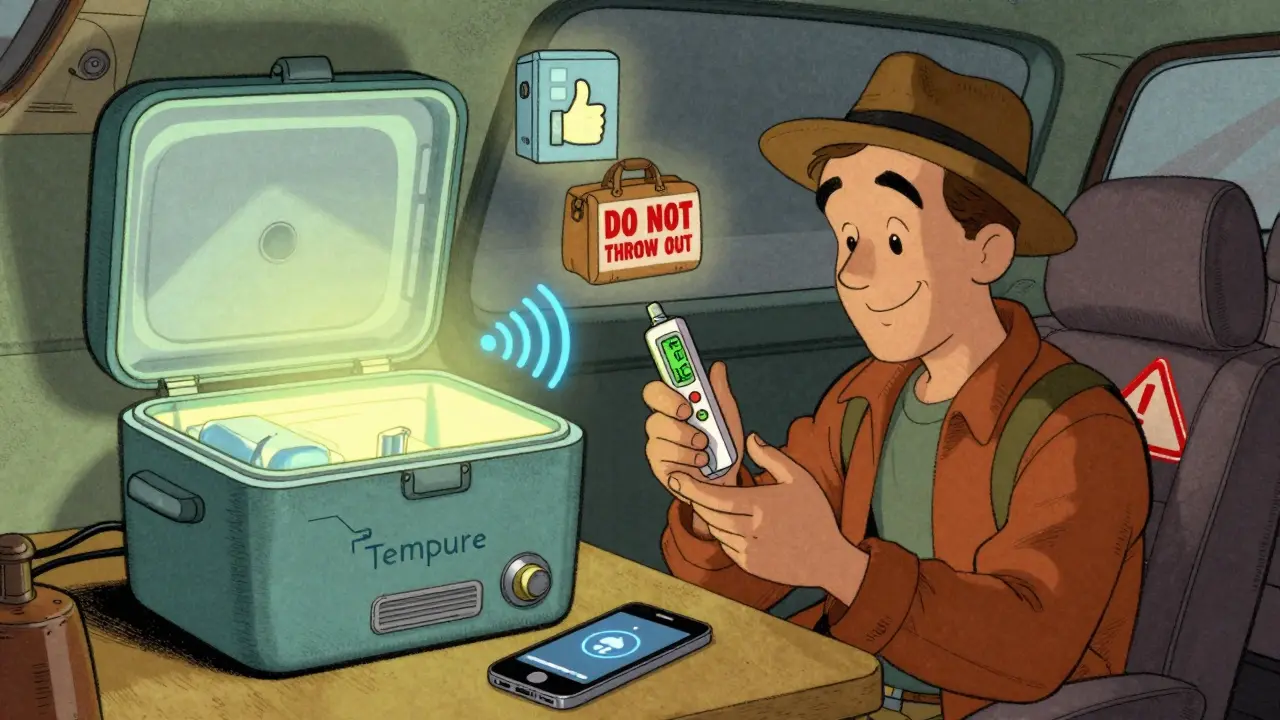
If you’re tech-savvy or traveling long-term, consider smart storage:- TempSure Medication Cooler ($129.99): Bluetooth-connected, shows real-time temps on your phone. Keeps insulin at exactly 42°F even in desert heat.
- TempTraq Medication Monitor ($49.95): A small sensor that clips to your pill bottle and logs temperature over time. Great for multi-day trips.
Air Travel Tips
Flying? Here’s what you need to know:- Keep all meds in your carry-on. Always.
- Use original pharmacy-labeled containers. TSA requires this.
- Declare medications at security if asked. Most agents are trained to handle this now.
- Don’t pack ice packs in checked bags-they’ll melt and leak. Bring them in your carry-on, wrapped in plastic.
- For refrigerated meds, use a cooler with enough ice bricks to last 24 hours. Most flights under 8 hours won’t require more.
What to Do If Your Meds Get Too Hot
If you realize your insulin was left in the car for an hour, or your EpiPen was on a hot dashboard-don’t panic. But don’t assume it’s still good either.- Check for visible changes: Cloudy insulin? Discolored pills? Swollen packaging? Throw it out.
- If it’s a life-saving drug (like epinephrine or insulin), get a replacement ASAP. Don’t wait.
- Call your pharmacist. They can tell you if the medication is likely still effective based on exposure time and temperature.
- For non-critical meds (like a painkiller), you might be okay-but don’t risk it if you’re unsure.
Pro Tips from Real Travelers
- Use a portable fan: One traveler in Florida used a USB fan pointed at her medication bag. It dropped the internal temp by 14°F. Simple, cheap, effective. - Store meds in the hotel minibar: If it’s refrigerated, it’s usually safe. Just check the temp first. - Carry extra doses: Especially for insulin or EpiPens. Heat exposure can ruin your supply. Always have a backup. - Label your cooler: Write "MEDICATION-DO NOT THROW OUT" on it. Airlines and hotels sometimes toss unclaimed coolers.What’s Changing in 2026
The industry is waking up. The FDA now requires manufacturers to print temperature stability info directly on medication labels. By early 2024, you’ll start seeing color-coded heat indicators-like a temperature strip on a baby bottle-that turn red if the drug was exposed to unsafe heat. The global market for medication storage solutions is growing fast-projected to hit $2.5 billion by 2030. Why? Because climate change isn’t slowing down. More people are traveling to hotter places. More people are taking more medications. And the old way of just tossing pills in a bag? That’s no longer safe.Final Checklist Before You Leave
Before you head out on your next hot-weather trip, run through this:- ✅ Identify which meds are heat-sensitive (insulin, EpiPen, birth control, inhalers, etc.)
- ✅ Pack them in an insulated, temperature-tested cooler-not a regular bag
- ✅ Keep them with you at all times-never in checked luggage or a car
- ✅ Bring a small thermometer to check the bag’s internal temp
- ✅ Carry extra doses of critical meds
- ✅ Know your pharmacy’s contact info in case you need a replacement
- ✅ Never use meds that look changed (cloudy, cracked, discolored)
Can I leave my pills in the car if it’s only for 10 minutes?
No. Even 10 minutes in a parked car on a 90°F day can push the interior to over 120°F. Medications like insulin and EpiPens can begin degrading within 20 minutes. Don’t risk it.
Is it safe to store insulin in a hotel fridge?
Yes-if the fridge is clean and reliable. Most hotel fridges maintain temperatures between 35°F and 40°F, which is ideal for insulin. Just verify with a thermometer before storing. Avoid fridges in garages or poorly maintained rooms.
What if my medication looks different after being in the heat?
If your insulin is cloudy, your pills are cracked or discolored, or your inhaler feels lighter than usual-don’t use it. These are signs of degradation. Replace it immediately. Your life may depend on it.
Do all medications need special storage?
No. Basic pain relievers like acetaminophen or ibuprofen are generally stable in heat. But anything with hormones, proteins, or biologics (like insulin, EpiPens, birth control, thyroid meds, or antibiotics) is at risk. When in doubt, assume it’s sensitive.
Can I use a regular cooler from the grocery store?
You can, but it’s not ideal. Regular coolers lose cold quickly and don’t maintain stable temps. They can also freeze medications if ice packs touch them directly. Use a cooler designed for medications-it’s worth the extra cost for safety.
What should I do if I run out of meds while traveling?
Call your pharmacy before you leave and ask for a travel prescription. Many pharmacies can fax a refill to a local pharmacy abroad. If you’re in an emergency, visit a local clinic or hospital-they can often provide a short-term supply. Always carry a list of your meds and dosages.

Jessica Bnouzalim
Okay but like-how is this not common knowledge already?? I had a friend pass out in Thailand because her EpiPen got left in a rental car for 20 minutes. She had to get flown to Singapore for a new one. I now carry my insulin in a Frio wallet strapped to my leg under my pants. Yes, really. No shame. Your meds are your lifeline.
Christina Widodo
I never realized how many meds are actually heat-sensitive until I read this. I thought ibuprofen was the only one that mattered. Now I’m checking all my bottles for temperature warnings. Also-why isn’t this info on every pharmacy website??
Prachi Chauhan
Think about it. Our bodies are temperature-regulated machines. Why would we assume pills are any different? Heat breaks bonds. Proteins unfold. Hormones misfire. It’s not magic. It’s chemistry. And we treat our meds like snacks in a glovebox. We’re lucky more people don’t die from this. Simple truth: if it saves your life, protect it like you’d protect a newborn.
Katherine Carlock
My cousin used a USB fan on her meds during a road trip through Texas and it worked?? That’s genius. I’m stealing that. Also-hotel minibar is a legit hack. Just make sure it’s not the one next to the freezer. Mine once froze my birth control pills. Long story. Short version: I had to buy Plan B at 3am in Albuquerque. Don’t be me.
Sona Chandra
THIS IS A NATIONAL EMERGENCY. PEOPLE ARE DYING BECAUSE PHARMACIES DON’T WARN YOU. I SAW A WOMAN IN THE PHARMACY CRY BECAUSE HER INSULIN WAS RUINED AND SHE COULDN’T AFFORD A NEW PEN. THE SYSTEM IS BROKEN. WHY ISN’T THIS ON THE NEWS? WHY ISN’T THERE A FEDERAL LAW? WHY DO WE STILL LET PEOPLE STORE MEDS IN THEIR GLOVEBOXES LIKE IT’S NORMAL??
Jennifer Phelps
I just use a ziplock with a cold pack and call it a day. Never had an issue. Maybe I’m lucky but I’ve traveled to 12 hot countries and my asthma inhaler still works. I don’t need a $130 Bluetooth cooler
Lauren Warner
Let’s be real-this post is 90% marketing for Frio and TempSure. The FDA doesn’t require manufacturers to print heat indicators until 2024? That’s not a revelation, that’s a failure. And the fact that people are paying $90 for a cooler that does what a $15 insulated bag can do? You’re being played. Also, your "220% sales increase" is from a tiny niche market. Stop hyping this like it’s a new discovery.
Craig Wright
It is deeply concerning that American travelers treat life-sustaining medication with such casual disregard. In the United Kingdom, we are educated from childhood on the importance of pharmaceutical integrity. Leaving insulin in a vehicle is not merely negligent-it is reckless endangerment. The notion that a USB fan is an acceptable solution is indicative of a broader cultural decline in medical literacy. I urge you to consult the NHS guidelines, which are far more rigorous than this loosely cited Reddit-style article.