
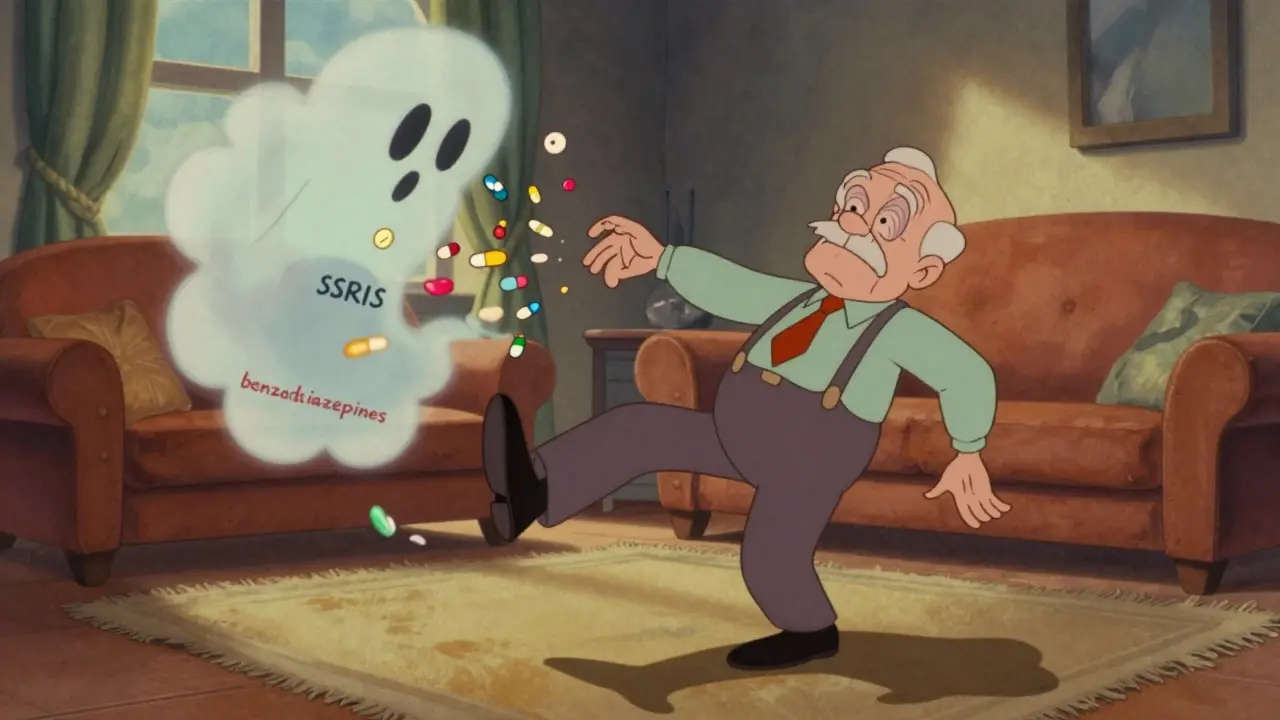
Every year, more than 36,000 older adults in the U.S. die from falls. That’s more than car crashes. And a huge part of the problem? Medications. Not because they’re bad drugs, but because too many seniors are taking them-sometimes for years-without anyone checking if they’re still safe.
What Makes a Medication Risky for Falls?
It’s not just about being old. It’s about how certain drugs affect the body. The biggest culprits are medications that mess with your balance, blood pressure, or brain. Think dizziness, slow reactions, confusion, or a sudden drop in blood pressure when you stand up. That’s called orthostatic hypotension. One moment you’re fine, the next you’re on the floor. These effects don’t always show up right away. Often, they build up slowly. You might not notice you’re unsteady until you trip on a rug or slip in the shower. And when you’re 75, a simple fall can mean a broken hip, a long hospital stay, or worse.Top Medications That Raise Fall Risk
Here’s what the research shows are the most dangerous for seniors:- Antidepressants - Especially SSRIs like sertraline (Zoloft) and tricyclics like amitriptyline. Studies show these double the risk of falling. Why? They cause drowsiness, dizziness, and lower blood pressure.
- Benzodiazepines - Drugs like diazepam (Valium) and lorazepam (Ativan) are used for anxiety or sleep. But they slow your reflexes, blur your vision, and make you feel foggy. Long-acting ones are especially risky. Even short-acting versions aren’t safe long-term.
- Antipsychotics - Used for dementia-related agitation, these include risperidone and quetiapine. They cause stiffness, shuffling gait, and sudden drops in blood pressure. The American Geriatrics Society says they should be avoided unless absolutely necessary.
- Opioids - Painkillers like oxycodone or hydrocodone. They cause drowsiness and dizziness. But here’s the scary part: combining opioids with benzodiazepines increases fall risk by 150% compared to either drug alone.
- Blood pressure meds - ACE inhibitors (lisinopril), beta blockers (carvedilol), and diuretics (hydrochlorothiazide) are common. But if the dose is too high-or if you just started them-you can get lightheaded when standing. Many falls happen during the first few weeks after a dose change.
- Antihistamines - Over-the-counter sleep aids and cold meds like diphenhydramine (Benadryl) are packed with anticholinergic effects. They dry out your mouth, blur your vision, and fog your brain. Yet, people still take them nightly without realizing the danger.
- Muscle relaxants - Drugs like cyclobenzaprine and carisoprodol. They’re meant for short-term use, but many seniors get them prescribed for chronic back pain and keep taking them.
- Anticholinergics for bladder issues - Oxybutynin and tolterodine help with overactive bladder, but they also cause confusion and dizziness. The American Geriatrics Society says these should be avoided in older adults.
It’s Not Just One Drug-It’s the Mix
Most seniors aren’t on just one risky medication. They’re on five, six, or more. And that’s when things get dangerous. A 2023 study found that 65% to 93% of older adults who fell were taking at least one medication linked to falls. Many were on three or more. It’s not just the drugs themselves-it’s how they interact. Two drugs that are mildly risky on their own can become deadly together. Take this example: A senior takes lorazepam for sleep, sertraline for depression, and hydrochlorothiazide for blood pressure. Each one alone might cause mild dizziness. Together? They multiply each other’s effects. The result: a person who stumbles walking to the bathroom at night. The National Council on Aging warns: taking four or more prescription drugs, no matter the type, increases fall risk. Polypharmacy isn’t just a buzzword-it’s a silent killer.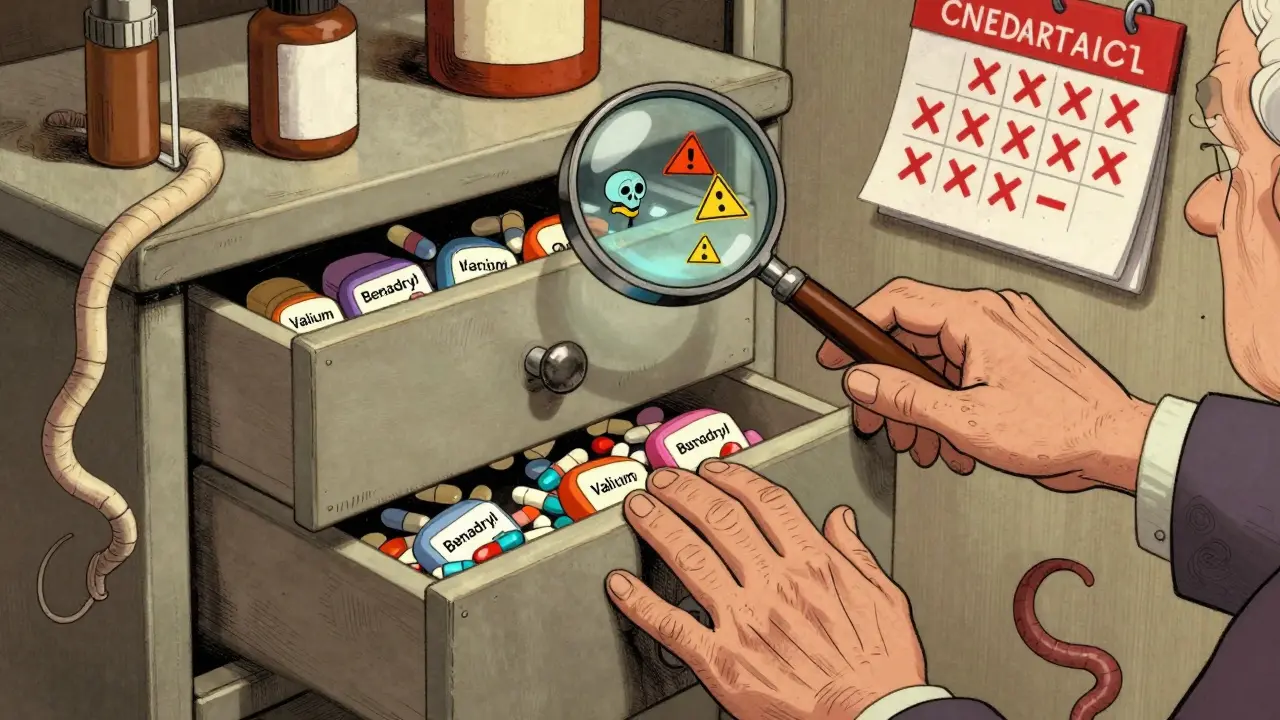
What Experts Say: The Beers Criteria and Deprescribing
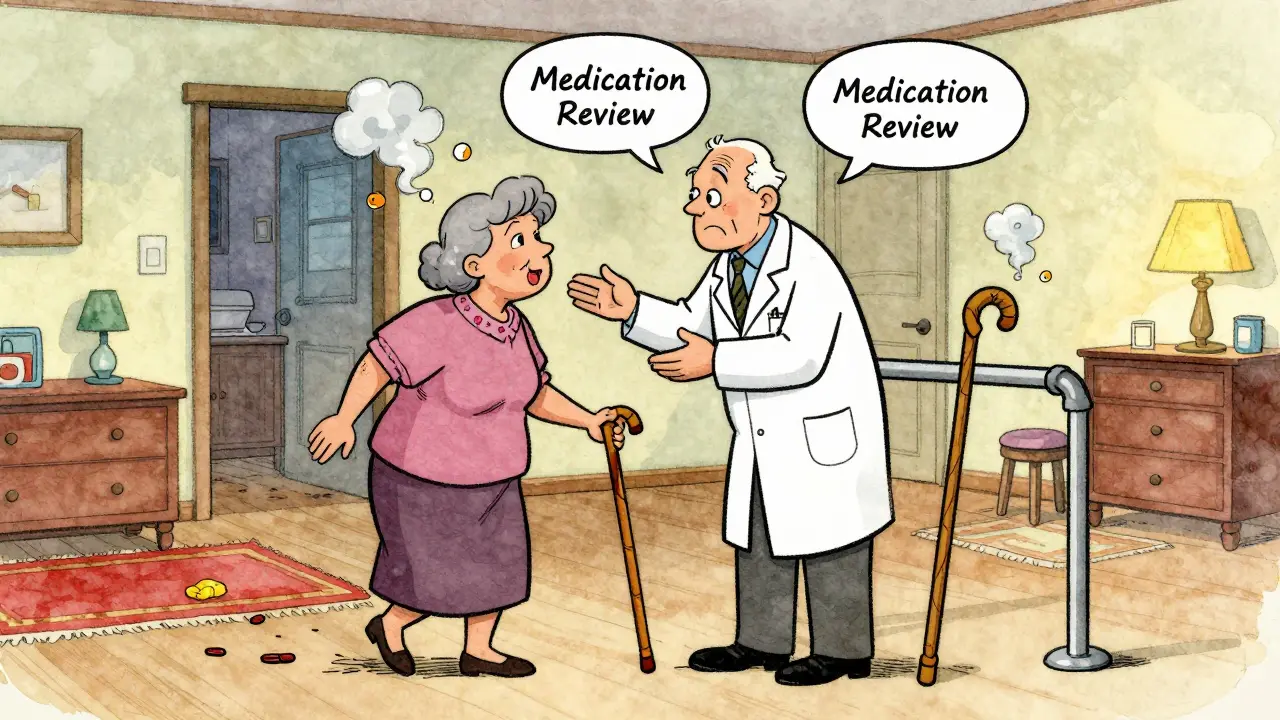
The American Geriatrics Society’s Beers Criteria is the gold standard for identifying risky medications in older adults. First published in 1991 and updated every two years, the 2023 version is clearer than ever: avoid or use extreme caution with the drugs listed above. But knowing what’s risky isn’t enough. The real solution is deprescribing-tapering off or stopping medications that aren’t helping anymore. Dr. Michael Steinman, co-author of the Beers Criteria, says reducing or eliminating fall-risk drugs can cut falls by 20% to 30%. That’s not a small win. That’s life-changing. Pharmacist-led reviews have proven this. The HomeMeds program in the U.S. showed a 22% drop in falls after pharmacists worked with seniors to review and adjust their meds. The CDC says medication review is the single most effective clinical intervention for preventing falls in older adults. Yet, only 42% of primary care doctors routinely check for medication-related fall risk. That’s a gap. And it’s leaving seniors vulnerable.What You Can Do Right Now
If you or a loved one is over 65, here’s what to do:- Make a complete list of every pill, patch, cream, and OTC drug you take-including vitamins and supplements. Don’t forget the Benadryl you take at night or the melatonin you bought online.
- Bring it to your doctor or pharmacist and say: “I’m worried about falls. Can we review these meds?”
- Ask about alternatives - Is there a non-drug option for sleep? Can anxiety be managed with therapy instead of benzodiazepines? Are there newer bladder meds with fewer side effects?
- Check for recent changes - Falls often happen within weeks of starting or changing a drug. Did you start a new blood pressure pill last month? Did your dose go up? That’s a red flag.
- Test for orthostatic hypotension - Sit quietly for 5 minutes, then stand up. If you feel dizzy or your vision goes dark, tell your doctor. They can measure your blood pressure while sitting and standing to confirm.
When to Ask for Help
If someone has had more than one fall in the past year, or if a fall caused injury, it’s time for a full review. Don’t wait for the next appointment. Call your doctor. Ask for a referral to a geriatrician or clinical pharmacist. Some hospitals have fall prevention clinics. Medicare covers medication therapy management for seniors on multiple drugs. And if you’re taking opioids and benzodiazepines together? That’s an emergency. Ask your doctor to help you taper off one or both. The risk isn’t just falls-it’s respiratory failure and death.It’s Not About Stopping All Meds
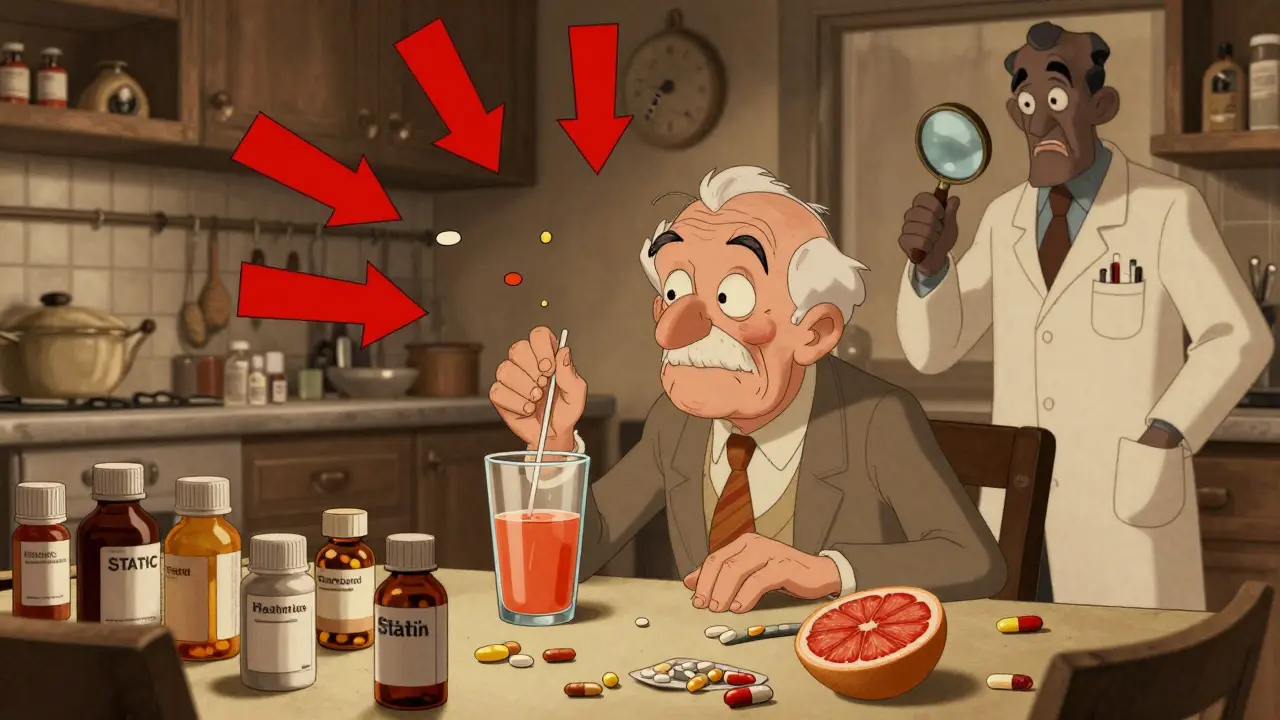
This isn’t about fear. It’s about balance. Some medications save lives. Blood thinners for atrial fibrillation. Insulin for diabetes. Statins for heart disease. The goal isn’t to stop everything. It’s to stop what’s doing more harm than good. Medications aren’t the only cause of falls. Poor lighting, loose rugs, no grab bars-those matter too. But while you fix your home, you also need to fix your medicine cabinet. The rise in fall deaths since 2018 isn’t because seniors are weaker. It’s because we’ve been prescribing more of the wrong drugs. And we’ve been letting them sit on the shelf for years without checking. You can change that. One list. One conversation. One decision to ask, “Is this still safe?”That’s how you protect someone you love.
Poppy Newman
This is so important 💔 My grandma took lorazepam for years and never told anyone she was stumbling. She fell in the shower and broke her hip. They never even questioned her meds. 😢
Mina Murray
Ive been saying this for years and no one listens. SSRIs are just chemical lobotomies for old people. They put them on these drugs to make them quiet so the nursing home staff dont have to deal with them. Its not medicine its control. And dont even get me started on benzos.
Adam Gainski
I'm a geriatric pharmacist and this is spot on. I see this every single day. A lot of these meds were prescribed 10+ years ago for a condition that no longer exists. We need to normalize deprescribing like we do adding meds. Just because a pill was prescribed once doesn't mean it's still needed.
Alex Danner
The opioid + benzo combo is a death sentence waiting to happen. I had a patient who was on both for chronic pain and anxiety. One night he stopped breathing. His daughter found him blue. Turns out his doctor never told him the risks. This isn't medical care. It's negligence.
Anthony Capunong
I dont know why we even let these drugs be sold. In America we just pump pills into old people like theyre vending machines. My uncle took 14 different meds. He was walking like a zombie. We pulled him off half of them and he started playing guitar again. Its not magic. Its just stopping the poison.
Emma Addison Thomas
In the UK we have Medication Reviews under the NHS. Every elderly patient gets one annually. It's not perfect but it saves lives. We don't just hand out prescriptions and forget. Maybe America needs something like that. Not just for seniors but for everyone on long-term meds.
Kamlesh Chauhan
I dont even know why we bother with doctors anymore they just write prescriptions like its a game. My mom was on diphenhydramine every night for 8 years. She thought it was harmless because its OTC. Then she started hallucinating. Turned out it was the benadryl. Now shes in a memory care unit and they still wont take her off it
Elen Pihlap
I hate how people think old people are just fragile. Its not that theyre weak. Its that weve been poisoning them with pills for decades. My dad fell because of his blood pressure med. He was on it for 12 years and no one ever checked if it was still needed. He died from the fall. And the doctor said he was just unlucky.
Katrina Morris
my aunt just had her meds reviewed and they took away 5 of them. she says shes never felt better. like literally she woke up one day and realized she could walk to the mailbox without holding onto the fence. its not about stopping meds its about stopping the stuff that hurts you
Christine Joy Chicano
The Beers Criteria isn't just a list-it's a moral compass. Every time a clinician ignores it, they're choosing convenience over compassion. We've turned aging into a pharmaceutical problem instead of a human experience. We treat dementia with antipsychotics instead of music therapy. We treat loneliness with sedatives instead of community. It's not just dangerous-it's a betrayal of care.
LALITA KUDIYA
i just wish people knew that benadryl is not a sleep aid its a brain fogger 😔
Jonathan Larson
Medication is not a solution-it is a tool. And like any tool, it must be wielded with wisdom, not habit. The tragedy lies not in the existence of these drugs, but in the abandonment of vigilance. A pill prescribed in 2005 for anxiety may serve no purpose in 2025, yet we let it linger like an uninvited guest. To deprescribe is not to deny care-it is to restore dignity.
Sai Ganesh
In India we dont have this problem because most elders dont take 10 pills. They use turmeric and yoga. But when they come to the US and get put on all these meds they turn into zombies. Its cultural imperialism disguised as medicine.
Anastasia Novak
I work in a nursing home. I’ve seen the same 87-year-old woman on 11 medications for 15 years. She hasn’t walked unassisted since 2010. Her family says ‘she’s just old.’ But when we stopped her anticholinergics and benzodiazepines? She started humming. She started recognizing her grandchildren. She didn’t need to be medicated into silence. She needed to be heard.
Andrew N
this is all just fearmongering. if you dont want to fall dont take meds. problem solved. also why are we even talking about this its not like old people are gonna live forever anyway