
When it comes to protecting your heart, what you eat matters more than you think. Not every diet works the same way. Some promise quick weight loss but leave your arteries vulnerable. Others, backed by decades of science, actually help your heart beat stronger, longer, and with less strain. Three eating patterns stand out: the Mediterranean diet, the DASH diet, and plant-forward eating. They’re not fads. They’re proven. And they’re not about deprivation-they’re about eating better, not less.
What Makes a Diet Truly Heart-Healthy?
A heart-healthy diet doesn’t just lower cholesterol. It lowers blood pressure, reduces inflammation, and keeps your blood vessels flexible. It doesn’t just avoid bad fats-it replaces them with the right ones. And it doesn’t just cut sugar-it fills your plate with fiber-rich foods that naturally balance your system.
The American Heart Association calls these three approaches Tier 1 diets-the highest level of evidence-backed nutrition for preventing heart disease. That means they’ve been tested in thousands of people over years, not just a few months. Studies show people who stick with them have up to 30% lower risk of heart attack and stroke. They also reduce the need for blood pressure meds in many cases.
The Mediterranean Diet: Flavor First, Health Second
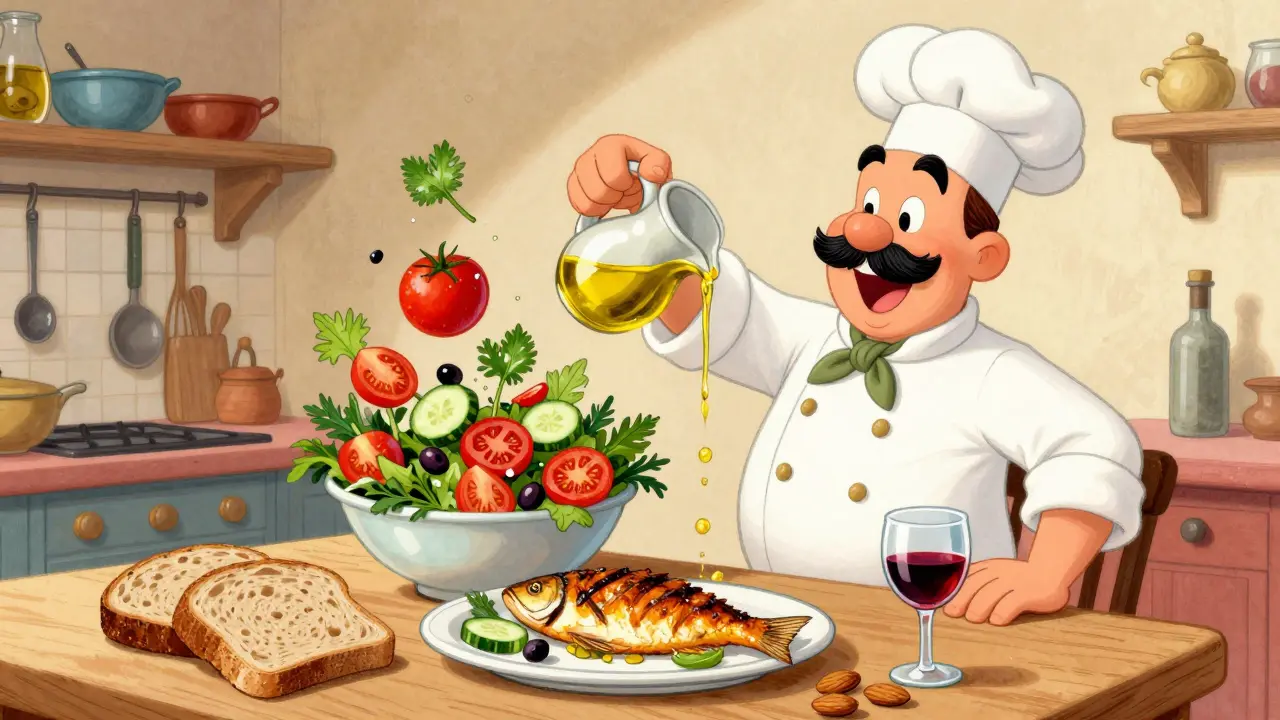
Imagine eating grilled fish with lemon and herbs, drizzled with golden olive oil, alongside a big salad of tomatoes, cucumbers, and olives. Add a slice of whole grain bread, a handful of almonds, and a glass of red wine. That’s the Mediterranean diet in a nutshell.
It’s not a strict plan. It’s a way of eating that comes from countries like Greece, Italy, and Spain. In the 1950s, researcher Ancel Keys noticed people in these regions had far fewer heart attacks than Americans-even when they ate more fat. The secret? The kind of fat. Olive oil, nuts, and fish are full of monounsaturated and polyunsaturated fats that protect your arteries.
Here’s what it looks like daily:
- Fruits and vegetables: at least 5 servings
- Whole grains: bread, pasta, rice-always unrefined
- Legumes: beans, lentils, chickpeas-eat them 3+ times a week
- Nuts and seeds: a small handful daily
- Extra-virgin olive oil: your main cooking fat
- Fish: twice a week, especially salmon, sardines, mackerel
- Poultry and eggs: moderate amounts
- Red meat: once a month or less
- Dairy: small portions of cheese and yogurt
- Red wine: optional, 1 glass with meals if you drink
Studies show people who follow this pattern have lower LDL (bad) cholesterol, less inflammation, and even lower levels of heart muscle damage markers. A 10-year study of over 2,000 people found those with the highest adherence had significantly fewer heart attacks and deaths from heart disease. And here’s the kicker-it’s one of the most enjoyable diets to stick with. People don’t feel like they’re on a diet. They feel like they’re eating well.
The DASH Diet: Science in Every Bite
If the Mediterranean diet is about flavor, the DASH diet is about numbers. DASH stands for Dietary Approaches to Stop Hypertension. It was created in the 1990s by researchers at Harvard, funded by the National Institutes of Health, specifically to lower blood pressure without drugs.
The original DASH trial showed systolic blood pressure dropping by up to 11.4 mm Hg in just eight weeks. That’s as effective as some medications. And it worked even better for people with high blood pressure.
Here’s how it works:
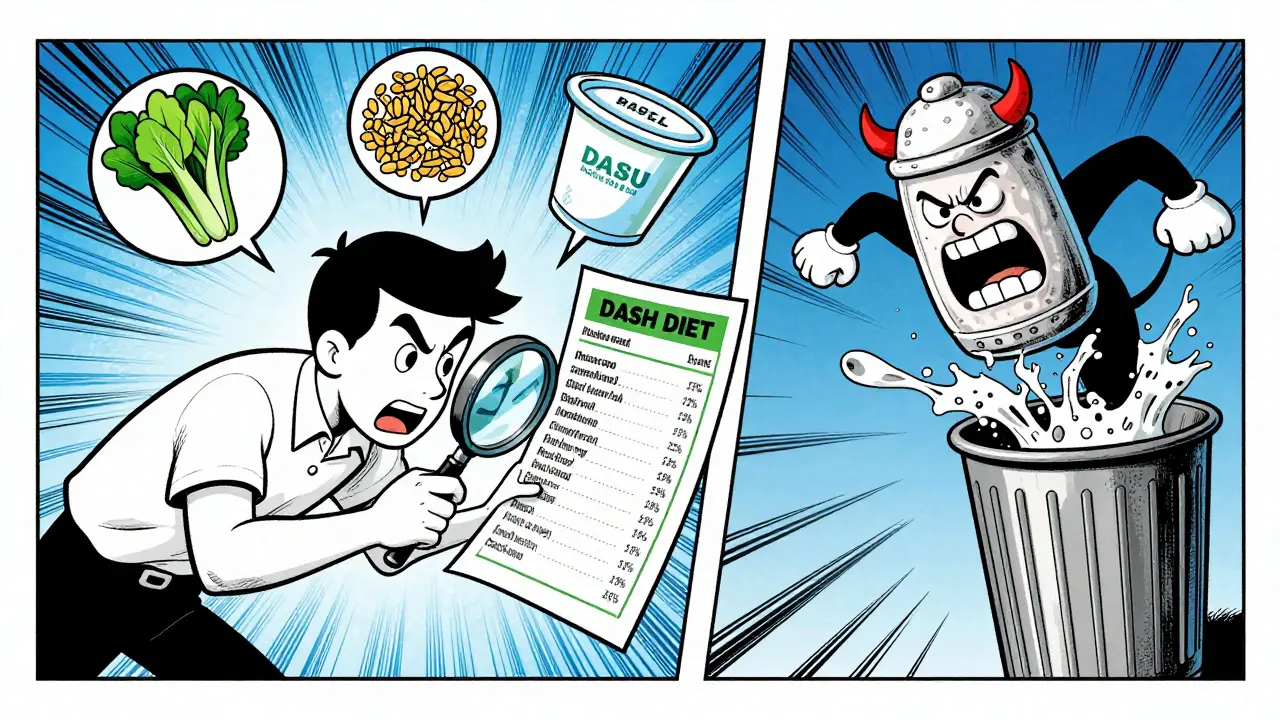
- Sodium: capped at 1,500-2,300 mg per day (most Americans eat over 3,400 mg)
- Fruits and vegetables: 4-5 servings each, daily
- Whole grains: 6-8 servings per day
- Low-fat dairy: 2-3 servings (milk, yogurt, cheese)
- Lean protein: fish, poultry, beans-6 servings or fewer per day
- Nuts, seeds, legumes: 4-5 servings per week
- Fats and oils: 2-3 servings (focus on plant oils, not butter)
- Sweets: 5 or fewer servings per week
It’s precise. You count servings. You read labels. You avoid processed foods like chips, canned soups, and deli meats-anything with hidden salt. The results? Blood pressure drops fast. In one study, 29% of hypertensive patients were able to reduce their medication within six months.
But it’s not easy. Cutting sodium from 3,400 mg to 1,500 mg is hard. Most people need help. The National Heart, Lung, and Blood Institute offers free meal plans and 14-day menus. And there’s a smarter version: the OmniHeart variation, which swaps some carbs for healthy fats or extra protein. That version had even better results and was easier for people to stick with long-term.
Plant-Forward Eating: Flexibility Without Compromise
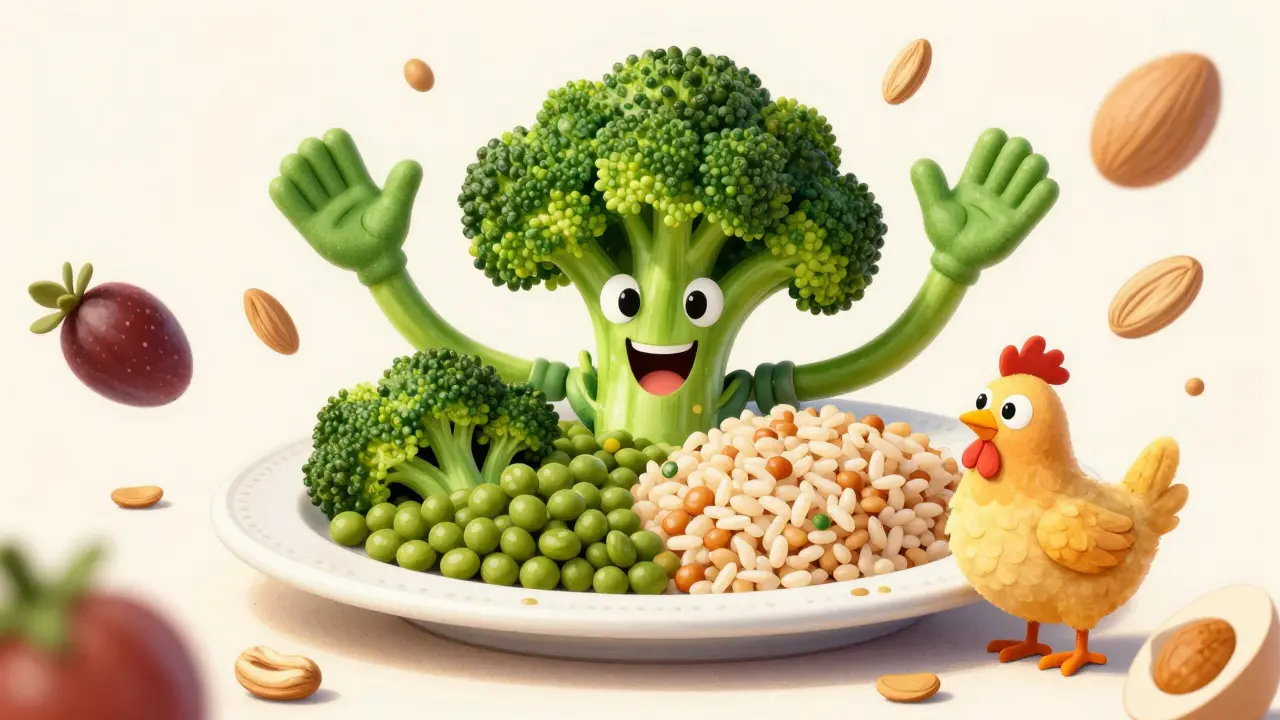
You don’t have to go vegan to eat for your heart. Plant-forward eating means making plants the star-not the side dish. It’s about filling half your plate with vegetables, fruits, beans, whole grains, nuts, and seeds. Animal products? They’re still allowed, but they’re not the main event.
This isn’t a new diet. It’s how people ate for centuries before processed food took over. Think of traditional diets from Asia, the Mediterranean, or rural Africa-lots of grains, legumes, vegetables, and small amounts of meat or fish.
Here’s what it looks like in practice:
- Breakfast: oatmeal with berries, chia seeds, and a spoon of almond butter
- Lunch: lentil soup with whole grain bread and a side of kale salad
- Dinner: stir-fried tofu with broccoli, brown rice, and sesame oil
- Snacks: apples with peanut butter, roasted chickpeas, or raw veggies
Even small shifts help. A 2024 study found that people who ate plant-based meals just three days a week cut their heart disease risk by 14%. The key is fiber-plants are packed with it. Fiber lowers cholesterol, stabilizes blood sugar, and feeds good gut bacteria linked to lower inflammation.
Unlike strict vegan diets, plant-forward eating doesn’t demand perfection. You can still have eggs, yogurt, or a grilled chicken breast. The goal is to make plants the default-not the exception. That’s why it’s the fastest-growing trend. In 2024, 42% of Americans reported eating mostly plant-based meals at least three times a week.
How Do They Compare?
Let’s break down the differences:
| Feature | Mediterranean | DASH | Plant-Forward |
|---|---|---|---|
| Primary Goal | Reduce overall heart disease risk | Lower blood pressure | Boost plant intake, reduce processed foods |
| Sodium Limit | Not strictly limited | 1,500-2,300 mg/day | Encouraged, but not mandated |
| Fat Focus | High in olive oil, nuts, fish | Low saturated fat, plant oils | Plant-based fats preferred |
| Dairy | Moderate (cheese, yogurt) | Low-fat dairy encouraged | Optional, plant-based alternatives common |
| Meat | Limited, mostly fish and poultry | Lean meat, poultry, fish | Small amounts, not central |
| Wine | Optional, moderate | Not recommended | Not required |
| Best For | Long-term sustainability, taste | Fast blood pressure results | Flexibility, accessibility |
Here’s what the data says:
- For lowering blood pressure: DASH wins. It’s the most effective single diet for this.
- For reducing heart attacks and death: Mediterranean diet leads. It cuts overall cardiovascular mortality.
- For ease of adoption: Plant-forward eating wins. You don’t need to count servings or avoid salt completely.
And here’s a new twist: many experts now recommend blending them. The "Medi-DASH" approach combines the olive oil, fish, and veggies of the Mediterranean diet with the sodium control and dairy focus of DASH. In a 12-week trial, this combo lowered blood pressure by 12.4 mm Hg and LDL cholesterol by nearly 19 mg/dL-better than either diet alone.
What’s the Real Challenge?
Knowing what to eat is one thing. Doing it every day is another.
People who try DASH often struggle with salt. Processed foods, restaurant meals, and even bread are loaded with sodium. Reading labels becomes a habit. Cooking at home is non-negotiable.
Those who try Mediterranean diet often get stuck on olive oil. Not all olive oil is created equal. Look for "extra-virgin," cold-pressed, and check the harvest date. Cheap, rancid oil won’t help your heart.
Plant-forward eaters face social pressure. Family dinners, work lunches, holidays-it’s hard to stick to your plan when everyone else is eating meat and pasta. But you don’t need to be perfect. Just make plants the main part of your plate, even if you share a bite of steak.
One Reddit user wrote: "I’ve been on Mediterranean for 18 months and it feels like a lifestyle, not a diet." Another said: "DASH dropped my BP from 150/95 to 130/85 in 6 weeks, but the sodium limits are brutal."
That’s the truth. One is easier to live with. The other gives faster results. You can have both.
How to Start Today
You don’t need to overhaul your life overnight. Start small:
- Swap one processed snack for a handful of almonds or an apple.
- Use olive oil instead of butter for cooking.
- Have one meatless dinner a week-try lentils or chickpeas.
- Read the sodium label on canned beans or soup. Rinse them before eating.
- Drink water instead of sugary drinks. Even one less soda a day helps.
Use free tools: The National Heart, Lung, and Blood Institute has printable DASH meal plans. Oldways.org offers Mediterranean recipe collections. The American Heart Association’s "No-Fad Diet" toolkit helps you build a plan that fits your life.
Most people take 3 to 6 months to fully integrate these changes. But the benefits start within weeks-better energy, clearer skin, more stable moods, and lower blood pressure.
What’s Next?
Science keeps evolving. In 2025, new guidelines are expected to put plant-forward eating on equal footing with Mediterranean and DASH. Genetic testing is even being used to predict who responds best to which diet-some people lower cholesterol better on Mediterranean, others drop blood pressure faster on DASH.
And while these diets cost about $1.50 more per day than a standard American diet, they save thousands in medical bills down the road. Insurance companies are starting to cover nutrition counseling for these plans because they work.
Eighty-nine percent of cardiologists now recommend one of these three diets as a first step for patients with high blood pressure, high cholesterol, or prediabetes. That’s not a trend. That’s medicine.
Your heart doesn’t need magic pills or extreme restrictions. It needs real food-plants, good fats, whole grains, and less salt. Pick one approach. Start today. Your future self will thank you.
Can I still eat meat on a heart-healthy diet?
Yes, but it should be small and occasional. The Mediterranean diet allows fish and poultry regularly, but limits red meat to once a month. DASH includes lean meat, poultry, and fish as protein sources, but in controlled portions. Plant-forward eating doesn’t ban meat-it just makes plants the main part of your plate. You don’t have to go vegan, but eating less meat is better for your heart.
Is the Mediterranean diet better than DASH for heart health?
It depends on your goal. If you want to lower your blood pressure fast, DASH is more effective. If you want to reduce your overall risk of heart attack, stroke, or death from heart disease, the Mediterranean diet has stronger long-term evidence. Many experts now combine both for the best results-this is called the Medi-DASH diet.
Do I need to count calories on these diets?
No. These diets focus on food quality, not calorie counting. You’ll naturally eat fewer calories because you’re filling up on fiber-rich, nutrient-dense foods. DASH does suggest serving counts to help with portion control, but you don’t need a scale or app. Just use your plate as a guide: half veggies, a quarter whole grains, a quarter protein.
Is wine really good for the heart?
Moderate red wine (one glass a day for women, two for men) has been linked to heart benefits in some studies, mostly due to antioxidants like resveratrol. But it’s not required. If you don’t drink, don’t start. The benefits can be achieved without alcohol. If you do drink, stick to one glass with meals-never more.
How long until I see results?
Many people notice improved energy and digestion within a week. Blood pressure can drop in as little as two weeks on DASH. Cholesterol improvements usually show up in 4-6 weeks. The real wins-fewer heart attacks, longer life-come from sticking with it for years. But the small changes add up fast.
Are these diets expensive?
They can cost about $1.50 more per day than a typical American diet, mostly because you’re buying fresh produce, whole grains, and quality olive oil. But you’re cutting out processed snacks, sugary drinks, and fast food-which often cost more than you think. Plus, many people save money on medications over time. Look for seasonal produce, frozen veggies, canned beans, and bulk grains to keep costs down.
Can I follow these diets if I have diabetes or kidney disease?
Yes, but adjustments may be needed. The DASH diet is often recommended for people with diabetes because it improves blood sugar control. For kidney disease, protein and potassium levels may need monitoring-especially with high fruit and vegetable intake. Always talk to your doctor or a dietitian before making big changes if you have a chronic condition.




Chinmoy Kumar
i just started eating more lentils and spinach and my energy is way better lol
no more 3pm crashes
also my mom who hates veggies is now asking for my chickpea curry recipe
Brett MacDonald
so basically we’re just going back to what grandpa ate before corporations turned food into plastic
who knew the answer wasnt a pill but a damn bean
Solomon Ahonsi
another ‘heart healthy’ diet that ignores the real problem: processed food is engineered to be addictive
you don’t need a fancy diet, you need to stop buying shit in boxes
also olive oil isn’t magic, it’s just less terrible than seed oil
George Firican
the real insight here isn’t the dietary patterns themselves but the cultural context in which they evolved
the mediterranean diet isn’t about olive oil-it’s about shared meals, slow eating, and the absence of industrial food marketing
we’ve confused nutrition with optimization, when what we really need is re-enchantment with food as ritual
the DASH diet reduces blood pressure, yes, but it doesn’t restore the dignity of eating as an act of care
plant-forward isn’t a trend, it’s a reconnection to the rhythm of seasons and soil
and yet we reduce all of this to macros and serving sizes, as if the soul of nourishment can be quantified in a spreadsheet
Matt W
my uncle was on DASH for 3 months and got off his blood pressure meds
he still eats steak once a week but now it’s a treat, not the center of the plate
also he started walking after dinner and now he’s got more energy than me
small changes, big results
Murarikar Satishwar
the key is consistency, not perfection. i switched to whole grain roti, swapped sugary tea for green tea, and added a handful of almonds daily. no dramatic changes, but my cholesterol dropped 18 points in 4 months. this isn’t about being extreme-it’s about being steady.
Dan Pearson
oh great, another ‘science-backed’ diet from the same people who told us fat was evil and carbs were king
we’re just swapping one dogma for another
also, why is everyone acting like the mediterranean diet is some ancient secret? my abuela cooked this way in 1965 and no one called it ‘science’ back then
Eli Kiseop
i tried plant forward for a week and honestly i just missed cheese so much
also why is everyone so obsessed with olive oil
can i just eat avocado instead
also is wine really necessary
im just trying to not die early
Ellie Norris
just a heads up-when buying olive oil, look for ‘first cold press’ and a harvest date, not just ‘extra virgin’-a lot of it’s fake
and for DASH, try using potassium salt (like NoSalt) instead of regular salt-it helps balance sodium without losing flavor
also rinse canned beans, it cuts sodium by 40%
Akhona Myeki
while these diets are statistically significant, they are culturally imperialistic. the notion that ‘plant-forward’ is universally accessible ignores the economic realities of food deserts and the historical significance of animal protein in African and South Asian diets. one size does not fit all, and reductionist nutritional advice perpetuates colonial epistemologies under the guise of science.
Sandeep Kumar
meh i eat biryani and butter chicken daily and my bp is fine
you think a salad stops pollution or bad genes
stop pretending food is the only thing that matters
Vatsal Srivastava
everyone ignores that the real heart killer is stress and sleep deprivation
no diet fixes a 70-hour workweek and 4 hours of sleep
also the mediterranean diet only works if you live by the sea and have a 3-hour lunch break
Brittany Marioni
you’re not failing if you slip up-every single person who’s ever tried to eat better has had a pizza night or a bag of chips after a rough day. what matters is that you come back. you’re not a bad person for eating bread. you’re a human being trying to survive in a world that sells you poison wrapped in glitter. be gentle with yourself. your heart will thank you for showing up, even imperfectly.
phara don
has anyone tried combining all three? like, mediterranean-style meals but with DASH sodium limits and plant-forward portions?
also, what’s the best frozen veggie brand that’s actually low sodium?
Hannah Gliane
if you’re still asking if wine is good for your heart, you’ve been living under a rock 🤦♀️
also, no, your kale smoothie isn’t going to undo your 3 a.m. Chipotle runs
stop pretending you’re healthy because you bought quinoa once
real change starts when you stop buying food from a plastic bag labeled ‘heart healthy’
and yes, you need to cook. no, your microwave isn’t your therapist 😘