
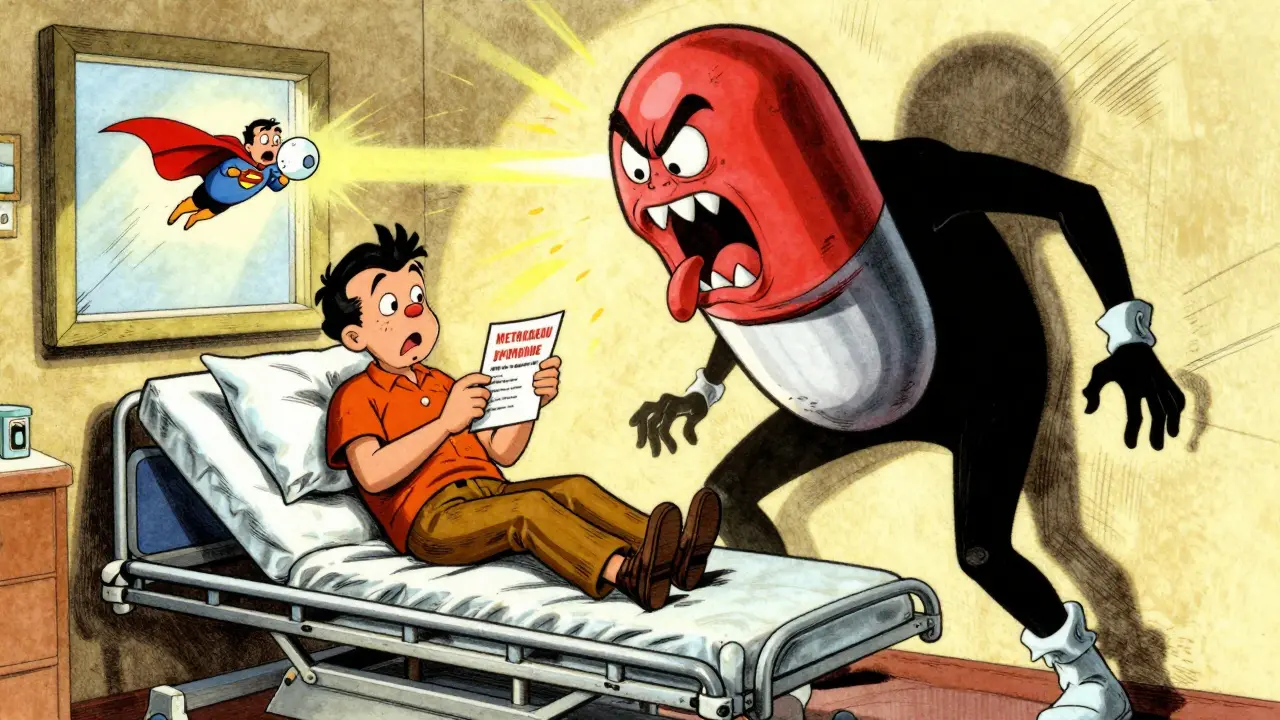
When you’re living with Parkinson’s disease, nausea isn’t just an inconvenience-it’s a common side effect of the very medication that helps you move. Levodopa, the cornerstone of Parkinson’s treatment, causes nausea in 40% to 80% of patients when they first start taking it. That’s why doctors often reach for an antiemetic. But here’s the trap: many of those antiemetics can make your Parkinson’s worse. Not a little worse. Dopamine antagonists-the most common type of nausea drug-can shut down what little dopamine signaling remains in your brain, triggering tremors, stiffness, freezing, and even hospitalization.
Why Dopamine Blockers Are Dangerous for Parkinson’s Patients
Parkinson’s disease isn’t just about shaking hands. It’s about dying brain cells in the substantia nigra, the area that produces dopamine. Without enough dopamine, your movements become slow, stiff, and uncoordinated. Levodopa replaces what’s lost. But if you take a drug that blocks dopamine receptors-like metoclopramide, prochlorperazine, or haloperidol-you’re essentially undoing the work of your medication. These drugs were designed to stop nausea by blocking dopamine in the chemoreceptor trigger zone, a part of the brainstem that signals vomiting. The problem? Many of them cross the blood-brain barrier and hit dopamine receptors in the basal ganglia, the same area damaged by Parkinson’s. That’s like turning off the lights in a room that’s already half-dark. The result? Sudden worsening of motor symptoms. Patients report freezing in place, tremors returning after months of control, or becoming too stiff to walk after a simple dose of an antiemetic.The Most Dangerous Antiemetics for Parkinson’s
Not all nausea drugs are created equal. Some are outright dangerous. According to the American Parkinson Disease Association’s Medications to Avoid list (2023), these drugs carry a 95% risk of worsening symptoms:- Metoclopramide (Reglan, Maxalon): The most common mistake. Even though it’s widely used for nausea, it’s a dopamine blocker with 20-40% brain penetration. A 2022 survey by the Michael J. Fox Foundation found 68% of Parkinson’s patients who received it in hospital reported major motor decline.
- Prochlorperazine (Stemetil): Often given in emergency rooms. Patients on forums describe being sent home in a worse state than when they arrived.
- Haloperidol (Haldol): Used for severe nausea or agitation, but it’s a potent D2 blocker linked to tardive dyskinesia and neuroleptic malignant syndrome.
- Chlorpromazine and Promethazine: Both are phenothiazines with strong central effects. Avoid completely.
These aren’t just theoretical risks. A Reddit user named ParkinsonsWarrior87 wrote in June 2023: “After being given metoclopramide for post-surgery nausea, I had freezing episodes every day for two weeks. My neurologist had to increase my levodopa three times just to get me back to baseline.”
The Safer Alternatives That Actually Work
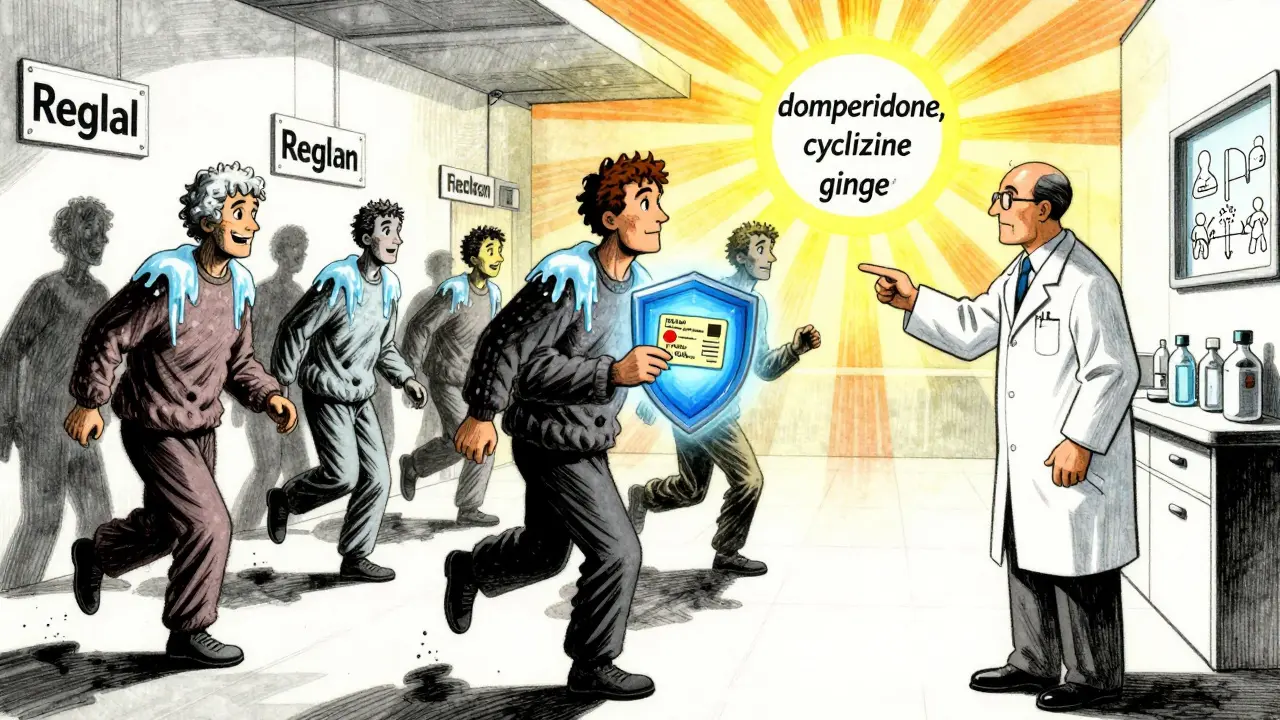
There are antiemetics that don’t touch dopamine receptors in the brain. These are your best options:- Domperidone (Motilium): This is the gold standard for Parkinson’s patients. It blocks dopamine in the gut but can’t cross the blood-brain barrier thanks to P-glycoprotein pumps. Risk of worsening symptoms? Less than 2%. It’s not available as an injection in the U.S. due to FDA restrictions, but oral forms are widely used in Australia, Canada, and Europe. Many patients report complete nausea control without motor side effects.
- Cyclizine (Vertin): An antihistamine that works on H1 receptors, not dopamine. Risk of worsening Parkinson’s? Only 5-10%. It’s often the first-line choice in Australian and UK clinics. One Parkinson’s NSW forum member said switching from metoclopramide to cyclizine eliminated his weekly freezing episodes.
- Ondansetron (Zofran): A 5-HT3 antagonist. Minimal dopamine interaction. Risk is 15-20%, slightly higher than cyclizine or domperidone, but still much safer than dopamine blockers. It’s especially useful for chemotherapy-related nausea.
- Ginger: Not a drug, but backed by evidence. A daily 1g dose of ginger powder has been shown to reduce nausea as effectively as some medications-with zero risk. Many patients use it alongside other treatments.
Levomepromazine (Nozamine) sits in the middle. It has a 30-40% risk of worsening symptoms. It’s not banned, but it should only be used after consultation with both a neurologist and a palliative care specialist-and even then, at the lowest possible dose (6.25mg twice daily, max 25mg/day).

What Happens When You Get It Wrong
The consequences aren’t minor. A 2022 study in the Journal of Parkinson’s Disease found that 62% of Parkinson’s patients had been given a dopamine-blocking antiemetic during a hospital stay. In 22% of those cases, they needed extended hospitalization because their motor symptoms didn’t improve even after increasing levodopa doses. One patient in the UK described being given prochlorperazine after a fall. “I couldn’t stand for three days. My legs locked up. They thought I’d had a stroke. It was just the drug.” The financial cost is real too. Each inappropriate antiemetic prescription adds an average of $3,200 in extra hospital costs, according to the Anesthesia Patient Safety Foundation. That’s not just money-it’s lost time, lost independence, and increased risk of falls and fractures.How to Protect Yourself
If you have Parkinson’s, here’s what you need to do:- Carry a Medication Warning Card. The APDA has distributed over 250,000 wallet cards since 2018 listing banned drugs. Keep one in your wallet or phone.
- Always tell every doctor, nurse, and pharmacist you have Parkinson’s. Even if they don’t ask. Emergency staff often don’t know.
- Ask: “Is this a dopamine blocker?” If they say yes, ask for an alternative. Domperidone or cyclizine are safe bets.
- Start with non-drug options. Ginger, small frequent meals, staying hydrated, and avoiding greasy foods can reduce nausea without any risk.
- If you must use a dopamine blocker, limit it to 3 days max. Even then, monitor for tremors, rigidity, or freezing. Stop immediately if symptoms worsen.
Some hospitals now require a special notation in the electronic health record: “Parkinson’s disease: verify antiemetic safety.” That’s progress. But it’s not universal. You can’t rely on the system. You have to be your own advocate.
What’s Changing for the Better
There’s hope. The Parkinson’s Foundation’s 2023 Quality Improvement Initiative trained over 1,200 healthcare providers in antiemetic safety. In participating hospitals, inappropriate prescriptions dropped by 55%. Research is moving forward too. A new drug called aprepitant (Emend), which blocks a different nausea pathway (neurokinin-1), showed 92% effectiveness in a 2023 trial with zero motor side effects. The Michael J. Fox Foundation is funding a $1.2 million project to develop a new peripheral-acting serotonin modulator specifically for Parkinson’s-related nausea-no brain penetration, no risk.The American Geriatrics Society now lists metoclopramide as “potentially inappropriate” for Parkinson’s patients in its 2023 Beers Criteria. That’s a big deal. It means geriatricians, ER doctors, and pharmacists are being formally trained to avoid it.
Final Takeaway: Don’t Let Nausea Cost You Your Mobility
Nausea from Parkinson’s meds is real. But the solution isn’t to reach for the first antiemetic your doctor suggests. It’s to ask the right questions. Domperidone and cyclizine work. Ginger helps. Metoclopramide and prochlorperazine don’t just treat nausea-they can steal your ability to walk, eat, and live normally. You don’t need to suffer. You just need to know what to avoid.Can I take metoclopramide if I have Parkinson’s disease?
No. Metoclopramide is a dopamine D2 receptor antagonist that crosses the blood-brain barrier and can severely worsen Parkinson’s motor symptoms like tremors, rigidity, and freezing. It’s listed as contraindicated by the American Parkinson Disease Association and the American Geriatrics Society. Even short-term use can trigger hospitalization. Avoid it completely.
Is domperidone safe for Parkinson’s patients?
Yes. Domperidone is one of the safest antiemetics for Parkinson’s because it doesn’t cross the blood-brain barrier. It blocks dopamine only in the gut, where it stops nausea, without affecting brain dopamine pathways. It’s widely used in Australia, Canada, and Europe. The main limitation is that it’s not available as an injection in the U.S., and oral forms require special access through an FDA Investigational New Drug application.
What should I do if I’m given a dopamine-blocking antiemetic in the hospital?
Politely but firmly ask for an alternative. Say: “I have Parkinson’s disease. Metoclopramide, prochlorperazine, and haloperidol make my symptoms worse. Can you give me cyclizine or domperidone instead?” If they refuse or don’t know, ask to speak with a pharmacist or neurologist on call. Carry a medication warning card to show them. Your safety depends on speaking up.
Can ginger really help with Parkinson’s nausea?
Yes. Studies show that 1 gram of ginger powder daily reduces nausea as effectively as some prescription antiemetics. It’s safe, has no drug interactions, and doesn’t affect dopamine. Many Parkinson’s patients use ginger capsules or tea alongside other treatments. It’s a first-line non-drug option recommended by neurologists.
Why do some doctors still prescribe metoclopramide to Parkinson’s patients?
Many doctors, especially in emergency rooms or non-specialist settings, aren’t trained on Parkinson’s-specific drug interactions. A 2022 study found only 37% of emergency physicians knew metoclopramide was dangerous for Parkinson’s patients. It’s still widely available, cheap, and commonly stocked. But that doesn’t make it safe. The burden is on the patient to educate providers and insist on safer alternatives.
What are the signs that an antiemetic is making my Parkinson’s worse?
Watch for sudden worsening of any motor symptom: increased tremors, new rigidity in limbs, difficulty starting to walk (freezing), slurred speech, or a feeling of being “locked in.” These can appear within hours of taking the drug. If you notice any of these, stop the medication immediately and contact your neurologist. Don’t wait for it to get worse.
If you’ve ever been told to “just tough it out” with nausea, know this: you don’t have to. There are safe, effective options. The key is knowing which drugs to avoid-and having the confidence to ask for them.


Kunal Majumder
Man, I wish I knew this back when my dad got stuck on Reglan after his gallbladder surgery. He froze up for days and the docs thought it was a stroke. Turned out it was just a bad drug choice. Domperidone saved his mobility. If you’ve got Parkinson’s, don’t let anyone push you into dopamine blockers. It’s not worth the risk.
Dwayne Dickson
It is, regrettably, an egregious oversight within the contemporary medical establishment that dopamine antagonists continue to be administered to Parkinson’s patients with such alarming frequency. The pharmacodynamic disconnect between peripheral antiemetic efficacy and central dopaminergic disruption remains woefully underappreciated by non-specialist clinicians. One might posit that this represents a systemic failure of translational neuropharmacology education.
Ted Conerly
Domperidone is the real MVP here. It’s not perfect - yeah, you gotta jump through hoops in the U.S. - but it works. No brain penetration, no motor crashes. If your doctor gives you flak, tell them the APDA and Michael J. Fox Foundation say it’s the gold standard. And ginger? Free, safe, and actually helps. No magic pills, just smart choices.
Faith Edwards
How is it that a population so profoundly vulnerable to neurochemical sabotage continues to be subjected to the reckless administration of phenothiazines and benzamides? One can only conclude that medical inertia, compounded by pharmaceutical lobbying and the grotesque commodification of emergency care, has rendered these clinicians morally obtuse. The fact that metoclopramide remains stocked in every ER is not a testament to efficacy - it is a monument to negligence.
Christine Milne
Domperidone isn't even approved in the U.S. because it’s dangerous. The FDA knows what they’re doing. If it were safe, it’d be on the market. You people are just chasing foreign drugs because you think they’re ‘better.’ That’s not science, that’s wishful thinking. And ginger? Please. That’s for people who think acupuncture fixes diabetes.
chandra tan
My uncle in Delhi got prescribed metoclopramide after a stomach bug. He couldn’t walk for a week. Then a nurse from the local clinic saw his meds and said, ‘Bhaiya, this is poison for Parkinson’s!’ She got him cyclizine from a pharmacy that imports it. He’s walking again. India’s got a lot of gaps in care - but sometimes, the right person at the right time saves you.
Ian Cheung
Domperidone is life-changing if you can get it and ginger works better than you think I’ve been taking it daily for 8 months and my nausea is gone no more vomiting before breakfast and I don’t feel like I’m gonna die every time I eat
Mario Bros
Just had my mom on domperidone for 6 months now. No more puking, no more freezing. She actually went to the grocery store last week by herself. That’s huge. Doctors need to stop acting like these drugs are harmless. This isn’t just advice - it’s a survival guide.
Jake Nunez
My brother got given prochlorperazine after a fall. Thought he was having a stroke. Turned out he just couldn’t move his legs. Took three weeks to recover. Never again. Now we carry the APDA card in his wallet. Simple. Effective. Lifesaving.
Bradford Beardall
I’ve been researching this for my dad’s care. The 2023 MJFF study showing 68% of patients declined after metoclopramide is terrifying. But what’s even scarier is how few ER staff know about it. How do we get this into medical training? Is there a campaign? I’d volunteer to help spread the word.
McCarthy Halverson
Domperidone. Cyclizine. Ginger. Avoid everything else. Carry the card. Say no. It’s that simple.
Michael Marchio
It’s fascinating how easily patients are manipulated into accepting dangerous interventions under the guise of ‘standard care.’ The fact that hospitals still stock metoclopramide speaks volumes about the commodification of medicine - profit over patient safety. And yet, the real tragedy isn’t the drug itself, but the silence surrounding it. No one speaks up because they assume the system knows what it’s doing. It doesn’t. And until we force accountability, more people will be robbed of their mobility by the very people sworn to heal them.
Jake Kelly
Thank you for sharing this. My mom just started domperidone last month. She’s eating again. That’s more than I can say for the last six months. You’re right - we have to be our own advocates. I’m printing out the APDA card for her wallet today.