Take with Food: What It Really Means for Your Medications
When a prescription says take with food, a simple instruction that changes how your body absorbs medicine. Also known as take after eating, it's not just a suggestion—it's often the difference between the drug working right or not working at all. Many people ignore this line, thinking it’s just a formality. But food isn’t just a buffer—it’s an active player in how your body handles drugs. Some medications need fat to dissolve. Others can wreck your stomach if taken on an empty one. And a few won’t even enter your bloodstream unless they ride in on a meal.
Drug absorption, how your body pulls medicine into your system changes dramatically depending on what’s in your gut. Take antibiotics like tetracycline: calcium in milk binds to them and blocks absorption. That’s why you’re told to wait two hours after dairy. On the flip side, drugs like itraconazole need stomach acid to work—and food triggers acid production. Skip the meal, and the drug might as well be water. Then there’s stomach upset from pills, a common side effect that food can prevent. NSAIDs like ibuprofen? They’re harsh on your lining. A slice of toast or a banana can stop nausea, cramps, or even bleeding. And for meds that cause dizziness or low blood sugar—like some diabetes pills—food keeps your body steady.
It’s not just about what you eat, but when. A high-fat meal might help one drug absorb better, but wreck another. Some pills work best with a light snack. Others need a full meal. The label doesn’t always explain why, but the science is clear: food alters pH, slows digestion, and changes blood flow to your gut. That’s why you can’t swap "take with food" for "take before bed" or "take with coffee." Even grapefruit juice can interfere, as shown in posts about medication interactions and food-drug interactions, how everyday foods change how drugs behave. You wouldn’t mix bleach and ammonia—don’t mix pills and food without knowing the rules.
What you’ll find in the posts below are real-world examples of how this plays out. From warfarin and cranberry juice to statins and grapefruit, these articles show you exactly which foods help, which hurt, and why ignoring the label can be risky. You’ll also see how fluid retention, weight changes, and even kidney function tie into what you eat with your meds. This isn’t guesswork—it’s science you can use to stay safe and get the most out of your prescriptions.
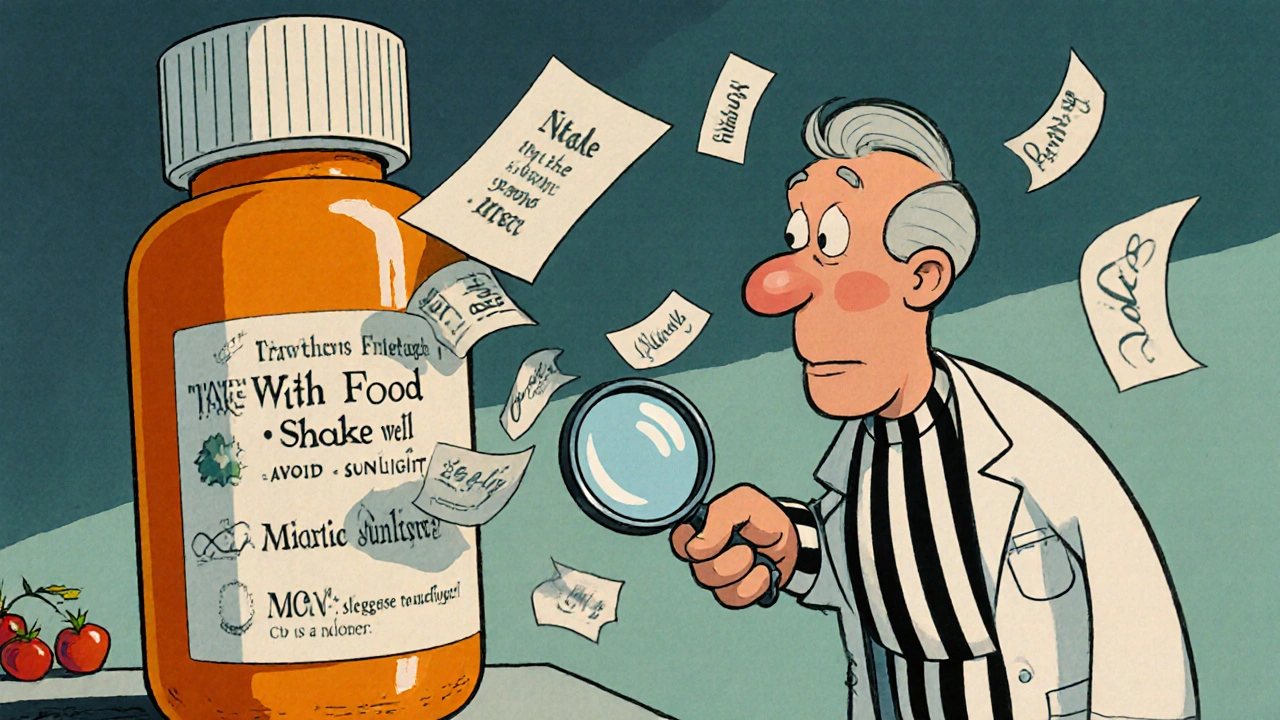
Special Instructions on Prescription Medication Labels Explained
Special instructions on prescription labels tell you how to take medicine safely - but most people miss or misunderstand them. Learn what phrases like 'take with food' really mean, where to find hidden warnings, and how to avoid dangerous mistakes.
Popular posts