
Naloxone Co-Prescribing Recommendation Tool
Opioid Dose Input
Risk Factors
Recommendation
Based on your inputs, naloxone co-prescribing is:
Why Naloxone Is Prescribed Alongside Opioids
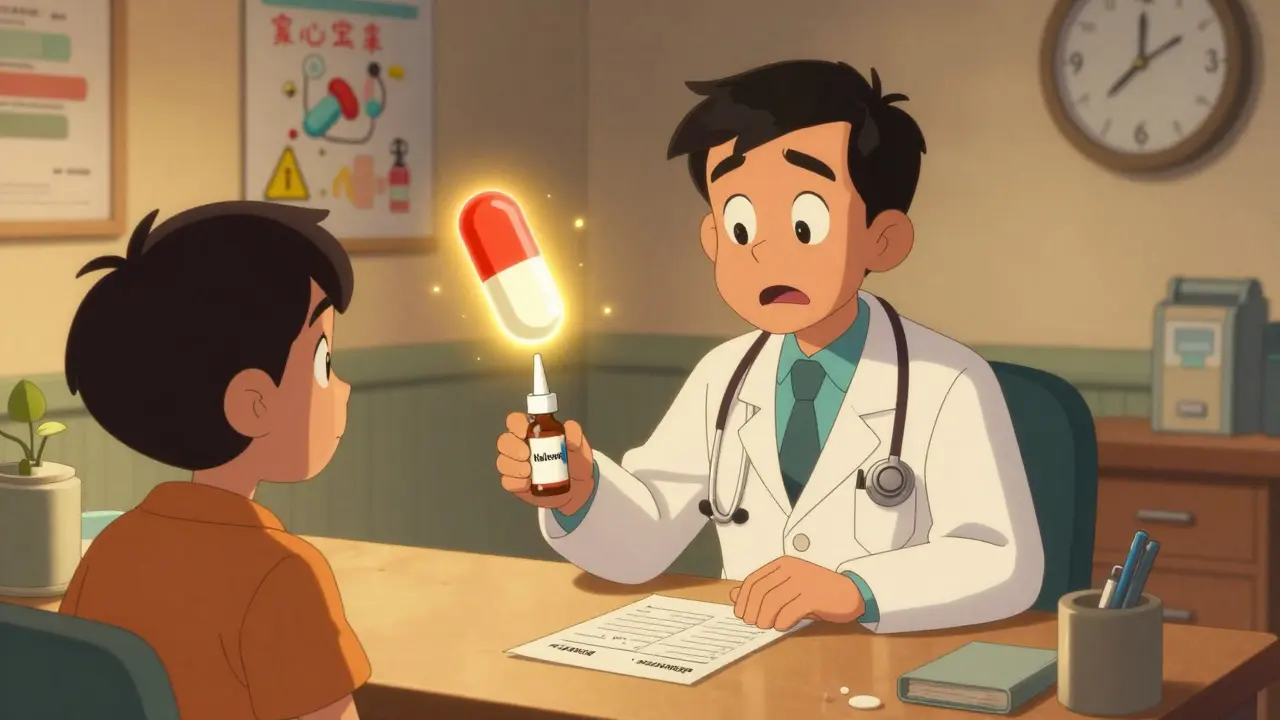
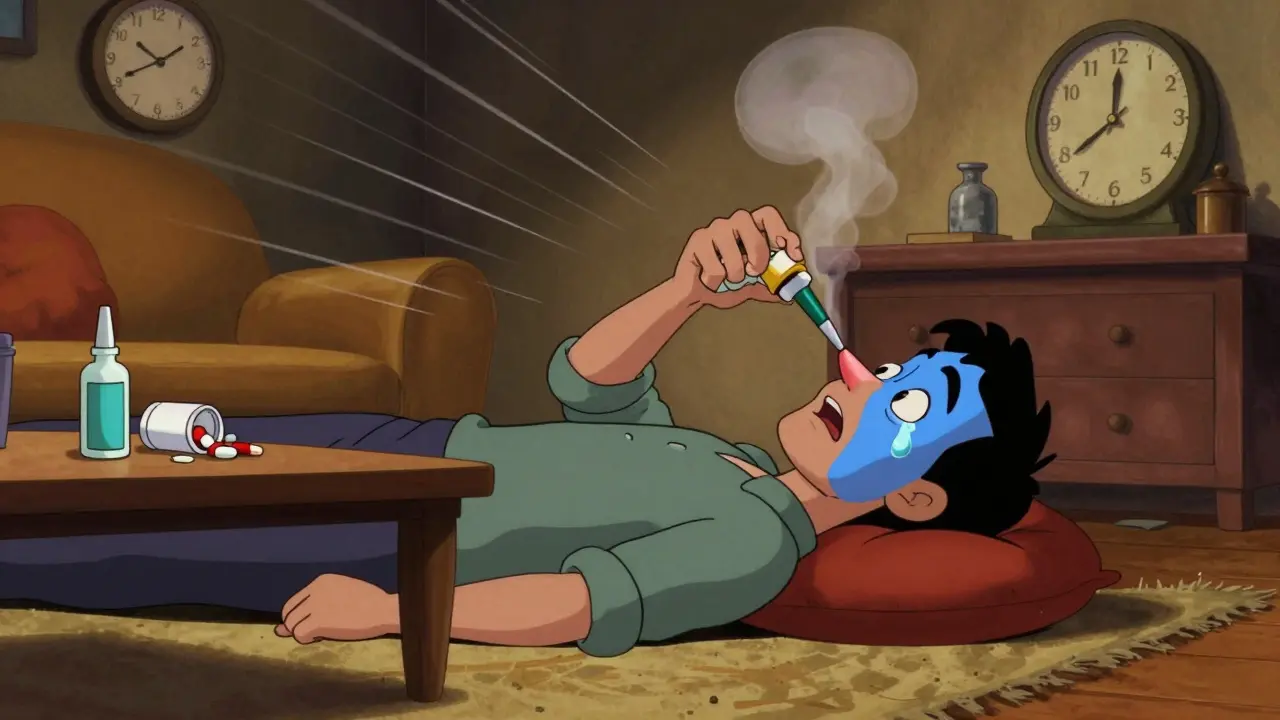
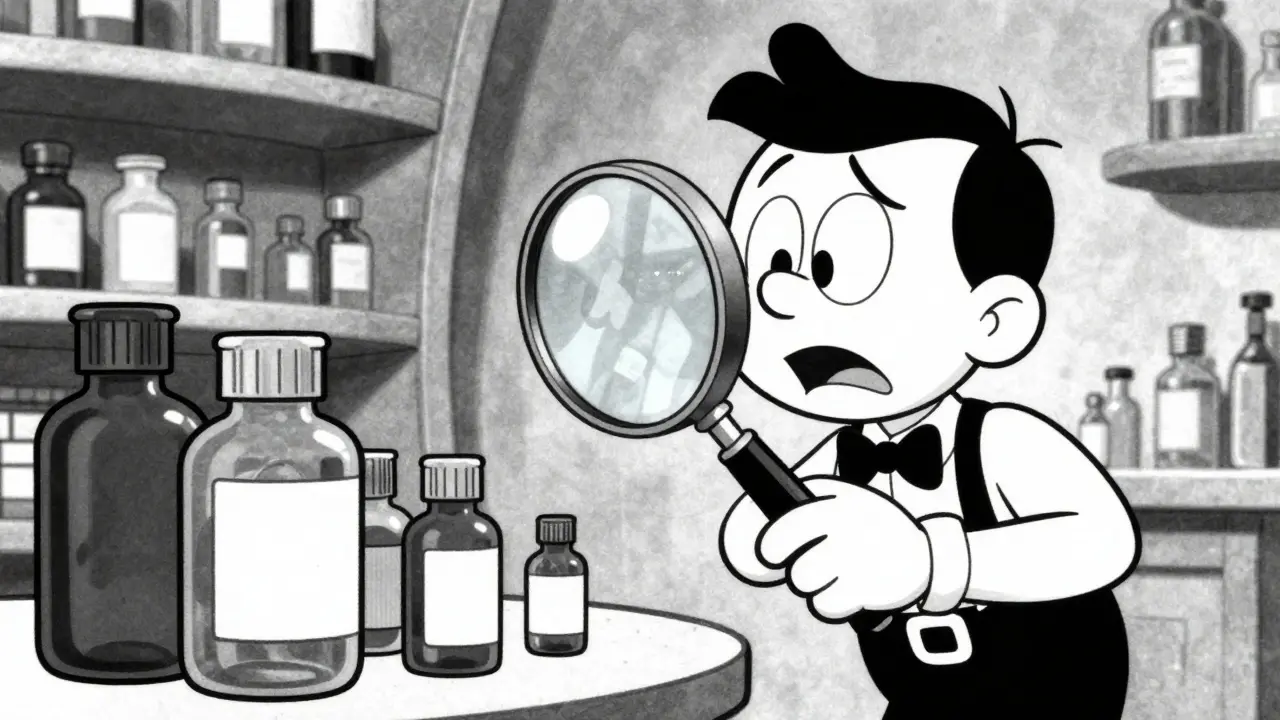
When a doctor prescribes opioids for chronic pain, they’re not just treating discomfort-they’re also exposing the patient to serious risks. Opioids slow breathing. At high doses, or when mixed with other sedatives like benzodiazepines, they can stop it completely. That’s where naloxone comes in. It’s not a substitute for pain relief. It’s a safety net. Naloxone co-prescribing means giving patients a medication that can reverse an opioid overdose-right alongside their pain pills.
This isn’t a new idea. Back in 2016, the CDC officially recommended it for anyone on 50 morphine milligram equivalents (MME) per day or more. That’s about 10 tablets of 5mg oxycodone daily. But the guidance has since expanded. Now, it’s also recommended for people with sleep apnea, a history of substance use, mental health conditions, or anyone who’s had a non-fatal overdose in the past year. Even if your dose is low, if you’re on benzodiazepines or have used alcohol or stimulants recently, naloxone should be offered.
How Naloxone Works in an Emergency
Naloxone doesn’t treat pain. It doesn’t get you high. It doesn’t even work if there are no opioids in your system. What it does is simple: it kicks opioids off the brain’s receptors. When someone overdoses, their breathing slows or stops because opioids are stuck to those receptors. Naloxone arrives faster. It binds tighter. It pushes the opioids out, and breathing returns-usually within 2 to 5 minutes.
The most common form today is the nasal spray. Brands like Narcan® and Kloxxado™ are easy to use. No needles. No training needed. Just remove the cap, insert the nozzle into one nostril, and press the plunger. That’s it. There are also injectable versions, but nasal sprays are preferred by patients and caregivers because they’re less intimidating and easier to administer during panic.
One dose usually works. But because some opioids last longer than naloxone, you might need a second dose after 2-3 minutes if the person doesn’t wake up. That’s why it’s critical to call 911 even after giving naloxone. The person still needs medical care.
Who Should Get Naloxone With Their Opioid Prescription
Not every patient on opioids needs naloxone-but many do. Here’s who should be offered it:
- Anyone taking 50 MME or more per day
- Patients using benzodiazepines (like Xanax or Valium) at the same time
- People with a history of opioid or alcohol use disorder
- Those with chronic lung conditions like COPD or sleep apnea
- Anyone who’s had a previous overdose-even if it was years ago
- Patients recently released from jail or prison
- People using stimulants like cocaine or methamphetamine (due to fentanyl contamination in the drug supply)
It’s not about judging someone’s behavior. It’s about recognizing that opioid use-even when taken as prescribed-carries risk. And naloxone is the only medication that can reverse an overdose before it’s too late.
State Laws and What You’re Legally Entitled To
Naloxone co-prescribing isn’t just a recommendation-it’s the law in many places. As of 2024, 24 U.S. states require doctors to offer naloxone to certain patients. The rules vary:
- In New York, naloxone must be offered to anyone prescribed opioids, no matter the dose.
- In California, it’s required for doses over 90 MME per day.
- In most other states, it’s required only for doses above 50 MME.
Even in states without mandates, most insurers cover naloxone with no copay thanks to the SUPPORT Act of 2018. Medicare and Medicaid must pay for it. Most private plans do too. If your pharmacy says it’s too expensive, ask for the generic version. Generic nasal sprays cost $25-$50. Brand-name Narcan® can run $130, but it’s rarely necessary.
Pharmacists in 49 states can dispense naloxone without a prescription under standing orders. That means you can walk into a pharmacy and ask for it-even if your doctor didn’t write a script. You don’t need to explain why. You don’t need to prove you’re at risk.
Why Some Doctors Don’t Offer It-And How to Ask
Despite the evidence, many providers still don’t offer naloxone. A 2021 survey found 68% of primary care doctors felt uncomfortable bringing up overdose risk. Some worry it’ll upset patients. Others think it’s not their job. But patients who’ve had a close call say otherwise.
Sarah Johnson, a patient in Ohio, was offended when her doctor gave her naloxone with her oxycodone. "I thought he didn’t trust me," she said. But when her 16-year-old son accidentally took a pill and stopped breathing, she used the nasal spray. He woke up in 90 seconds. "That spray saved his life," she told her doctor later. "Now I’m glad you gave it to me."
If your doctor doesn’t mention naloxone, ask. Say: "I’ve heard naloxone can reverse an overdose. Should I have one at home?" Or: "I’m on a higher dose. Do you recommend I get naloxone?" Most will say yes. If they hesitate, ask why. If they refuse, go to a pharmacy. You don’t need permission to save a life.
What Happens After You Get Naloxone
Getting the spray is just the first step. You need to know how to use it-and make sure others do too. Family members, roommates, even neighbors should know where it’s kept and how to use it. Store it at room temperature. Don’t keep it in the car or bathroom. Check the expiration date every six months. Most sprays last two years.
Use the S.L.A.M. method taught by the Indian Health Service:
- Signs: Is the person unresponsive? Are their lips blue? Are they breathing slowly or not at all?
- Life-saving steps: Call 911. Try to wake them. Shake them. Shout their name.
- Admister: Give one spray in one nostril. If no response after 2-3 minutes, give a second spray.
- Monitor: Stay with them until help arrives. Even if they wake up, they can crash again.
There’s no harm in giving naloxone to someone who hasn’t overdosed. It won’t hurt them. And if they’re overdosing, not giving it could kill them.
The Real Impact: Numbers That Matter
It’s not just theory. Naloxone saves lives-and the data proves it.
- A 2019 study of nearly 2,000 patients found naloxone co-prescribing reduced emergency room visits by 47% and hospitalizations by 63%.
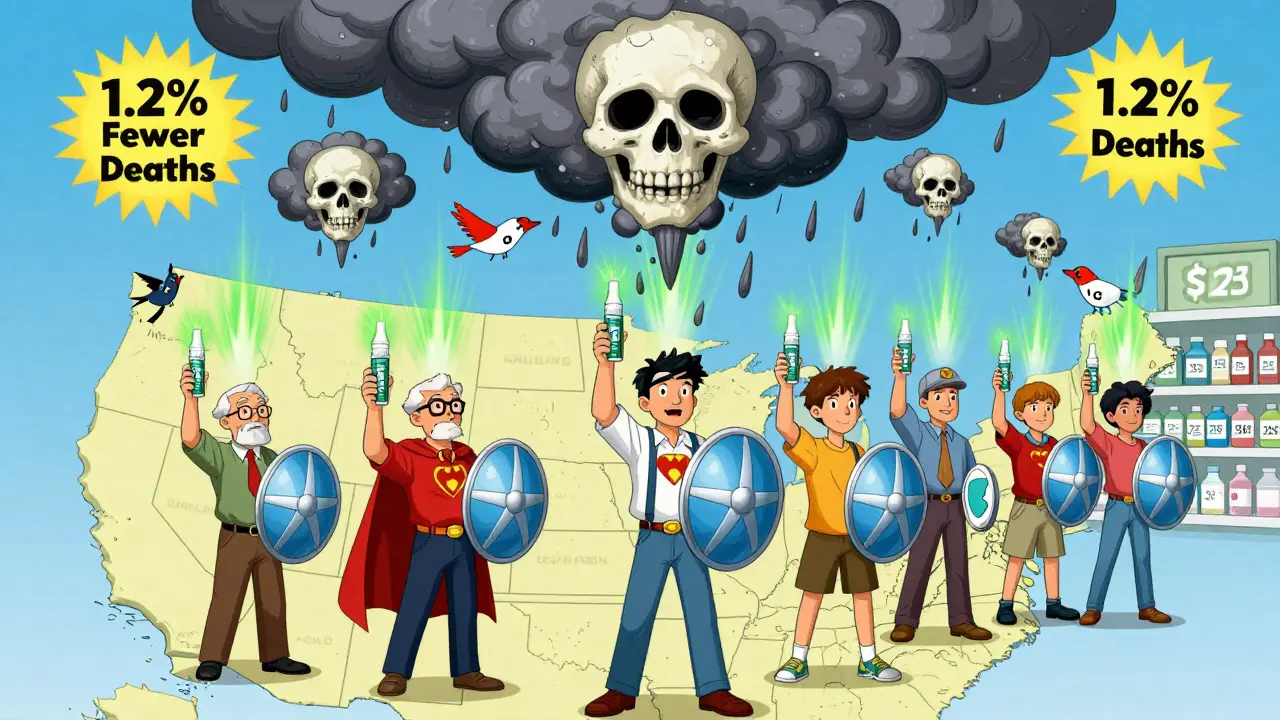
- For every 10% increase in naloxone distribution, opioid deaths drop by 1.2%, according to the National Institute on Drug Abuse.
- One clinic in rural Kentucky reported 17 overdose reversals by family members since they started co-prescribing in 2021.
- 78% of family caregivers say they feel safer knowing naloxone is available.
And it’s getting more accessible. The FDA approved the first generic nasal spray in 2023. Prices dropped. Distribution through community programs jumped. In 2024, the Biden administration allocated $500 million to expand naloxone access nationwide.
What’s Next for Naloxone
The future is promising. A long-acting version of naloxone is in Phase III trials and could be approved by 2025. That means one dose might last for days instead of hours-ideal for people who are at constant risk. The NIH is investing $1.5 billion into overdose prevention, with 30% going to better delivery systems.
But progress isn’t even. Rural pharmacies still stock naloxone less than half as often as urban ones. Some states don’t enforce co-prescribing laws. And stigma still keeps people from asking for it.
The solution isn’t just better drugs. It’s better conversations. Better training. Better access. And more people willing to carry a spray that costs less than a coffee but could save someone’s life.
Mark Able
I got naloxone with my oxycodone last year and honestly? I thought my doctor was calling me an addict. Then my buddy OD’d at a party and I used it. He’s alive. I’m not ever taking it for granted again. 🙏
Dorine Anthony
My grandma’s on pain meds after her hip surgery. Her pharmacist gave her two naloxone sprays for free. She keeps one in her purse and one by the bed. Smart move. No shame in being prepared.
Marsha Jentzsch
I can’t believe people still think this is about ‘trusting’ patients??!! This isn’t a trust issue-it’s a LIFE OR DEATH issue. If you’re on opioids, you’re playing Russian roulette with your breathing. And if you’re too proud to carry naloxone? You’re literally gambling with your family’s future. 😒💔
Henry Marcus
They’re pushing this because Big Pharma wants you dependent on BOTH the opioid AND the antidote. Naloxone’s been around since the 60s-why now? Why the $130 brand names? Why the federal funding? Someone’s making a killing. And guess who’s getting the bill? You. Wake up.
Carolyn Benson
The real tragedy isn’t the overdose-it’s the systemic failure that lets people reach that point in the first place. We treat pain like a mechanical problem, not a human one. We prescribe opioids like they’re aspirin, then hand out naloxone like a Band-Aid on a hemorrhage. We’re not fixing the system. We’re just stocking the emergency room.
Aadil Munshi
In India, we don’t have this luxury. If you need opioids, you get them. If you OD, you die. No naloxone. No standing orders. No federal grants. So yeah, I’m glad y’all have it. But don’t act like this is some moral victory. It’s just damage control. And it’s still too little, too late for most.
Danielle Stewart
If you’re on opioids, please, please, please keep naloxone in your home. And tell someone where it is. My cousin didn’t know his wife had it. He called 911, then panicked and left the house. She didn’t make it. Don’t let that be you.
mary lizardo
The article is riddled with grammatical inconsistencies, inconsistent capitalization (e.g., "S.L.A.M." vs. "S, L, A, M."), and an overreliance on emotive rhetoric rather than clinical precision. Naloxone is not a "safety net"-it is a competitive antagonist at mu-opioid receptors. Precision matters.
Sajith Shams
You think this is about saving lives? Nah. It’s about control. They give you the drug, then give you the antidote, then monitor your usage, then judge you for needing it. Next thing you know, they’ll be scanning your prescriptions with AI. Welcome to the opioid surveillance state.
Adrienne Dagg
My dad used naloxone on my brother last Christmas. He was asleep on the couch after mixing pills with wine. We cried. We hugged. We got him to the hospital. I’m so glad we had it. 💕🫂 #NaloxoneSavesLives
Erica Vest
The S.L.A.M. method is accurate and evidence-based. However, many providers still misinform patients about duration of action. Naloxone’s half-life is 30–80 minutes, while many opioids (like fentanyl or methadone) last 8–72 hours. Multiple doses may be required. Also, naloxone has no effect on non-opioid sedatives like GHB or alcohol. Important distinctions.
Chris Davidson
People need to stop acting like naloxone is a cure. It’s not. It’s a temporary fix. If you’re taking opioids long term you need rehab not a spray. This is just enabling people to keep using. No one’s talking about the root cause
Kinnaird Lynsey
I used to think naloxone was for ‘other people.’ Then my neighbor’s kid OD’d in the driveway. I didn’t know how to use it. I called 911 and just stood there. He lived. But I didn’t. That guilt? It never leaves. I carry two now. And I taught my whole block how to use them.
benchidelle rivera
Naloxone co-prescribing is not merely a medical intervention-it is a moral imperative grounded in harm reduction ethics, public health equity, and the fundamental principle of nonmaleficence. The failure to implement it universally constitutes a systemic breach of the duty of care. We must institutionalize access, not commodify it.