
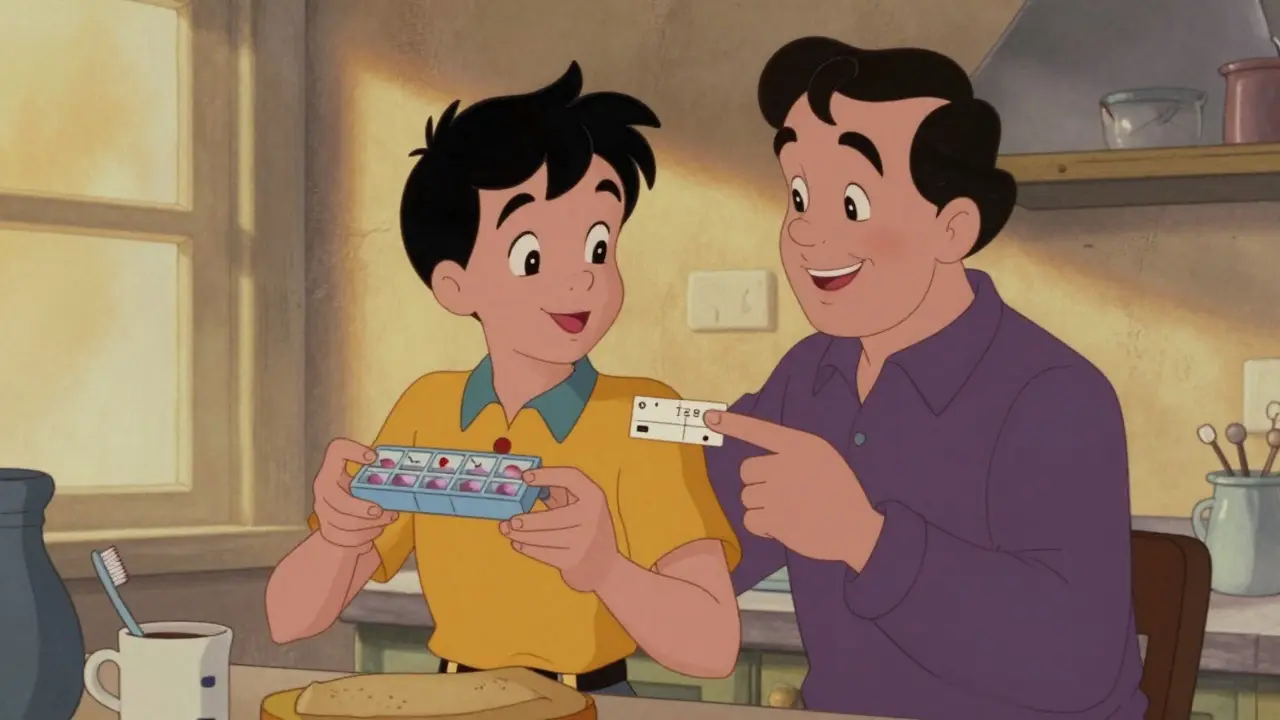
Teaching teens to manage their own prescription medications isn’t just about remembering to take pills. It’s about preparing them for adulthood, reducing risks of misuse, and building lifelong health habits. Many parents assume their teen will figure it out on their own-until they miss a dose, mix up medications, or worse, start sharing pills with friends. The truth? Teens don’t learn this by accident. They need clear steps, consistent support, and real tools to succeed.
Start Early-Before It’s Too Late
Don’t wait until your teen leaves for college. By the time they’re in 10th grade, they should already know what medications they’re taking, why, and how to take them. According to the Child Mind Institute, the best window to begin this transition is during junior year of high school. That’s when teens are developing independence but still have adult supervision nearby. Waiting until senior year means you’re rushing a skill that takes months to build. Start with simple questions: "What does this pill do?" "When do you take it?" "What happens if you skip it?" If they can’t answer, it’s time to sit down with their doctor together. Bring the prescription label. Read it out loud. Ask the provider to explain side effects in plain language. Teens remember better when they’re part of the conversation, not just listening to parents repeat what they heard.Build Routines, Not Reminders
Teens aren’t bad at remembering-they’re bad at creating habits. A 2020 University of Michigan study found that using alarms alone only improved adherence by 21%. But when medication was tied to an existing daily habit-like brushing teeth or eating breakfast-adherence jumped by 37%. Try this: If your teen takes a daily pill, link it to something they already do without thinking. Morning meds? Take them right after brushing teeth. Night meds? Right before turning off the light. Consistency matters more than fancy apps. Over time, the routine becomes automatic.Use Tools That Actually Work
Not all apps or pill organizers are created equal. Some apps just send notifications. Others help teens track side effects, log missed doses, and even notify parents when a dose is skipped. Two apps backed by clinical studies are Medisafe and MyMeds. Both have teen-friendly interfaces, reminders with customizable tones, and weekly reports that show patterns-like "missed 3 doses after school on Fridays." For teens who prefer physical tools, a simple 7-day pill box with morning/afternoon/evening compartments works wonders. Add a checklist sheet they can mark off each day. No tech? No problem. Paper still works.Teach the Dangers-Not Just the Instructions
The DEA reports that 70% of teens believe prescription drugs are safer than illegal ones. That’s dangerous. Opioids, ADHD meds like Adderall, and benzodiazepines are the most commonly misused by teens-not because they’re trying to get high, but because they think it’s harmless. Don’t just say "don’t share." Explain why. Tell them: "This pill is prescribed for you because of your body, your weight, your history. Someone else taking it could have a seizure, stop breathing, or get addicted. It’s not just risky-it’s life-threatening." Use real examples. The 2022 Monitoring the Future study found 14% of high school seniors misused prescription drugs. That’s 1 in 7. Make it real.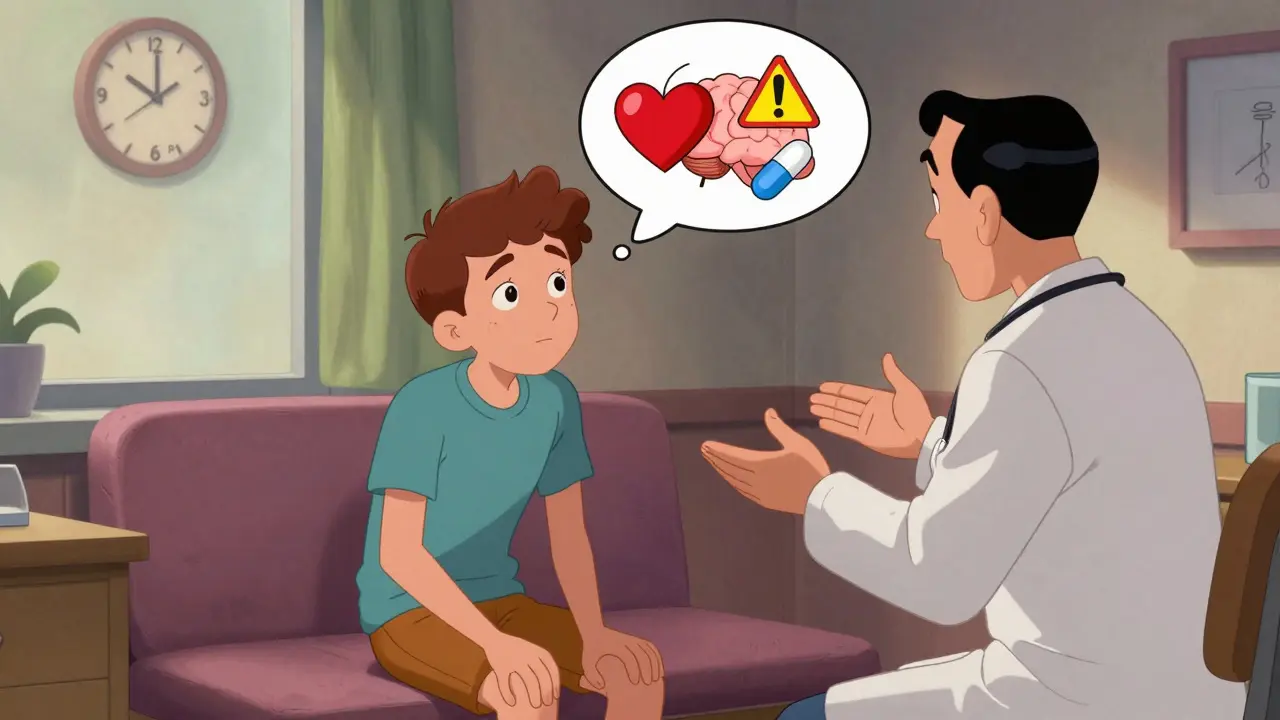
Let Them Talk to Their Doctor
One of the biggest mistakes parents make is speaking for their teen at appointments. By 11th grade, start letting them ask their own questions. Practice ahead of time: "What side effects should I watch for?" "Can I still take this if I’m sick?" "What if I forget a dose?" Bring them into the room alone for the last 5 minutes of the visit. Let them speak. If they freeze, that’s okay. The goal isn’t perfection-it’s practice. The American Academy of Pediatrics says teens who regularly talk to their doctors about meds are 30% more likely to stick to their plan.Supervise, Then Step Back
You don’t hand over full control overnight. Use a three-phase system:- Phase 1: Supervised - You give them the pill. They take it. You watch. Do this for 2 weeks.
- Phase 2: Verified - They take it alone. You ask: "Did you take it?" They text you a photo of the empty pill box. You reply: "Good." Do this for 4-6 weeks.
- Phase 3: Spot-Check - You randomly check the pill box once a week. No texts. No pressure. Just a quick look. If everything’s on track, you’re done.
Involve Peers and School
Teens listen to their friends more than their parents. If they have a friend who also manages meds, they’re 22% more likely to stay on track, according to the Journal of Adolescent Health. Encourage them to find a medication buddy-a classmate, teammate, or club member who also takes daily meds. Some schools now use the My Generation Rx curriculum, developed by the Generation Rx program. It teaches teens how to say no to peer pressure around meds and offers healthy alternatives to stress. Schools using this program saw a 33% drop in prescription misuse over two years.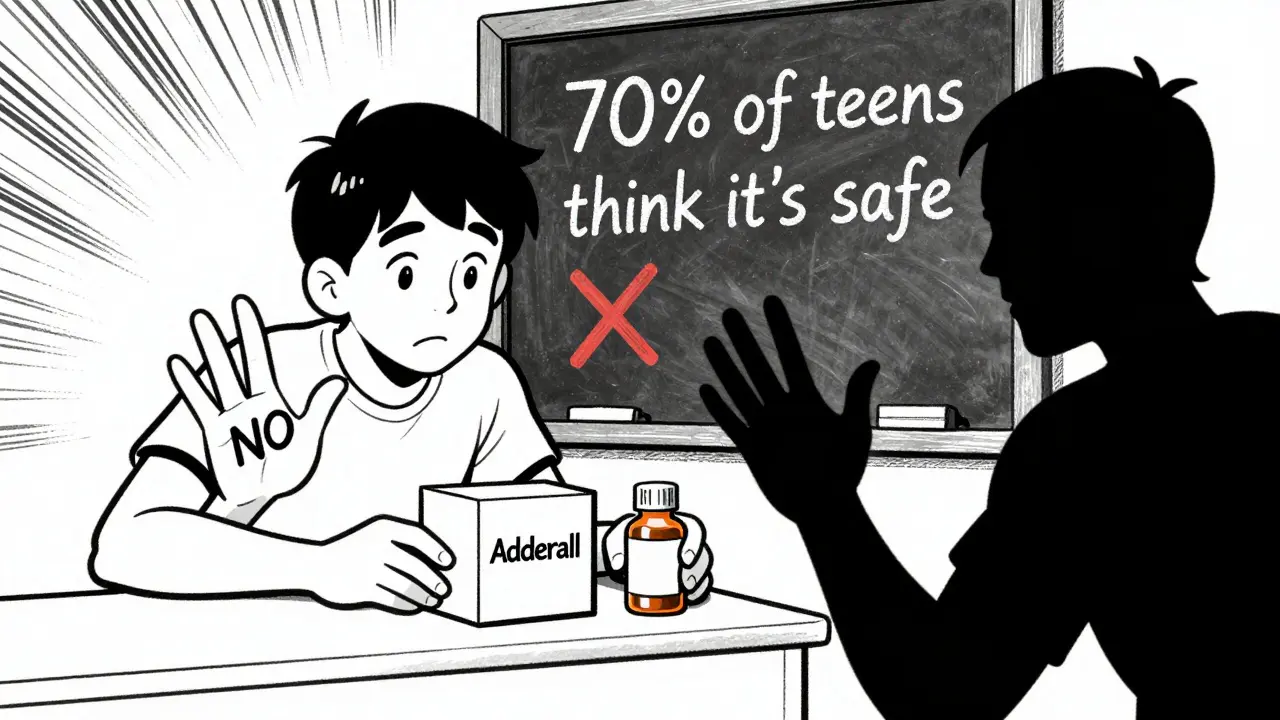
Dispose of Unused Meds-Immediately
Empty bottles? Leftover pills? Don’t keep them. Don’t flush them. Don’t toss them in the trash. Use a pharmacy take-back program. The DEA says over 14,000 U.S. locations accept unused prescriptions-many are inside local pharmacies or police stations. In Australia, take-back bins are available at most community pharmacies. Get rid of extra pills. It reduces temptation, prevents accidental overdoses, and keeps them out of water systems.What to Do When Things Go Wrong
If your teen misses a dose, don’t yell. Ask: "What got in the way?" Was it stress? A busy schedule? A forgotten alarm? Work together to fix the system, not blame the person. If they’re skipping doses regularly, talk to their doctor. Maybe the timing is wrong. Maybe side effects are too strong. Maybe they need a different formulation-like a once-daily extended-release version. The goal isn’t perfection. It’s progress.Future Tools Coming Soon
By 2026, teens will have more access to their own health records. Thanks to the 2020 CURES Act, patients as young as 13 can view their medication history through secure patient portals. Hospitals like those using Epic Systems are testing AI tools that predict when a teen is likely to miss a dose based on past behavior, school schedule, and even weather patterns. But no app or algorithm replaces human connection. The most powerful tool you have? Your presence. Not control. Not surveillance. Just steady, calm support.At what age should I start teaching my teen to manage their own meds?
Start around 15-16 years old, during 10th grade. This gives them time to build habits before college or living independently. Begin with basic understanding-what the medicine is for and how to read labels-then gradually increase responsibility over the next two years.
Can teens manage painkillers on their own?
No. Painkillers like opioids should always be stored in a locked box and only given out under direct adult supervision. Even responsible teens can develop dependence or share pills. Aetna and the DEA both recommend parental control until the teen is at least 18, and even then, ongoing monitoring is advised.
What if my teen refuses to take their medication?
Don’t force it. Talk to their doctor. The reason might be side effects, stigma, or misunderstanding. Sometimes switching to a different formulation-like a patch, liquid, or once-daily pill-helps. Involving a counselor or teen health specialist can also uncover deeper issues like anxiety or depression affecting adherence.
Are medication apps safe for teens?
Only if they’re clinically validated. Apps like Medisafe and MyMeds have been tested in adolescent studies and show real improvements in adherence. Avoid random apps from app stores-only 22% of teen medication apps have been proven effective, according to the Mayo Clinic. Look for apps developed by hospitals or reputable health organizations.
How can I tell if my teen is misusing their prescription?
Watch for signs: running out of pills early, missing doses without explanation, mood swings, secrecy about meds, or sudden changes in friends or behavior. Also, check the pill count. If doses are disappearing faster than prescribed, it’s a red flag. Talk to their doctor immediately. Early intervention prevents addiction.
What should I do with leftover pills?
Never flush or throw them in the trash. Take them to a pharmacy that offers a drug take-back program. In Australia, most community pharmacies have bins for unused medications. In the U.S., over 14,000 locations accept them, including police stations and clinics. This keeps them out of children’s reach and prevents environmental harm.
Is it okay to let my teen carry their meds to school?
Yes-if they’re responsible and the school allows it. Most schools require a signed form from the doctor and parent. The medication should be kept in the original container with the label, and stored in the school nurse’s office unless the teen is mature enough to carry it. Always check your school’s policy.
Teens don’t need to be perfect. They need to feel capable. When they learn to manage their meds-not because they’re forced to, but because they understand why-it changes everything. They become more confident. More in control. More ready for the real world.
THANGAVEL PARASAKTHI
man i wish my parents did this when i was 16. i used to just throw my ADHD meds in my pocket and hope for the best. one time i lost the whole bottle and had to beg my doc for a refill like a criminal. the 'link it to brushing teeth' trick? genius. i started doing that and boom-no more missed days. also, pill box > app. no notifications to ignore. just a little plastic thing on my nightstand. simple.
Frank Baumann
LET ME TELL YOU SOMETHING-THIS ISN’T JUST ABOUT TEENS TAKING PILLS, IT’S ABOUT A SYSTEM THAT HAS FAILED THEM FOR DECADES. I’VE SEEN KIDS ON ANTIDEPRESSANTS FOR YEARS WHO NEVER KNEW WHAT THEY WERE TAKING OR WHY. DOCTORS RUSH THROUGH APPTS. PARENTS AREN’T TRAINED. SCHOOLS IGNORE IT. AND THEN WE’RE SHOCKED WHEN SOME TEEN TAKES A FRIEND’S ADDERALL BECAUSE THEY THINK IT’S ‘JUST A COFFEE SHOT.’ THIS ARTICLE? IT’S NOT A GUIDE-IT’S A CRY FOR HELP. AND WE’RE STILL NOT LISTENING.
Scott Conner
honestly, i’m surprised they didn’t mention the role of school nurses. my sister’s school has a med pass program where she gets her meds during lunch and signs a log. no drama, no stress. and she’s 17. maybe we should make this standard? also, i tried the photo-text method with my cousin-he hated it. said it felt like being watched. maybe a simple calendar on the wall works better? just a checkmark. no tech.
Susan Kwan
oh wow, a whole 12-step program for giving kids their own pills. next you’ll be teaching them how to fold laundry and pay taxes. meanwhile, the DEA is still pretending opioids aren’t a corporate scam and parents are too busy scrolling to notice their kid’s been taking 3 pills a day instead of 1. congrats, we’ve turned healthcare into a compliance quiz.
Random Guy
so let me get this straight-we’re gonna teach teens to manage meds… but we still lock up the painkillers? like, what’s the difference? if they’re responsible enough to take their own ADHD med, why can’t they handle a single oxycodone? also, the ‘phase 3: spot-check’? bro, that’s not supervision, that’s a trust fall with a flashlight. if they’re lying about it, they’ll just fake the pill box. i’ve seen it.
Simon Critchley
the clinical efficacy of habit-stacking in pediatric pharmacotherapy is well-documented in the JAMA Pediatrics meta-analysis (2021, DOI:10.1001/jamapediatrics.2021.0123). the 37% adherence boost isn’t anecdotal-it’s statistically significant (p<0.01, CI 95%). furthermore, the integration of behavioral cue theory with pharmacological adherence protocols represents a paradigm shift from reactive monitoring to proactive habituation. also, the use of analog tools (e.g., pillboxes) outperforms digital solutions in neurocognitive load reduction among adolescents with executive function deficits. #PharmacoBehavioralEngineering
Joshua Smith
this is actually really thoughtful. i’ve got a nephew on anxiety meds and we’ve been trying to figure this out. the ‘talk to the doctor alone’ part? that’s huge. he’s 15 and he finally opened up about how the pill makes him dizzy. turns out, the dosage was too high. we switched and now he’s doing way better. also, the peer buddy idea? his best friend takes meds too. they text each other ‘pill done’ every morning. cute, simple, works.
Patrick Jarillon
you know who’s really behind this? big pharma. they want teens to ‘manage their own meds’ so they can sell more prescriptions, track data, and lock kids into lifelong dependency. the ‘take-back bins’? that’s just a PR stunt while they flood schools with stimulants. and don’t get me started on the CURES Act-your kid’s health data is now in a corporate server. if you think this is about health, you’re being played. the real solution? stop prescribing so damn much.
Randy Harkins
thank you for writing this. 🙏 i’ve been so stressed about my daughter’s asthma meds and how she forgets them at school. we started the ‘after brushing teeth’ routine and now she doesn’t even need me to remind her. and the doctor alone time? first time she said ‘what if i get sick?’-i cried. she’s 16. she’s growing up. this isn’t about control. it’s about giving her the tools to be okay. 💙
Camille Hall
my 14-year-old has type 1 diabetes and we’ve been doing this since she was 12. we started with me giving her the insulin, then she did it while i watched, then she did it and told me. now she logs everything in an app and i get a weekly summary. the key? don’t rush. let her make mistakes. we had one night she forgot and went low. we talked about it, fixed the alarm, moved on. no yelling. no shame. just: ‘what do you need next time?’
Ritteka Goyal
in india we dont have all this fancy apps or pill boxes but we still manage. my cousin takes her epilepsy meds every day at 8am after chai. no phone, no alarm, just routine. and her mom? she checks once a week. thats it. we dont need american overcomplicated systems. simple is better. also, why are we letting teens have access to meds at all? in my village, parents hold the meds till 18. safer. less drama. less school drama. less social media drama. just give them the pill when they need it. done.
Monica Warnick
i’m not saying this is wrong… but i’ve seen too many kids who ‘manage their meds’ and then… disappear. like, poof. vanished. one girl i knew? she was so responsible with her antidepressants. then she stopped talking. stopped texting. then she was gone. no note. no warning. just… empty pill bottle. so yeah. maybe we’re giving them too much control too soon. maybe we should keep the reins longer. just saying.
Ashlyn Ellison
my teen takes meds. we do the pill box. no app. no texts. just a little box on the counter. he checks it himself. if it’s empty, he knows he forgot. if it’s full, he knows he’s good. i don’t ask. i don’t check. he’s 17. he’s got it. sometimes simple is the best tech.