
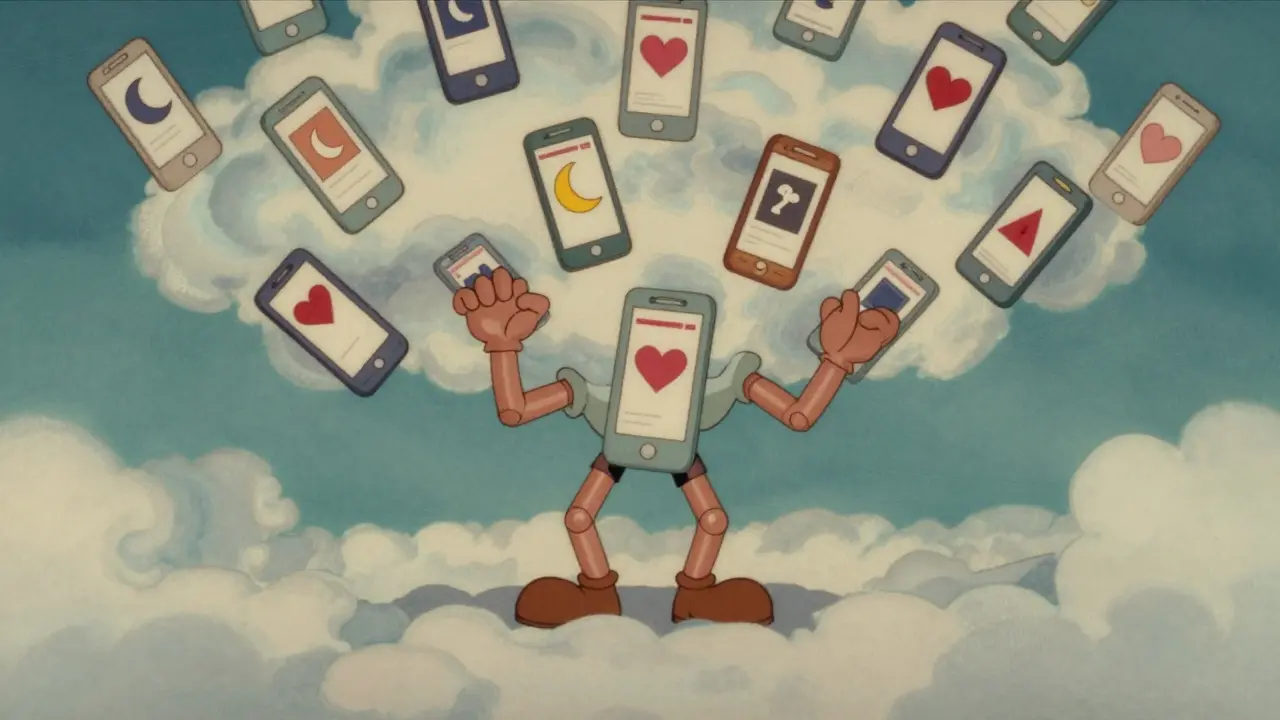
You probably have at least one mental health app on your phone right now. Maybe it's for sleep, maybe for anxiety, or perhaps you're curious about online therapy. You aren't alone. By 2026, there are over 20,000 mental health applications worldwide. That is a staggering choice to navigate. But while access has never been easier, trust has become harder to find. As the industry matures, the conversation shifts from "What does it do?" to "Is it safe?" This guide cuts through the noise to explain what digital mental health actually offers today, where the risks lie, and how to choose tools that genuinely help you.
The State of Digital Mental Health in 2026
Digital mental health isn't just a trend; it is a fundamental shift in how care is delivered. Think of Mental Health Apps as software designed to provide support, treatment, and wellness management. This field exploded after 2008 with smartphones, but the real momentum built during the pandemic when traditional offices closed. Now, the market is solidified. According to Grand View Research, the global market for these apps was worth around USD 7.48 billion in 2024 and is climbing fast toward nearly USD 18 billion by 2030.
Why the growth? Stigma is fading. People who once avoided clinics now prefer the anonymity of a screen. In 2024, North America took the lead with over 36% of the revenue share. However, regulations are catching up globally. For instance, Germany introduced a system called DiGA (Digitale Gesundheitsanwendungen) that allows doctors to prescribe apps that meet clinical standards. Under DiGA, nearly half of the approved digital health solutions focus on mental health conditions like depression. These apps can even be reimbursed by public health insurance. It shows a clear direction: we are moving from casual wellness to clinical utility.
Types of Tools: From Mindfulness to Teletherapy
Not all digital tools are created equal. Some are meant to relax you, while others are designed to treat specific conditions. Understanding the difference prevents wasted money and frustration.
- Mindfulness and Sleep: Platforms like Calm and Headspace dominate this space. Calm reported 100 million downloads by 2024. These apps offer guided meditations and sleep stories. They are generally low-stakes, meaning you can use them for general stress without needing a prescription.
- AI Chatbots: Apps like Wysa or Youper simulate cognitive behavioral therapy (CBT). Wysa has completed 14 clinical studies, while Youper has published seven peer-reviewed papers. They act as virtual coaches, analyzing your mood logs to suggest coping strategies.
- Teletherapy: Services like BetterHelp connect you with licensed professionals via video or chat. Unlike chatbots, these involve real humans. Pricing here is tiered, often costing between $60 and $90 per week for full access to therapists.
| Type | Primary Goal | Typical Cost | Clinical Validation |
|---|---|---|---|
| Mindfulness Apps | Stress Reduction | Free - $70/year | Varying Levels |
| AI Chatbots | Mood Management | Subscription | Moderate (Some Studies) |
| Teletherapy | Treatment | $60-$90/week | High (Licensed Providers) |
A major concern is retention. Even the best tools struggle to keep users engaged. A systematic analysis notes completion rates for digital interventions can be as low as 29.4% among young people. Users often download an app, try it for a few weeks, and abandon it. One Reddit user noted downloading five apps during lockdowns but sticking with only one because free versions became too limited. To combat this, developers are integrating Personalized AI that learns your behavior patterns. If an app notices you skip sessions when stressed, it might adjust its timing. However, experts warn this creates a dependency risk where digital tools replace necessary professional intervention.

Privacy and Data Security Concerns
This is the biggest question hanging over the industry. When you type your deepest anxieties into an app, where does that data go? A 2025 review by Camacho et al. examined 578 apps across 105 dimensions and found privacy vulnerabilities in 87% of them. This is not a minor glitch; it places users at significant risk of data exposure.
In regions with strict laws like Europe, GDPR requires companies to protect personal data. But enforcement varies. Some apps share data with third parties for analytics. Enterprise solutions used by companies often claim to anonymize workforce insights, yet individuals rarely see the fine print. Dr. Imogen Bell from Brown University warns of ethical implications, noting that digital dependence can delay real help. Furthermore, the Healthy Minds Network emphasizes that high download numbers are inadequate predictors of quality. An app rating 4.5 stars doesn't guarantee your data is secure.
If you are in Australia, local privacy laws apply, but many global apps operate under US jurisdiction. Always check the policy for data sharing. Specifically, look for clauses regarding insurance partners or advertisers. Clinical-grade apps usually adhere to stricter security protocols like HIPAA in the US or similar frameworks elsewhere, but consumer apps often lack these protections.
Effectiveness and Clinical Evidence
Does it actually work? The answer is nuanced. For mild anxiety, mindfulness apps show promise in reducing stress scores. But for severe depression or complex trauma, self-guided apps rarely suffice. The most promising path appears to be hybrid models. These combine self-guided app content with scheduled teletherapy sessions. Recent data suggests these hybrid approaches achieve 43% higher completion rates compared to fully digital methods.
Investors remain confident despite the retention issues. Statista reports funding into AI mental health ventures hit USD 1.3 billion globally in 2024. By 2027, experts predict 65% of apps will offer direct referral pathways to licensed professionals. This bridges the gap between prevention and treatment. Instead of leaving a user spinning in an app, the platform recognizes crisis indicators and connects them to human care immediately.

How to Choose the Right Tool
With 20,000 options, selection paralysis is common. Use this checklist to evaluate before you download or subscribe:
- Check Credentials: Does the app list medical advisors? Are claims backed by peer-reviewed studies?
- Review Privacy Policy: Who owns your data? Is it sold to third parties? Look for encryption mentions.
- Test Support: Try contacting customer service before buying. If they don't reply in 24 hours, avoid them.
- Beware of Paywalls: Many apps lock vital features behind premium tiers. Try the free version thoroughly first.
- Look for Integrations: Prefer apps that integrate with existing healthcare ecosystems rather than isolated silos.
Companies implementing these tools also report measurable ROI. A case study showed a 50% reduction in mental health-related sick days after rolling out a wellness solution. This proves that when done correctly, digital tools have tangible benefits beyond just "feeling good." However, low barriers to entry mean bad actors still exist. Stick to established brands with transparent reporting practices.
The Future of Care
We are entering an era of consolidation. Grand View Research projects only 15-20% of current apps will remain viable by 2030 due to rising regulatory requirements. The winners will be those who balance innovation with clinical rigor. The goal isn't just to fill the phone with tools, but to create a safety net that catches you before a crisis peaks.
Are mental health apps a replacement for therapy?
No. While apps can manage mild symptoms or aid wellness, they are generally not substitutes for licensed therapy, especially for severe conditions. Hybrid models combining apps with professional oversight tend to yield the best outcomes.
Is my data safe on these platforms?
Safety varies by provider. Studies indicate privacy vulnerabilities exist in 87% of apps. Always read privacy policies, check for encryption, and prefer apps compliant with GDPR or similar strict regulations.
How much does teletherapy cost compared to apps?
Mindfulness apps range from free to $70 annually. Teletherapy services typically charge a weekly subscription, often between $60 and $90, depending on the provider and level of access.
Can I get reimbursed for mental health apps?
It depends on your region and plan. In Germany, approved DiGA apps can be prescribed and reimbursed. In other regions, some insurers cover digital therapeutics, so check your specific health plan.
What happens if I stop using the app?
Retention is a major industry challenge. Many users stop after a few months. If you discontinue use, ensure you delete your account to prevent further data collection, though providers may retain records for legal periods.





tyler lamarre
The notion that a chatbot understands clinical nuance is frankly insulting to actual medicine. These corporations wrap their surveillance capitalism in velvet language about self-care. You pay weekly subscriptions for access to therapists who manage fifty clients simultaneously while you scroll. Privacy policies are essentially admission forms for data harvesting companies. We are normalizing a market where anxiety becomes a revenue stream for venture capitalists. Trust is the first casualty of this digital revolution disguised as healthcare. People believe the marketing copy instead of reading the terms of service. It is a comforting delusion sold to the vulnerable masses seeking help. The industry claims innovation while offering repackaged self-help books with a login screen. Clinical standards are often bypassed for faster scalability in these models.
Debra Brigman
We often forget that technology is just a mirror reflecting our own brokenness. An algorithm cannot truly heal the human spirit in its deepest fractures. It can only soothe the surface while we pretend everything is fine. This reliance on screens creates a false sense of security in a fragile world. We trade vulnerability for convenience without realizing the cost we pay. Every click leaves a mark on data servers somewhere far away from us. Those marks become currency for companies who never cared about your pain. They sell hope wrapped in subscription fees and monthly billing cycles. True healing requires messy human interactions that software cannot replicate. A bot does not know the weight of your silence in the middle of the night. It simply guesses based on patterns formed by thousands of strangers like you. We must remember that wellness apps are tools rather than saviors for us. To ignore this distinction is to invite further isolation into our lives. I wish we could find balance without losing ourselves entirely to digital dependence. Perhaps the answer lies in using the tool without letting it define our worth. But until then we keep searching in the glow of our phones.
Rachael Hammond
i see wat ur saying but teh privacay part scare me the most becuse they save evrything u type. my friend stopped using one app after finding they share datata with ads. maybe we shoudl stick to free version till things get beter. i think its sad how fast we trust machines with our secrets.
Tony Yorke
just focus on whats helping you directly
Jeannette Kwiatkowski Kwiatkowski
The retention statistics mentioned in the text are actually quite damning for the long term viability of these platforms. Most users churn because the experience feels transactional rather than therapeutic. When engagement drops the company pivots to selling aggregated health data to insurers. It is a classic bait and switch tactic used in modern consumer health tech. We need stricter regulations before this sector grows further. Without oversight the definition of care shifts entirely toward monetization. Quality control is negligible when profit margins dictate clinical decisions.
Aaron Olney
This is terrifying honestly imagine them knowing u r depressed bfore u do. the datat mining goes way deeper than just logs. secruirty breaches are inevitable and nobody talks about the aftermath. my info is already everywhere so why would i trust them more. feels like a trap set for people needing help.
Paul Vanderheiden
its really nice that options exist now for everyone everywhere. i think taking small steps is better than doing nothing at all. remember you deserve support and progress takes time so dont be hard on yourself. many people are getting real relief from these resources and thats great news. we can all learn to use these tools safely with care.
Rohan Kumar
they track your biometric stress data and sell it to insurance firms to hike premiums 📉👀🚫. dont fall for the fake wellness buzzwords designed to soften the blow of surveillance capital. always assume the worst outcome when clicking allow permissions. 🤖👁️🗨️🔒
gina macabuhay
These corporations exploit vulnerability under the guise of care. Profit motives will always supersede patient outcomes in unregulated environments. Ethical violations occur silently within the codebases nobody reads. Society accepts this erosion of privacy as the new normal for mental health treatment. We demand accountability from these entities before signing up.