If you've noticed that standing still or walking for long periods triggers leg pain, but bending over or sitting down provides instant relief, you might be dealing with neurogenic claudication is a clinical syndrome where leg pain, numbness, or weakness occurs during activity and is relieved by spinal flexion. It is the most common symptom of lumbar spinal stenosis, a condition where the spaces within your spine narrow, putting pressure on the nerves that travel through the lower back to your legs.
The real challenge isn't just managing the pain, but getting the right diagnosis. Many people mistake this for a circulation problem because both cause leg pain during walking. However, treating a nerve issue as a blood flow problem-or vice versa-can lead to months of ineffective therapy. Understanding how your body responds to movement is the first step toward getting your mobility back.
The Difference Between Nerve and Vascular Pain
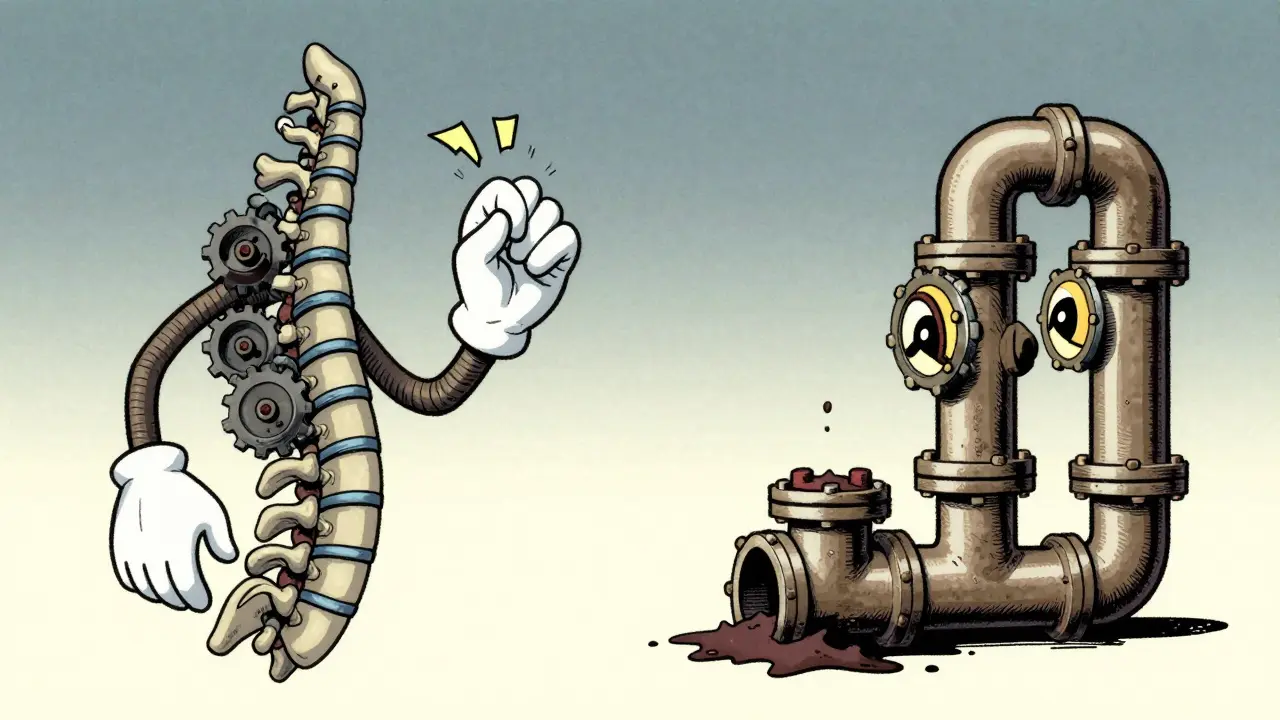
When your legs hurt while walking, doctors need to figure out if the problem is "pipes" (vascular) or "wires" (neurogenic). Vascular Claudication is pain caused by a shortage of oxygen-rich blood reaching the muscles due to narrowed arteries. This is a circulatory issue. In contrast, neurogenic claudication is a mechanical issue caused by compression in the spinal canal.
The big differentiator is position. If you have a vascular problem, stopping and standing still usually helps because the blood flow catches up. But if you have neurogenic claudication, simply stopping isn't enough. You usually need to bend forward-like leaning over a walker or sitting in a chair-to open up the spinal canal and relieve the pressure on the nerves. This is why clinicians look for the "simian stance," where a person naturally walks with a stooped posture to keep the pain at bay.
| Feature | Neurogenic Claudication | Vascular Claudication |
|---|---|---|
| Primary Cause | Spinal canal narrowing (Stenosis) | Arterial blockage (PAD) |
| Relief Method | Bending forward or sitting | Stopping and resting (any position) |
| Foot Pulses | Usually present and strong | Often weak or absent |
| Pain Trigger | Walking or standing straight | Walking/Exertion |
| Posture | Stooped or flexed (Simian stance) | No specific postural preference |
How Spinal Stenosis Actually Happens
Your spine is a series of bones (vertebrae) with a central canal that protects your spinal cord and nerve roots. As we age, the body undergoes degenerative changes. Ligaments can thicken and buckle, and bone spurs-small growths of extra bone-can develop. When these occur together, the canal narrows.
This narrowing doesn't just "pinch" the nerve in one spot. It often creates a two-level problem. Central stenosis squeezes the main canal, which can compromise blood flow to the nerves, while lateral stenosis compresses the specific nerve roots as they exit the spine. This combination leads to that heavy, tingling sensation in both legs. Interestingly, an MRI might show a narrowed canal in about 67% of people who have no symptoms at all, which is why your doctor cares more about your actual experience than just a picture of your spine.
Diagnostic Steps: More Than Just an MRI
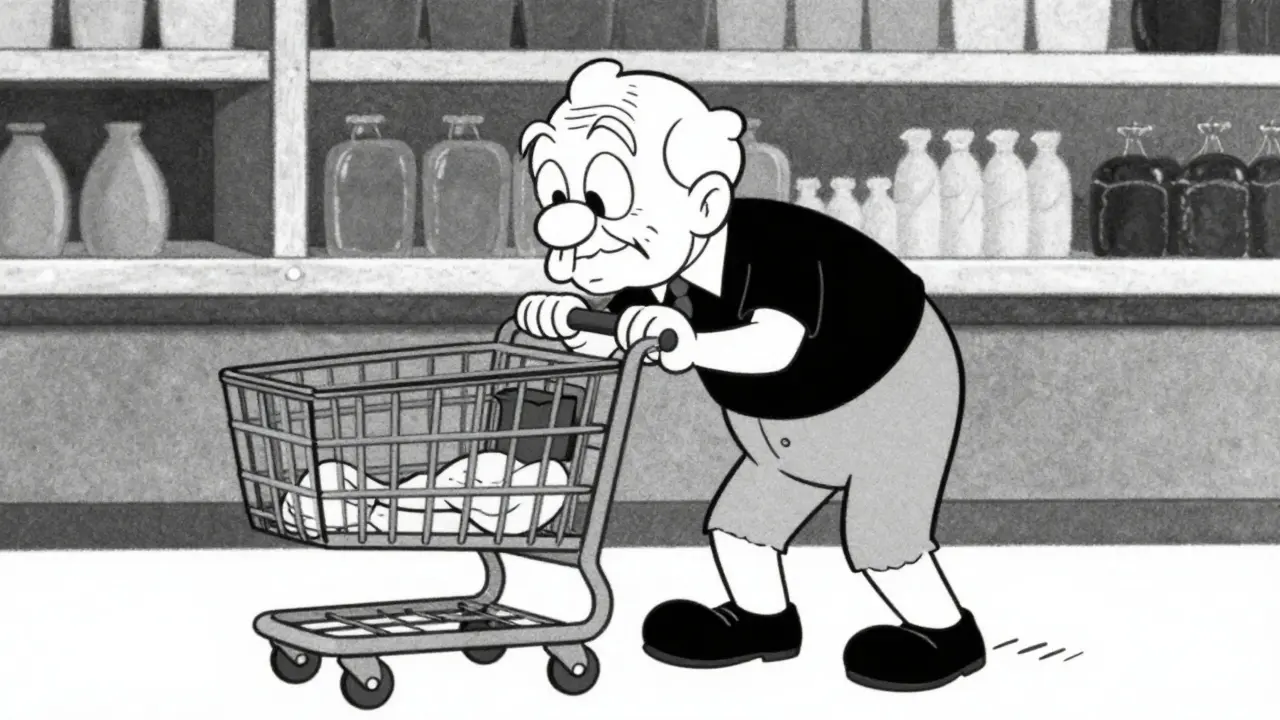
Because imaging can be misleading, a professional diagnosis relies heavily on your history and a physical exam. A provider will likely ask you a few specific questions: Do you feel relief when using a shopping cart? Do your legs feel like lead after a certain distance? Do you have to sit down to make the pain stop?
During the physical exam, a doctor will check your foot pulses. If the pulses are strong and symmetric, it points away from a vascular issue. They might also use the five repetitive sit-to-stand test (5R-STS). If you can complete five reps in about 10 seconds, your functional impairment is likely low. In more advanced cases, they may look for wasting in the extensor digitorum brevis muscle (a small muscle on the side of the foot), which is a reliable bedside marker for significant lumbar canal stenosis.
The Conservative Treatment Pathway
Most people don't start with surgery. The first goal is to manage symptoms and maintain mobility through conservative means. For many in the early stages, this is enough to get back to a normal routine.
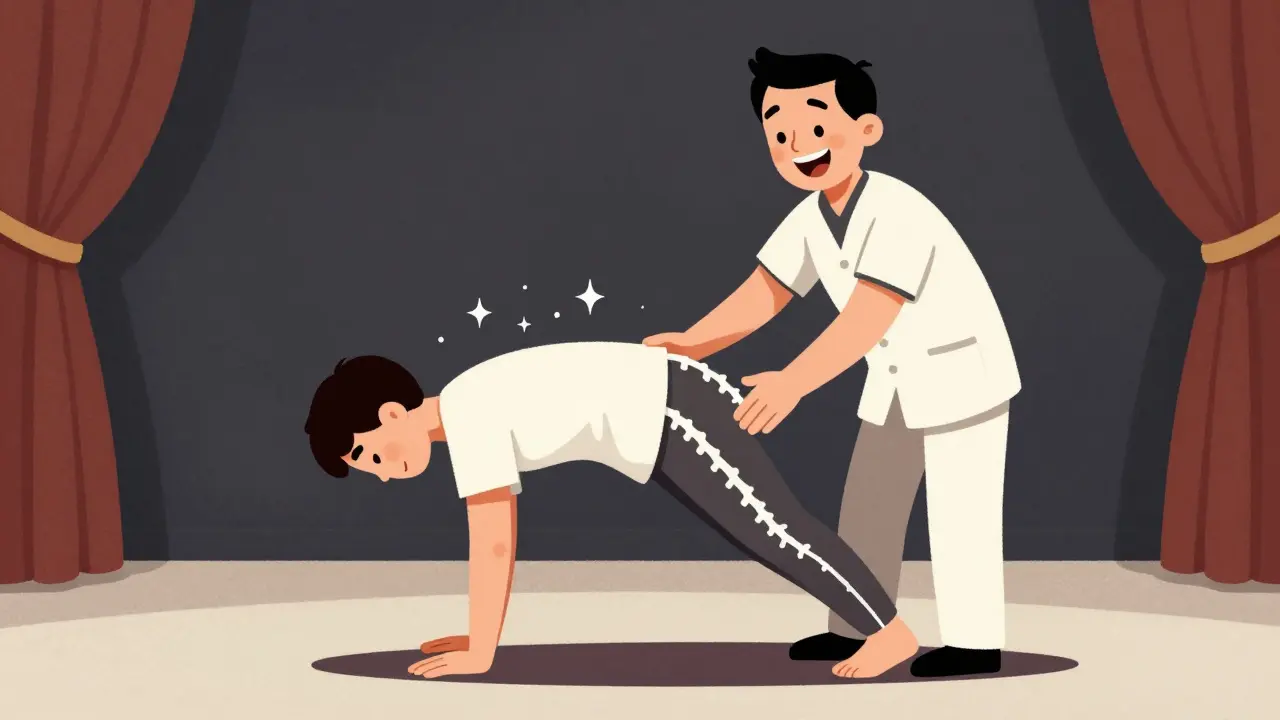
- Physical Therapy: This isn't just general exercise. The focus is on flexion-based movements. Since bending forward helps, therapists teach you how to strengthen your core and stretch your hips to maintain a posture that keeps the spinal canal open.
- Pain Management: Over-the-counter anti-inflammatories or specific nerve medications can help dampen the "background noise" of the pain.
- Activity Modification: Using a walker or a rolling cart isn't just for the elderly; it's a clinical tool that allows you to walk further by maintaining the necessary forward tilt.
Generally, doctors recommend sticking with these methods for 3 to 6 months. If your walking distance continues to shrink or you develop new weakness, it's time to look at the next step.
Interventional and Surgical Options
When physical therapy doesn't cut it, interventional pain management comes into play. Epidural Steroid Injections are medications injected into the space around the spinal nerves to reduce inflammation and swelling. These aren't a cure, but they provide temporary relief for about 50-70% of patients, giving them a window of reduced pain to engage more deeply in physical therapy.
If the pain is chronic and conservative efforts fail, nerve decompression surgery is a surgical procedure designed to remove bone or ligament that is pressing on the spinal nerves. Common techniques include:
- Laminectomy: The surgeon removes the back part of the vertebra (the lamina) to create more space for the nerves.
- Laminotomy: A smaller version where only a portion of the lamina is removed.
- Minimally Invasive Decompression: Using smaller incisions and specialized tools to clear the canal, which often leads to faster recovery times.
Data shows that 70-80% of appropriately selected patients see significant improvement after surgery. There are also newer devices, like interspinous process decompression devices, which act as a spacer to keep the canal open during walking.
Is spinal stenosis the same as a herniated disc?
Not exactly, though they are related. A herniated disc is a specific event where the inner gel of a disc leaks out and hits a nerve. Spinal stenosis is a more general narrowing of the spinal canal, usually caused by a combination of bone spurs, thickened ligaments, and wear-and-tear over many years. You can have both at the same time.
Can neurogenic claudication be cured without surgery?
"Cure" might be the wrong word because you can't reverse the aging of the spine, but it can be managed. About 82% of patients in early stages find significant relief through physical therapy and activity modification. However, if the narrowing is severe, surgery is often the only way to physically create more space for the nerves.
Why does bending forward help the pain?
When you bend forward (flexion), you actually open up the spaces in the lumbar spinal canal and stretch the thickened ligaments. This reduces the mechanical pressure on the nerve roots and improves blood flow to the nerves, which stops the pain and numbness.
How do I know if I need surgery now or can I wait?
You should consider surgery if you experience "red flags" like sudden leg weakness, loss of bowel or bladder control, or if the pain is so severe that you can no longer perform basic daily activities despite 3-6 months of physical therapy.
Will an MRI always show spinal stenosis?
An MRI is the best tool we have, but it's not perfect. Many people have "stenosis" on an image but feel no pain. Conversely, some people have severe symptoms with only mild narrowing on the scan. This is why doctors treat the patient, not the image.
Next Steps and Troubleshooting
If you suspect you have this condition, start by tracking your triggers. Note exactly how far you can walk before the pain starts and exactly what position makes it go away. This data is more valuable to your doctor than a general statement like "my legs hurt."
For those starting Physical Therapy: Don't get discouraged if you don't feel a difference in week one. Nerve-related recovery is slow. Give the program at least 6-8 weeks of consistency before deciding if it's working.
For those considering surgery: Ask your surgeon about minimally invasive options. If you are otherwise healthy and the compression is localized, these can significantly reduce your hospital stay and recovery time compared to a traditional open laminectomy.