
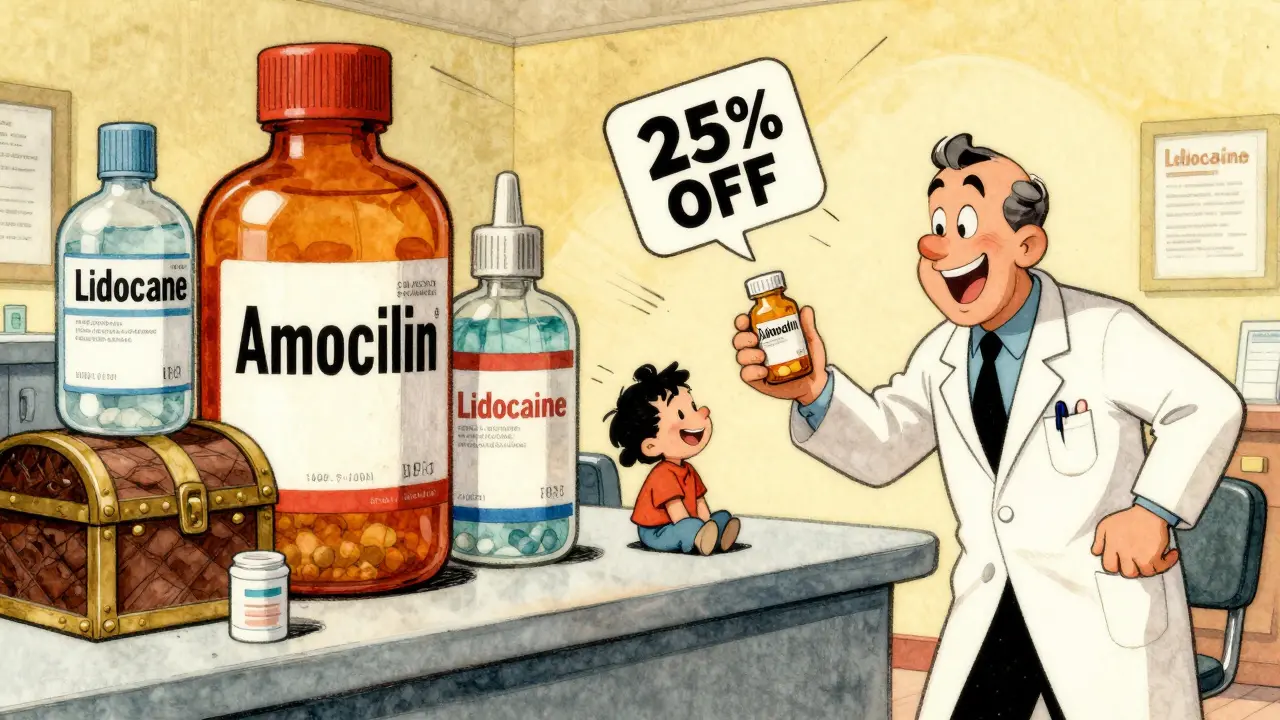
When you walk into a clinic or urgent care center, you might not think about how much the antibiotics, lidocaine, or saline solutions cost. But for providers, those prices add up fast. In 2022, generic drugs made up 90.1% of all prescriptions filled in the U.S., yet they accounted for just 24.8% of total drug spending. That gap isn’t magic-it’s the result of smart bulk purchasing. Large-scale procurement of generics isn’t just about buying more. It’s about negotiating better deals, managing inventory smarter, and cutting waste without cutting care.
How Bulk Purchasing Actually Saves Money
The savings from buying in bulk don’t come from one single trick. They come from layers. First, there’s the direct discount off the invoice. If you order 1,000 units of amoxicillin at once, you might get 5-15% off. But if you order 10,000? That jumps to 20-30%. That’s not theory-it’s standard practice for clinics that track their top 20 medications. Republic Pharmaceuticals’ case studies show urgent care centers in Texas cut lidocaine and antibiotic costs by 20% in just two months by switching from monthly to quarterly bulk orders. Then there’s short-dated stock. These are medications with 6-12 months left before expiration. Most providers avoid them out of fear of waste. But smart buyers know: if you use a lot of a drug-like IV saline or epinephrine-buying short-dated stock can save 20-30%. One Ohio clinic saved 25% on injectables by making this shift. The trick? They didn’t just buy more. They tracked usage down to the vial and matched orders to patient volume. No stockouts. No expired meds. Just lower costs.Who’s Really Offering the Best Deals?
Not all suppliers are created equal. The big three wholesalers-McKesson, AmerisourceBergen, and Cardinal Health-control 85% of the U.S. generic drug distribution. But they typically offer only 3-8% discounts for bulk orders. That’s not enough to move the needle for small practices. Enter secondary distributors like Republic Pharmaceuticals. These companies specialize in bulk procurement for independent providers. They source directly from manufacturers, often from surplus or overstock, and pass on deeper discounts-20-25% on average. They also offer more flexible minimums and fewer restrictions than the big wholesalers. A Florida medical director told a 2023 survey: “Switching some of our purchasing to Republic gave us options we didn’t have before. No allocations, no games-just the inventory we needed at prices that make sense.” State-level buying pools like the National Medicaid Pooling Initiative (NMPI) and Sovereign States Drug Consortium (SSDC) also offer savings-3-5%-but only for Medicaid programs. These pools work because they combine buying power across multiple states. A single state negotiating alone might get 1-2%. Together, they get 3-5%. That’s real money when you’re buying millions of doses a year.The Hidden Catch: Rebates and PBMs
Pharmacy Benefit Managers (PBMs) are the middlemen between insurers, pharmacies, and manufacturers. They negotiate rebates-often 15-40%-on generic drugs. Sounds great, right? But here’s the catch: they don’t always pass those savings along. According to the USC Schaeffer Center, for every $100 spent on drugs at retail pharmacies, $41 goes to the manufacturer. A big chunk of that isn’t profit-it’s rebate money. PBMs keep 30-50% of those rebates for themselves. That means even if your insurer negotiated a 30% rebate on metformin, your copay might not drop at all. That’s why point-of-sale discount programs are changing the game. Starting in 2024, the top three PBMs began integrating discounts directly into pharmacy checkout systems. No more separate discount cards. Just lower prices at the register for common generics like atorvastatin or lisinopril. RxBenefits reported patients seeing 30-50% lower out-of-pocket costs overnight.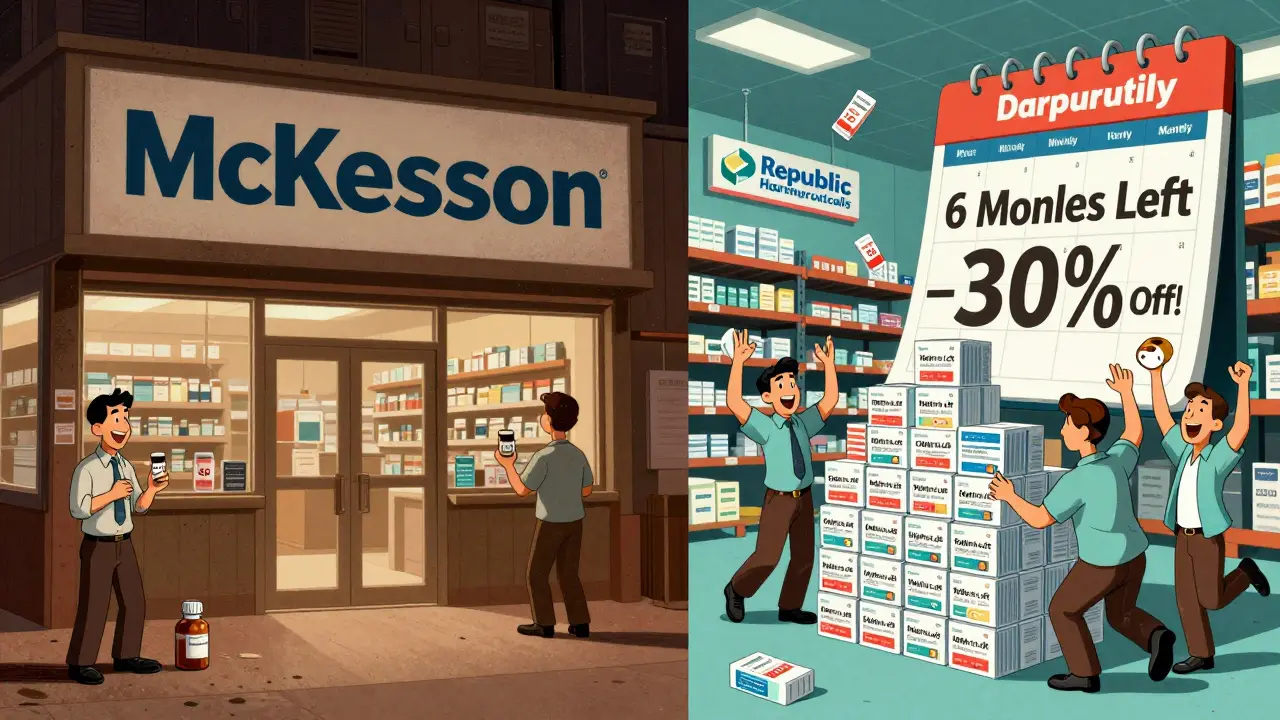
What Works-and What Doesn’t
Bulk purchasing shines for high-volume, low-cost generics. Think antibiotics, pain relievers, corticosteroids, saline, and insulin. These are drugs clinics use every day. The savings stack up fast. But it doesn’t work for everything. Low-use specialty drugs? Not worth the risk. If you only prescribe a drug once a month, buying 10,000 units just to get a discount means you’ll likely waste half of it. And during shortages? Forget bulk. The FDA reported 298 active generic drug shortages in November 2023. When supply is tight, even the biggest buyers get last in line. Also, don’t assume bigger = better. Some secondary distributors require minimum orders that force clinics to buy more than they need. A 2023 MGMA survey found 35% of urgent care centers said this was a major pain point. The key is to start small. Pick your top 15-20 drugs. Track how many you use per month. Then match your bulk order to that number-not to the supplier’s minimum.How to Get Started Without Overwhelm
You don’t need a pharmacy team to do this right. Here’s how most successful clinics start:- Identify your top 15-20 medications. These should represent 60-70% of your total drug spend. Use your EHR or billing system to pull usage data.
- Compare suppliers. Get quotes from your current wholesaler and at least one secondary distributor. Ask about short-dated stock options and minimum order sizes.
- Start with one drug. Pick the most frequently used one-say, amoxicillin. Order a bulk quantity. Track how long it lasts.
- Set up a simple inventory tracker. Even a spreadsheet with expiration dates and usage logs can prevent waste. One Texas clinic reduced waste to under 2% by checking stock every Friday.
- Scale slowly. After 3 months, add another drug. Within a year, most clinics have 80% of their generics on bulk contracts.
What’s Changing in 2024 and Beyond
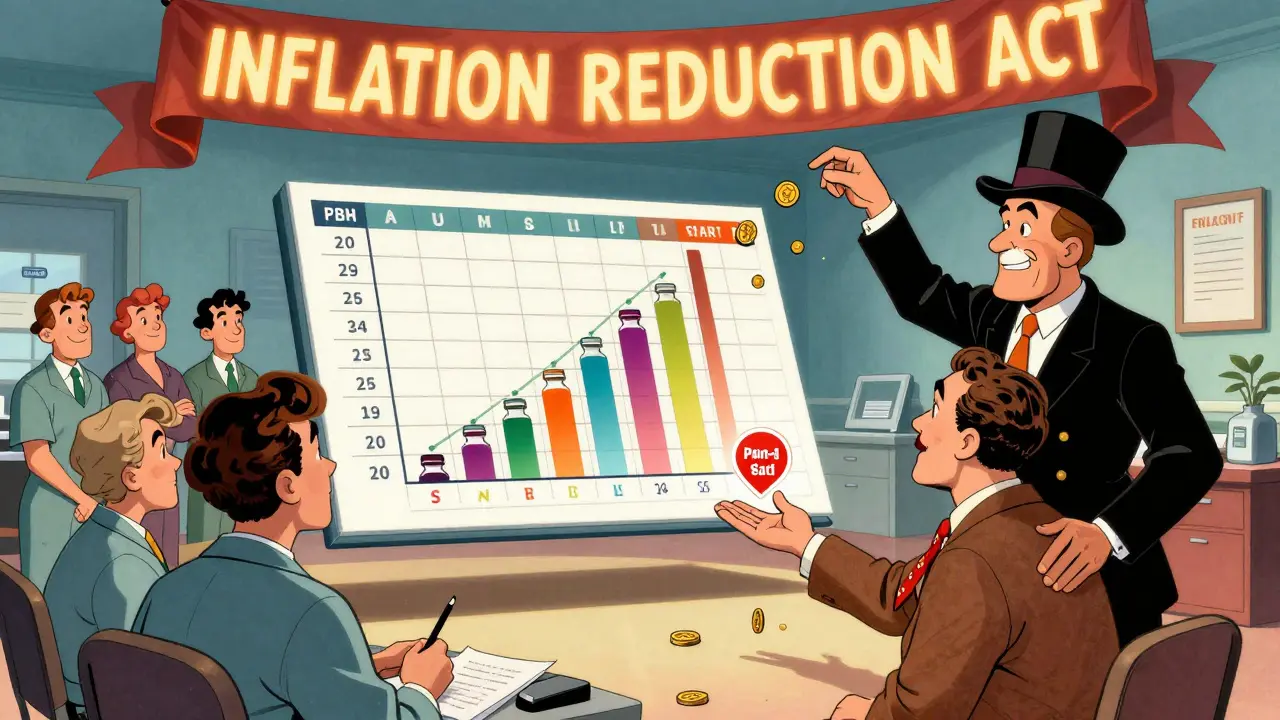
The Inflation Reduction Act is forcing a shift. Starting in 2026, Medicare will negotiate prices for 10 high-cost drugs-with discounts of 38-79% off list prices. That’s not just for Medicare. It’s setting a new floor for the whole market. PBMs and manufacturers will have to adjust. The FTC has 17 active investigations into price manipulation as of late 2023. Transparency is coming. Secondary distributors are also evolving. Some are now integrating directly with EHRs to auto-reorder generics when stock hits a set level. Others are offering real-time inventory dashboards so clinics can see what’s in stock, what’s expiring, and what’s discounted-all in one place. The future isn’t about buying more. It’s about buying smarter.Frequently Asked Questions
Can small clinics really save money with bulk purchasing?
Yes. Even small clinics can save 15-25% on their top 15-20 generic medications by switching to secondary distributors and buying short-dated stock. The key is focusing on high-use drugs and avoiding minimum order traps. One Ohio urgent care center cut injectable costs by 25% without changing their formulary.
Are short-dated medications safe to use?
Absolutely. The FDA allows medications to be used up to their labeled expiration date, even if they’re only 6 months from expiring. The concern isn’t safety-it’s waste. Clinics that track usage closely and rotate stock properly report zero safety issues and 95-98% utilization rates.
Why don’t all clinics use bulk purchasing?
Many don’t know it’s an option. Others are locked into contracts with primary wholesalers that don’t offer competitive pricing. Some fear the administrative work. But once clinics start tracking usage and compare supplier quotes, they see immediate savings. The biggest barrier is inertia-not cost.
Do PBM rebates actually lower patient costs?
Not always. PBMs negotiate rebates from manufacturers, but they often keep 30-50% of those savings. That’s why point-of-sale discount programs-launched in 2024-are a game changer. They apply negotiated discounts directly at checkout, so patients pay less upfront, no matter who’s negotiating.
What should I watch out for when choosing a supplier?
Watch for hidden fees, minimum order sizes that force you to buy too much, and poor documentation. Secondary distributors like Republic Pharmaceuticals scored 4.3/5 in user guide quality in 2023. Primary wholesalers averaged 3.1/5. Ask for sample contracts, check expiration tracking tools, and read reviews from other providers before signing.
Will drug shortages make bulk purchasing risky?
Yes, during shortages, bulk purchasing can backfire. The FDA tracked 298 active generic shortages in late 2023. If you commit to a large order and the drug becomes unavailable, you’re stuck with unused inventory. That’s why it’s smart to only bulk-buy drugs with stable supply and high, consistent usage. Avoid speculative buying.
How does the Inflation Reduction Act affect bulk purchasing?
It’s creating downward pressure on prices. Medicare’s negotiated discounts-up to 79% off list prices-will force manufacturers to lower their baseline pricing. That means even non-Medicare buyers, like private clinics, will benefit over time. It’s not direct, but it’s real. The market is shifting toward transparency, and bulk buyers will have more leverage.


Ryan W
Let’s cut the fluff. Big Pharma and PBMs are running a rigged game, and these 'bulk savings' are just band-aids on a hemorrhage. If you're still buying from McKesson or Cardinal, you're being played. Secondary distributors? Sure, they’re better-but they’re still just middlemen with better PR. The real fix? Nationalize drug manufacturing. We import 80% of our active pharmaceutical ingredients from China and India. That’s not supply chain resilience-that’s national security failure. Stop optimizing the system and burn it down.
Allie Lehto
OMG this is so true!!! 😭 I work in a tiny clinic and we were paying $40 for a 100-count bottle of amoxicillin… then we switched to short-dated stock from Republic and now it’s $12!! 🙌 I cried when I saw the invoice. Like… people think generics are ‘cheap’ but they don’t get how the system is literally designed to make us suffer. Also, expiration dates? WHO CARES if it’s 6 months out?? It’s not gonna turn into poison 🤷♀️
Henry Jenkins
There’s a deeper structural issue here that isn’t being addressed. The entire model of pharmaceutical distribution is built on opacity. PBMs aren’t just intermediaries-they’re profit-maximizing entities with zero accountability. The fact that 30-50% of rebates are kept by them while patients pay full price is a moral failure disguised as capitalism. What’s more troubling is that clinics are being encouraged to ‘optimize’ within a broken system instead of demanding systemic reform. Bulk purchasing helps, yes-but it’s like using a sponge to bail out a sinking ship. We need transparency laws, public bidding for generics, and elimination of rebate secrecy. Until then, we’re just rearranging deck chairs on the Titanic.
Dan Nichols
Everyone’s acting like this is some revolutionary insight but it’s not. Anyone with half a brain knows buying in bulk saves money. The real story here is how little most clinics know about their own supply chain. You’re telling me a clinic can’t track how many vials of lidocaine they use per month? That’s not incompetence-that’s negligence. And don’t get me started on the ‘short-dated stock’ crowd. If you’re not rotating inventory like a grocery store, you’re not running a business-you’re running a charity with a DEA license. Also Republic Pharmaceuticals? Never heard of them. Probably some shady importer with expired meds in the back.
Renia Pyles
Ugh. Another ‘let’s save money on meds’ post while people are skipping insulin doses. You think this is about ‘smart buying’? No. It’s about a system that lets corporations charge $100 for a vial of epinephrine and then pretends it’s ‘affordable’ if you buy 10,000. Meanwhile, my cousin died because her insurance denied her metformin. You’re optimizing profit margins while people die. This isn’t clever. It’s cruel.
George Rahn
Let us not forget the sacred covenant of American enterprise: that the free market, when left unshackled by bureaucratic interference, will always deliver the most efficient outcomes. Yet here we are-trapped in a labyrinth of PBM cartels and state-sanctioned monopolies masquerading as ‘wholesalers.’ The solution? A return to classical liberal principles: deregulate distribution, permit direct manufacturer-to-clinic sales, abolish artificial minimums, and let the invisible hand-unfettered by federal overreach-restore order. The fact that a Florida clinic saved 20% by bypassing McKesson is not an anomaly. It is a prophecy.
Napoleon Huere
There’s a quiet revolution happening here, and most people miss it. We’re not just talking about cost savings-we’re talking about dignity. When a nurse doesn’t have to ration saline because the last bottle expired, when a child gets antibiotics without their parent choosing between groceries and prescriptions-that’s not logistics. That’s justice. The system taught us to see drugs as commodities. But they’re not. They’re lifelines. And when we start treating them that way-by tracking usage like sacred data, by rejecting arbitrary minimums, by trusting expiration dates like we trust our own eyes-we don’t just save money. We restore humanity to medicine.
SWAPNIL SIDAM
Very interesting. In India, we buy bulk medicines from local manufacturers and save 60-70%. No PBMs. No middlemen. Just factories and pharmacies. Maybe USA needs to learn from developing countries. Simple system. No drama. Just good medicine.
Curtis Younker
Y’all are overthinking this. I run a 3-doctor clinic in rural Kansas. We started with amoxicillin-ordered 5,000 pills instead of 500. Saved $1,200 in 3 weeks. Then we added metformin. Then insulin. Now we’ve got a spreadsheet that tells us when to reorder based on patient volume. We check stock every Friday like it’s church. No fancy software. Just a guy with a highlighter and a coffee habit. If you’re not doing this, you’re leaving money on the table-and patients are paying the price. Start small. Don’t wait for perfection. Just start.
Shweta Deshpande
This is so encouraging!! I’m from India and I work with a small NGO clinic here. We’ve been doing bulk buying for years-mostly because we had to. But seeing how structured this is in the US? It gives me hope. Even small clinics can do this. My favorite part? The short-dated stock. We use that all the time. People think it’s risky, but honestly? If the bottle says ‘expires 2025’ and it’s 2024, it’s still good. Medicine doesn’t turn evil after a date on the label. 😊 Keep sharing these stories-they change lives.
Aishah Bango
So you’re telling me we should trust a company called ‘Republic Pharmaceuticals’ over the big three? What’s next? Buying insulin from a guy on eBay? This is how people die. You think you’re saving money? You’re gambling with patient safety. And don’t give me that ‘FDA-approved’ nonsense-regulations are just suggestions for shady distributors. If you want to save money, go to Canada. Don’t gamble with expired meds and unknown suppliers. This isn’t entrepreneurship. It’s recklessness.