
Medication Safety Checker for Athletes
Check Your Medication
This tool simulates the Global DRO (Global Drug Reference Online) verification process for athletes. Note: This is a demonstration tool - always verify medications on Global DRO for official confirmation.
Important: This tool is for educational purposes only. Always verify medications through the official Global DRO system before taking any prescription or over-the-counter medication.
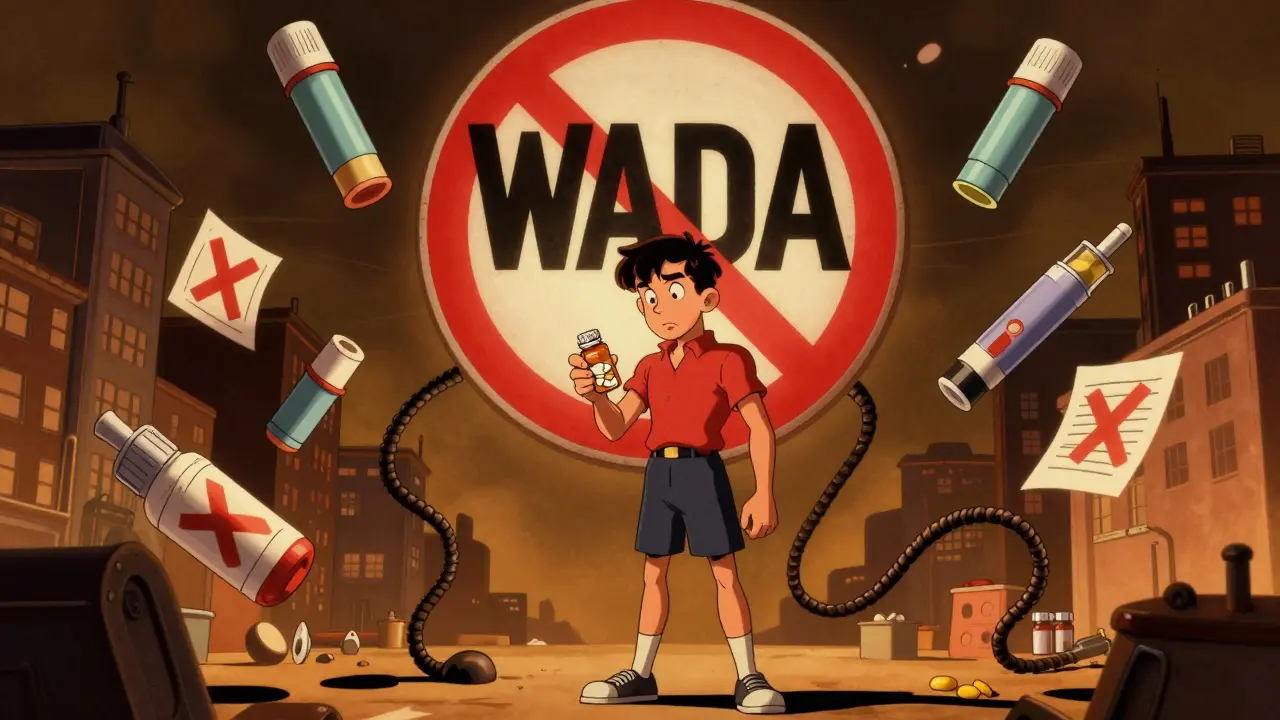
Every year, thousands of athletes take prescription meds to manage asthma, ADHD, diabetes, or chronic pain. But what they don’t realize is that one pill could cost them their career. Anti-doping rules aren’t just about steroids or performance enhancers-they’re about everyday medications that look harmless on a pharmacy shelf. If you’re an athlete, or you’re helping one, you need to know this: just because your doctor prescribed it doesn’t mean it’s allowed in sport.
Why Your Prescription Could Be Banned
The World Anti-Doping Agency (WADA) publishes a list every year called the Prohibited List. It’s updated on January 1st, and it’s the law for every athlete competing under an international or national federation. In 2024, the list had over 250 banned substances. Some are obvious-like anabolic steroids. Others? Not so much. Take salbutamol, the active ingredient in most inhalers for asthma. It’s allowed-but only if you use it via inhaler and stay under 1,600 micrograms in 24 hours. Take it as a pill or IV drip? That’s a violation. Same with corticosteroids: a joint injection for tendonitis might be fine, but a shot before a race? That’s banned in-competition. Even common cold medicines can contain pseudoephedrine, which is prohibited above certain thresholds. The rule is simple: strict liability. If it’s in your system, you’re responsible. No excuses. Not even if your doctor didn’t know. Not even if you got it from a friend. Not even if you’ve used it for years without issue. That’s why so many athletes get caught-they assumed their medication was safe because it was prescribed.What Medications Are Most Likely to Cause Problems?
Based on 2023 data from WADA and USADA, the top three medications that trigger Therapeutic Use Exemption (TUE) requests are:- Glucocorticoids (like prednisone or dexamethasone): Used for inflammation, allergies, autoimmune conditions. 28.7% of all TUEs. Side effects include adrenal suppression, bone loss, and mood swings.
- Beta-2 agonists (like albuterol, formoterol): Used for asthma. 21.3% of TUEs. Can cause heart palpitations, tremors, and in high doses, cardiac arrhythmias.
- Growth hormone and related peptides: Used for muscle wasting or recovery. 12.6% of TUEs. Risk of joint pain, insulin resistance, and abnormal tissue growth.
Therapeutic Use Exemptions (TUE): How to Get One
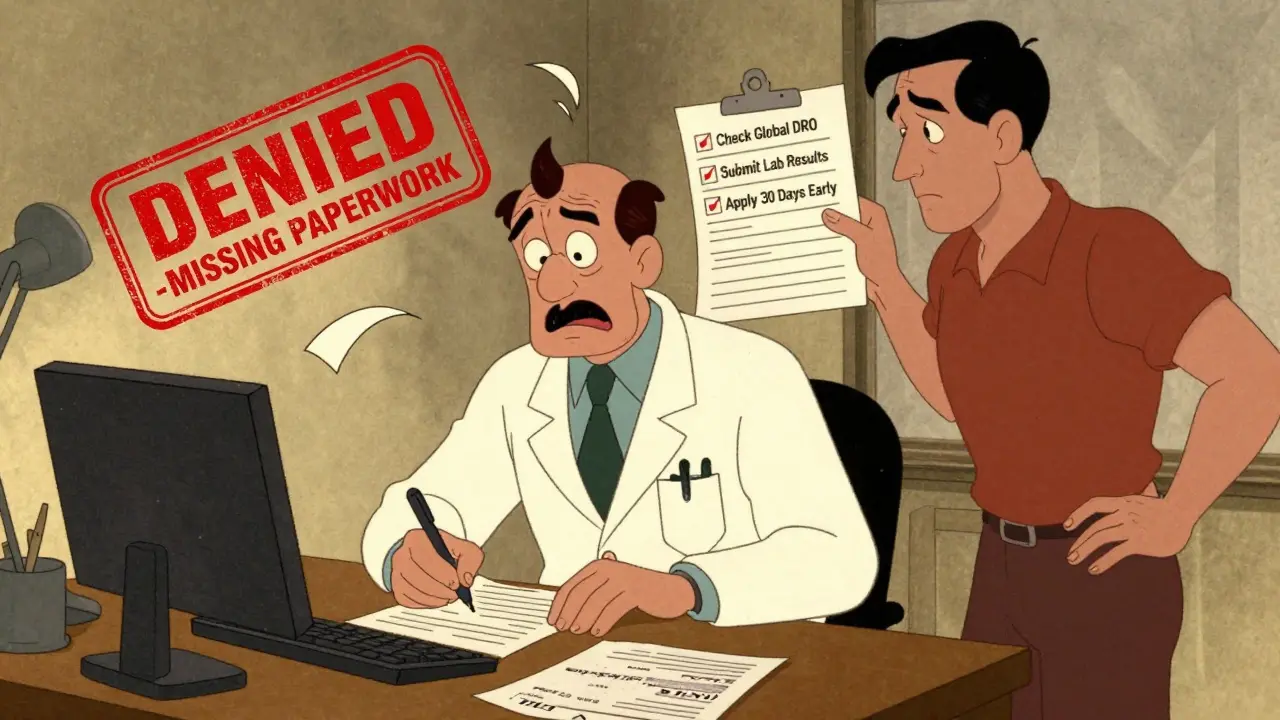
If you need a banned substance for a legitimate medical condition, you can apply for a TUE. But it’s not a form you fill out the night before a race. It’s a process that takes weeks, sometimes months. To qualify, you must prove four things:- You have a diagnosed medical condition that requires the prohibited substance.
- The medication won’t give you an unfair performance edge-it just brings you back to normal health.
- There’s no permitted alternative that works as well.
- You applied before you used it (unless it was an emergency).
- International athletes apply through their sport’s international federation.
- National athletes apply through their country’s anti-doping agency (like USADA or CADS).
- Recreational athletes may still need one if they compete in events with testing.
How to Check Your Medication (Before You Take It)
The easiest way to avoid trouble? Check before you take anything. Every single time. The Global Drug Reference Online (Global DRO) is your best friend. It’s free, updated daily, and covers over 1,200 medications across 10 countries. You pick your country, your sport, and the medication name. It tells you:- Is it banned?
- Is it banned only in-competition?
- What’s the dosage limit?
- Is a TUE required?
What Your Doctor Needs to Know
Most doctors don’t know the WADA list. A 2022 study found that 68% of athletes said their doctors had no idea what was banned in sport. That’s dangerous. When you see your doctor, say this: “I’m an athlete subject to anti-doping rules. Can you check if this medication is allowed?” Then hand them WADA’s Check Your Medication toolkit. It’s free. It’s designed for clinicians. Doctors who treat athletes need to:- Know the current Prohibited List.
- Understand routes of administration (inhaler vs. pill vs. injection).
- Know clearance times for in-competition bans.
- Help you apply for a TUE if needed.
Side Effects You Can’t Ignore
Even if you get a TUE, you’re not off the hook. These medications have real risks. Corticosteroids can shut down your adrenal glands if used long-term. That means your body stops making its own cortisol. Suddenly stopping can cause fatigue, nausea, even life-threatening crashes. Beta-2 agonists can spike your heart rate. For endurance athletes, that’s a recipe for dangerous arrhythmias-especially when combined with dehydration or heat. Stimulants like Adderall (for ADHD) are banned in-competition. Even with a TUE, they can cause anxiety, insomnia, and elevated blood pressure. One NCAA athlete spent 11 months getting approval for Adderall. He had to submit three applications, get letters from three specialists, and prove he’d tried every legal alternative. Don’t think of these as “safe because I have a TUE.” Think of them as tools-with side effects, risks, and timing requirements.What Happens If You Get Caught?
A positive test for a banned substance? That’s an Anti-Doping Rule Violation (ADRV). Consequences range from:- A warning (rare, only for low-level or unintentional cases)
- A 2-year ban
- A 4-year ban (common for intentional use or repeat offenses)
- A lifetime ban (for multiple violations or aggravated circumstances)
What Athletes Are Actually Doing
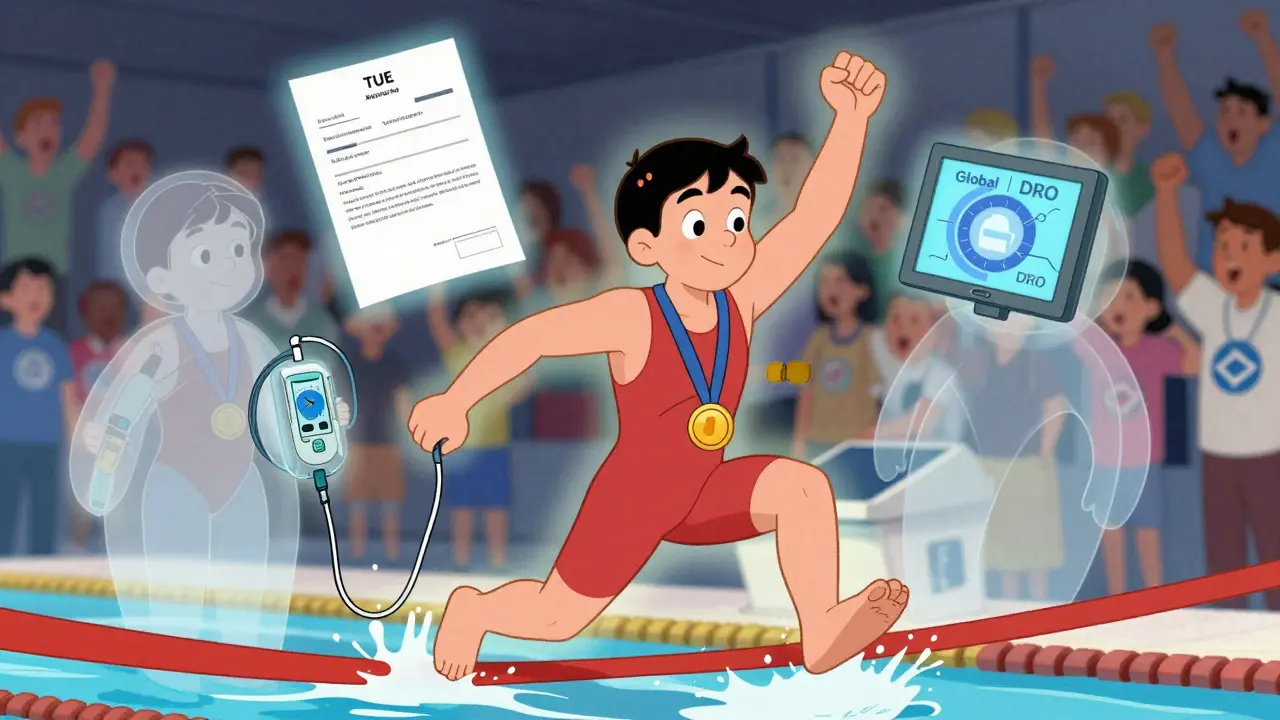
Some athletes delay treatment because they’re scared. A 2022 survey of 1,200 athletes found that 37% postponed needed meds due to anti-doping fears. 22% of them got worse. Others panic and quit their meds cold turkey. A 2023 USADA survey showed 28% of youth athletes stopped taking insulin, asthma inhalers, or ADHD meds because they thought it would get them banned. That’s not clean sport. That’s dangerous. The right path? Plan ahead. Check every medication. Talk to your doctor. Apply for a TUE early. Don’t wait until the day before a race. One swimmer, 17 years old, needed insulin for type 1 diabetes. Her team worked with her endocrinologist, submitted the TUE six months before her first international meet, and got approved. She competed clean, safely, and won a medal. It’s possible. But only if you act early.What’s Changing in 2025?
WADA is pushing for better integration between pharmacies and anti-doping rules. Starting in 2024, pharmaceutical companies in Europe began labeling drugs with WADA status-like “Prohibited in-competition” on the box. Pilot programs cut inadvertent violations by 45%. By 2027, WADA aims to reduce medication-related violations by 30% through better doctor education. They’re partnering with medical schools and licensing boards to make anti-doping knowledge part of every physician’s training. The message is clear: clean sport isn’t about banning medicine. It’s about managing it responsibly.Final Checklist: What Every Athlete Must Do
- Check every medication-every time-on Global DRO before taking it.
- Tell your doctor you’re an athlete subject to anti-doping rules.
- Apply for a TUE at least 30 days before competition (longer for complex cases).
- Know the clearance time for any in-competition banned substance.
- Never take a supplement without checking it on Global DRO.
- Keep copies of your TUE approval and medical records.
- Don’t assume “it’s safe because I’ve used it before.”


jenny guachamboza
ok but what if the government is secretly putting banned substances in ALL prescription meds to control athletes?? 🤔 I saw a video on TikTok where a guy said the FDA and WADA are in cahoots!! 🚨💊 #DeepStateDoping
Sam Black
I’ve seen too many young athletes burn out because they were too scared to take their insulin or asthma meds. The system’s broken if someone has to choose between health and competition. A TUE isn’t a loophole-it’s a lifeline. Let’s stop treating medicine like contraband and start treating athletes like humans.
Tony Du bled
I used to coach high school track and half the kids were popping albuterol pills like candy. Their coaches had no clue. Global DRO should be mandatory in every PE class. Simple. Free. Works. Why isn’t this taught in gym class instead of how to do a proper squat?
Kathryn Weymouth
The article is well-researched and accurately outlines the complexities of therapeutic use exemptions. However, it fails to address the systemic inequities: athletes with access to specialists and legal counsel are far more likely to secure TUEs than those without. This isn’t just about medication-it’s about privilege.
Nader Bsyouni
So we're criminalizing medicine because some people are too lazy to read the fine print? The real problem isn't athletes taking meds-it's the authoritarian absurdity of a global list that changes every year and no one actually understands. WADA is a bureaucracy masquerading as morality
Julie Chavassieux
I just... I just can't believe this is real. My brother got banned for two years because his cough syrup had pseudoephedrine. He cried for three days. He didn't even know. How is this fair? How is this justice? I'm so angry I can't even type properly
Herman Rousseau
If you're an athlete, this is your bible. Seriously. Save this page. Print it. Stick it on your fridge. Check every pill, every inhaler, every supplement. Global DRO is free. TUEs take time. Don't wait till the day before a race. Your future self will thank you. 💪🧠
Ajay Brahmandam
In India, most athletes don’t even know Global DRO exists. We need local outreach-videos in Hindi, Tamil, Bengali. Doctors here don’t know WADA rules either. This isn’t just a US problem. It’s global. And we need grassroots education, not just forms.
Candy Cotton
The United States of America maintains the highest standards of athletic integrity. Any deviation from these standards, including the misuse of therapeutic exemptions, is an affront to the very principles upon which our nation was founded. This is not a medical issue-it is a moral imperative.
Tarun Sharma
Thank you for the detailed breakdown. I would only add that athletes should always carry their TUE approval letter with them during competitions. It reduces confusion and avoids unnecessary delays during testing.