
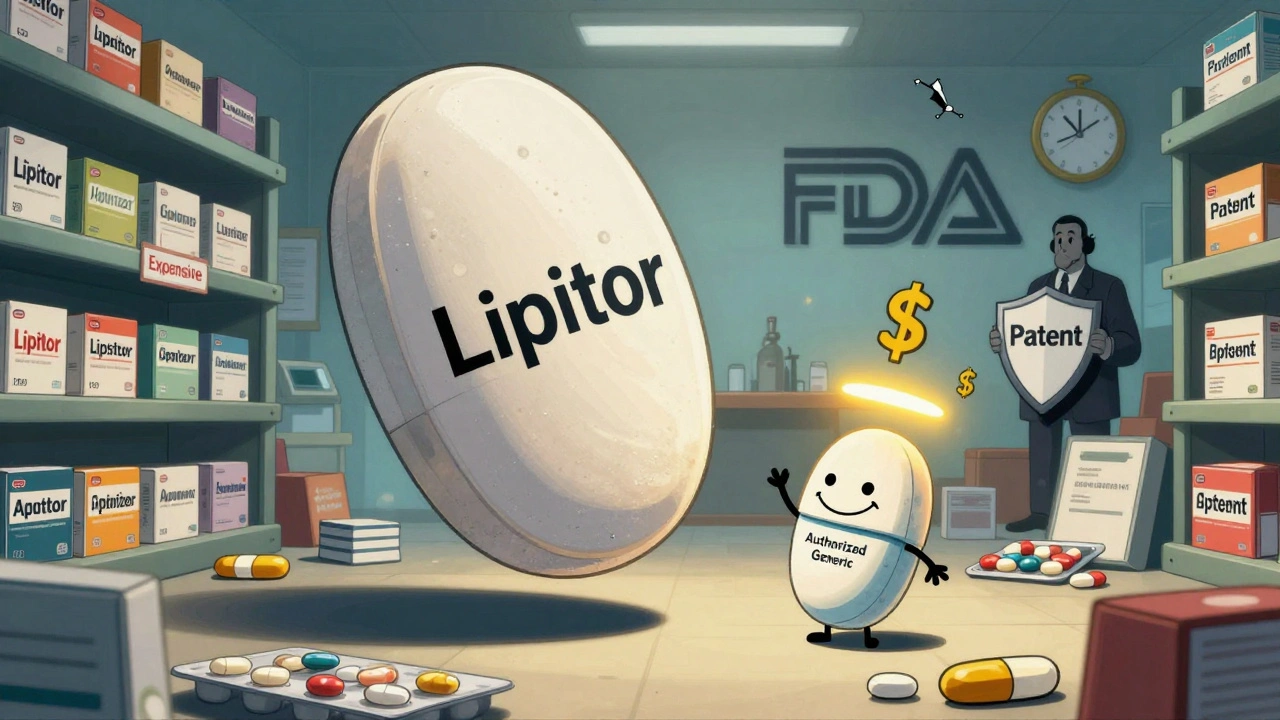
Ever picked up a prescription and noticed your "generic" pill looks exactly like the brand-name version - same shape, same color, same imprint - but costs less? That’s not a coincidence. It’s likely an authorized generic. But here’s the catch: only a tiny fraction of drugs have them. Most of the medications you take - even expensive ones - never get this option. And that’s by design.
What Exactly Is an Authorized Generic?
An authorized generic isn’t just another cheap copy. It’s the exact same drug made by the original brand-name company, packaged under a different label, and sold at generic prices. Think of it like a car manufacturer making the same model but selling it under a no-name badge. The ingredients, the factory, the quality control - all identical. The only difference? The box says "generic" instead of "Lipitor" or "Prozac."
Unlike traditional generics, which must prove they work the same way through costly bioequivalence tests, authorized generics skip that step. They’re made under the original FDA-approved application (the NDA), so they hit the market faster. No waiting. No delays. Just the same pill, cheaper.
Why Don’t All Drugs Have Authorized Generics?
Because no one is forced to make them. Authorized generics are a business decision - not a public health requirement. Only brand-name drugmakers can launch them, and they only do it when it makes financial sense.
Take the EpiPen. When Mylan faced public outrage over its $600 price tag, they didn’t wait for a competitor to enter. In 2016, they launched their own authorized generic - priced 30% lower. It wasn’t charity. It was damage control. They kept control of the market instead of letting a generic rival steal it.
But for most drugs? No authorized generic. Why? If a drug isn’t profitable enough, or if the patent won’t expire soon, there’s no reason to bother. According to FDA data from 2019, only 1,215 authorized generics existed in the U.S. out of thousands of prescription drugs. That’s less than 5% of the market.
And here’s the kicker: 89% of authorized generics come from drugs with annual sales over $500 million. If your medication doesn’t make big money, you’re not getting this option.
How Authorized Generics Change the Game - For Everyone
When an authorized generic enters the market, prices drop - fast. The FTC found that during the first 180 days after a generic launches, an authorized generic cuts retail prices by 4-8% and wholesale prices by 7-14%. That might not sound like much, but for a $300 monthly drug, that’s $12-$24 saved per month.
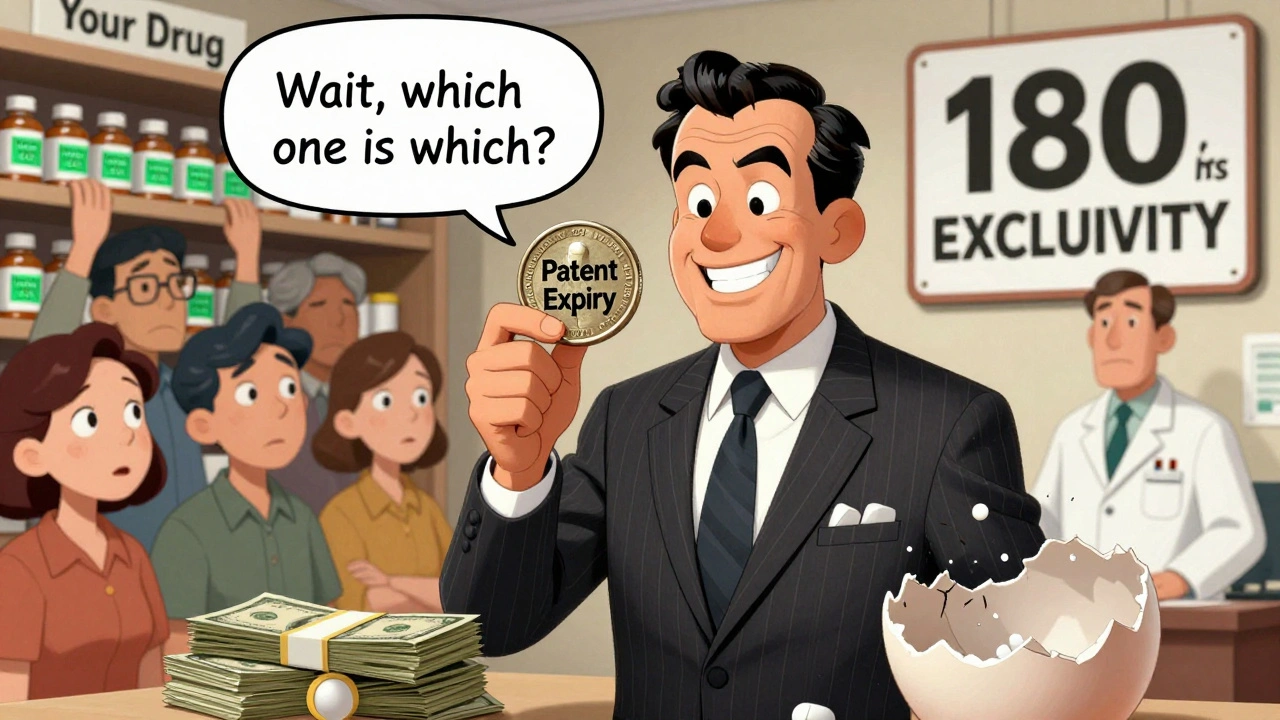
But here’s the twist: that same drop can kill real generic competition. The first company to file for a traditional generic gets 180 days of exclusive rights. That’s a goldmine - worth hundreds of millions. But if the brand company drops its own authorized generic right then? That first generic loses its edge. Revenue plummets by 40-52% during that window.
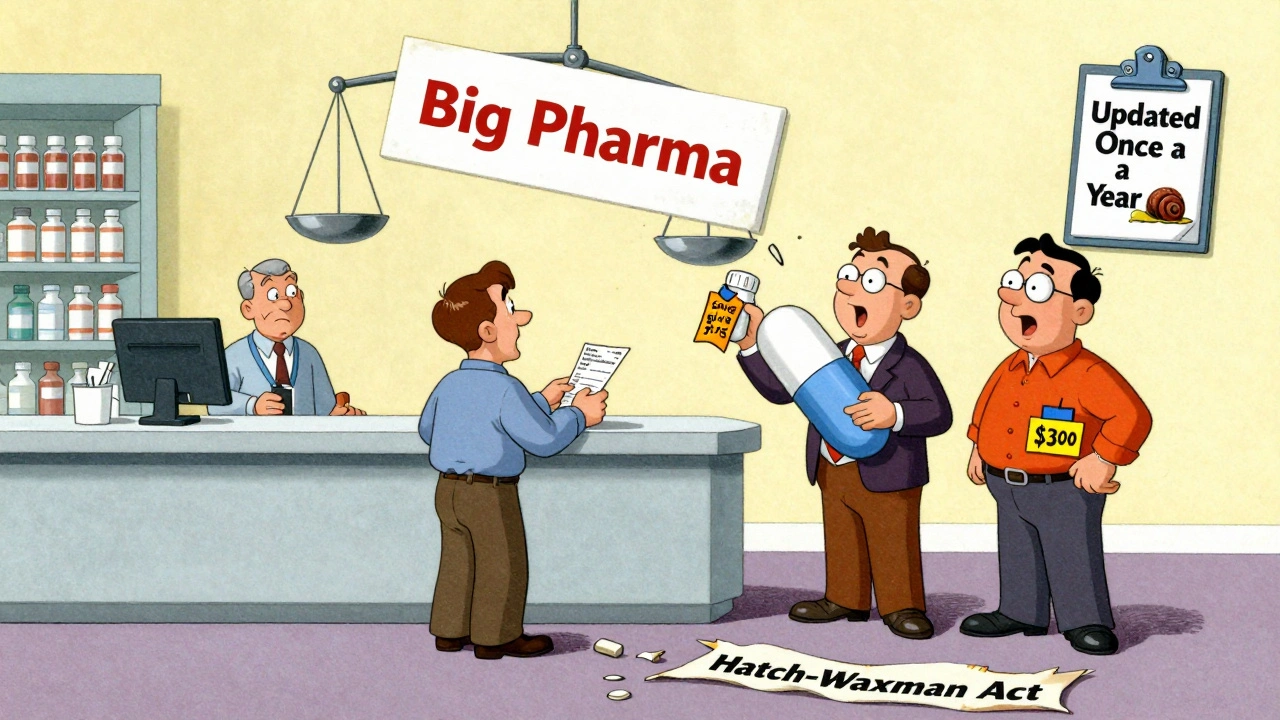
That’s why some generic makers call authorized generics a trap. They say it undermines the whole point of the Hatch-Waxman Act - which was to speed up competition. Instead, it lets brand companies play both sides: they get to be the monopoly and the discount option at the same time.
Who Benefits? Who Gets Left Out?
Patients who get an authorized generic? They save money. AARP found people saved an average of $18.75 per prescription when an AG was available. For seniors on Medicare Part D, that adds up.
But what about the 95% of drugs without one? If your drug is expensive and has no generic at all - authorized or not - you’re stuck paying full price. And if your drug is cheap and already has a generic? You probably won’t even know an authorized version exists.
Pharmacists see the confusion. One study found 27% more prescription errors when both brand and authorized generic versions were available. Patients get confused when their "generic" suddenly looks different. Doctors get frustrated - 63% of physicians in a 2018 survey said authorized generics make substitution decisions harder.
And then there’s the long-term cost. Harvard’s Aaron Kesselheim found that while authorized generics lower prices now, they can discourage future generic competition. Why would a small company spend millions to challenge a patent if the brand company is already undercutting them with its own version?
The Regulatory Gap
The FDA tracks authorized generics - but barely. Their official list is updated once a year. It’s manual. It’s slow. And it doesn’t explain why some drugs get them and others don’t.
Legislators have tried to fix this. The Preserve Access to Affordable Generics Act has been introduced multiple times since 2003. It wants to ban authorized generics during the 180-day exclusivity window. But so far, nothing’s passed. The brand companies have too much lobbying power.
In 2023, the FTC stepped in again, filing legal briefs arguing that authorized generics during exclusivity periods are anti-competitive. But unless Congress acts, the system stays broken.
What You Can Do
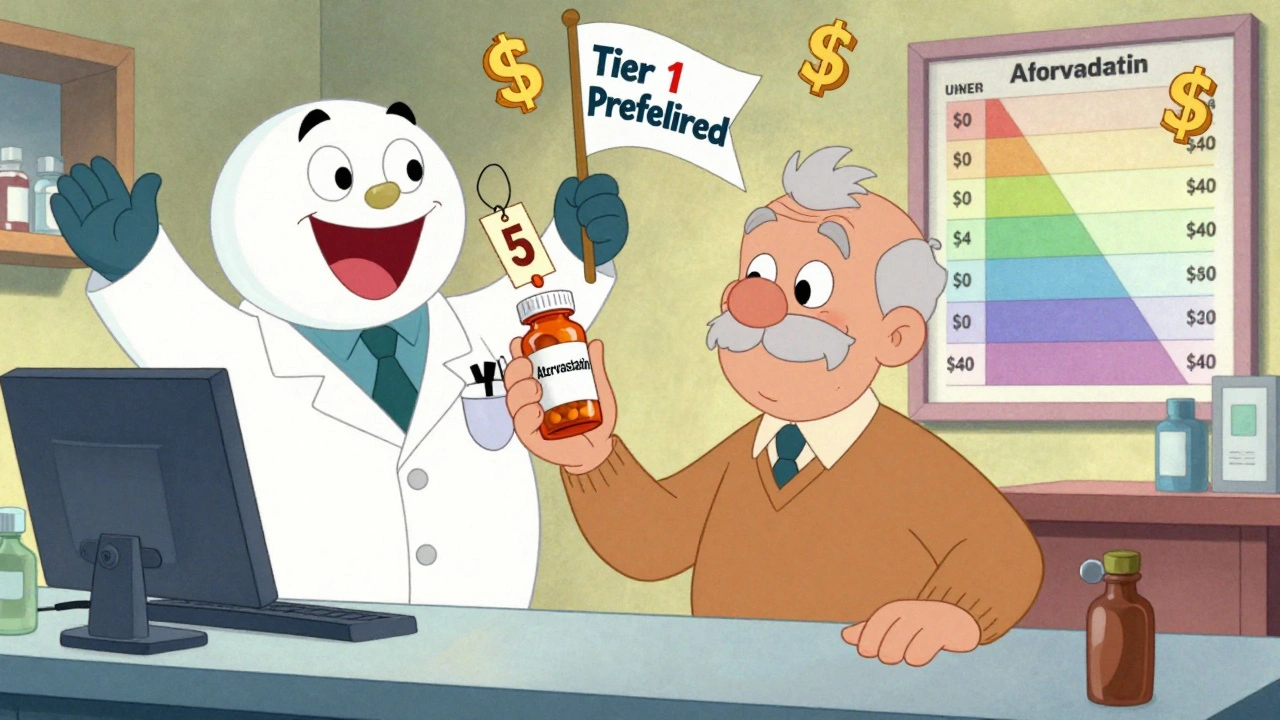
Don’t assume your drug has an authorized generic. Ask your pharmacist: "Is there an authorized generic for this?" They can check the FDA’s list or their internal database.
If your drug doesn’t have one, ask your doctor if there’s a similar medication that does. Sometimes switching to a different drug in the same class can save you hundreds.
And if you’re on Medicare or private insurance, compare your plan’s formulary. Some plans list authorized generics separately - and they might be cheaper than the traditional generic.
There’s no magic fix. But knowledge helps. Knowing that authorized generics exist - and that they’re rare - puts you in a better position to ask the right questions.
Why This Matters Beyond Your Prescription
This isn’t just about pills. It’s about how the system works - or doesn’t work. The pharmaceutical industry has created a legal loophole that lets big companies control the market even after their patents expire. Authorized generics are a tool, not a solution.
They help some people. They hurt others. And they leave most of us in the dark.
If you’re paying high prices for a drug that should be cheap - it’s not because no one can make a generic. It’s because the company that owns the patent decided not to let one exist.
Audrey Crothers
Just asked my pharmacist about my blood pressure med-turns out there's an authorized generic! Saved me $40 this month. 🙌
Why don't more people know this?
Laura Weemering
It's not just about cost-it's about power dynamics disguised as market efficiency. The pharma-industrial complex doesn't want competition; it wants controlled, compliant substitution. Authorized generics are the velvet glove on the iron fist of monopoly.
And yet, we're told to be grateful for crumbs. We're told to 'ask our pharmacist'-as if that's a solution to systemic exploitation.
It's capitalism with a placebo label.
And the FDA? A passive bystander with a yearly spreadsheet.
sandeep sanigarapu
Very informative. In India, generics are common but often lack quality control. Authorized generics would help, but the system here is very different. No brand companies make them here-only small local labs.
Still, the concept is good if regulated well.
Ashley Skipp
So the big pharma companies are playing both sides and we're supposed to be happy they give us a discount?
Wow what a shocker
Robert Webb
There's something deeply ironic here. The Hatch-Waxman Act was designed to break monopolies, but now the monopolists are using the system's own tools to suppress competition.
Imagine if a car company made its own 'discount version' of a model right when a competitor was about to launch a cheaper alternative-then sued them for 'market confusion.' That's exactly what's happening here.
And the worst part? It's legal. Not because it's fair, but because the lobbying was too strong.
It makes you wonder: if we can't fix this in pharmaceuticals, where else is this happening? And why do we keep accepting it as 'the way things are'?
nikki yamashita
OMG I just checked my insulin-there's an authorized generic!!
Went from $300 to $120!!
Y'all need to ask your pharmacists!!
Adam Everitt
so like… authorized generics are kinda like when a band releases a demo version under a diff name to undercut bootlegs? kinda clever but also kinda shady?
and why does the fda even bother with a yearly list? it's 2024
wendy b
Let's be honest-most people don't understand bioequivalence, pharmacokinetics, or regulatory pathways. They just want pills that work. The fact that you're even discussing this suggests you're overthinking it.
Also, the FTC has no business meddling in private market decisions.
And yes, I'm aware of the 2018 physician survey. I read it in JAMA. You didn't.
Rob Purvis
Wait-so if a brand company launches an authorized generic during the 180-day exclusivity window, does that technically violate the spirit of Hatch-Waxman? Or just the letter?
And if the FTC is filing briefs against it, why hasn't the DOJ taken action?
Also, has anyone looked into whether these authorized generics are ever sold in the same pharmacy as the brand version under different labels? Because that’s a marketing tactic that feels… manipulative.
And why does the FDA’s list take a year to update? Is it still being manually entered by interns? Who’s paying for this? Is this a bureaucratic failure or a deliberate delay?
I’m not mad-I’m just confused. And this system feels like it was designed by someone who thinks patients are too dumb to understand transparency.
Donna Anderson
i just looked up my antidepressant and there IS an ag!!
saved me 60 bucks a month!!
why didnt anyone tell me this sooner??
Levi Cooper
Of course the big pharma companies are protecting their profits. That's what American businesses do.
But if you're complaining about drug prices, maybe you should stop buying from them and move to Canada.
Or maybe you should get a job that pays more than minimum wage.
This isn't a crisis-it's capitalism.
Nathan Fatal
The real tragedy isn't that authorized generics exist-it's that they're the exception, not the rule.
What this reveals is a system where profit motives override public health, and where regulatory agencies are structurally incapable of enforcing transparency.
Authorized generics are a Band-Aid on a hemorrhage.
The Hatch-Waxman Act was supposed to be the cure. But it was neutered by lobbying before it even hit the books.
And now we're left with a paradox: the only way to get a truly affordable generic is for the brand company to make it themselves-because the independent generics are either too slow, too expensive to develop, or crushed by the very system they were meant to exploit.
This isn't a market failure. It's a design flaw.
And until we treat medicine like a public good-not a profit center-we'll keep patching holes with authorized generics while the whole system leaks.