
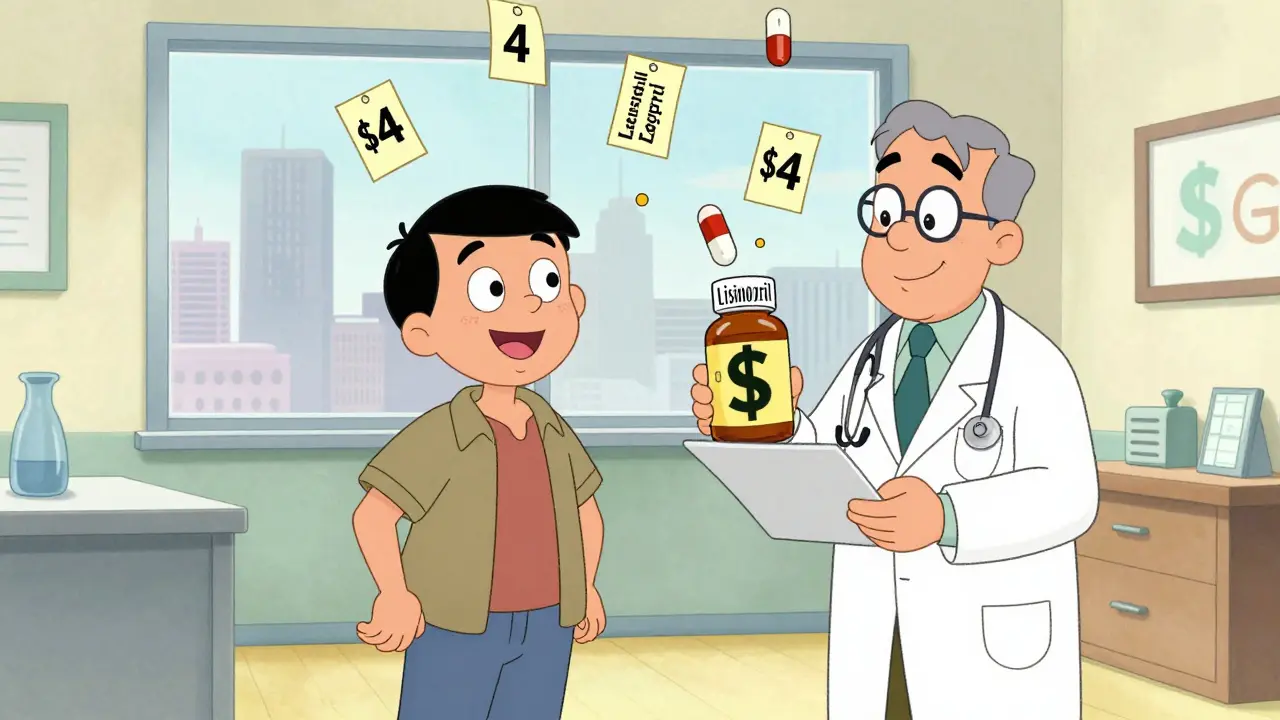
Every year, millions of people in Australia and around the world pay hundreds or even thousands of dollars extra for brand-name medications-when a perfectly effective, FDA-approved generic version exists at a fraction of the cost. If you’ve ever stood at the pharmacy counter, shocked by a $200 co-pay for a pill you know should cost less, you’re not alone. The good news? You don’t have to accept that price. You just need to know how to ask.
Why Generics Are Just as Good (And Much Cheaper)
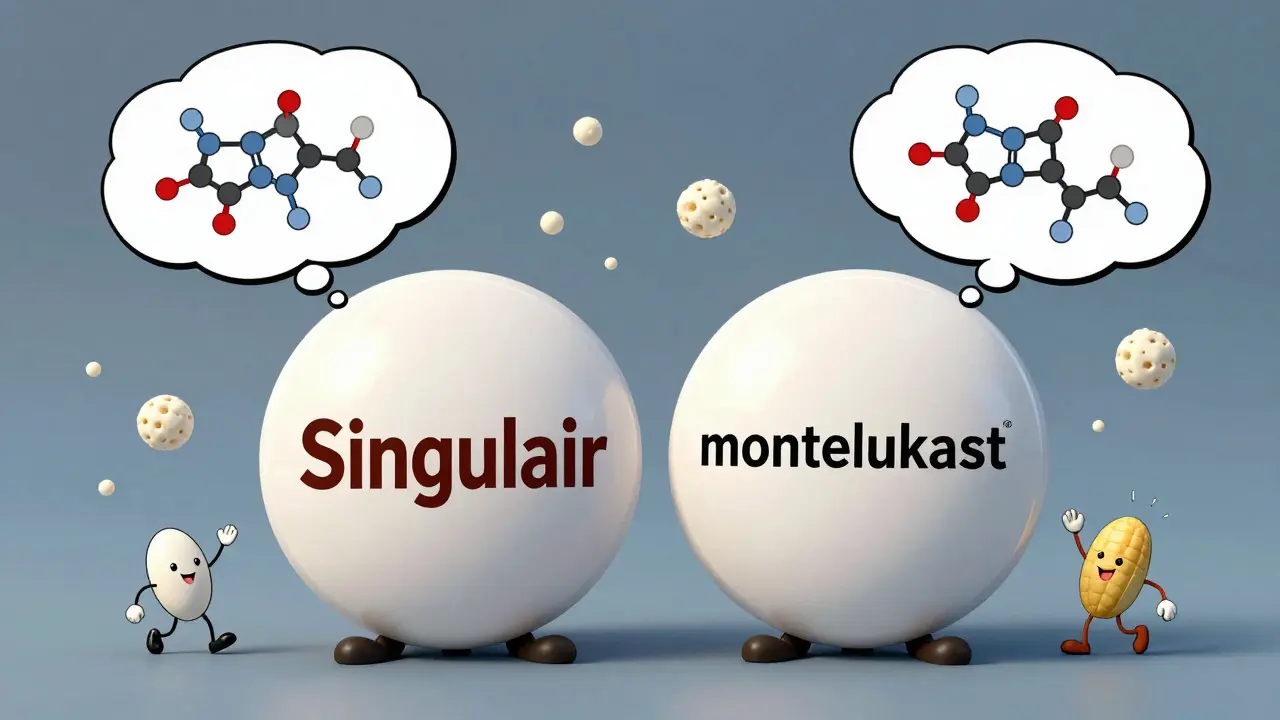
Generic drugs aren’t cheap imitations. They’re the exact same medicine as the brand-name version, with the same active ingredient, dosage, strength, and how your body absorbs it. The only differences? The color, shape, or filler ingredients-and the price. By law, generics must meet the same strict standards as brand-name drugs. In fact, the same companies that make brand-name drugs often make the generics too, just under a different label.
Take lisinopril, a common blood pressure pill. The brand-name version, Zestril, might cost $150 for a 30-day supply. The generic? Around $4. Same active ingredient. Same results. Same side effects. The difference isn’t quality-it’s marketing, patents, and profit margins.
According to the U.S. Food and Drug Administration, 9 out of 10 prescriptions filled in the U.S. are for generics. In Australia, similar patterns are emerging, especially as more drugs come off patent. When multiple companies start making the same generic, prices drop even further-sometimes by 90%. That’s not a guess. That’s market reality.
When You Should Stick With the Brand Name
There are exceptions. A small group of medications-about 5% of all prescriptions-fall into what doctors call “narrow therapeutic index” drugs. These are medicines where even tiny changes in blood levels can cause serious problems. Examples include warfarin (a blood thinner), levothyroxine (for thyroid conditions), and some anti-seizure drugs like phenytoin.
In these cases, switching between different brands or generics can cause your levels to fluctuate. That’s why some doctors prefer you stick with one version. But here’s the key: it’s not about brand vs. generic. It’s about consistency. If you’re stable on a generic, stay on it. If you’re stable on a brand, stay on that. Switching back and forth between different manufacturers is what can cause issues-not generics themselves.
If your doctor says, “This one needs to be brand,” ask: “Is this because of the narrow therapeutic index? Or is it just habit?” Most of the time, the answer will surprise you.
How to Bring Up Generics Without Sounding Like You’re Trying to Skimp
Many people avoid asking about generics because they worry their doctor will think they’re cheap, or that they don’t trust the medicine. That’s a myth. Doctors know generics work. In fact, the American Medical Association now encourages doctors to routinely discuss them.
Here’s how to start the conversation the right way:
- Ask early: Don’t wait until you’re at the pharmacy. Bring it up during your appointment, right after your doctor suggests a new medication.
- Use phrases like: “Is there a generic version available for this?” or “I’d like to explore the most cost-effective option that still works well for me.”
- Be specific: “I’ve seen that the brand costs $180, but the generic is under $10. Can we go with that?”
- Frame it as teamwork: “I want to make sure I’m on the best treatment that fits my budget. Can we go over what’s available?”
One patient in Melbourne told her rheumatologist she was struggling to afford her monthly Humira injection. The doctor didn’t push back. He checked the formulary, found the generic adalimumab was now available, and switched her on the spot. Her out-of-pocket cost dropped from $6,300 to $4,500 a month-still high, but $1,800 less. That’s the power of asking.
What to Do If Your Doctor Says No
Not every doctor will say yes right away. Sometimes it’s because they’re not up to date on which generics are approved. Other times, they’re worried about insurance coverage or think you’ll have side effects.
If they say no, ask these three questions:
- “Is there a medical reason I can’t use the generic, or is this just how it’s always been done?”
- “Can you check if there’s a generic available through my pharmacy’s formulary?”
- “If a generic isn’t available now, when might one be?”
Many doctors don’t realize generics come out faster than they think. For example, the patent for the popular antidepressant sertraline expired over a decade ago, yet some patients are still being prescribed Zoloft. If your doctor says, “There’s no generic,” they might be wrong. A quick check on the PBS (Pharmaceutical Benefits Scheme) website or with your pharmacist can clear that up.
And if they still refuse? Ask for a written note explaining why. That’s your right. If it’s not a narrow therapeutic index drug, and there’s no documented reason, then the refusal is likely based on preference-not science.
Pharmacists Are Your Secret Weapon
Don’t underestimate your pharmacist. They’re trained to spot generic alternatives and can often suggest a cheaper option even if your doctor didn’t mention it. In Australia, pharmacists can legally substitute a generic unless the prescription says “Do Not Substitute.”
When you pick up your prescription, say: “Is there a generic version of this available through PBS? I’d like to save money if it’s safe.”
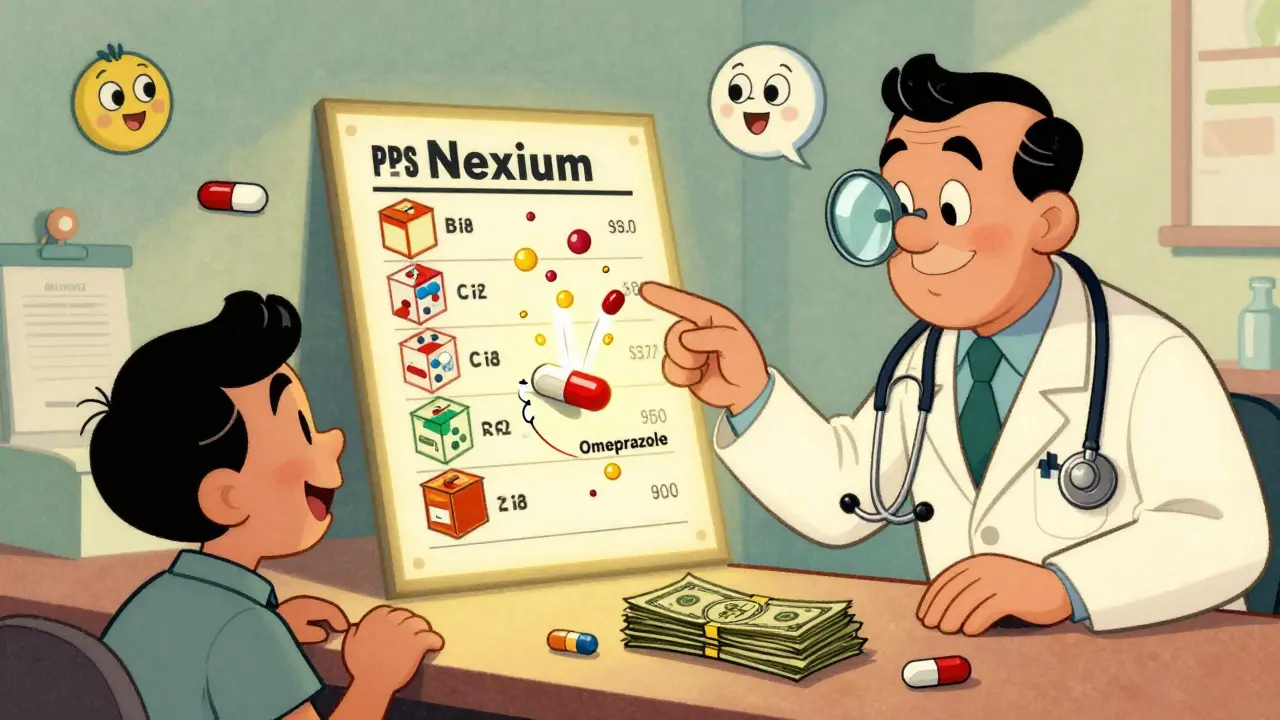
Many pharmacists keep a list of cost-saving swaps. One in Melbourne told a patient taking brand-name Nexium (for acid reflux) that omeprazole-the generic-was 98% as effective and cost $5 instead of $280. The patient switched and saved $3,200 a year. No side effects. No issues.
How Much Can You Really Save?
Here’s a quick snapshot of what switching can mean:
| Medication (Brand) | Generic Equivalent | Brand Price (30-day) | Generic Price (30-day) | Annual Savings |
|---|---|---|---|---|
| Lisinopril (Zestril) | Lisinopril | $150 | $4 | $1,752 |
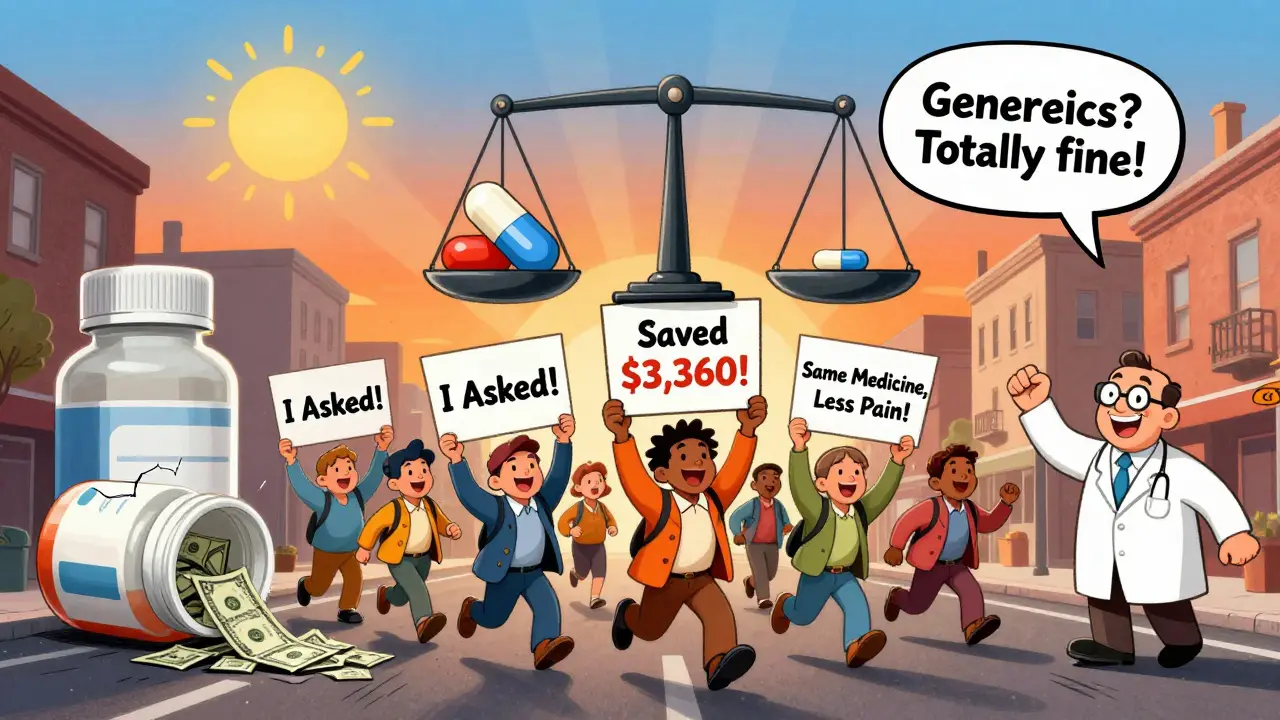
| Omeprazole (Nexium) | Omeprazole | $284 | $4 | $3,360 |
| Atorvastatin (Lipitor) | Atorvastatin | $120 | $6 | $1,368 |
| Sertraline (Zoloft) | Sertraline | $140 | $5 | $1,620 |
| Metformin (Glucophage) | Metformin | $90 | $3 | $1,044 |
That’s not a few dollars. That’s real money-enough to cover groceries, utilities, or even a medical co-payment for something else. And it’s all legal, safe, and approved.
What to Do If You Notice a Difference
Some people say, “I switched to the generic and I felt different.” Maybe your sleep changed. Maybe you felt a little more anxious. Or maybe your stomach felt off.
That’s usually not the active ingredient. It’s the fillers-lactose, dyes, or coatings. These don’t affect how the drug works, but they can affect how your body reacts. If you notice a change, don’t assume the generic doesn’t work. Talk to your doctor or pharmacist. They can help you switch to a different generic brand, or go back to the original.
One patient in Sydney switched from one generic levothyroxine to another and noticed her TSH levels jumped. She went back to the original brand-and her levels stabilized. That’s why consistency matters for certain drugs. But again: it’s not about brand vs. generic. It’s about sticking with one version you know works.
Final Tip: Make It a Habit
Don’t wait until you’re struggling to pay. Every time you get a new prescription-whether it’s for blood pressure, cholesterol, depression, or acid reflux-ask: “Is there a generic?”
Keep a simple list: Medication | Brand Price | Generic Price | Savings. You’ll start seeing patterns. And you’ll realize you’ve been overpaying for years without knowing it.
Generic drugs aren’t second choice. They’re the smart choice-for your wallet, your health, and your peace of mind. You don’t need to be an expert. You just need to ask.
Are generic drugs really as effective as brand-name drugs?
Yes, for the vast majority of medications-about 95%-generic drugs are just as effective as brand-name versions. The U.S. Food and Drug Administration requires generics to contain the same active ingredient, in the same strength, and work the same way in your body. They must also meet the same strict manufacturing standards. The only differences are in color, shape, or inactive ingredients, which don’t affect how the drug works. Studies and real-world use confirm that patients get the same results whether they take a brand or generic.
Why do some doctors hesitate to prescribe generics?
Most doctors support generics, but some don’t keep up with new approvals or assume patients prefer brands. Others may have had a patient report a side effect from a different filler in a generic, leading to caution. In rare cases, they may not realize a generic is available. If your doctor says no, ask if it’s because of a narrow therapeutic index drug-like warfarin or levothyroxine-or if it’s just habit. Many times, the answer is the latter.
Can I switch from a brand-name drug to a generic anytime?
For most medications, yes. But if you’re on a drug with a narrow therapeutic index-like blood thinners, thyroid meds, or seizure drugs-it’s best to stay on the same version (brand or generic) once you’ve found one that works. Switching between different generics can cause small changes in how your body absorbs the drug, which could affect your condition. Always talk to your doctor before switching, especially if you’re on one of these drugs.
What if my pharmacy automatically gives me a generic I don’t want?
In Australia, pharmacists can substitute a generic unless your doctor writes “Do Not Substitute” on the prescription. If you’re given a generic you didn’t expect, you can ask to speak with the pharmacist. They can check if the substitution was allowed and confirm whether it’s the same as what your doctor prescribed. If you prefer the brand, you can request it-but you’ll likely pay more out-of-pocket. You always have the right to ask for clarification.
How do I know if a generic is covered by my insurance or PBS?
Check the Pharmaceutical Benefits Scheme (PBS) website or ask your pharmacist. Most generics are listed on PBS and cost the same as the brand-usually under $30 for concession cardholders or $32.50 for others. If a generic isn’t on PBS yet, your doctor can apply for an authority prescription. You can also use online tools like Medscape or GoodRx to compare prices and coverage. Don’t assume a drug isn’t covered-ask.
Will switching to a generic cause more side effects?
Side effects from the active ingredient won’t change. But some people notice differences because generics use different inactive ingredients-like dyes, fillers, or coatings. These can occasionally cause mild reactions, like stomach upset or headaches, in sensitive individuals. If you notice a change after switching, tell your doctor or pharmacist. They can help you try a different generic brand or go back to the original. It’s not that generics are less safe-it’s that your body might react to a different filler.
When will a generic version of my current medication be available?
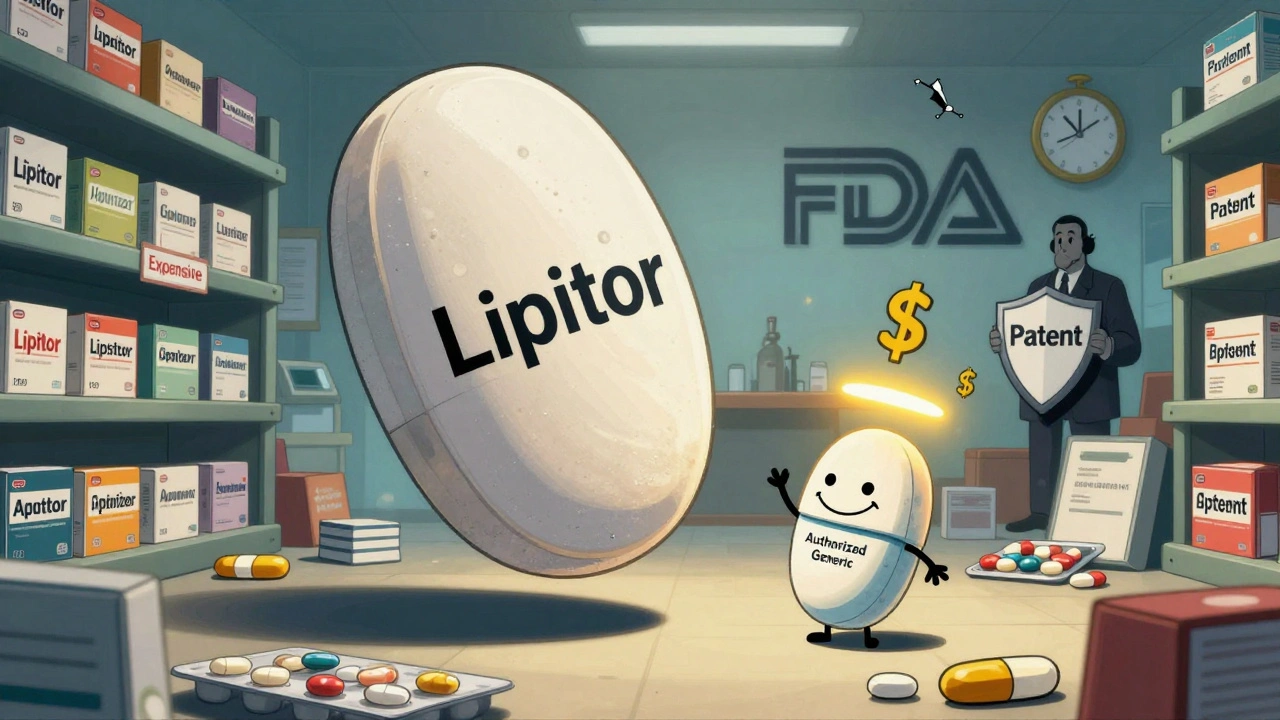
Brand-name drugs are protected by patents, usually lasting 20 years from filing. Once the patent expires, other companies can make generics. Many drugs become available as generics within months after patent expiry, especially if multiple manufacturers enter the market. You can check the PBS website or ask your pharmacist for updates. If your medication is still under patent, ask your doctor if there’s a similar drug already available as a generic that could work just as well.
Oladeji Omobolaji
Man, I never knew generics were this cheap. I’ve been paying for brand-name stuff in Nigeria thinking it’s better, but now I’m gonna ask my pharmacist next time. $3 for metformin? That’s like half my bus fare.
Janet King
Generic medications are bioequivalent to brand-name products and are subject to the same rigorous testing by regulatory agencies. Patients should be encouraged to use them when clinically appropriate to reduce healthcare expenditures.
Susannah Green
YES. YES. YES. I work in a clinic, and I’ve seen patients cry because they can’t afford their meds-then we switch them to generic, and they’re fine. Literally. No difference. I’ve had patients tell me they felt ‘better’ after switching because they weren’t stressed about money anymore. It’s not the drug-it’s the peace of mind.
Anna Pryde-Smith
Pharmaceutical companies are ROBBING us. They spend millions on ads telling you Zoloft is ‘special,’ then charge $140 for something that costs 5 cents to make. And doctors? They get kickbacks or just don’t care. I switched my entire family to generics-and saved over $10K in two years. Stop letting corporations dictate your health.
Sallie Jane Barnes
This is such an important conversation. I’ve been telling my friends for years to ask about generics-but so many are scared to speak up. You’re not being cheap. You’re being smart. And if your doctor reacts badly? That’s not your fault. It’s theirs. Keep asking. Keep saving. Keep advocating.
Andrew Smirnykh
Interesting how cultural attitudes toward medication vary. In some countries, generics are the default. In others, there’s a stigma. I’ve seen patients in the U.S. refuse generics because they associate them with ‘poor people’s medicine.’ But the science doesn’t care about branding. It’s just chemistry.
charley lopez
From a pharmacokinetic standpoint, the bioavailability profile of generic formulations must fall within 80–125% of the reference listed drug per FDA guidelines. In most cases, inter-individual variability exceeds the intra-formulation differences between brand and generic. Therefore, clinical equivalence is statistically and therapeutically substantiated.
Kerry Moore
I had a relative who was terrified to switch from brand-name levothyroxine. We sat down, looked at the PBS data, and found she’d been on the same generic for three years without issue. She just didn’t know. Sometimes, the biggest barrier isn’t science-it’s misinformation. Thank you for breaking this down clearly.
Sue Stone
I switched to generic omeprazole last year and forgot I even had acid reflux. No more burning, no more $280 bills. My pharmacist just handed it to me like it was normal. Why isn’t everyone doing this?
Vanessa Barber
Generics are fine, I guess. But what if your body just doesn’t like them? I tried one and got a rash. Brand worked fine. So maybe not everyone’s a candidate.
Stacy Thomes
YOU CAN SAVE THOUSANDS. I DID. I WASN’T EVEN TRYING. I JUST ASKED. AND NOW I CAN BUY GROCERIES WITHOUT CRYING. PLEASE TELL YOUR FRIENDS. THIS ISN’T A TRICK. IT’S JUST COMMON SENSE.