
Why Generic Medicines Are Targeted by Counterfeiters
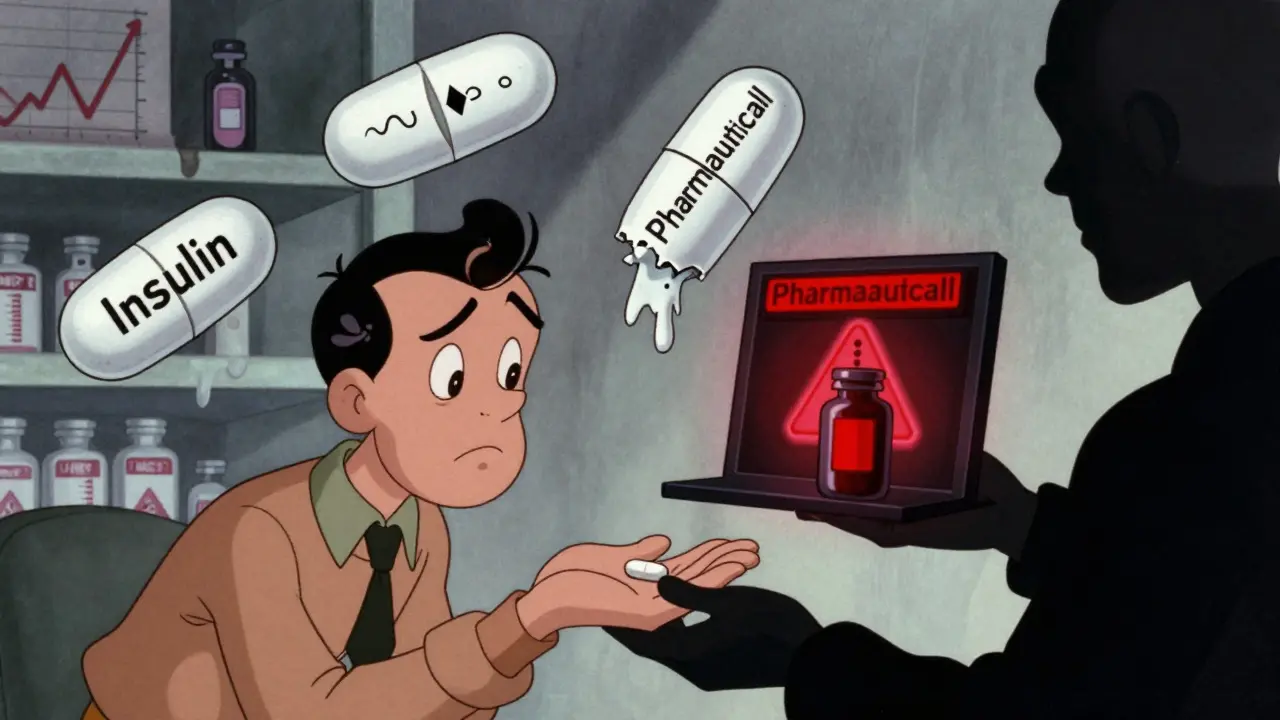
Generic medicines make up 90% of prescriptions in the U.S., but they account for just 22% of total drug spending. That gap is why counterfeiters target them. Producing fake branded drugs is risky and expensive - you need to copy logos, colors, and packaging that people recognize. But generics? They look almost identical across manufacturers. No fancy branding. No consumer loyalty. Just a white pill with a letter or number stamped on it. That makes them easy to copy and hard to spot.
According to the World Health Organization, up to 10% of medicines worldwide are fake. In some low-income countries, that number jumps to 30%. These aren’t just ineffective pills - they can contain toxic chemicals, wrong dosages, or no active ingredient at all. A fake metformin pill could send a diabetic into ketoacidosis. A counterfeit antibiotic might not kill the infection but could make bacteria resistant to real drugs. The consequences aren’t theoretical. In 2012, contaminated steroids from a fake compounding pharmacy killed 64 people in the U.S. That’s why verifying packaging and labeling isn’t just good practice - it’s a matter of life and death.
The Three Layers of Fake Drug Detection
There’s no single magic trick to spot a fake generic. Real verification uses three overlapping layers: overt, covert, and track-and-trace features. Think of it like a lock with three different keys. If one fails, the others still protect you.
Overt features are what you can see with your eyes. These include color-shifting ink - like the green-to-blue shift on Pfizer’s Viagra packaging - or holograms with tiny microtext. You don’t need tools. Just hold the box at an angle and look for changes. But here’s the catch: modern counterfeiters have high-resolution printers and can copy these features with 80-90% accuracy. INTERPOL’s 2021 Operation Pangea report found that fake packaging often looks perfect to the untrained eye. So while overt features help, they’re not enough.
Covert features need a little help. UV lights, for example. Many manufacturers, including Johnson & Johnson, use invisible ink that glows under 365nm ultraviolet light. You can buy a $15 UV pen online. Shine it on the label. If the hidden code doesn’t appear, it’s a red flag. Some generics use RFID tags or chemical taggants like Lumilink® UV markers. These require handheld readers costing $200-$500, but they’re used by pharmacies and inspectors. The key is: if the packaging claims to have a covert feature, but you can’t verify it with the right tool, it’s probably fake.
Track-and-trace systems are the most reliable. Since 2019, the European Union’s Falsified Medicines Directive (FMD) requires every prescription medicine - including generics - to have a unique 2D barcode. That code links to a central database. When a pharmacist scans it, the system checks if the batch is real, hasn’t expired, and hasn’t been tampered with. The U.S. followed with the DSCSA, which became fully active in November 2023. This system tracks every package from factory to pharmacy. But here’s the problem: not all generics are covered yet. A 2023 report from the Generic Pharmaceutical Association found that 35-45% of generic products still lack consistent serialization. If you’re scanning a barcode and it doesn’t return a match, don’t assume it’s fake - assume it’s unverified.
How Professionals Use Spectroscopy to Catch Fakes
Visual checks and barcodes are good, but they can be fooled. That’s where spectroscopy comes in. This isn’t sci-fi - it’s lab-grade science in a handheld device.
Two common tools are NIR (Near-Infrared) and Raman spectroscopy. The Thermo Fisher TruScan® RM and B&W Tek NanoRam® are used by pharmacists and regulators. They work by shining light on the pill and measuring how it reflects. Every drug has a unique chemical fingerprint. Even if a fake pill looks identical, its chemical structure might be off. Maybe the coating is thinner. Maybe the filler is cornstarch instead of lactose. The device compares the sample to a known authentic version and gives a match score.
Studies show these tools catch 92-97% of counterfeits. In one case, a pharmacy in Texas used a NanoRam® to test a batch of generic metformin. The pills looked normal. The barcode scanned fine. But the spectroscopy reading showed a correlation coefficient of 0.79 - below the 0.85 threshold the FDA considers reliable. The batch was pulled. Patients were protected. That’s why pharmacists who use these devices say things like, “It saved a life.”
But there’s a catch. These machines cost $15,000-$50,000. Training takes 8-16 hours. Most small pharmacies can’t afford them. That’s why they’re mostly in hospitals, big chains, or government labs. But if you’re a pharmacist or work in a clinic, ask your manager if they’ve considered investing. One device can protect hundreds of patients.
What Pharmacists Are Really Seeing - Real Stories
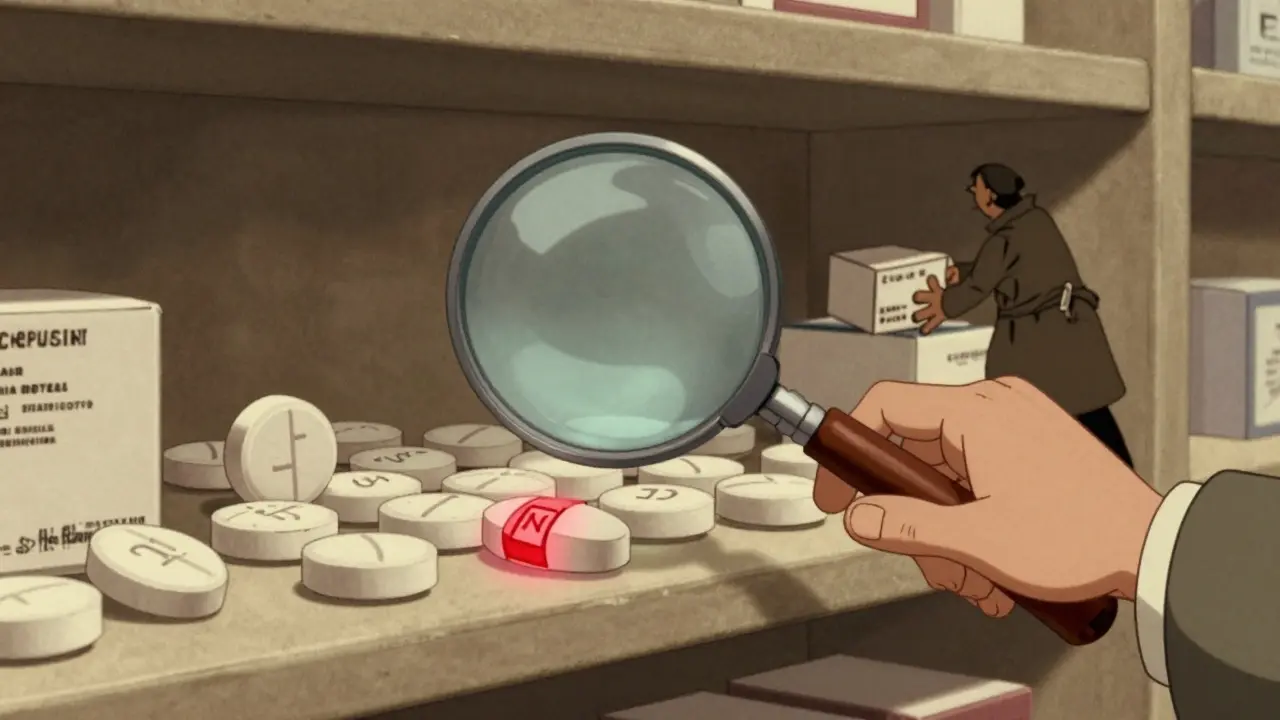
Reddit threads, pharmacy forums, and surveys tell the real story. In a 2023 thread on r/pharmacy, a pharmacist described catching a fake Nexium® generic. “The expiration date font was slightly off,” they wrote. “Took me three times looking at it before I noticed.” Another said the seal on the blister pack was too shiny. The color was a fraction too red.
A 2022 survey of 1,500 U.S. community pharmacists by the National Community Pharmacists Association found that 68% had trouble verifying generics compared to just 22% for branded drugs. Why? Three reasons: inconsistent security features (84%), no reference samples to compare against (76%), and poor serialization (71%).
One pharmacist in Ohio told me, “I get three shipments of generic lisinopril a week. Two manufacturers. Different packaging. No one sends me a sample of what the real one should look like. How am I supposed to know?”
Mobile apps like MediMark claim to verify drugs by scanning barcodes. But users report they fail 40-50% of the time with generics. Why? Because the database doesn’t have the right info. Or the barcode is printed wrong. Or the manufacturer didn’t register the batch. These apps are helpful - but don’t rely on them alone.
What You Can Do - Even If You’re Not a Pharmacist
You don’t need a UV light or a spectrometer to protect yourself. Here’s what you can do:
- Check the packaging. Look for spelling errors, blurry logos, or mismatched colors. Compare it to a previous bottle. If it looks different, ask your pharmacist.
- Ask for the manufacturer. Generic drugs can come from India, China, or the U.S. Some manufacturers have better reputations. Ask your pharmacy which one they use. If they don’t know, that’s a red flag.
- Don’t buy from unknown online sellers. The WHO says 50% of online pharmacies are fake. Stick to licensed pharmacies. In Australia, check the TGA’s website for approved suppliers.
- Report suspicious pills. If something feels off, tell your pharmacist. They’re trained to report these. In the U.S., you can file a report with the FDA’s MedWatch program. In Australia, contact the TGA.
And if you’re a patient on a tight budget - don’t assume cheaper means fake. Many legitimate generics are cheaper because they don’t spend money on marketing. But if the price seems too good to be true - it probably is.
The Future: AI, Blockchain, and Global Standards
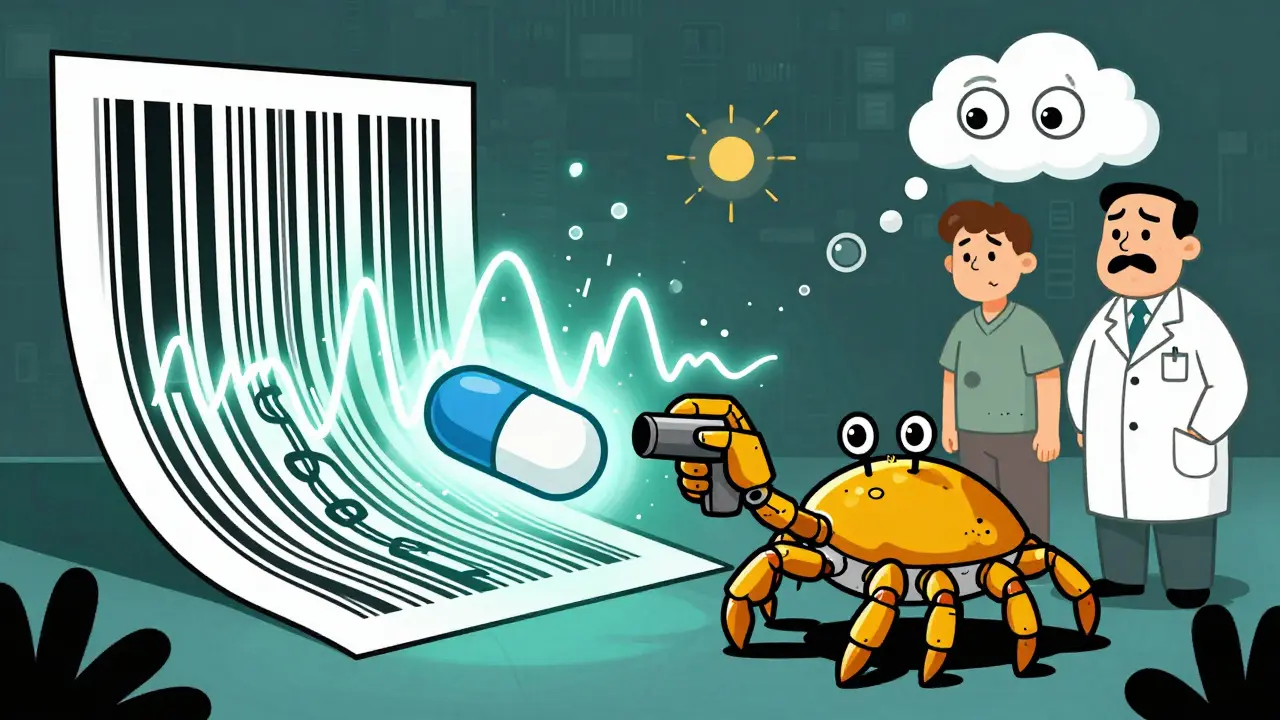
Things are changing fast. The EU will require all generics to have encrypted 2D codes by January 1, 2025. The FDA’s 2023 pilot program using blockchain for generics achieved 99.2% accuracy in tracking pills through four distribution levels. That means in a few years, you’ll be able to scan a pill and see its entire journey - factory, warehouse, truck, pharmacy.
AI is also stepping in. Gartner predicts that by 2028, 70% of drug verification will use AI to combine data from packaging, spectroscopy, and blockchain. It’ll spot patterns humans miss - like a batch of pills with the same serial number appearing in three countries at once.
But the biggest hurdle isn’t tech - it’s cooperation. Counterfeiters don’t care about borders. A fake pill made in India can end up in a pharmacy in Melbourne, Toronto, or Nairobi. The WHO says national systems alone won’t fix this. We need global standards - same codes, same databases, same rules.
For now, the best defense is layered verification: look, scan, ask, and when in doubt, double-check. Your life - or someone else’s - might depend on it.
What to Do If You Suspect a Fake
If you think a generic medicine is fake, don’t throw it away. Don’t stop taking it without talking to your doctor. Here’s what to do:
- Save the packaging. Keep the bottle, box, and any inserts. Don’t wash them.
- Contact your pharmacy. Tell them exactly what you noticed. Date, time, batch number - even small details help.
- Report it. In the U.S., use the FDA’s MedWatch form. In Australia, report to the TGA via their online portal. In the EU, contact your national medicines agency.
- Ask for a replacement. Legitimate pharmacies will replace it immediately and investigate the source.
Don’t wait. Fake drugs don’t just hurt one person. They weaken trust in the whole system.
Edith Brederode
This is so important!! 🙌 I work in a clinic and we just got a shipment where the pill color was slightly off-turned out it was fake. Never ignore the little details. Save your life, not just your wallet.
Paul Barnes
The article mentions "overt features" but doesn't define them clearly. Also, "UV pen" is not a standard term-it's a UV flashlight. Grammatical precision matters when lives are at stake.
Arlene Mathison
I’ve been telling my patients for years: if it looks too clean, too perfect, or the bottle feels cheap-ask questions. I had one guy come in with a bottle of generic lisinopril that had no batch number. We called it in. Turned out it was from a shady Canadian supplier. Don’t be shy. Your pharmacist is your ally.
Carolyn Rose Meszaros
I love how this breaks it down into layers 🙏 I’m not a pro, but I always check the cap seal and compare the pill to my last bottle. If it’s different? I call the pharmacy. Simple. Free. Life-saving. Also-why do people buy meds off Instagram? 😳
Greg Robertson
Great summary. I’ve seen the same thing in rural pharmacies-no reference samples, no training, just a stack of pills and a prayer. Maybe we need a free national database with images of real generic packaging. Could be a public health win.
Crystal August
This is why we’re all doomed. Big Pharma doesn’t want you to know how easy it is to fake generics. They profit from the confusion. The FDA is corrupt. The WHO is a puppet. You think they care about you? They care about liability. Don’t trust anyone. Not even your pharmacist.
Nadia Watson
The global standardization of serialization is a critical gap. While the EU and US have made strides, the absence of harmonized protocols in low- and middle-income countries creates systemic vulnerabilities. One must consider the ethical imperative of equitable access to verifiable medicines, irrespective of geography. The technology exists; the political will does not.
Courtney Carra
It’s funny how we treat medicine like it’s a magic spell. You pop a pill, and poof-health. But we don’t ask where it came from. We don’t care about the factory, the worker, the chemical, the trace. We just want the relief. Maybe the real counterfeit isn’t the pill-it’s our belief that we’re safe.
thomas wall
The notion that consumers can reliably detect counterfeit medicines through visual inspection is a dangerous fallacy. In the UK, the MHRA has documented over 12,000 incidents of falsified medicines in the last five years alone. Public education is insufficient without systemic enforcement. This article underestimates the scale of the crisis.
Art Gar
Let’s be real-99% of people don’t care about this. They’ll buy the cheapest pill they can find, even if it’s from a website that looks like it was coded in 2005. The real problem isn’t counterfeit drugs-it’s the American healthcare system forcing people to choose between rent and insulin.
clifford hoang
You think this is about fake pills? Nah. This is a cover. The real agenda? The government wants to force everyone onto blockchain IDs so they can track your meds-and your health data. They’ll use the ‘fake drug’ scare to install surveillance tech in every pharmacy. The NanoRam? It’s a spy device. The barcode? A backdoor. Wake up.
Emily Leigh
I mean... why are we even talking about this? It’s not like the FDA does anything. They approved a generic version of metformin last year that had traces of NDMA-same stuff in the recall from 2020-and nobody even blinked. We’re all just lab rats with prescriptions.
Shane McGriff
This is gold. Seriously. I’m a pharmacy tech and I’ve seen too many people ignore the signs because they’re scared of the cost. But here’s the truth: catching one fake pill early can stop a whole chain of harm. Talk to your pharmacist. Ask for the manufacturer. Take a picture of the pill. You’re not being paranoid-you’re being smart.
Jacob Cathro
So like, the UV thing? Bro, I bought a $12 UV pen off Amazon and it didn’t work on my generic Xanax. So I just googled ‘fake pill images’ and compared. It worked. No fancy machine needed. Also, the barcode thing? Half the time it just says ‘invalid’. Probably because the manufacturer didn’t upload it. Don’t overcomplicate it. Look. Compare. Question.
pragya mishra
In India, 40% of medicines are fake. We have no regulations. Pharmacies sell pills in plastic bags with no labels. People die every day. Your article talks about barcodes and spectroscopy-but here, we don’t even have running water in some clinics. Stop preaching to the privileged. Fix the system first.